
For years, the Pinellas Suncoast Transit Authority and the city of St. Petersburg have been wonderful partners in working together on our common goals to ensure residents have a reliable, affordable transit system that helps the city continue to grow and thrive.
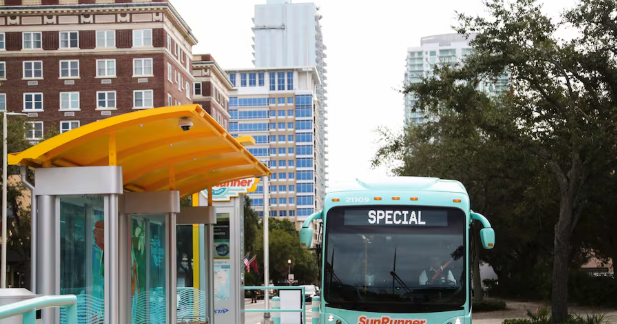
From the SunRunner Bus Rapid Transit line that stretches from the downtown waterfront to the beach to the more recent Spark buses connecting Eckerd College and the Skyway Marina District to the beach and downtown, PSTA’s partnership with the city has produced remarkable success stories that other communities would envy. When government agencies work together for a shared purpose, good things happen that attract new residents, jobs and businesses.
Now the partnership between the PSTA and St. Petersburg is on the verge of another significant accomplishment. The City Council will consider zoning changes in April along the SunRunner route, the county’s highest bus ridership route. These changes have been in the works since the SunRunner began more than three years ago, and the idea is to encourage smart development along the route accessible to all SunRunner riders who are moving around St. Petersburg without cars.
For example, the zoning changes should encourage developers to create more types of housing, restaurants, retail stores and other services along the SunRunner corridor. The proposed zoning changes allow for more flexibility in density, height, building setbacks and parking in the corridor, which includes Central Avenue and First Avenues North and South. These sorts of transit zoning overlays are common in other major cities with robust transit systems, and this one in St. Petersburg should evolve over time.
There is one key provision of these zoning changes that the city should adjust now. While the overall proposal is a big step in the right direction, its off-street parking requirements should be revised to help ensure we meet our broader goals.
Parking requirements are little-known rules that force property owners and developers to include an arbitrary number of parking spaces regardless of actual demand. Most seem based on 1960s-era guesswork. Urban planning professor Donald Shoup, author of The High Cost of Free Parking, called them junk science akin to astrology.
I’ve seen firsthand the harm created by unreasonable parking requirements. When my wife and I began building a small rental unit in our backyard, contractors told us the city would require three parking spaces. We only own one car, and a large oak tree made this impossible. We eventually found an exemption, but this is not the way smart planning should work.
As Shoup observed, ample free parking comes at a steep cost. Parking requirements mean fewer housing units are built, and those that are built cost more. Each required spot can add over $200 to the monthly rent, whether residents use it or not.
Here’s the issue with the proposed zoning changes along the SunRunner corridor: The parking requirements are relaxed from the center line of First Avenue North to the center line of First Avenue South. While that’s a meaningful step, it creates an odd situation where the parcels directly across from SunRunner stations on First Avenues North and South will still be subject to the current parking requirements. So will parcels within the transit zoning overlay but more than a quarter mile from a station.
The city should make this easy fix before the City Council’s final vote in May: Remove parking requirements that are within the transit zoning overlay or within a quarter mile of a SunRunner station. This would ensure that land near high-quality transit can support transit-oriented development.
PSTA and the city of St. Petersburg are partners who have demonstrated we can achieve great things when we work together. We are close to another significant success with these zoning changes that will produce long-term benefits for SunRunner riders, property owners along the route and businesses and residents throughout the city. Let’s update our parking rules now to better ensure we achieve our common goal and encourage transit-oriented development that will boost the economy, benefit local entrepreneurs and businesses, and improve our quality of life in St. Petersburg.
Max McCann is a member of the Pinellas Suncoast Transit Authority’s board of directors and co-founder of Activate St Pete, a sustainable transportation advocacy organization. He lives in St. Petersburg.