
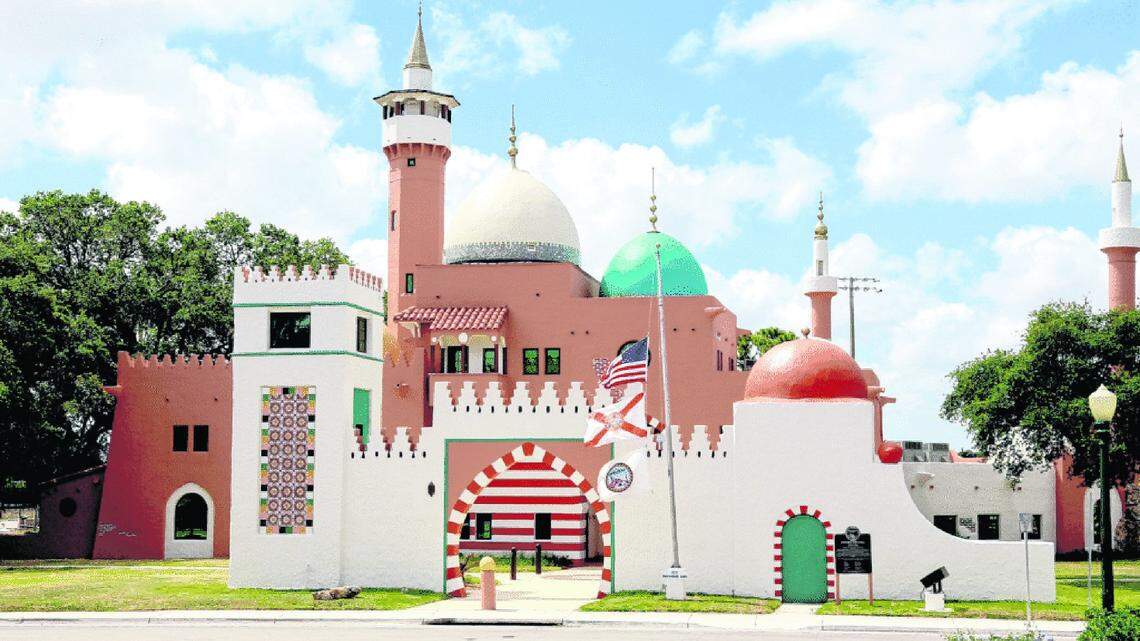
A photo of Opa-Locka City Hall. The historic building is designed in the style of Moorish Revival Architecture.
Miami Herald file
For the first time in its 100-year history, the city of Opa-locka marked Ramadan with a community dinner, bringing together Muslims and non-Muslims to celebrate and learn about Islam’s holiest month.
A group of about 60 people attended the event, hosted by the Coalition of South Florida Muslim Organizations (COSMOS), at Opa-locka’s Historic City Hall earlier this week. Attendees included representatives from the Turkish and Bangladeshi consulates, the Opa-locka mayor’s office and members of the Jewish and Christian communities.
Miami architect Asad Siddiqui spoke about the history of the Islamic-style architecture found all throughout Opa-locka. The city, founded by aviator Glenn Curtiss in 1926, has one of the largest collections of Moorish Revival architecture in the United States.
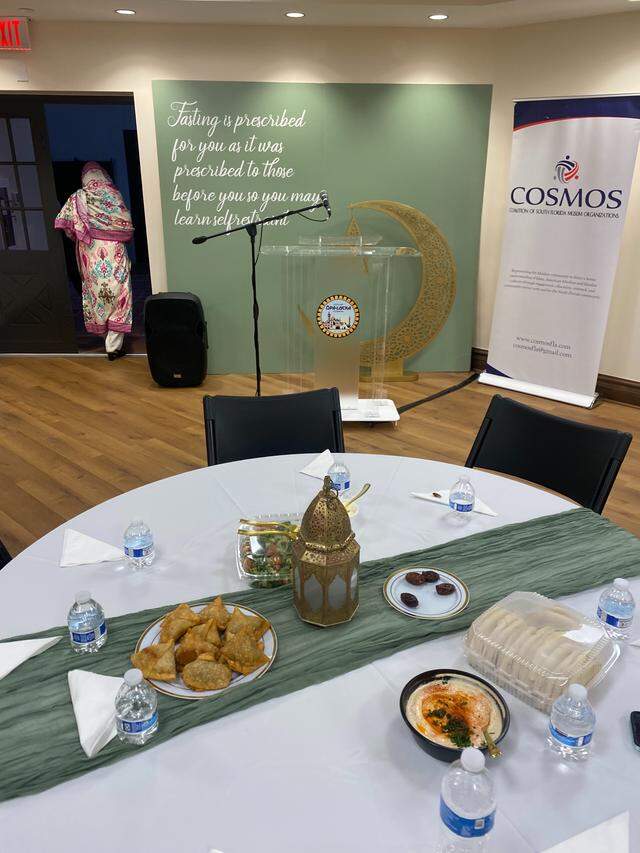 The city of Opa-locka hosted a Ramadan iftar dinner, bringing together Muslims and non-Muslims to celebrate and learn about Islam’s holiest month. Lauren Costantino
Iftar dinners are held during each night of Ramadan to mark the breaking of the fast over a large feast often shared with friends and family. The aim of the iftar dinners is to “break bread and build bridges,” said COSMOS president Tehsin Siddiqui.
More municipalities throughout Miami-Dade County are beginning to publicly recognize Ramadan as a holiday in an effort to show support for their Muslim residents.
On Tuesday, Miami-Dade County Mayor Daniella Levine-Cava spoke at a Ramadan dinner at the Islamic School of Miami in Kendall. Wearing a traditional headscarf, the mayor told the crowd that the county’s official buildings will be lit up in green on March 19, during the holiday of Eid ul Fitr “to demonstrate our unity,” she said. Ramadan began Feb. 17 and ends March 18.
Last month, the city of Coral Gables hosted a public Ramadan observance at its City Hall for the first time to mark the beginning of the Islamic holy month. The event included a proclamation from the mayor, remarks from community leaders, and a poetry reading reflecting on the meaning of fasting and reflection during Ramadan.
READ MORE: ‘A month of light’: FIU Ramadan dinner unites people of different faiths
Every year, two billion Muslims across the world observe Ramadan, which commemorates when the Qur’an was first sent down from heaven to guide people toward salvation.
Ramadan is the month that Muslims fast from food and drink from sun up to sun down in an effort to form a deeper connection with God, without the distractions of worldly temptations. The month concludes with a holiday called Eid al-Fitr, a joyous time that is akin to Christmas, but for Muslims, said Siddiqui at the Opa-Locka dinner.
But the month-long fasting period is also about connecting with family, community and prioritizing what’s important in life.
Fasting also “helps people to slow down and become more thoughtful and generous in their minds and daily living,” Siddiqui said. Ramadan is also a time when people are engaging in acts of service and charity, reminding us of our continuous responsibility to care for others.
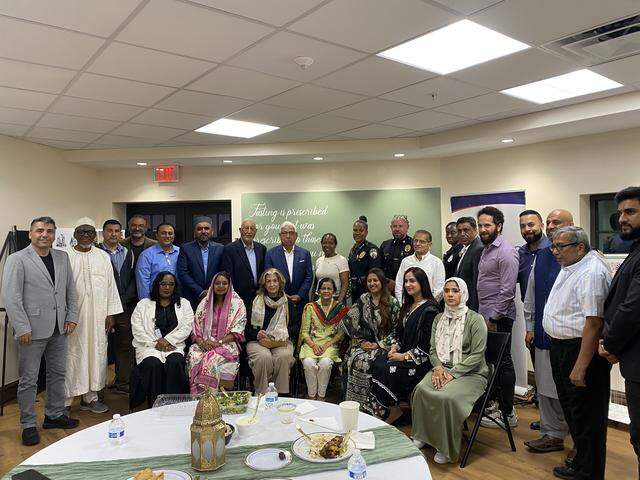 Attendees of Opa-Locka’s first ever city-sponsored Ramadan dinner pose together for a photo in City Hall. Lauren Costantino
This story was produced with financial support from Trish and Dan Bell and donors in South Florida’s Jewish and Muslim communities, including Khalid and Diana Mirza and the Mohsin and Fauzia Jaffer Foundation, in partnership with Journalism Funding Partners. The Miami Herald maintains full editorial control of this work.