
For years, calls to Hialeah City Hall and the Hialeah Police Department have told a familiar story. Residents, many of them elderly, describe deteriorating buildings, unresolved maintenance issues and condo boards they say are unresponsive, raising concerns about upkeep, financial reports, fraud and other potential misdoings.
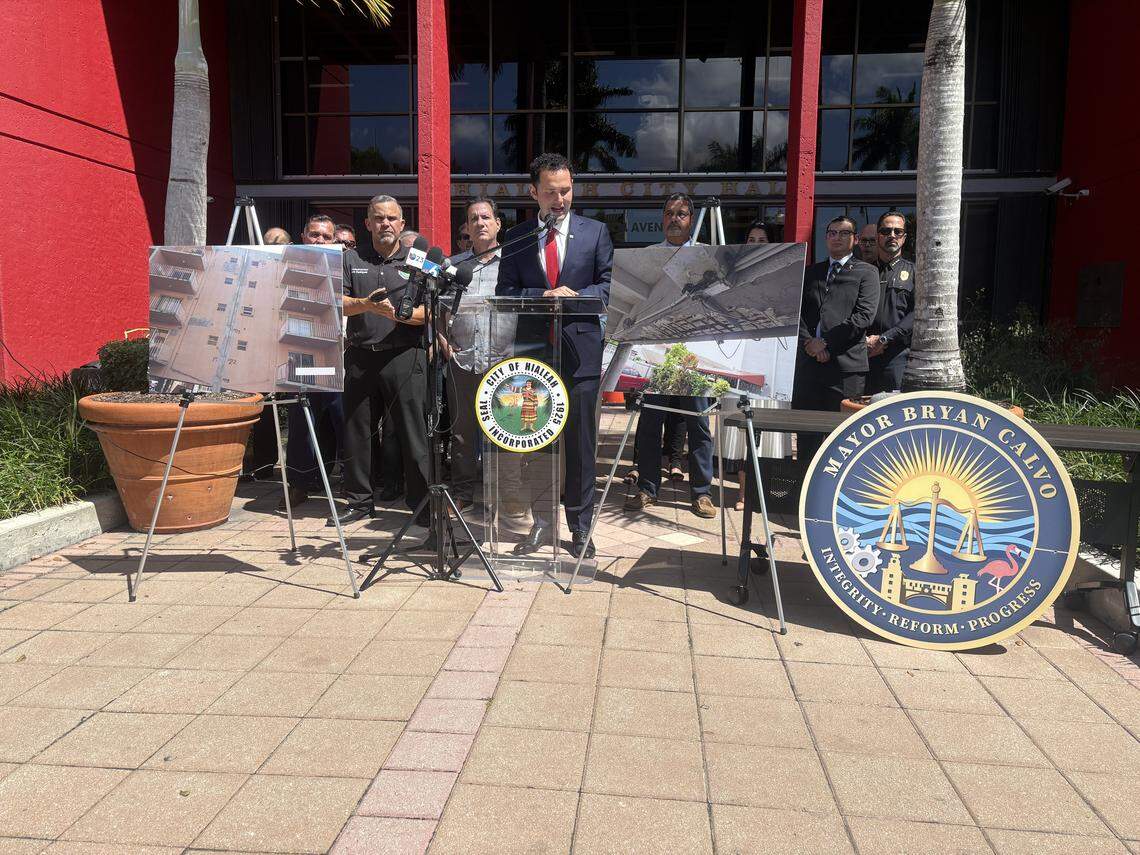
In response to growing concerns, Mayor Bryan Calvo signed an executive order Wednesday creating the Condominium and Homeowners Association Advisory Task Force — CHAT. The initiative, the mayor said at press conference to announce the creation of the force, is designed to help residents navigate disputes and connect with state regulators, providing guidance and support in situations where board mismanagement leaves residents at a disadvantage.
The scale of the problem in Hialeah is significant. The city is home to 26,055 condominiums, making it one of the most condo-dense municipalities in Miami-Dade County. Thousands of residents, many of them seniors on fixed incomes, live under the governance of boards that control the rules of their communities. When those boards fail, residents can find themselves trapped: unable to sell or to afford to skyrocket assessment fees, and unsure of where to turn.
The move was a direct response to what the mayor described as hundreds of complaints pouring into City Hall from residents frustrated by unresponsive, and in some cases corrupt boards.
Under Florida law, the Florida Department of Business and Professional Regulation is responsible for overseeing and policing condominium associations. But as many Hialeah residents have discovered, knowing that the state agency exists is very different from knowing how to use it. The path from complaint to investigation has often been unclear, slow, or simply unknown to the people who need it most.
That is the gap Calvo said CHAT is designed to close. The task force has two main goals: to launch an educational campaign informing residents about their rights and board election procedures, and to provide a direct line of communication between residents and state investigators.
The city will host an event on March 16 at Milander Center at 5 p.m. Residents of condominiums or homeowner associations will be able to meet directly with state personnel to file or discuss complaints, while city staff will be on hand to provide assistance.
Concerns over mismanagement and alleged corruption have emerged from multiple properties in the city, highlighting long-standing issues with oversight and transparency. Luis Pedraza has experienced those problems firsthand. The Hialeah investor owns several units in a condominium between West 34th and 36th streets.
Pedraza described what he called long-standing issues at the building.
“The corruption in this specific condominium has been going on for over three years,” he told the Miami Herald. “A woman positioned herself on a three-person board, and during that time there hasn’t been a single meeting, no elections, no updates, nothing.”
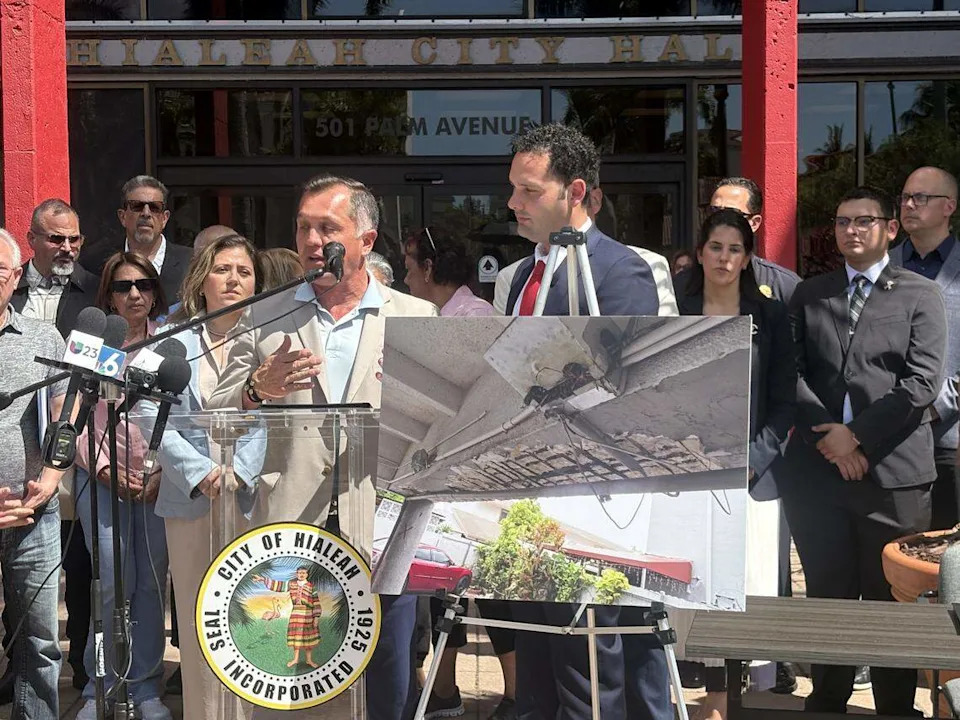
Luis Pedraza, an investor who owns several units in a building between West 34th and 36th streets in Hialeah, highlights concerns over mismanagement and alleged corruption in the city’s condominiums.
(Verónica Egui Brito/vegui@elnuevoherald.com)
He added, “They were always asking for increases in maintenance fees, increases, increases. She took out a loan without telling anyone for over $1 million. There are checks for more than $12,000 to her son, who is under 15, for picking up trash. We also have a number of checks made out to her husband for the same work, totaling almost $90,000.”
Pedraza said residents have repeatedly requested copies of financial documents, which they are legally entitled to receive. “What she’s doing is making a mockery of people,” he said, adding that 90 percent of the residents in those units are over 70 years old.
He attended a Hialeah City Council meeting the night before Calvo’s press conference to ask for help.
“We escalated the case to DBPR, Hialeah Police and Miami-Dade Police a year ago, and nothing has been done,” he said. “Meanwhile, the president of the board keeps asking for loans in the condominium’s name without any authorization from the property owners.”
The condominium where Pedraza owns units is just one example, the mayor said, of widespread issues involving malfeasance and mismanagement.
“Basically, you have property managers who are hired out and don’t care about the property. They’re just there to line their pockets. Deferred maintenance creates additional issues. Those are the most common complaints, but there are many more. It’s important to us to make sure these complaints don’t go unheard or unanswered,” he said.
In recent years, South Florida has seen a string of fraud cases related to homeowner associations come to light, including a lengthy criminal investigation into the leadership of The Hammocks community in Miami-Dade, which resulted in several arrests. The cases underscored that homeowner association boards, which wield enormous power over residents’ daily lives and finances, can operate for years with minimal scrutiny.
Despite the creation of the new task force, the authority to investigate and penalize mismanaged boards remains with the state, and if issues rise to criminal activity, Hialeah Police may become involved. But residents like Pedraza, and others who say they have felt invisible in their own buildings for years, see the promise of a direct line to help as a step forward.