
Editor’s note: This editorial has been updated from the print version to reflect the final status of bills that died after our print deadline for the Saturday edition.
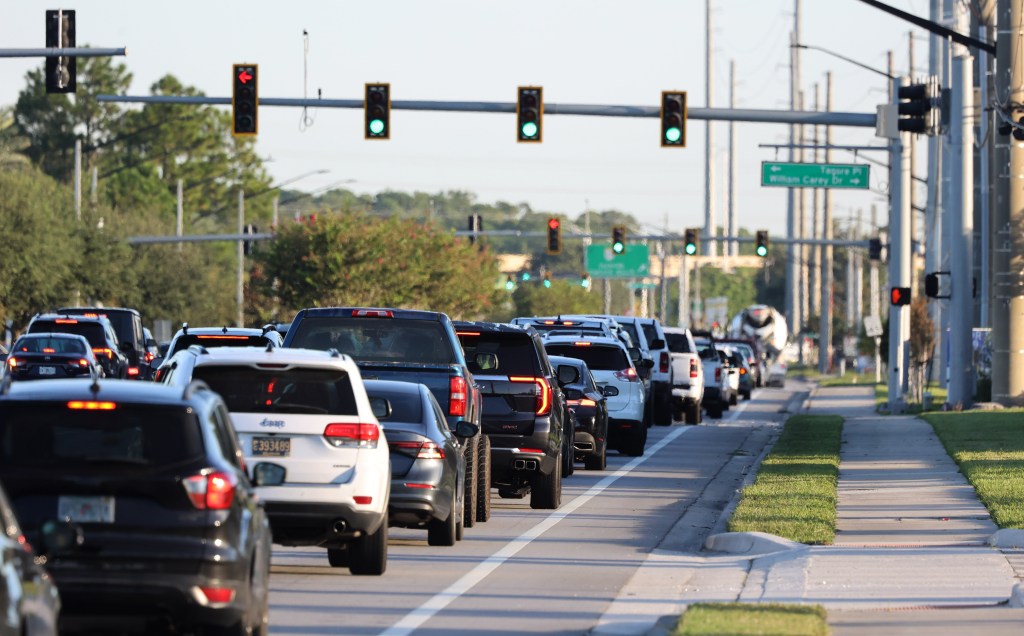
Before a 2022 vote on a proposed sales surtax that would have given Orange County the money it needed to improve public transit, quell this area’s ever-growing danger to bicyclists and unsnarl several of Central Florida’s most congested roadways, County Mayor Jerry Demings asked a prophetic question:
“If not now,” he said, “when?”
That question drew a depressing answer earlier this month: Maybe never. Almost certainly, a long time. Residents of this county — and other counties that couldn’t secure additional sources of revenue to deal with the inevitable impact of growth and Florida’s increasingly unhinged Legislature — can expect things to get a lot worse before they get better.
We can’t fault the County Commission for rejecting a last-ditch plan to put another sales surtax on the November ballot — something they also considered in 2024. The plan the commission discussed at its March 2 meeting was a solid start, envisioning a one-penny surtax that would raise about $758.6 million a year, with almost 90% of its proceeds coming from visitors to Orange County. It would have addressed multiple needs that appeal to local voters, including transportation, affordable housing and environmental preservation.
In more rational times, it probably would have passed easily.
These are not rational times.
This year, any attempt to raise money for local needs will almost certainly go down in flames, thanks to the irresponsible war that powerful Tallahassee interests have launched on Florida’s local governments.
Meanwhile, county officials will need to save all their firepower to fight a ruinous plan to slash funding the county depends on for essential functions like emergency services. They don’t know what that proposal will look like, but they can rest assured that the backers of the plan, including Gov. Ron DeSantis, will fight dirty to get this on the ballot and then approved.
A war of mass distraction
In fact they’ve already started. In recent years, lawmakers have worked to strip cities and counties of the ability to manage their own growth without straining local resources, including schools, roads, city and county services and utilities. But that’s just one shoe dropped. The double whammy is likely to arrive later this year: Another ballot question, this one statewide, that would sharply reduce the amount of property taxes flowing to cities and counties. Lawmakers failed to pass a plan during the session, but DeSantis plans to call them back.
Rancor among Republicans doomed property tax plan
If the statewide property-tax cut tax makes the ballot, it seems likely to pass — even though it would exacerbate tax-fairness problems across the state. The only plan that’s been approved so far (and that died at the end of the regular session, though it could easily be revived) would erase non-school property taxes for all homesteaded properties in the state. This would obviously provide the biggest benefits to owners of pricey McMansions in gated communities, which could see tax breaks tax savings up to thousands of dollars per household. Meanwhile, it would do very little for owners of inexpensive homes, and could actually put more of a burden on people who must pay rent (and whose landlords might see their property taxed at a higher level to make up some of the tax lost from homeowners).
This may not be the break that is finally approved when DeSantis calls the Legislature back in session to deal with it. But it’s clear that the state’s GOP leaders intend to push forward with some kind of property tax giveaway — one that makes them look tough on taxes without reining in their own extravagant spending.
The underhanded plan
The way this plan was launched speaks volumes. Over the past several months, former State Sen. Blaise Ingoglia (who is currently filling in as Florida’s chief financial officer) barnstormed the state bragging of “proof” that local governments were wasteful and overspending. He kicked off his campaign in Orange County, lucky us — and it was immediately apparent that he could not cite a single example of actual waste. Instead, he babbled off a cockeyed formula that claimed to track spending against population growth, using bogus numbers and ignoring other factors, including COVID and spending demands that had been dumped on cities and counties by state government.
It seems obvious that Ingoglia didn’t really set out to prove anything. Instead, he was focused on ginning up the myth that city and county governments were wasteful and bloated — encouraging Floridians to underestimate the impact of a giant property-tax reduction. Yet leaders in the House and Senate have dutifully parroted his claims as if they were based on actual math.
Doesn’t matter. Any proposal to increase taxes on that same November ballot — however justified — is almost certainly doomed, and might even add to the miasma of faux outrage that’s already surrounding the statewide tax cut.
Outrage and falsity
One thing is becoming clear. The people in charge of Florida government — which is top-to-bottom controlled by extreme elements of the GOP — are determined to turn this state into California, where voters are duped into supporting an endless stream of short-sighted tax cuts. Any suggestion of a cohesive, equitable tax policy in Florida has been shredded by petty partisanship, deceitful tactics and fake populism. And there’s a bonus. Making city and county leaders struggle to fund basic services will undermine their ability to say “no” to powerful landowners and developers who want to pave the remaining scraps of Florida’s wilderness.
Editorial: Floridians deserve to know what’s on the block with massive tax cuts
This isn’t about tax reform, or even tax relief. If so, the help would be going where it is needed most. Yet DeSantis and legislative leaders haven’t even glanced in the direction of meaningful changes that would require Florida’s wealthiest corporations to pay their fair share, and reduce the burden on the struggling class of workers who make this state’s economy hum.
And it’s definitely not about local budgets gone out of control. Demings and other Orange County leaders — along with elected officials in Florida’s 66 other counties and hundreds of cities and towns — don’t get to hide in Tallahassee when they make their spending decisions,. Meanwhile, Ingoglia has flatly ignored the way the state’s $117 billion budget keeps swelling, or the millions that DeSantis has wasted in foolish political stunts.
Who will pay?
This is a political game that carries a terrifying penalty: Lawmakers’ schemes to gut local governments’ ability to combat urban sprawl fell short this session. But they will likely come back , all but guaranteeing a rush of new development that would demand even more miles of roadway and other amenities. But they’re also planning to starve cities and counties of the revenue they’ll need for things those new residents will need, such as parks, environmental cleanups, code enforcement and youth sports leagues.
Throwing a local sales surtax onto the ballot on this atmosphere would be like dumping chum into shark-infested waters. Orange County leaders were right to pull back on a surtax — not because the revenue isn’t needed but because it’s the only rational response to irrational times.
The Orlando Sentinel Editorial Board consists of Opinion Editor Krys Fluker, Executive Editor Roger Simmons and Viewpoints Editor Jay Reddick. Use insight@orlandosentinel.com to contact us.