
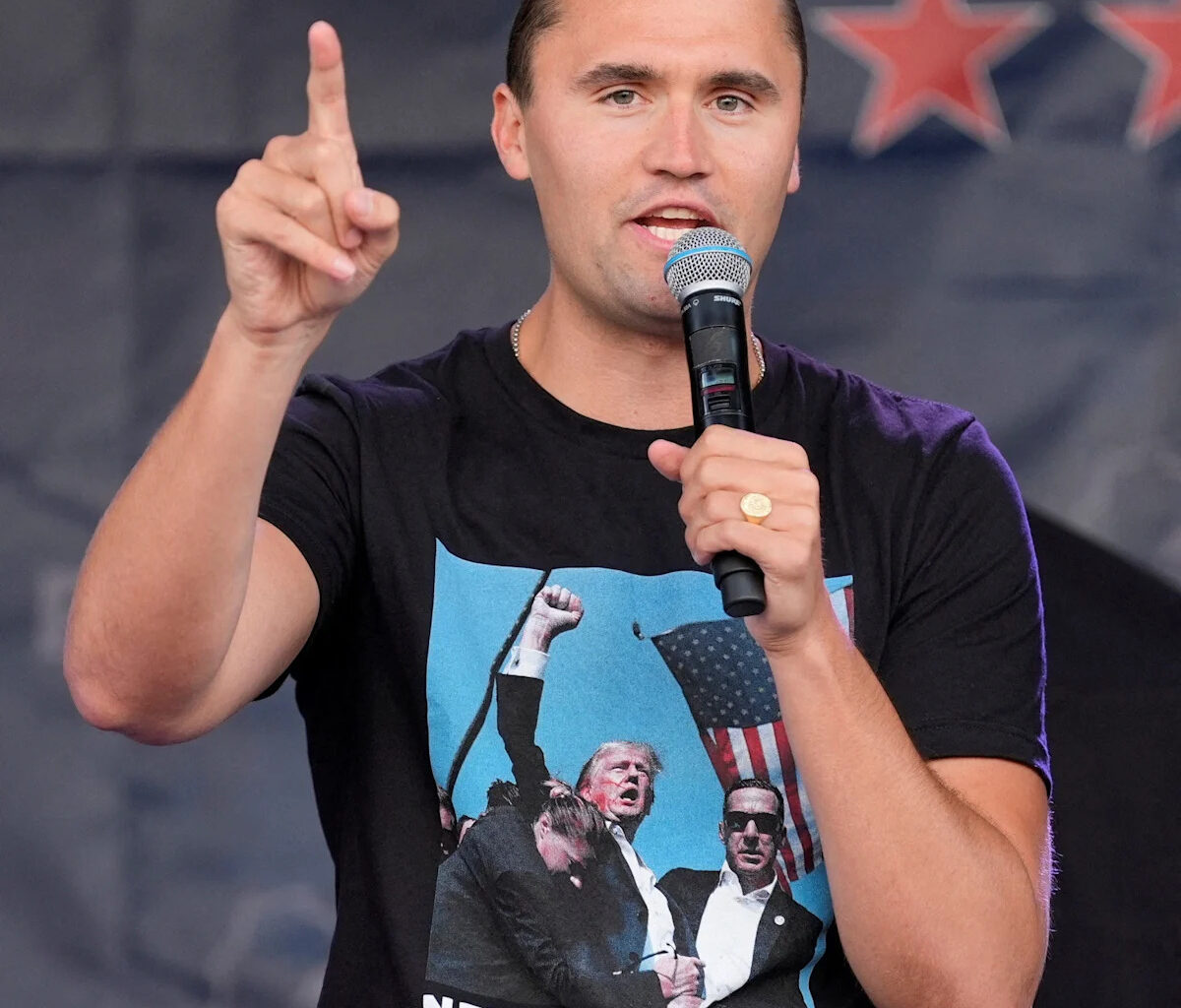
How bad is the state of higher education in Florida? So bad that even the lawmakers have gone quiet.
Let us explain. In the days following conservative activist Charlie Kirk’s assassination in September, a small number of university professors took to social media to criticize Kirk. Some did so with delicacy and care. Others were much more inflammatory.
Either way, many elected officials, often egged on by conservative influencers and commentators, called on universities to punish these professors or else face retribution.
Unlike other states, Florida’s critics of Charlie Kirk were muted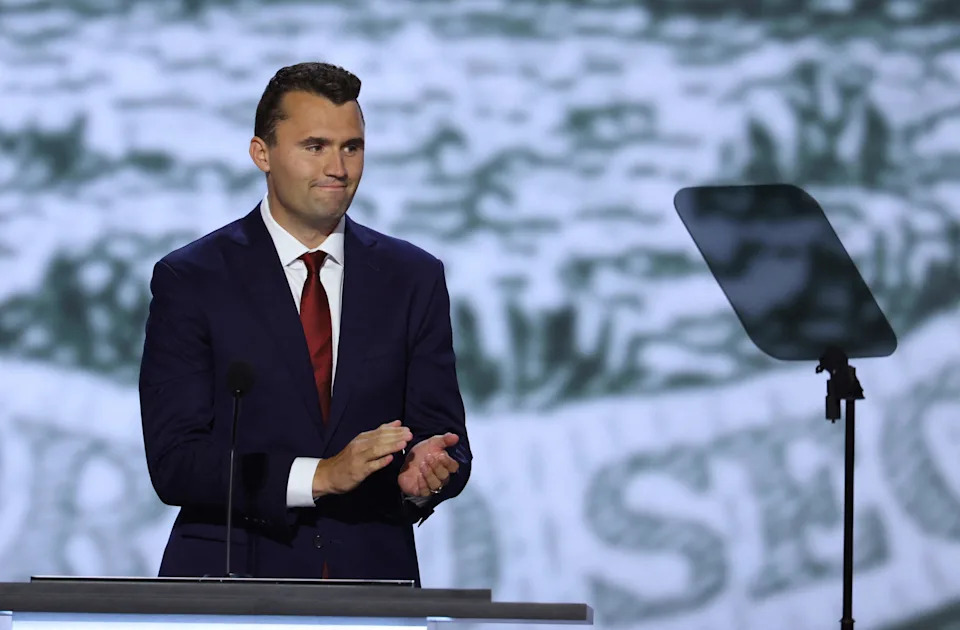
Charlie Kirk addresses the Republican National Convention in Milwaukee on July 15, 2024.
For example, in Tennessee, a state lawmaker vowed to cut off East Tennessee State University’s access to federal funds if it did not fire a professor accused of celebrating Kirk’s death. A congresswoman from New York leveled a similar threat at Syracuse University.
The South Carolina Freedom Caucus, a group of conservative lawmakers in the legislature, announced its intention to defund Clemson University because of what three of its faculty members had said on social media. And because an Emory University professor posted “Good riddance” beneath a Facebook post announcing Kirk’s death, at least one federal politician vowed to see to it that Emory is stripped of every federal contract it holds.
All of these faculty were punished.
Opinion: Texas A&M just decided an ancient philosopher is too woke to teach
This is where Florida stands out. In Florida, there were no threats – no public ones, anyway. In the end, four professors were punished for Kirk-related social media speech (a fifth resigned under enormous pressure), but at no point did any lawmaker or elected official articulate a public threat or ultimatum demanding they be punished.
That’s strange. You’d think that if any state’s politicians would race to make political hay out of faculty speech, it would be Florida’s. Instead, it was the complete opposite.
That’s alarming. Because it’s quite likely those conversations are happening. They’re just not happening in public. We believe we know why.
Politicians, not academics, run Florida’s universities
The leadership of Florida’s 12 public universities is more politicized than that of any other state in the country. Four are led outright by former Republican state lawmakers: Jeanette Nunez (Florida International University), Richard Corcoran (New College of Florida), Adam Hasner (Florida Atlantic University) and Manny Diaz Jr. (University of West Florida).
A fifth, Florida A&M University’s Marva Johnson, is a close DeSantis ally who served on his gubernatorial transition team. Overseeing them all is Ray Rodrigues, chancellor of the State University System of Florida and the former House majority leader.
All are Republican.
This makes Florida a true outlier. In our research, we have found no other public university system in the country where former elected officials hold so much power.
For instance, neither Tennessee nor South Carolina – two states that led the jawboning charge following Kirk’s fatal shooting – have any former lawmakers at the helm. Nor do Mississippi or Alabama, where politicians were vociferous in calling for the punishment of faculty. Looking at other public university systems in the South, North Carolina, Virginia and Kentucky don’t, either.
Opinion: You’re not always right. The sooner you realize that, the better off we’ll be.
Even in Texas, we see something different
And for the record, our examination of three of the largest state university systems – the State University of New York, the University of California and the California State University, which happen to be in “blue states” – confirmed that experienced academics, not politicians, are consistently chosen to lead.
Even in Texas, where politicians seem determined to exert ideological control over university curricula, what we see is something quite different.
Opinion alerts: Get columns from your favorite columnists + expert analysis on top issues, delivered straight to your device through the USA TODAY app. Don’t have the app? Download it for free from your app store.
While former politicians, like Brandon Creighton, now serve as chancellors of each of Texas’ five public university systems, universities themselves are largely led by career academics. Only one, Texas A&M University, has a former lawmaker for a president, and only on an interim basis. The previous president stepped down after an egregious case of social-media jawboning in September.
In the ranks of American higher ed, Florida seems to stand apart. Or perhaps it’s at the forefront of changes to come. This dynamic has two major consequences.
First, it means that Florida’s universities are much more likely to be led by people who think like politicians. That means they are sensitive to public opinion, wary of angering lawmakers and dismissive of those who challenge their authority.
Second, it means that when an outraged lawmaker wants to give the university an earful (a tale as old as time), that lawmaker doesn’t have to use X or Facebook. They don’t need to. They can expect that the university president is already on the same page and willing to act in precisely the way the lawmaker wants, if given the opportunity.
Charlie Kirk remembered in memorials: Conservative activist was shot while speaking in Utah
1 of 22
Supporters visit a memorial for Charlie Kirk at the Turning Point Headquarters in Phoenix on Sept. 11, 2025.
When a politician publicly threatens a university or browbeats its leadership, we are accustomed to seeing that as a sign of strength. In the days after Kirk’s assassination, U.S. Sen. Marsha Blackburn, R-Tennessee, made it virtually a pastime.
In reality, publicly attacking a university is more bluster than blunt force. It’s what politicians do when they don’t already have a university president on speed dial.
Suppressing free speech can be done quietly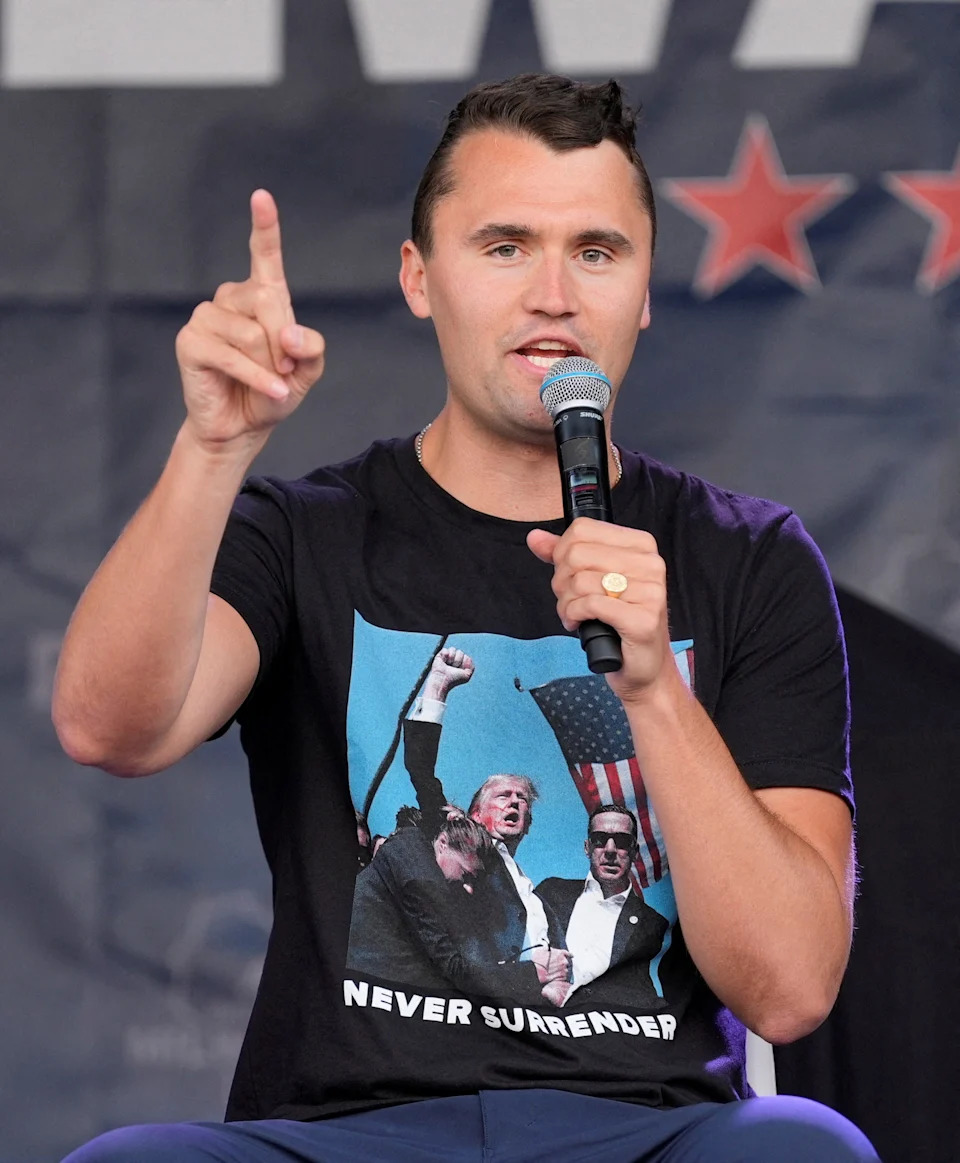
Conservative activist Charlie Kirk, wearing a shirt depicting Republican presidential nominee Donald Trump reacting defiantly after his attempted assassination, addresses supporters in Milwaukee, Wisconsin, on July 17, 2024.
Real power is discrete. Or, more precisely, it is unnecessary to exercise publicly because the university president is already part of the club.
Faculty in Florida were punished for their social media posts about Kirk, just as they were in other states, but what sets Florida apart is the fact that universities seemed to act without external pressure. That doesn’t mean the politicization of universities isn’t deeply concerning.
Rather, political power in Florida has been hardwired into the administrative structure of higher education, allowing politicians to pull the levers of ideological enforcement without needing to climb atop a social media soapbox.
What does ideological control of higher education sound like? In Florida, it sounds like silence.
Jeffrey Sachs is a senior analyst at PEN America, a nonprofit devoted to protecting free expression. Amy Reid is the program director for PEN America’s Freedom to Learn program.
You can read diverse opinions from our USA TODAY columnists and other writers on the Opinion front page, on X, formerly Twitter, @usatodayopinion and in our Opinion newsletter.
This article originally appeared on USA TODAY: Politicians run Florida colleges so we don’t see dissent | Opinion