
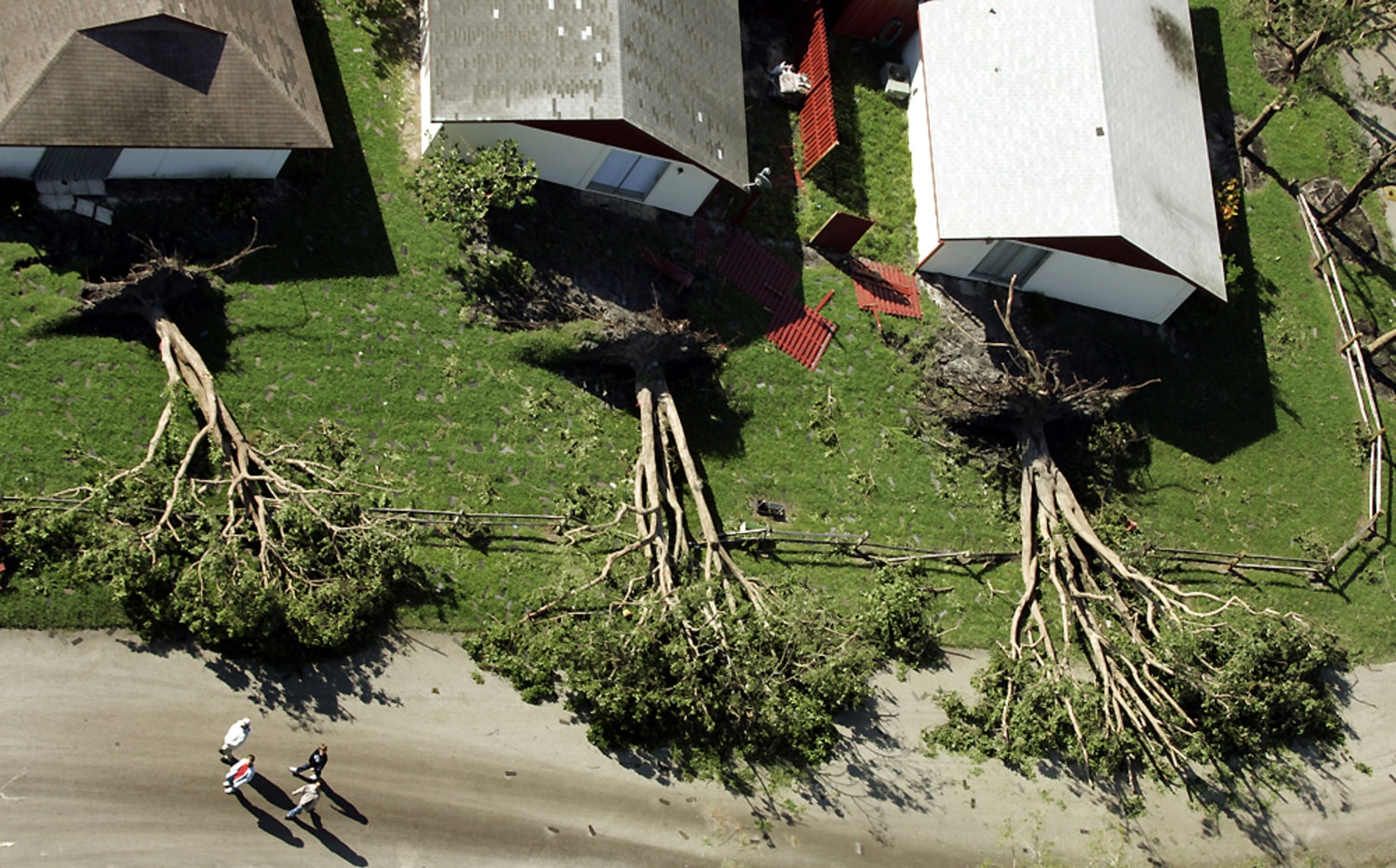

20 years ago today, on October 24, 2005, Hurricane Wilma made landfall near Cape Romano, Florida, as a Category 3 hurricane with sustained winds of approximately 120 mph (195 km/h). It carved a path across the Florida peninsula, leaving behind a trail of destruction: over 3 million homes lost power, major agricultural losses, massive infrastructure damage and a damaged economy.
At the time I was a Delray Beach resident and can attest nothing was the same after the storm.
Twenty years later, the physical wreckage is gone—but many of Wilma’s lessons live on.
What Changed: Infrastructure and Resilience
One of the key long-term effects of Wilma is how it forced Florida’s utilities and emergency systems to rethink resilience. For example, the state’s largest electric utility, Florida Power & Light Company (FPL), noted that Wilma was a turning point.
FPL invested more than $5 billion in grid hardening post-Wilma: upgrading poles, reinforcing lines, installing rapid assessment systems.
Some policy changes: After Wilma, South Florida required backup generators for gas stations and grocery stores.
The storm also underscored vulnerabilities in coastal communities and mobile-home parks—leading to stricter building codes, more awareness of storm surge risks and better evacuation planning.
In other words: while Wilma wreaked havoc, it also helped spark improvements that might save lives (and money) in subsequent storms.
The Lingering Wounds
But resilience isn’t the same as recovery, and two decades on, Florida still carries scars from Wilma:
Agriculture: The citrus, sugarcane and nursery industries took heavy hits. Wilma’s timing and path compounded cumulative damage after prior storms. In fact citrus production has never returned to pre-storm levels and sugar had a crisis between 2005 and 2009 or so due to the damage from multiple storms that culminated with Wilma.
Communities: Many routine services—from power to traffic signals—were knocked out for days or weeks. Some neighborhoods never fully returned to “pre-Wilma” normal for years.
Mindset shift: Floridians who lived through it often say Wilma changed their relationship with hurricane season: the back-side winds, the sudden eye passage, the wide damage footprint. One local recalled: “We lost our roof… three weeks without power.” (Reddit)
What It Means Today
In 2025, as researchers and residents look ahead to stronger storms because of climate change, Wilma serves as both cautionary tale and benchmark. A few key take-aways:
Preparedness matters: Wilma cut across Florida quickly, showing how fast major damage can arrive—even for a “just” Category 3 landfall.
Infrastructure is only as strong as its weakest link: Even well-built communities suffered because of interconnected failures (e.g., power, communications, fuel).
Recovery takes time: Two decades on, the improvements are real—but so were the losses. Some neighborhoods and industries still carry Wilma’s legacy.
Storms will come again: Florida has since experienced many hurricanes, but Wilma’s wide footprint and rapid damage serve as a reminder of what’s possible.
Personal Experiences
As I mentioned at the time of Wilma’s passing I lived in Delray Beach. In advance of the storm, my wife, myself and our three animals (two cats and a dog) evacuated to my parent’s house in Coral Springs. But because Wilma was coming from West to the East, we actually experienced the center of the storm- the eye interacting with us and people left their houses to check in on one another during the eye’s 10 minutes passing of calm.
The aftermath of the storm was horrible. Everyone had lost power and would in fact be without power for weeks. Traffic seemed worse than ever after the storm and it really never got better. Wilma was an experience, a turning point in south Florida.
Related