
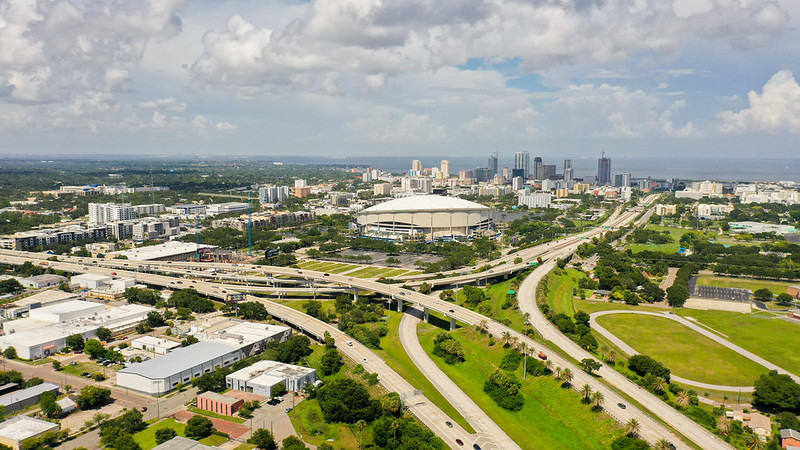
Retail investors continue to view the Tampa-St. Petersburg region as one of the strongest markets in the United States.
A new retail investment forecast from Marcus & Millichap ranks the metro sixth nationally, highlighting the region’s population growth, limited retail construction and steady consumer spending.
The ranking covers the broader Tampa-St. Petersburg metropolitan area, which includes St. Petersburg and much of Pinellas County.
For St. Petersburg, the report reinforces trends already visible across the city. New residents continue moving into the area, while retail construction has remained relatively limited. That imbalance has helped keep storefront demand strong even as national retailers navigate bankruptcies and shifting consumer habits.
Marcus & Millichap projects the metro will add roughly 10,000 jobs in 2026. That represents slower growth than in recent years, but still exceeds the national average.
The study also notes that retail construction across the region remains constrained. Inventory growth is forecast at just 0.4 percent in 2026, making it one of the slowest development periods for the market since before the Great Recession.
Limited supply is helping maintain tight market conditions.
Even with vacancy expected to rise slightly, the report projects the retail vacancy rate will end 2026 around 4.1 percent. That remains below the metro’s long-term average. Average asking rents are forecast to reach about $23.70 per square foot.
Those fundamentals have kept the Tampa-St. Petersburg region attractive to investors.
Across Florida, several metros ranked near the top of the national retail investment index. Alongside Tampa-St. Petersburg, markets such as Miami-Dade, Fort Lauderdale, West Palm Beach and Orlando also appeared in the top tier.
The concentration reflects broader population and economic growth across the state.
For St. Petersburg, the retail environment continues evolving alongside new residential development. Downtown St. Petersburg has seen thousands of new apartment and condominium units added over the past decade, while mixed-use projects have expanded along major corridors including Central Avenue and the City of St. Petersburg’s broader downtown district.
That growth has created additional demand for restaurants, neighborhood services and lifestyle retail close to where people live.
Many of the tenants expanding in urban areas like St. Petersburg are service-oriented businesses such as fitness studios, medical providers, personal services and experiential concepts. These types of retailers tend to be less vulnerable to online competition than traditional merchandise stores.
Marcus & Millichap says those categories are expected to remain important drivers of retail leasing in the coming year.
The report also suggests that investors continue targeting Sun Belt markets where population and household formation remain strong. Florida, Texas and the Carolinas have become especially attractive destinations for retail capital.