
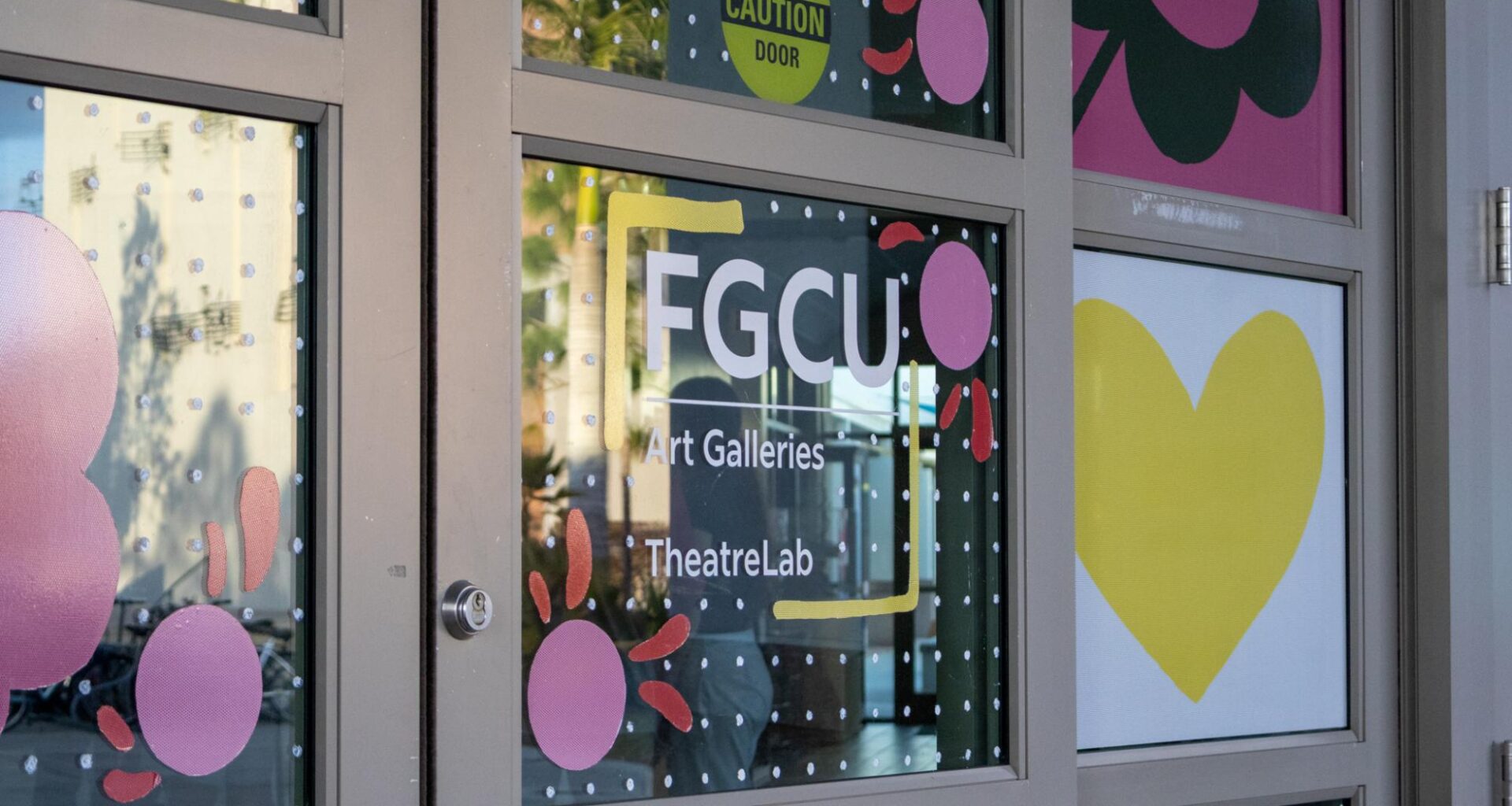
Hidden inside the FGCU Bower School of Music and Arts complex, the theatre program creates a new world for students to escape to.
The escape materializes as a black box theater. This theater is a room painted black from floor to ceiling. A black box theater can be transformed into alternating realities by sets, lighting and music to immerse an audience.
Past the theater and through the winding hallways of the complex, there are rooms with dance floors and mirrors covering the walls.
“Theatre is a direct interface with members of the community, who come to campus expressly to see some of our arts-based programming,” theatre program coordinator and professor Dan Balazco said. “We produce a variety of shows, but always keep in mind the important question of “Why This Play Now?” In other words, how might it resonate with our audiences, our students, and with events happening in the world today?”
Story continues below advertisement
The FGCU theatre department offers a minor or a BA in the program. Its enrollment of 50 students is what makes this program different from others at the university
“I loved how close-knit the program was, and I loved that it wasn’t competitive within the program itself. You get lots of support from peers and faculty,” junior Faith Angles said.
Balazco explained that he enjoyed spending so much time with the students, creating a real mentorship dynamic rather than only seeing a student in your class once. However, with so few students circulating the program, it can be difficult to source appropriate necessities to learn effectively, due to lower funding.
The funds distributed by FGCU for the department are largely based on donations given, and the theatre department only has a single stream. This is a recurring donation from Lee and Gene Seidler, which last year allowed students to receive scholarships and have guest lecturers.
It is important to note that the theatre donations received are not exclusive to the theatre department and are spread out through different programs at FGCU, including the study abroad programs and undergraduate fellowships.
With the funding provided, the spaces available for students to learn are reportedly insufficient.
“We don’t have a suitable space for theatre, believe it or not. Our black box was originally made for the music school, and some of our rooms are recording studios,” Angles said. “There is a lot of work to be done on this program to help it function, but we do what we can.”
There are no plans to upgrade the department’s utilities, and none have been made in the past 10 years.
“We really need an upgrade to our performance space. While there are plans to fundraise for expanded theatre facilities, there are some needed improvements that we’re looking into for our current black box theatre, to better serve the needs of our students and the program as a whole,” Balazco said.
Students in the program are required to be involved in at least two shows to graduate, but many take on roles for the experience.
On average, around 20 people work on a single production. The students who work on a show commit up to 175 hours. These hours span over a two-month process.
Within “She Kills Monsters,” the current show in the works, two students are paid and one is a WiSER program-funded research assistant under Balazco.
Junior Elizabeth Wilke has attended almost every play the theatre program has produced in the past two and a half years.
“I wasn’t really into theatre before going to see the shows here with my roommate to support her,” Wilke said. “So, it’s been a really good introduction.”
Wilke has gotten her friends and coworkers to join her at these shows, and the overall reaction is always positive.
“I’ve definitely spread the word, I think it’s a really awesome way to get involved with the art space at FGCU because as a Water School student, I don’t really spend a lot of time there. So, I like to share the experience with other people who wouldn’t typically go there, too,” Wilke said.
Over the past semester, Wilke has noticed some changes that have been implemented.
In the play “The Skin of Our Teeth,” which ran from Nov. 7 to Nov. 16, the director and FGCU theater professor, Barry Cavin, incorporated the use of Artificial Intelligence.
The AI was used to generate a montage of clips, which were spliced together and replayed on a small screen at the corner of the stage.
“To do what I did would require an entire production and illustration artists and we didn’t have the budget or ability to hire such for these shows,” Cavin said.
For centuries, art has been a tool of expression and representation. Brielle Midler, an actor who has been part of the program for three years, agrees.
“I think we need to consider getting more funding and promotions for our program,” Midler said. “A bigger theater would be such a great idea that the school should consider. Or let us use the proscenium theater in the music school. Everyone in the department works extremely hard in everything they do, and I think the program deserves more credit and recognition.”
For more information about the theatre department and upcoming shows, visit its website fgcu.edu/theatrelab/.