
By Issabella M. Gutierrez
In the last decade, extreme weather has become a greater economic liability for Florida farmers. From freeze-damaged crops to hurricane losses and rising insurance premiums, increasingly volatile conditions are reshaping agriculture’s financial foundation in a state that produces more than 300 commodities.
Farmers and agricultural leaders say these events are part of a pattern disrupting both production and long-term viability.
“Agriculture is affected by climate change, and it’s a major threat multiplier because it disrupts production,” said Ernest Shea, president of Solutions from the Land, a nonprofit group that promotes sustainable farming practices to address environmental challenges. “It’s become increasingly obvious that the frequency of abnormal weather and extreme weather is rising.”
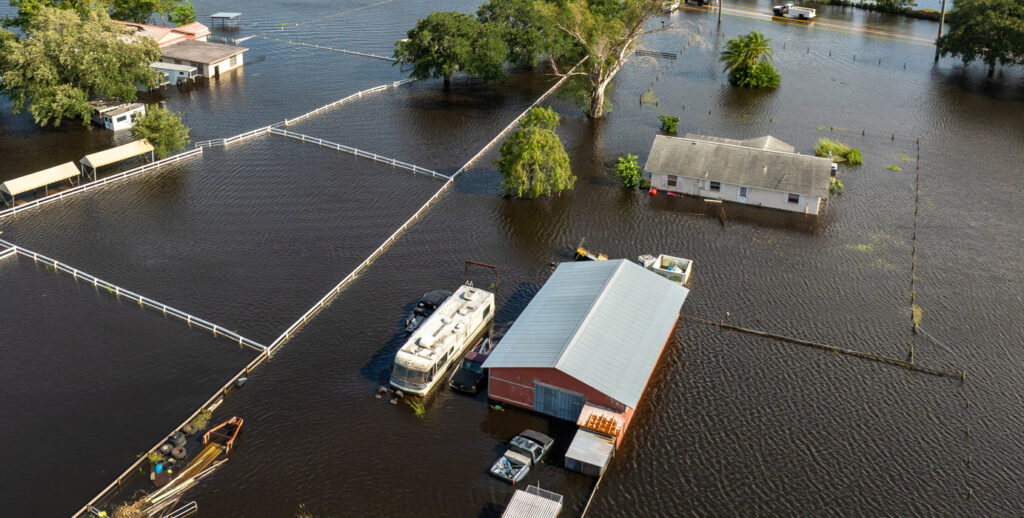 Flooded rural land following Hurricane Debby (iStock image)
Florida’s average annual temperature has increased by 3.5 degrees F since 1950, according to the Florida Climate Center at Florida State University. The state is experiencing more extreme heat days and more frequent heavy rainfall events — trends that have contributed to significant harvest losses in recent years.
For specialty growers, including those who plant fruits and vegetables during the state’s mild winters, climate volatility can be especially costly. A freeze can destroy an entire harvest. A false spring can disrupt pollination. Intense rainfall — dropping 4 to 6 inches in less than an hour — can flood fields, erode soil and wash away expensive fertilizers.
“The water management systems and soil conservation practices that we’re using today were designed to meet conditions 20, 30, 40 years ago,” Shea said. “They’re not designed to deal with the conditions of today.”
Crops such as citrus, berries and leafy greens are among the most vulnerable. Citrus acreage has declined in recent years, and other sectors could face similar pressures if crop losses persist.
Fruits and vegetables often lack strong risk management tools compared with other agricultural sectors, said Rachael Smith, communications director for the Florida Farm Bureau, the state’s largest agricultural advocacy group.
Saltwater intrusion presents another challenge, altering soil chemistry and forcing farmers to reconsider which crops they can grow. Heavy rainfall also increases nutrient runoff, contributing to declining water quality.
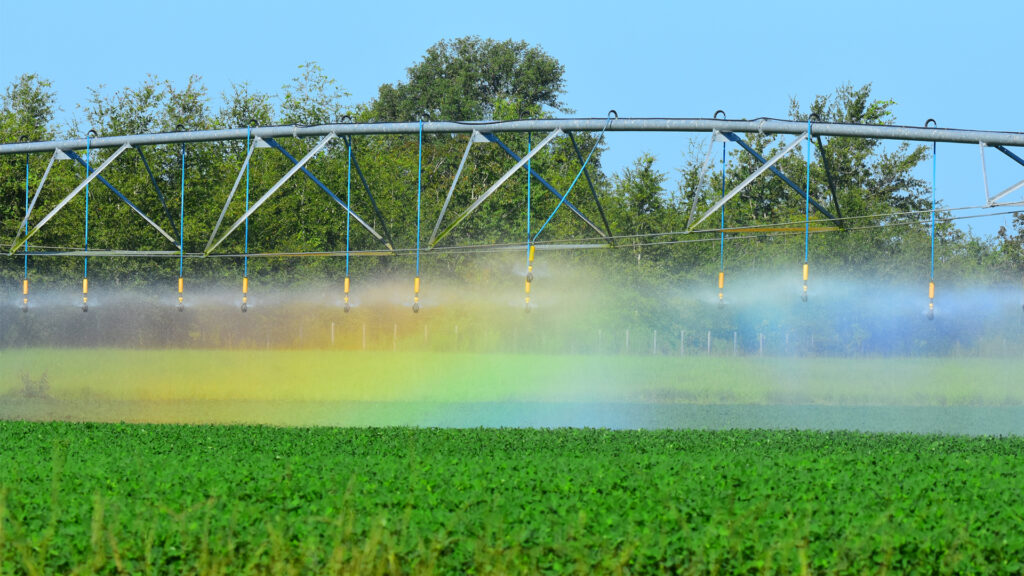 Circular irrigation in use on crops in Madison County − a water-intensive system that relies on groundwater pumping. (iStock image)
Rising temperatures intensify competition for limited water resources, increase irrigation demand and raise operating costs.
“Farmers farm because they love what they do, but it’s a business, and they have to make a profit,” Shea said.
Major storms have driven up insurance rates, and in high-risk areas, including Tampa, securing coverage has become more difficult. Federal disaster relief and crop insurance programs provide support, Smith said, but they “rarely make producers whole.” In severe years, those payments can determine whether farms continue operating or shut down.
Florida’s rapid population growth further intensifies competition for land. If farms become unprofitable, agricultural acreage is often converted into residential and commercial development, reducing the state’s capacity to produce food and fiber.
Shea described climate pressures as an economic force multiplier.
“If you’re not economically viable and you go out of business, that land is likely going to turn into something else,” he said.
In response, farmers are adopting practices designed to reduce long-term costs and improve resilience.
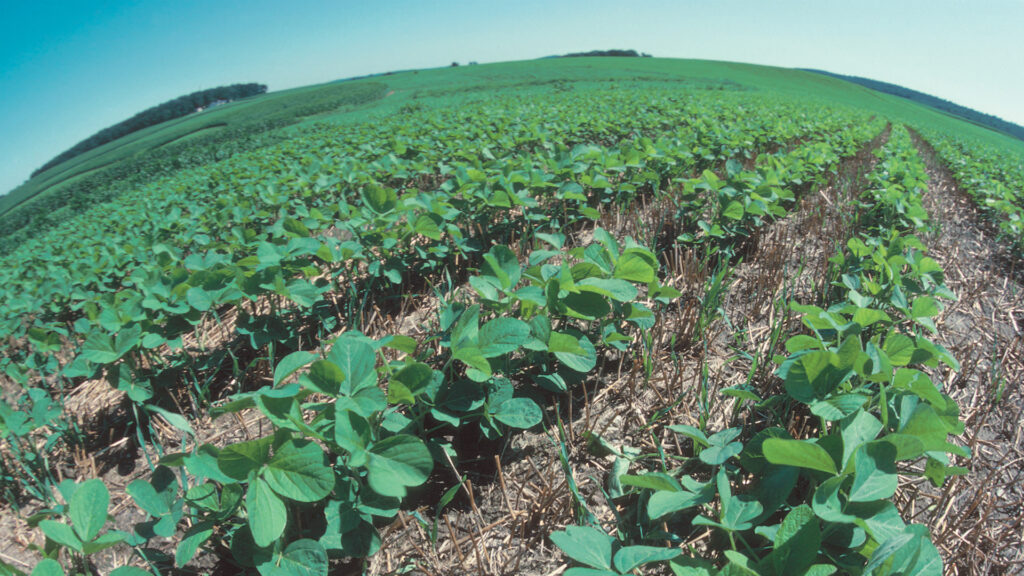 Young soybean plants thrive in the residue of a wheat crop. This form of no till farming provides good protection for the soil from erosion and helps retain moisture for the new crop. (Tim McCabe/USDA Natural Resources Conservation Service, Public domain, via Wikimedia Commons)
Cover crops planted between growing seasons protect soil from flooding and erosion. Others are shifting from conventional tillage to no-till systems to retain moisture and improve soil health. Such strategies, Shea said, can strengthen farm operations while providing environmental benefits.
“We’re trying to keep the working lands of Florida healthy and working so the manager of the land can stay there for the current generation and future generations,” he said.
Political dynamics, however, complicate long-term planning. In Tallahassee, climate policy remains a sensitive topic. Some climate-focused agricultural programs in Florida have faced funding reductions, including millions of dollars in federal cuts to climate-smart agriculture grants and local food purchasing programs in 2025.
“If you want to have a conversation about climate change, don’t use the words ‘climate change,’” Shea said. Instead, discussions are often framed around “extreme weather” and “resilience” rather than politically charged terminology.
Smith said the Florida Legislature has supported the agricultural sector, but funding constraints and competing priorities limit assistance. Research, disaster support and stable regulatory policies are critical as farmers adapt to evolving climate conditions.
For Florida farmers, the challenge is not only surviving the next freeze or hurricane. It is maintaining profitability in an increasingly unpredictable climate and ensuring the state’s agricultural economy can endure the financial strain ahead.
The pace and intensity of recent weather events raise questions about whether farmers’ strategies can keep up with the growing risks.
“These conditions are real,” Shea said. “They’re becoming more frequent. We’re not as prepared as we need to be, and we need to step up the game and transform.”
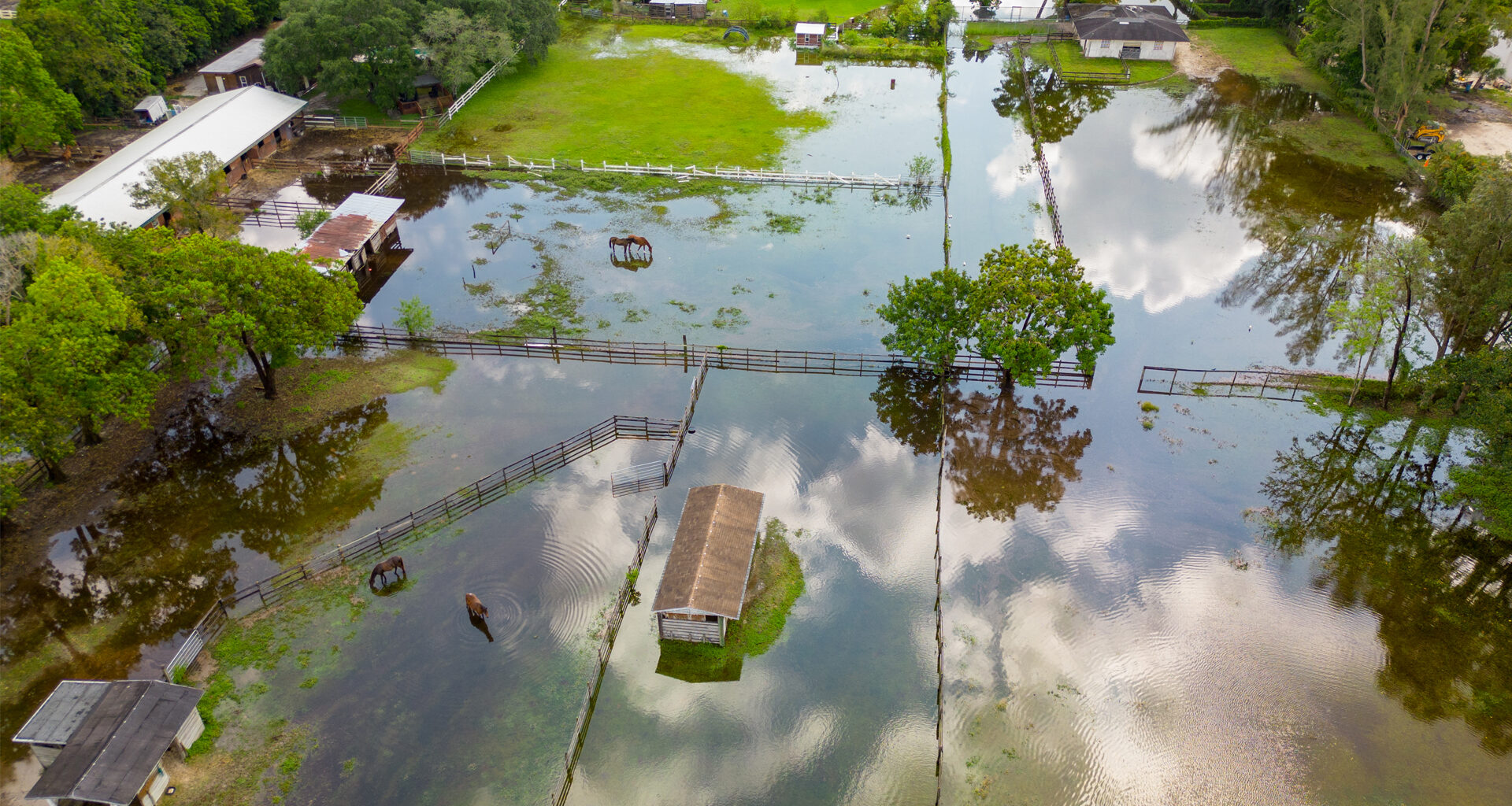
Issabella M. Gutierrez is a junior majoring in multimedia journalism at Florida Atlantic University. Banner photo: Ranches flooded in Southwest Florida after days of heavy rains (iStock image).
Sign up for The Invading Sea newsletter by visiting here. To support The Invading Sea, click here to make a donation. If you are interested in submitting an opinion piece to The Invading Sea, email Editor Nathan Crabbe.