
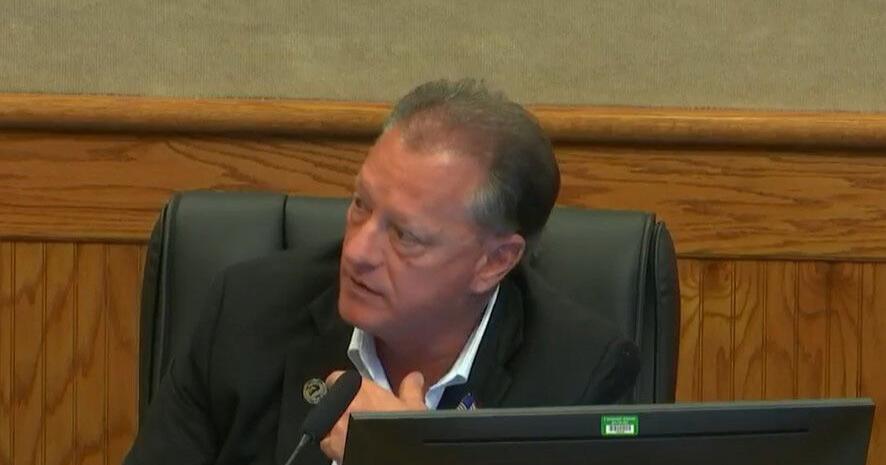
Charlotte County officials are warning that proposed property tax relief measures could shift the financial burden onto businesses and nonhomesteaded property owners, potentially driving up costs across the local economy.
During a March 17 workshop, Deputy County Administrator Emily Lewis told commissioners that if voters approve a property tax relief referendum on the Nov. 3 ballot, homesteaded homeowners would see reduced tax obligations, while commercial and nonhomesteaded properties would shoulder a greater share of the tax base.
Under current proposals, homesteaded residents would continue paying property taxes to fund schools, law enforcement, firefighters and other first responders. However, taxes supporting general government services would be reduced for those homeowners, leaving businesses and nonhomesteaded property owners to make up the difference.
“So, there is no reduction in revenue or reduction in taxes for those two entities, and essentially, they’re going to be paying for the government,” Lewis said.
Commissioner Bill Truex said the shift would have broad economic consequences.
“Everything is going to go up,” Truex said. “We’re talking about affordability and housing. Housing is going to go up because anybody who’s got an office is going to pay more in taxes to cover the tax base.”
He said higher taxes on businesses would likely be passed on to consumers, affecting prices for goods and services, including groceries.
“Everything is going to be affected by it because they’re going to have the weight of that variance,” Truex said.
Of eight property tax relief bills introduced in the Florida House, three advanced through committee and one — House Bill 203 — passed a full House vote. County officials estimate that HB 203 could create a $160 million shortfall in Charlotte County’s budget.
It remains unclear which proposal, if any, will ultimately appear on the November ballot. However, county leaders said they are preparing for the possibility that voters approve a measure that reduces property tax revenue.
Lewis said the county plans to launch a public education effort to explain the potential impacts of the legislation, particularly how the tax burden would shift to businesses and nonhomesteaded properties.

Charlotte County Commissioner Chris Constance speaks during a workshop, urging lawmakers to consider the human impact of proposed property tax changes on local employees and services.
Charlotte County government
She acknowledged that the uncertainty surrounding the proposals has created concern among county employees.
“We have very dedicated employees who work very hard and show up when most people want to evacuate; they show up for this community,” Lewis said.
She emphasized that workforce reductions would be considered only as a last resort.
Commissioner Chris Constance echoed support for county employees and urged lawmakers to consider the human impact of the proposals.
“These are human beings that [legislators are] playing games with,” Constance said. “This is not just numbers.”
County officials said they will begin meeting with departments in April to evaluate service levels and identify potential areas for cost reductions. Some discretionary programs could be at risk, including initiatives focused on community health and efforts aimed at reducing incarceration.
Lewis said those programs, while beneficial, are not mandated by the state and could be subject to cuts if revenues decline.
Commission Chair Joe Tiseo added that funding for nonprofit organizations, including the United Way, also could be affected.
The county also is conducting a citizen survey to gather public input, with results expected after the November election.