
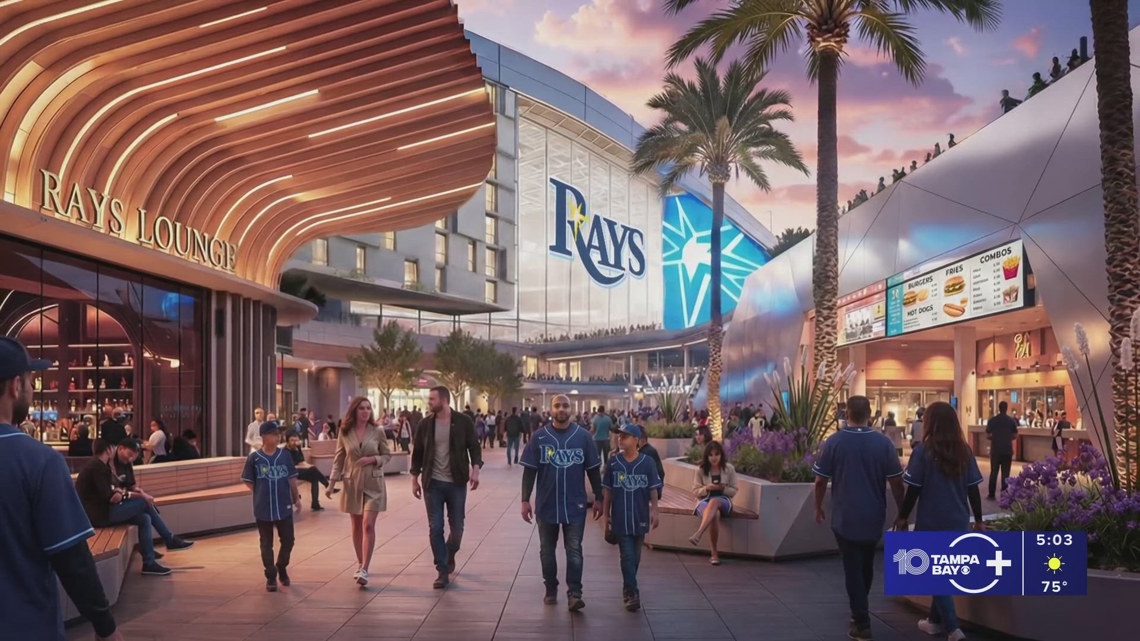
Hillsborough County commissioners won’t take up the Rays stadium proposal until at least April 15 as questions grow over funding and roof design
A decision on a proposed new Tampa Bay Rays stadium in Hillsborough County is being pushed back as new concerns surface about the project’s cost, design and funding.
An email to commissioners from the deputy county administrator shows the earliest the proposal could appear on a Board of County Commissioners agenda is April 15. The email also states staff does not plan to include any ballpark-related items on the April 1 agenda.
County staff outlined three guiding principles as discussions continue: avoiding development risk, protecting the county’s AAA credit rating and ensuring public funds are used only for projects that provide a public benefit.
The delay comes as new questions emerge about the stadium’s design.
A preliminary analysis commissioned by the Tampa Sports Authority found the proposed roof could be too heavy and vulnerable to storm damage. The report indicated the design could add hundreds of millions of dollars to the project’s cost.
However, the construction firm that conducted the analysis cautioned the findings may already be outdated, noting the Rays have since adjusted key design plans.
The proposal has cleared an early hurdle at the state level, with approval to move forward on using land at Hillsborough Community College’s Dale Mabry campus as a potential site. Still, financing, local approvals and final agreements have not been secured.
As the price tag grows, one of the biggest sticking points is how to pay for it.
“The big issue now is the CIT tax. The community investment tax and whether to use that half cent tax to help fund this project,” said John Boyd, an economic development expert.
The tax is already approved through 2041, but some commissioners have raised concerns that it is not intended for stadium funding.
“There’s a lot of concern about diverting that money away from roads and bridges and public safety,” Boyd said.
Boyd said there may be room for compromise, including alternative funding options.
He pointed to user-targeted revenue sources, such as ticket surcharges, hotel taxes tied to game-day tourism and even potential revenue-sharing agreements tied to naming rights between the city and county.
He added that delays like this are not unusual.
“These type of delays are part of good governance to make sure the taxpayer is protected,” Boyd said.
Still, he warned extended negotiations could impact the timeline.
“The longer this drags out, the harder it will be to meet that 2029 deadline,” Boyd said.
If the proposal moves forward in mid-April, the Tampa City Council could take it up shortly after.