
For years, the formula for most secondary airports in the US looked straightforward: attract low-cost carriers (LCCs), keep charges competitive, stimulate traffic with cheap fares, and let growth do the rest. That strategy now looks far less secure. Southwest has moved well beyond its old low-cost template, JetBlue increasingly behaves like a hybrid carrier, and the pure LCC end of the market has become much more fragile, with Spirit Airlines restructuring again and Frontier Airlines still under pressure to deliver consistent profits.
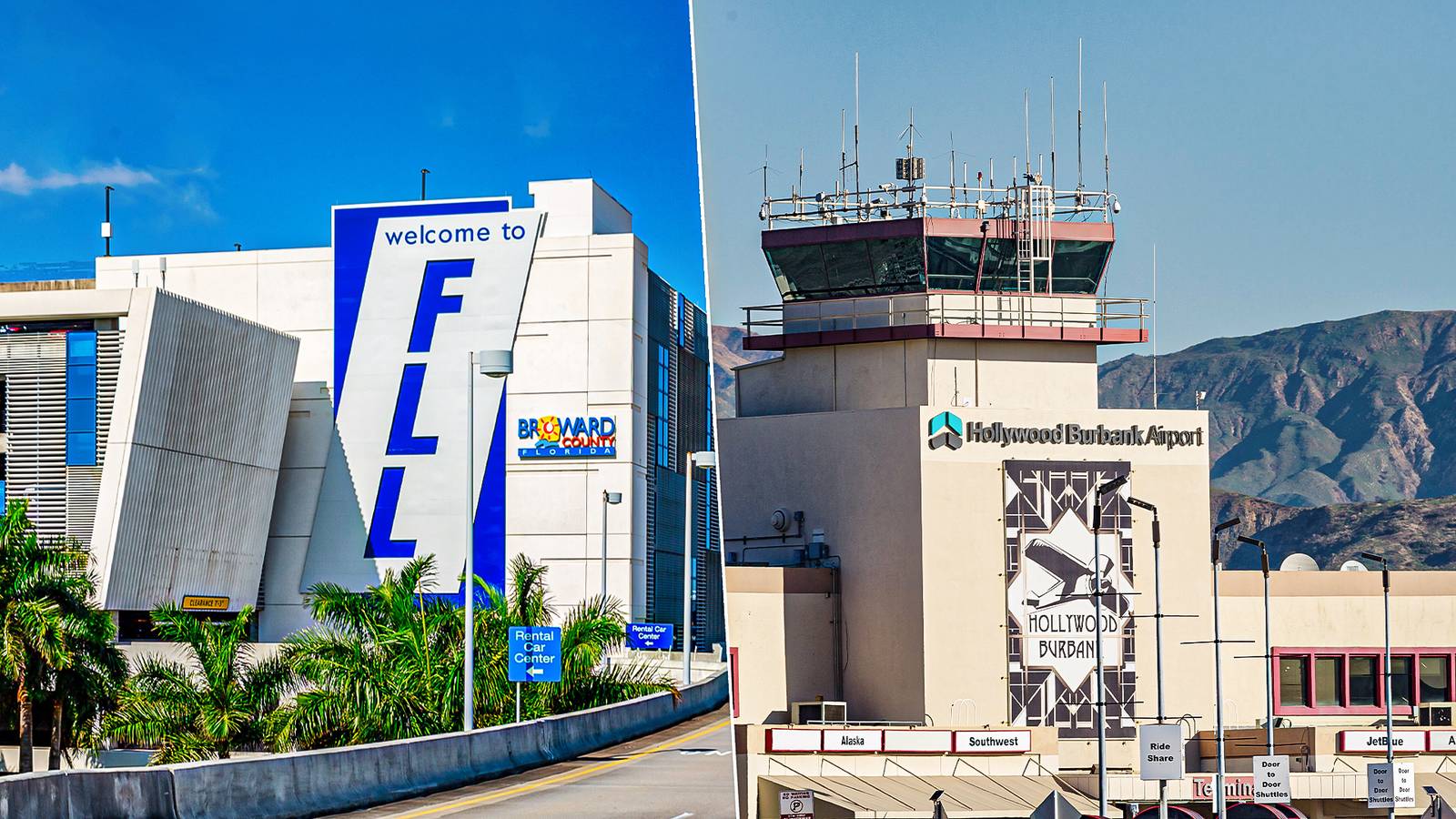
That leaves airports facing a difficult question: if low-cost airlines are no longer reliable growth engines, what exactly are they selling instead? In many cases, the answer is convenience. And that shift is especially clear when illustrated by the stark differences between the two major US airports with “Hollywood” in their names.  Fort Lauderdale-Hollywood International Airport (FLL) can still function as a rare low-cost megahub because the market is big enough for multiple budget airlines to fight over it. But Hollywood Burbank Airport (BUR) cannot. Its future increasingly depends on becoming the easiest airport, not the cheapest one.
The Low-Cost Model Is No Longer Enough
Credit: Shutterstock
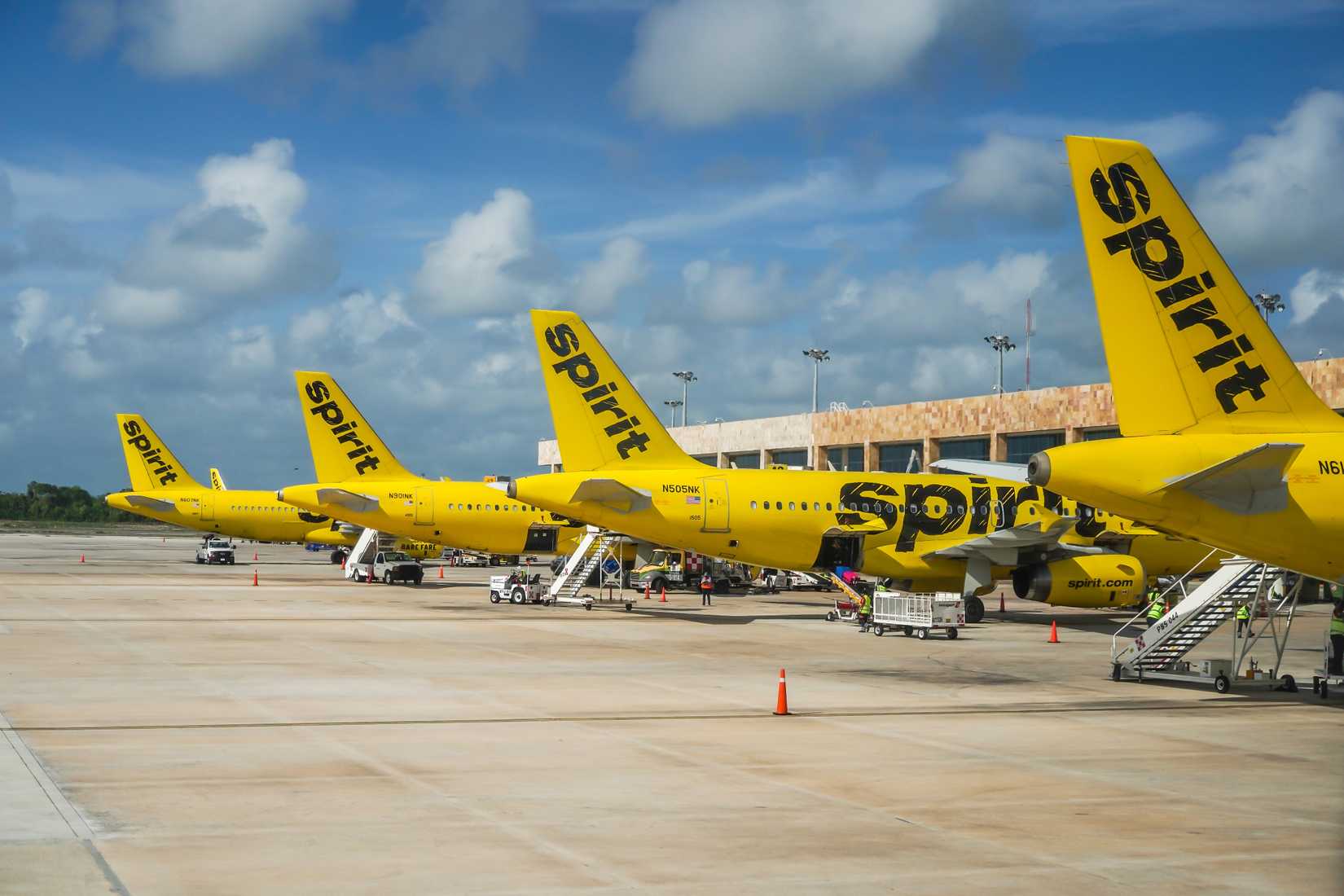
The challenge for airports is not that low fares have vanished. It is that the airline categories that once shaped airport strategy have become far less distinct. For decades, it was easy to build around the idea of the low-cost carrier.  Southwest Airlines meant scale, frequency, and a straightforward value proposition. JetBlue meant lower fares with a better onboard product. Spirit and Frontier meant aggressive stimulation, stripped-down pricing, and rapid route experimentation. Secondary airports could align themselves with one or more of those models and know roughly what they were getting.
That clarity is disappearing. Southwest is still a giant force in US aviation, but it no longer fits the old LCC mold in the way it once did. Assigned seating, extra-legroom products, and a broader focus on ancillary revenue all move it further into the mainstream. JetBlue has also shifted its strategy, leaning more heavily into a premium-tinged East Coast leisure strategy rather than simply undercutting larger network rivals on price. Even where the fares remain competitive, the airline identities themselves are more blurred than they used to be.
At the same time, the true LCC model has become much less dependable. Spirit is smaller, weaker, and more selective than before. Frontier remains active, but the old expectation that it could simply pour capacity into a market and build a durable airport story feels far shakier than it once did. For airports, that is the real problem. The old assumption was that a low-cost airline would come in, stimulate demand, add routes, and give the airport a clear growth narrative. That assumption now looks much riskier.
As a result, only a few secondary airports can still rely on scale from LCCs alone. The strongest of them are large enough and dynamic enough to attract replacement capacity whenever one carrier stumbles. The rest have to adapt. And no comparison shows that more clearly than Fort Lauderdale and Burbank. One still benefits from a deep and competitive low-cost ecosystem. The other is having to change the game.
Fort Lauderdale: The Exception That Proves The Rule
Credit: Shutterstock
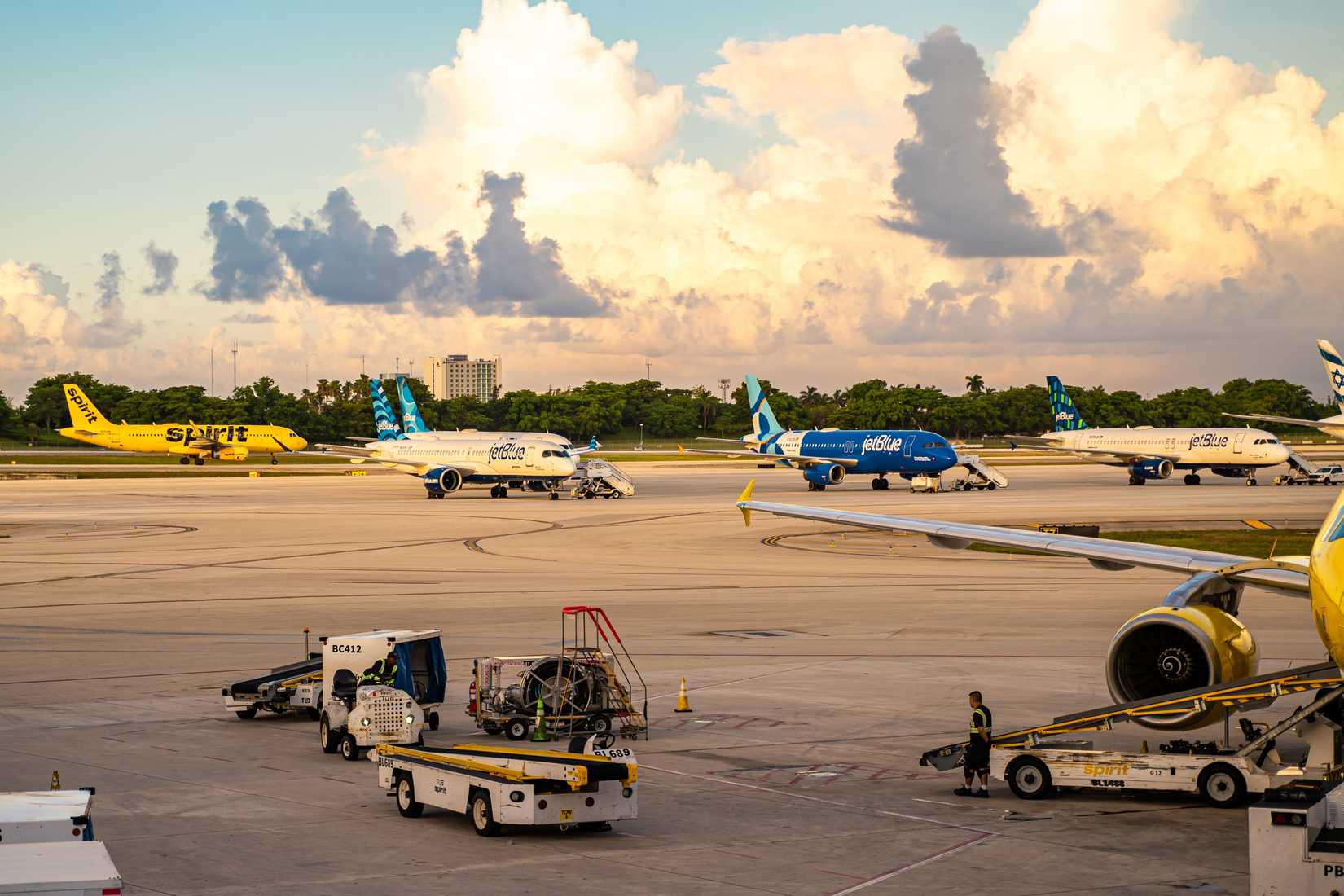
Fort Lauderdale-Hollywood remains one of the few secondary airports in the United States big enough, diverse enough, and well-positioned enough to absorb this new reality without having to reinvent itself. It is still a major South Florida gateway with deep local demand, powerful leisure traffic, and strong ties to Latin America and the Caribbean. As a result, it became a place where discount airlines could build real scale, and it remains highly competitive and relentlessly fare-driven.
Fort Lauderdale first rose to prominence as a major low-fare airport on Southwest’s back, but in recent years, it was Spirit that turned it into its spiritual hometown megabase. But two bankruptcies later, Spirit is a shadow of its former self, and with a much-reduced fleet size, has had to slash routes at even its largest bases, with FLL being no exception. But such is the nature of FLL that multiple competitors have rushed to fill the white space, most notably JetBlue.
Looking at Cirium Diio data comparing the second quarter of last year (Q2 2025) to this year, JetBlue is set to operate more than 5,000 additional flights to and from FLL in Q2 2026, an increase of 45%. That equates to more than 180 daily flights at the airline’s South Florida focus city, and placed the New York-based airline firmly as the new largest carrier at Fort Lauderdale.
Budget Carriers At FLL: Q2 2026 Vs. Q2 2025
Airline
Flights In Q2 2026
Flights In Q2 2025
Increase/Decrease
JetBlue
16,316
11,246
45%
Spirit Airlines
11,788
13,760
-14%
Southwest Airlines
5,554
5,924
-6%
Allegiant Air
2,842
2,254
26%
Frontier Airlines
2,500
716
214%
Breeze Airways
284
–
–
But JetBlue is not the only carrier moving in. Frontier Airlines has also expanded sharply, albeit from a low base. Allegiant Air has continued to grow selectively, and Breeze Airways has also begun serving Fort Lauderdale for the first time. The result is that FLL has become a market where one carrier’s weakness immediately becomes another carrier’s opportunity, and the airport is still getting what most secondary airports can only hope for: multiple airlines competing to fill the same low-cost space.
That is what makes Fort Lauderdale so unusual. In most markets, the retreat of a single carrier would leave a vacuum. At FLL, it creates a scramble. The airport still has the scale, the geography, and the traffic base to attract replacement capacity almost on instinct. Very few secondary airports can rely on that kind of competitive back-fill, and that is where the other Hollywood airport becomes especially instructive.
Related
JetBlue Tightens Grip As The New No. 1 Airline At Fort Lauderdale
JetBlue’s latest growth spurt cements its rise as Fort Lauderdale’s new number one airline.
Burbank’s Tougher Reality
Credit: Shutterstock
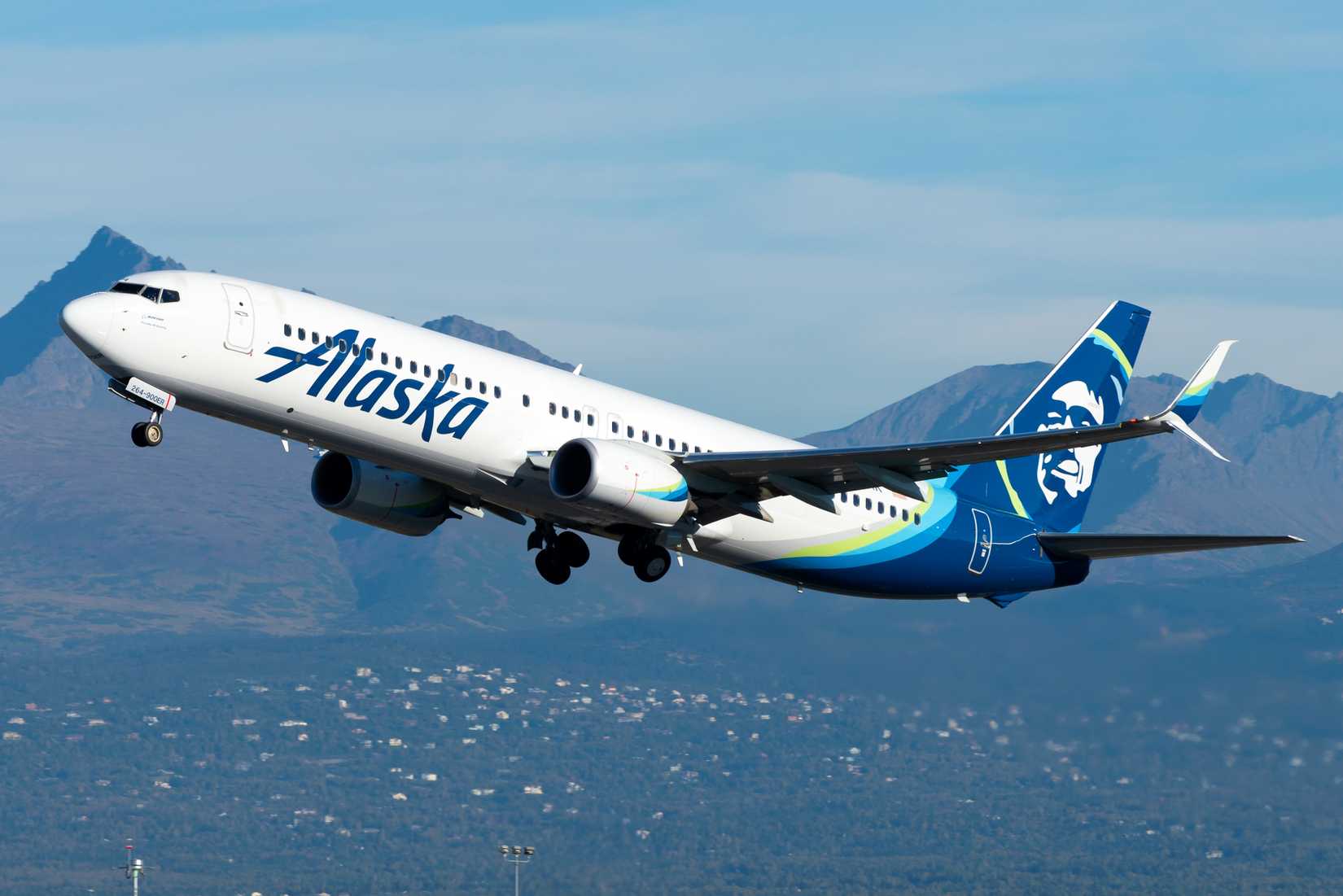
Hollywood Burbank Airport tells the more revealing story because it shows what happens when the old low-cost formula stops working in a smaller, more constrained market. BUR remains a valuable airport, but its customer base is not deep enough to support endless experimentation from discount carriers. That makes it more exposed when the sector weakens, and the past few years have been difficult. Traffic in 2025 was down just over 5% compared to the year prior, and Cirium Diio data shows that Q2 2026 will have a further 6% drop when compared to the same period last year.
So what happened? It started with Canadian LCC Flair Airlines, which left a few years ago, switching its transborder flights to  Los Angeles International Airport. Then Avelo Airlines pulled out last year after trying to make Burbank work as a West Coast base. Predictably, Spirit’s traffic has fallen sharply, but perhaps most worryingly for the airport, long-term market leader Southwest will also have an 8% drop in traffic versus last year as it sheds less profitable routes from its network.
Budget Carriers At BUR: Q2 2026 Vs. Q2 2025
Airline
Flights In Q2 2026
Flights In Q2 2025
Increase/Decrease
Southwest Airlines
8,860
9,606
-8%
Spirit Airlines
502
710
-29%
Avelo Airlines
–
572
-100%
Breeze Airways
244
–
–
Allegiant Air
160
–
–
JetBlue
156
62
156%
Frontier Airlines
142
102
29%
However, there are some silver linings for Burbank. Even as Avelo has departed, this year it is adding two new carriers in the form of Allegiant and Breeze, both of which have more sustainable long-term growth prospects. Two other budget carriers are increasing flights, although off very small bases, and then one of its long-term legacy residents,  Alaska Airlines, is making some significant expansion moves.
What Burbank Is Doing About It
Credit: Hollywood Burbank Airport
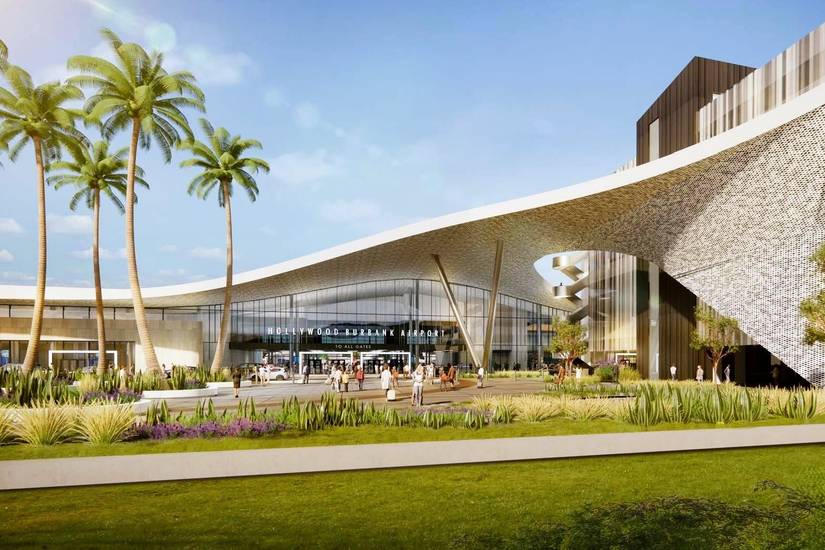
Burbank’s response has been to lean harder into the one thing it can still own decisively: convenience. The clearest signal is the airport’s new terminal project, designed with art deco and mid-century modern styling to reflect the styling from the golden age of Hollywood. The new 14-gate, 355,000-square-foot terminal will also include airfield upgrades, a new parking garage, a new airline support facility, a new on-airport access road, and improved transit connectivity. The airport is presenting it as more modern and convenient, making BUR a better version of itself rather than a major capacity expansion.
In California terms, that is why Burbank increasingly looks more like Norman Y. Mineta San Jose International Airport than Oakland International Airport. San Jose’s appeal is not that it is the Bay Area’s cheapest airport. It is that it is often the easiest to use. Burbank is moving in the same direction in the Los Angeles market. It is not trying to out-fare-war LAX or become Southern California’s great LCC fortress. It is trying to become the airport that travelers actively prefer because the trip feels simpler from the moment they leave home.
The airport is seeing the first green shoots from this repositioning. It has lured back JetBlue with transcontinental service, is seeing growth from Frontier, and has a new addition in Allegiant. But perhaps most importantly, Alaska Airlines is increasing its flights at BUR by 12%, deepening its West Coast presence by adding new local routes to adjacent states, as well as the addition of direct flights to Hawaii. Whether flying to Boise or Bellingham, the message is clear: it’s a lot simpler from BUR.
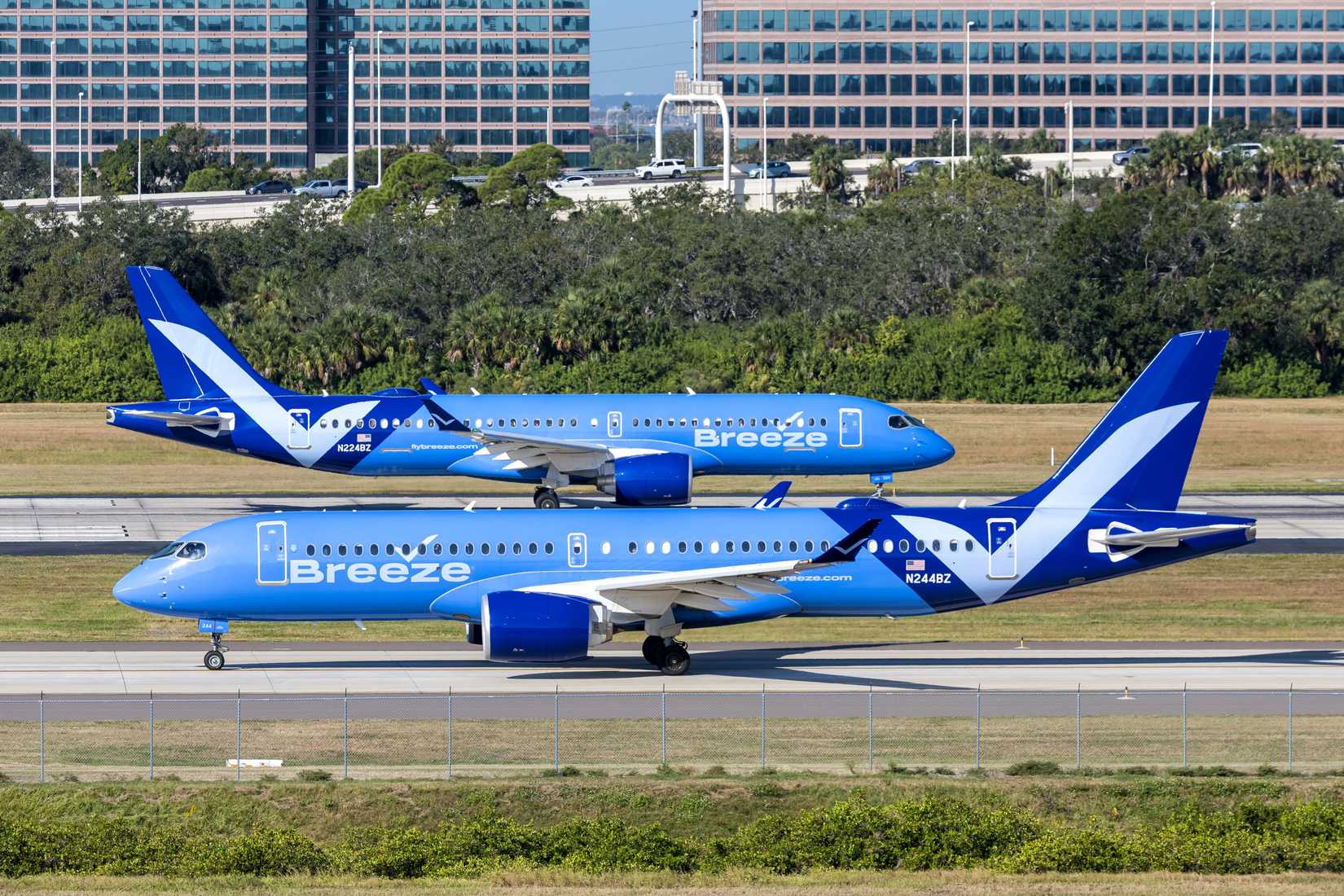
Which is why Breeze is a particularly exciting new entrant into the market. The carrier has built its entire business model on serving secondary airports with convenience and simplicity, adding nonstop flights for those wanting to avoid hubs and connections. Given its rapid expansion as the fastest-growing airline in the US, and that it is increasingly using the range of its Airbus A220 fleet for transcontinental flying, it could be a significant addition to the airport in terms of driving long-term growth.
Related
How Much Hollywood Burbank Airport’s New Terminal Cost & Who’s Paying For It
The $1.3 billion terminal is set to open in October 2026.
Other Airports Need To Think This Way Too
Credit: Southwest Airlines
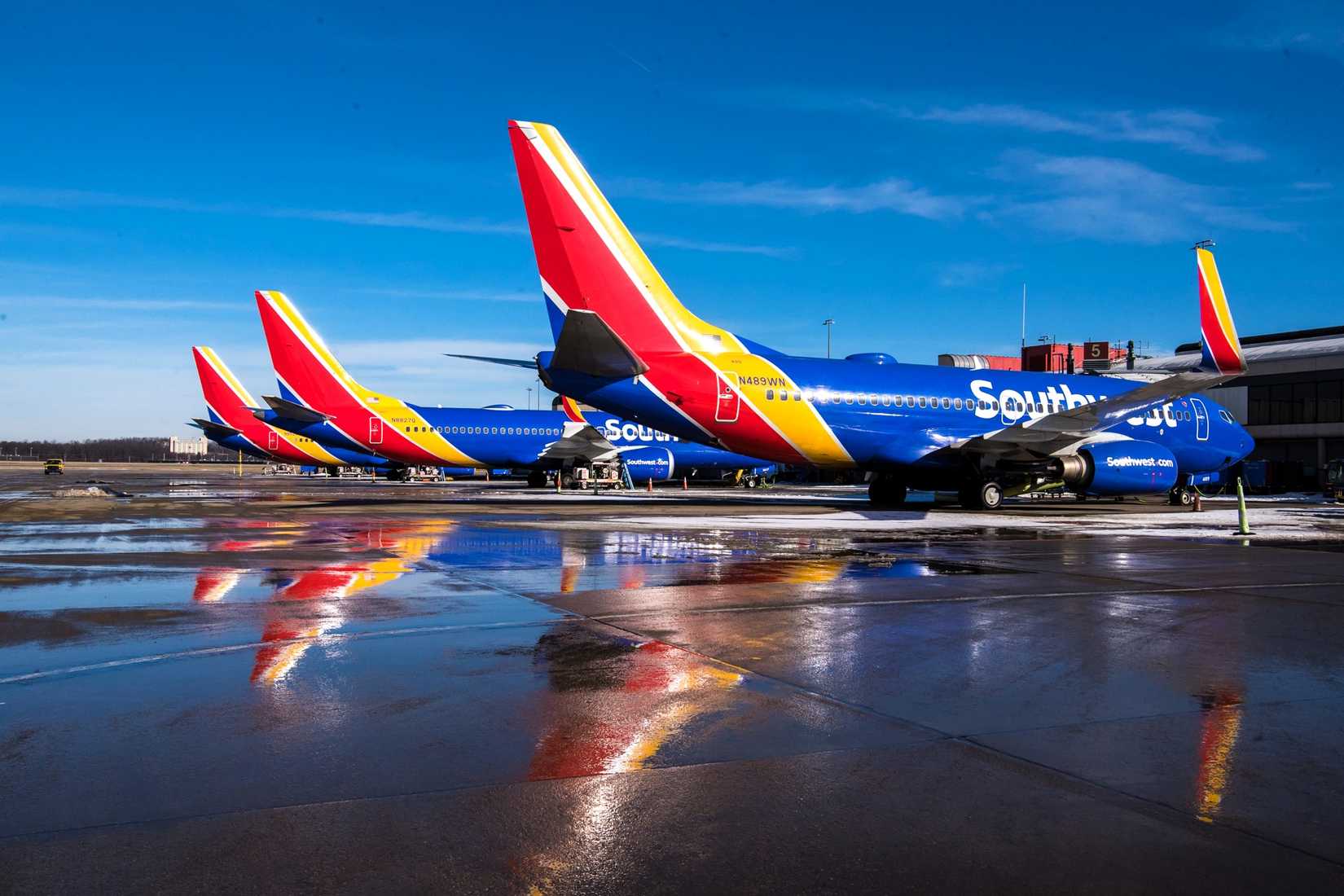
Burbank is not alone. A growing number of secondary airports are facing the same broad challenge: if the old low-cost growth model is less dependable, how do they remain relevant? Increasingly, the answer is to become the airport people prefer rather than simply the airport with the cheapest ticket. That means selling ease, local access, and predictability as aggressively as airports once sold low fares.
The pattern now stretches well beyond California. At the larger end are airports such as John Wayne Airport-Orange County Airport, San Jose, Ontario, Palm Beach, Providence, Bradley, Long Island MacArthur, Westchester, and Long Beach — all airports with a meaningful scale, but where the value proposition increasingly centers on being easier than a larger nearby gateway. Some compete against giant hub airports directly, while others serve regions where travelers simply want to avoid congestion, long walks, high parking costs, or unreliable processing times. The table below shows how varied these airports are in size and airline mix, but also how similar their convenience pitch has become.
Secondary Airports Pivoting Towards Greater Convenience
Airport
2025 passengers
Largest Budget Carrier
Convenience pitch
Bradley / Hartford (BDL)
6,423,000
JetBlue
A practical regional airport with big-airport reach and less hassle.
Long Beach (LGB)
3,818,000
Southwest
A calmer, easier Southern California airport than LAX.
Long Island MacArthur (ISP)
1,580,000
Southwest
Long Island’s easy alternative to JFK and LaGuardia.
Ontario (ONT)
7,116,800
Southwest
Inland Southern California’s easy airport, combining scale with a smoother experience than LAX.
Palm Beach (PBI)
8,247,900
JetBlue
A calmer South Florida option that competes on ease rather than scale.
Provo (PVU)
960,100
Allegiant
Utah Valley’s close-to-home airport, selling convenience and simple leisure access.
Providence (PVD)
4,281,400
Southwest
Boston alternative with easier access, cheaper parking, and less stress.
San Jose (SJC)
11,400,000
Southwest
The Bay Area’s easy airport, focused on speed and reliability.
John Wayne / Orange County (SNA)
11,369,900
Southwest
Orange County’s most convenient airport, built around quick access and shorter lines.
Santa Rosa (STS)
780,700
Southwest
A locally loved airport selling simplicity, proximity, and a seamless experience.
Tweed New Haven (HVN)
1,260,000
Avelo
Southern Connecticut’s small-airport alternative built around simplicity and local access.
Westchester County (HPN)
2,313,000
JetBlue
Close-in New York airport built around speed and simplicity.
Wilmington (ILG)
328,800
Avelo
Delaware’s easy airport, built on avoiding the congestion of PHL and BWI.
At the smaller end are airports such as Tweed New Haven, Wilmington, Provo, and Santa Rosa, where the logic is even more explicit. These airports are not trying to become mini-hubs in the old sense. They are trying to become the default local choice for travelers who value proximity and simplicity over scale. Even airports where Southwest remains dominant, such as Ontario, show how the strategy is evolving: the traffic base may still be low-fare-led, but the long-term pitch is increasingly about making the trip easier, not just cheaper.
There is an important exception, though: airports where Southwest remains the resident and dominant force. Midway International Airport, Dallas Love Field, and Houston Hobby Airport do not face quite the same urgency to reinvent themselves, because their anchor tenant is still there at an overwhelming scale. That gives them a level of traffic stability most secondary airports would envy.
What Convenience Actually Means
Credit: Shutterstock
If an airport wants to reposition itself as a convenience play, it has to compete on time, predictability, and ease, not just on price. In practice, that usually comes down to a few very specific things:
Fast car-to-gate time: Easy road access, close-in parking, short walks, and intuitive wayfinding matter. Passengers should feel the difference almost immediately.
Parking that feels frictionless: Parking cannot be slow, confusing, or stressful. Easy entry and exit, clear availability, and proximity to the terminal are part of the product.
Short, reliable TSA processing: Smaller airports win when security feels manageable and predictable. Long, erratic lines destroy the convenience promise quickly.
A terminal built for flow: Good sightlines, efficient checkpoints, sensible gate layouts, enough seating, and minimal walking matter more than flashy design.
Operational consistency: “Easy” has to hold up on bad days, not just good ones. Curbside management, baggage delivery, and disruption recovery all shape whether passengers come back.
A strong local identity: Convenience airports work best when they become “my airport” for a defined geography. Loyalty to a place can be just as valuable as low fares.
The right airline mix: These airports should want a blend of strong incumbents, quality-focused hybrid carriers, and a few selective secondary-market specialists, not total dependence on one fragile business model.
That is the real divide between the two “Hollywoods”. FLL can still thrive as one of the rare secondary airports large enough to remain a genuine low-cost battleground even as the airline landscape changes around it. BUR cannot, so its smarter path is to become more valuable in a different way: by making the journey simpler, calmer, and more predictable than the alternatives.
And that may be the broader lesson for secondary airports across the United States. In the next phase of the market, the winners may not be the airports that can promise the absolute cheapest fare, but the ones that can most convincingly promise the easiest trip.