
TAMPA, Fla. — A new program at Tampa General Hospital is helping some patients with tremors transform their lives.
What You Need To Know
A focused ultrasound at Tampa General Hospital helps to treat tremors
The treatment requires patients to shave their heads
NeuroWig program helps break emotional barriers of losing hair with one custom-fit, high-quality, medical-grade wig
Tremors started in Ann Kanuck’s 40s and continued getting worse.
“That’s a difficult thing to live with, you know, to suddenly realize you can’t feed yourself,” said Kanuck.
She decided to look into focused ultrasound treatment to help.
“Focused ultrasound works by directing ultrasound beams, hundreds of ultrasound beams harmlessly through the skull,” said Dr. Oliver Flouty, a neurosurgeon with Tampa General Hospital and USF Health.
The treatment requires a patient to shave their head, which can cause some to reconsider because of how it impacts their appearance.
“We did a little research ourselves and found that women were a little bit less likely to get the focused ultrasound treatment for their central tremors, because they did have to shave their head completely,” said Stevie Trias, a nurse navigator with TGH.
That’s why the NeuroWig program was launched. It’s designed to help break down emotional barriers that can come with the life-changing treatment. Kanuck said the program helped make her decision to have focused ultrasound easier.
“When I was completely bald and looked in the mirror, tears came to my eyes and I couldn’t believe it, because I didn’t believe I was attached to my hair, but I was,” she said.
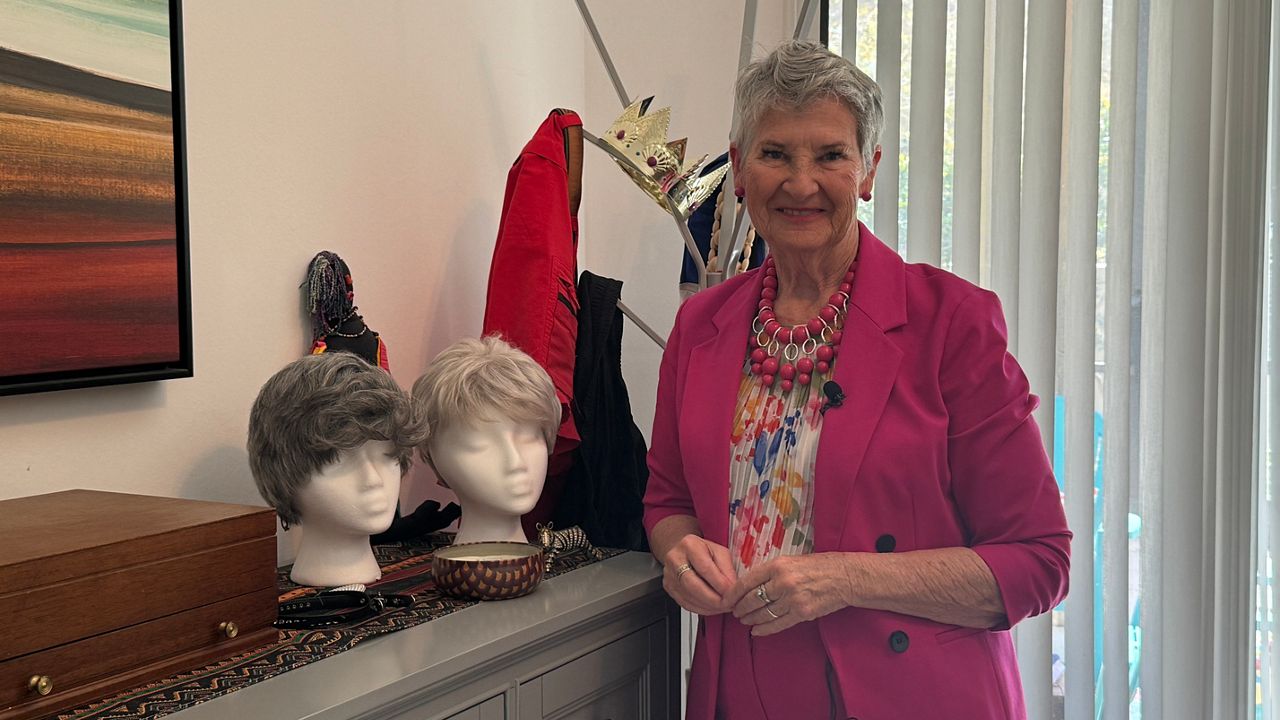
Kanuck said she was able to overcome that emotional barrier with help from the NeuroWig program. It provides patients with one custom-fit, high-quality, medical-grade wig. Kanuck was one of the first to receive a wig.
“It’s sort of like, ‘Hey, I’m not so different, I’m not so changed,’” said Kanuck. “You know, this is not such a shock.”
Former hairstylist Marilyn Shaw is now a psychotherapist and mental health educator at St. Petersburg College. She said that shock can set in because for some, hair symbolizes identity, culture and confidence.
“It’s deeper for a lot of people,” said Shaw. “For some of them, it can be an opportunity to reset their life as a way to express who they are. And when you think about the loss of hair, it can seem like a part of their identity is being lost.”
Shaw suggests leaning into the emotions. Kanuck described feeling distress first, but she says she began embracing her new wig and even wears it after her own hair has grown back.
“I like to wear it when I dress up, and I also have a white one now, the platinum blond version,” said Kanuck of purchasing a second wig on her own.
She enjoys the new style and a new way of life.
“It’s just been a marvel to be able to use this hand again, to be able to eat, to be able to sew by hand, so I mean, that was out of the question,” said Kanuck.
Improvements in her tremor could be seen immediately.
“The left hand stayed the same and the treated hand is more stable,” said Flouty.
“I can do things now with this hand that I haven’t done in years,” said Kanuck, who will be a candidate to have focused ultrasound on her left hand one year after the procedure on her right hand.
The NeuroWig program is funded by a grant from the Bruemmer Women’s Leadership Circle.