
Home » Airline News In America » USA Travel Alert: Delta Airlines Atlanta to Tallahassee Flight Diverts Mid‑Air — What It Means for Passengers
Published on
March 22, 2026
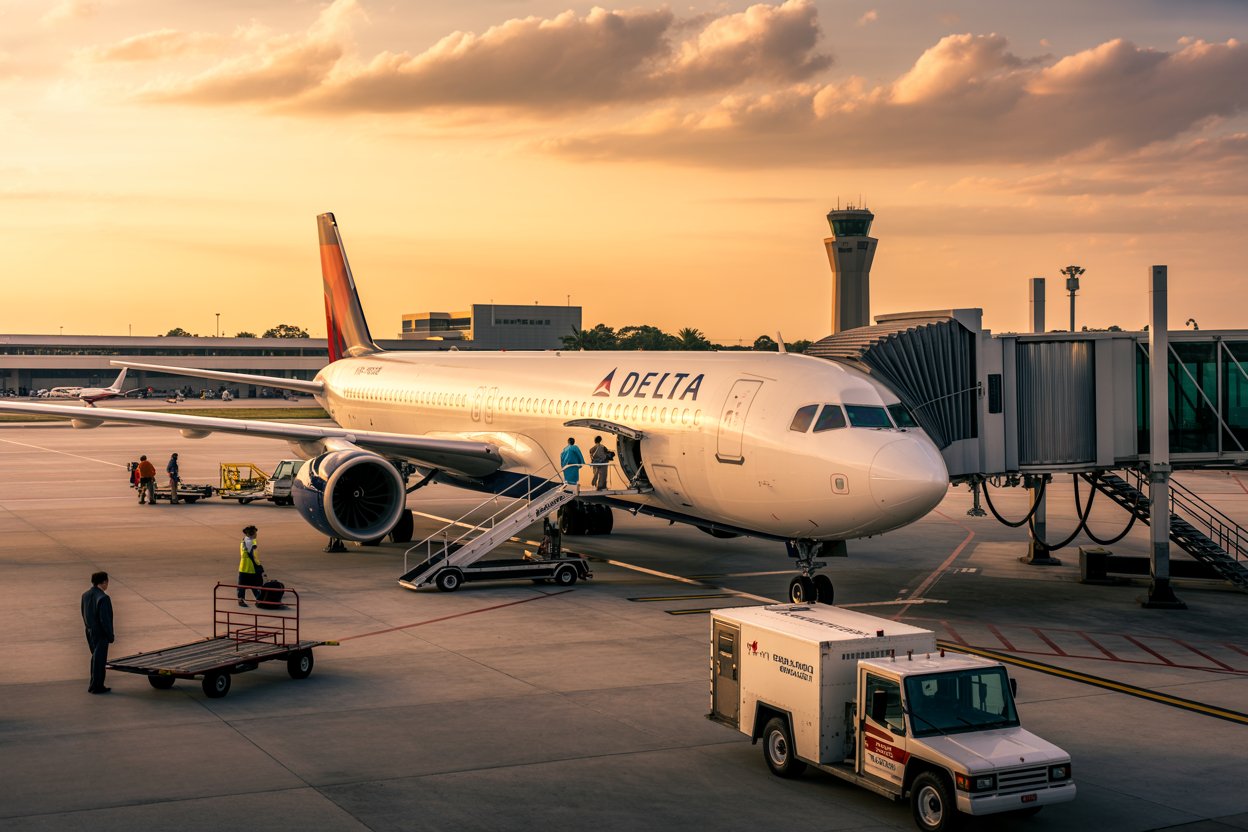
Image generated with Ai
Delta Air Lines Flight DL1182, operating from Atlanta, Georgia, to Tallahassee, Florida, made an emergency diversion to Tallahassee Regional Airport on 22 March 2026 after the crew detected a mid‑air technical issue shortly after take‑off. All passengers and crew disembarked safely. The diversion triggered delays and rebooking challenges for travellers, highlighting both the airline’s safety protocols and the disruption risks when flights divert unexpectedly.
Introduction – Critical Aviation Alert from the USA
In a striking development in US aviation today, Delta Air Lines Flight DL1182 bound from Atlanta to Tallahassee was forced to divert mid‑air to Tallahassee Regional Airport (TLH) after the flight crew reported a technical anomaly. The diversion occurred only minutes after departure and underscored both airline safety prioritisation and potential travel disruptions for passengers on flights departing from the world’s busiest airport, Hartsfield–Jackson Atlanta International Airport.
Quick SummaryDelta Airlines Flight DL1182 diverted to Tallahassee due to a technical issue.All passengers and crew landed safely with no injuries.The incident caused delays and rebooking challenges.Delta arranged customer care support, accommodations and meals.FAA investigation into the technical fault is ongoing.Technical Glitch Sparks Emergency Diversion
Delta Air Lines Flight DL1182 had only just climbed out of Hartsfield–Jackson Atlanta International Airport when pilots detected a technical issue. Following standard aviation safety protocols, the flight crew opted to divert the flight to the closest suitable airport — Tallahassee Regional Airport — to secure a safe landing.
This decision reflects the highest priority in aviation: passenger safety. Modern aircraft systems constantly monitor for anomalies and communicate directly with the flight deck. Should anything appear outside normal parameters — even if not immediately dangerous — pilots will often select the nearest airport for landing.
Advertisement
Advertisement
Airport operations at Tallahassee surged to meet this unplanned arrival. Ground crews equipped with maintenance tools and passenger care teams were on standby, ensuring the aircraft was examined and travellers were supported upon landing.
Advantages for Travellers: Safety First and Passenger Support
For travellers, the immediate advantage of this diversion was safety. Although diverting mid‑flight can be unsettling, it means the flight crew and airline systems identified a potential problem before it became a major hazard — a testament to rigorous training and modern monitoring technology.
Advertisement
Advertisement
Delta activated its customer care protocols swiftly. Affected passengers received assistance with accommodations, meals, transport and rebooking options. Under US Department of Transportation regulations, travellers impacted by significant delays or cancellations are entitled to compensation and care services.
Furthermore, diversion to a smaller airport like Tallahassee can often mean quicker disembarkation, shorter waiting times for ground support and a calmer airport environment — contrasting with the hectic pace at a major hub like Atlanta.
Advertisement
Advertisement
Disadvantages and Travel Disruption Realities
However, the diversion also brought downsides. Travellers expecting to land in Atlanta faced missed connections and schedule reshuffling. Flight delays can cascade across an airline’s network, affecting subsequent departures and crew availability.
Passengers connecting through Atlanta were forced to rearrange onward plans, sometimes requiring bookings on partner carriers or waiting for available seats on Delta’s next flights. Even with airline support, such disruptions can erode trust and lead to stress — especially for business travellers on tight schedules.
Moreover, a diversion to a regional airport means some amenities and direct onward connections are limited compared to a major hub. Travellers may face additional ground travel to continue journeys — adding time and cost.
FAA Investigation and Network Impact
The Federal Aviation Administration (FAA) has launched an investigation into the specific technical fault that triggered the diversion. Determining root causes in such incidents is crucial to preventing future disruptions and ensuring continued aviation safety.
Operations at Delta’s Atlanta hub experienced knock‑on effects, with schedule adjustments and aircraft repositioning necessary to restore normal service. This is a common outcome when an unplanned event occurs near a major airline’s core hub.
Conclusion – Safety Triumphs Over Disruption
Delta Airlines’ decisive action in diverting Flight DL1182 to Tallahassee has once again highlighted the aviation industry’s unwavering commitment to passenger safety. While the diversion has resulted in travel disruption for many passengers, the outcome avoided potential risk and ensured everyone onboard disembarked without injury. As the FAA investigates the technical anomaly, the focus for travellers and airlines alike remains on transparency, support and lessons learned to strengthen future operations.
