
For the third year in a row, Florida’s legislature rewrote provisions of the landmark Live Local Act to make it easier for apartment developers and owners to claim lucrative property tax exemptions for affordable housing, thwarting the efforts of local governments to protect their tax revenue.
This year’s legislation also allows for affordable housing developments on land owned by religious institutions without rezoning. And although the new rules don’t take effect immediately, both changes come as existing law will force Central Florida municipalities to hand out more of the coveted tax exemptions in 2026, with developers lining up in Orange, Osceola, Lake and Seminole Counties to push their projects, according to a report in GrowthSpotter.
The cost to local cities and counties could be millions of dollars.
On the last day of the regular session, both houses overwhelmingly passed HB 1389 to codify some of the changes in the Live Local Act that were left out of last year’s bill. Their handiwork now awaits a signature from Gov. Ron DeSantis.
Adopted in 2023, the Live Local Act loosened zoning regulations by requiring cities and counties to approve multifamily development projects in areas already zoned for commercial, industrial, or mixed-use if at least 40% of the units are affordable for households making up to 120% of the Area Median Income. This year’s “YIGBY” legislation (Yes In God’s Backyard) adds the same flexibility to church-owned land, as long as the property is at least 3 acres and has housed a religious institution for 10 years.
The latest update also limits the ability of cities and counties to opt out of a 75% property tax exemption for providers of “Missing Middle” housing — two years after that opt-out was added at the urging of municipalities. Beginning in 2027, a local jurisdiction could refuse to offer the affordable housing tax exemptions only if a county has had a surplus of available rental units for three previous years, rather than just for the most recent year, as the law now states.
The Orlando-Kissimmee-Sanford MSA had a surplus of missing middle units in 2023 and 2024, according to the Shimberg Center for Housing Studies, which tracks housing affordability across the state. That opened the door for all four counties (Lake, Orange, Osceola and Seminole) ]and cities within their boundaries to opt out of the tax exemption. But the 2025 Shimberg report moved the Orlando MSA into the negative column with a deficit of 1,945 rental homes. In fact, Orlando now has the most severe shortage of affordable homes for low-income renters in the nation, according to the National Low Income Housing Coalition.
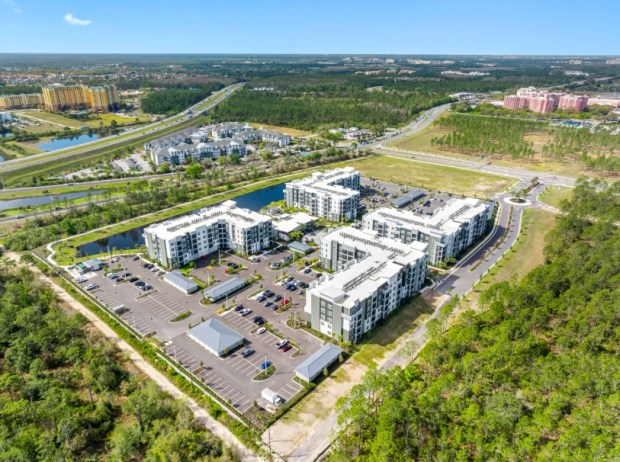 Bainbridge World Center, which has 341 units in Orlando’s tourism corridor, is claiming a tax exemption for 159 units. (Photo provided by The Bainbridge Companies)
Under the new rules, dozens of apartment complexes that were built in a post-pandemic boom are once again eligible to claim lucrative tax exemptions that could shave millions off the tax rolls in the four-county region while helping to keep rents lower in those apartments. The owners were required to file their paperwork, including their rent rolls and tenant income data, to their respective property appraiser’s office by March 2. County appraisers have until July to approve or deny the exemptions.
Orange County will be the most impacted. This year, 34 apartment complexes were certified for missing middle tax exemptions, including 12 that were first-time applicants, according to the Florida Housing Finance Corp.
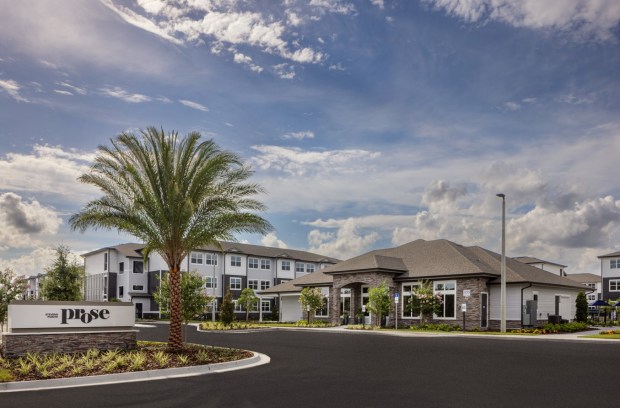 Alliance Residential received a Live Local tax exemption for 118 units in its Prose Stevens Pointe community in St. Cloud. Now it’s claiming the exemption for 218 units. (Courtesy of Alliance Residential)
Many of the first-time applicants are considered Class-A, luxury apartment communities, like The Julian in Creative Village and Bainbridge World Center near Disney. But they must provide rent rolls showing that their rents are at least 10% below market rate, as defined by HUD, and income data for each tenant to qualify for the exemption.
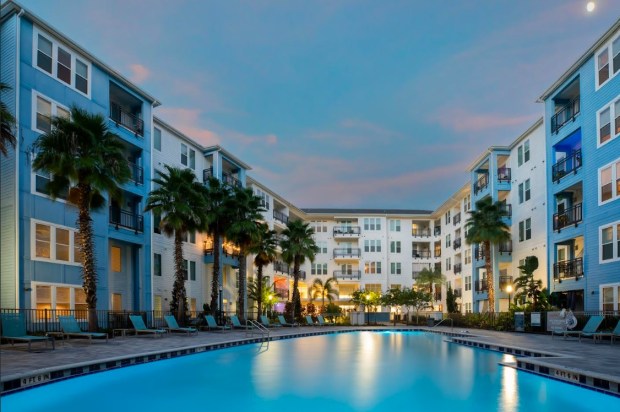 The 403-unit Millenia 700 apartments in Orlando was previously approved for missing middle tax exemptions for 167 units. This year the owners claimed exemptions for 235 units. (Handout courtesy of JLL)
Osceola County Property Appraiser Katrina Scarborough told GrowthSpotter that six apartment complexes in her county have applied for the exemption, on top of the five that were approved in 2024. Those include two recently completed Class-A communities near the Tupperware SunRail station (19South and Altís Grand Twin Lakes).
Scarborough said the six new properties have a combined market value of nearly $274 million. The hit to Osceola’s tax roll, if the opt-out resolutions are voided, would be a huge blow.
“It would be several million, for sure, if every single one of them qualifies,” she said. “My guess is that they’re all going to qualify. We might have one or two that don’t meet all of the criteria, but it would be millions easily.”
Seminole County currently has three apartment communities grandfathered in, and received a fourth application this year from Cypress Longwood.
In Lake County, there are three first-time applications from Bristol Park and Tesora apartments, both located in the Four Corners submarket, and Saunders Lakefront Living, a 55+ community in Mount Dora.
Amanda White, vice president of the Florida Apartment Association, said that if more apartment owners are getting tax exemptions, it means the Live Local Act is working. The whole point of the law was to incentivize developers to build workforce housing and protect tenants from rent hikes, she said.
“The success of the Live Local Act is undeniable,” White said. “Since the Live Local Act was first signed into law, over 180 developments, totaling 55,000 new apartment homes, have entered the development pipeline.”
Have a tip about Central Florida development? Contact me at lkinsler@GrowthSpotter.com or (407) 420-6261. Follow GrowthSpotter on Facebook and LinkedIn.