
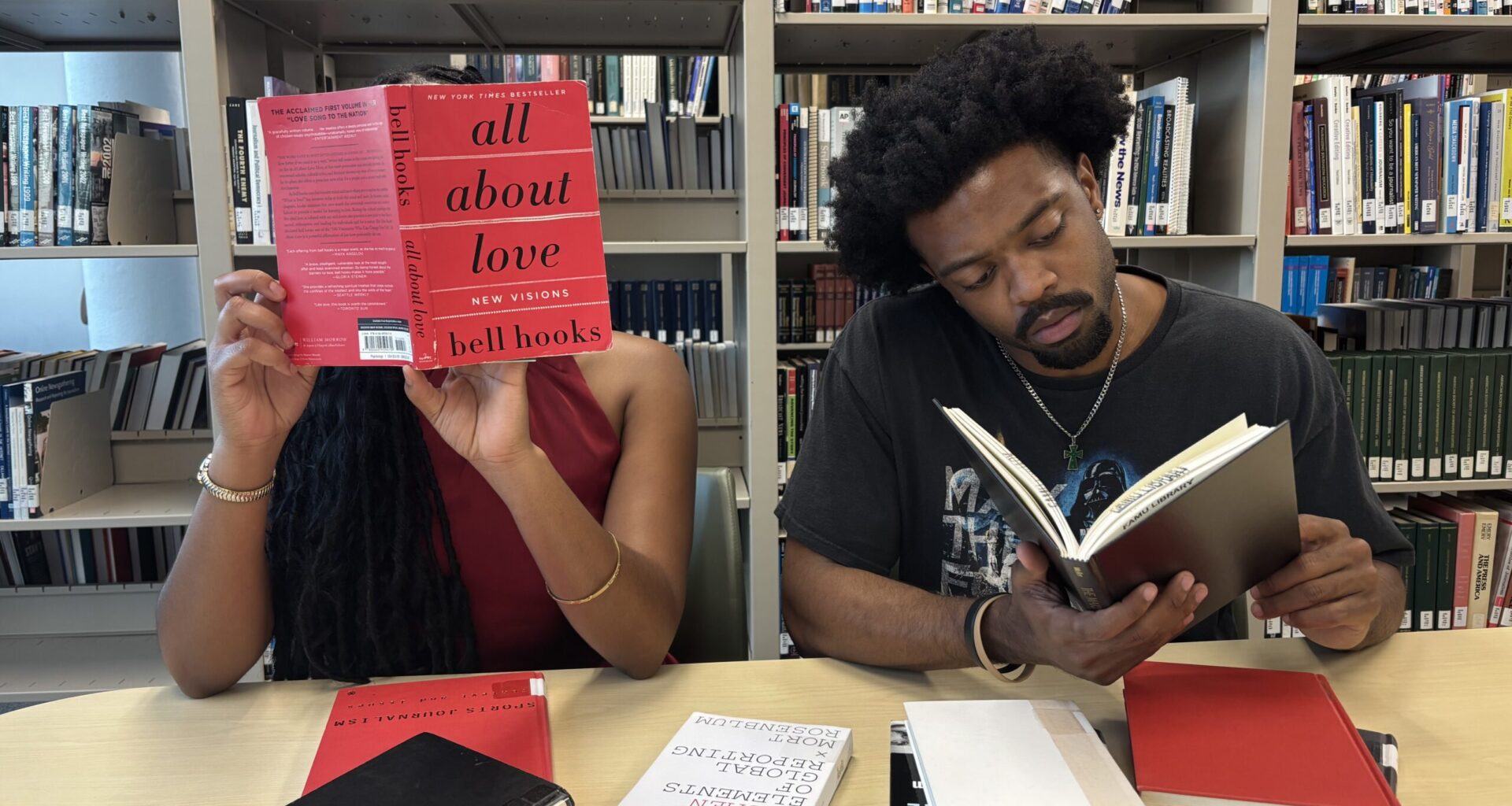
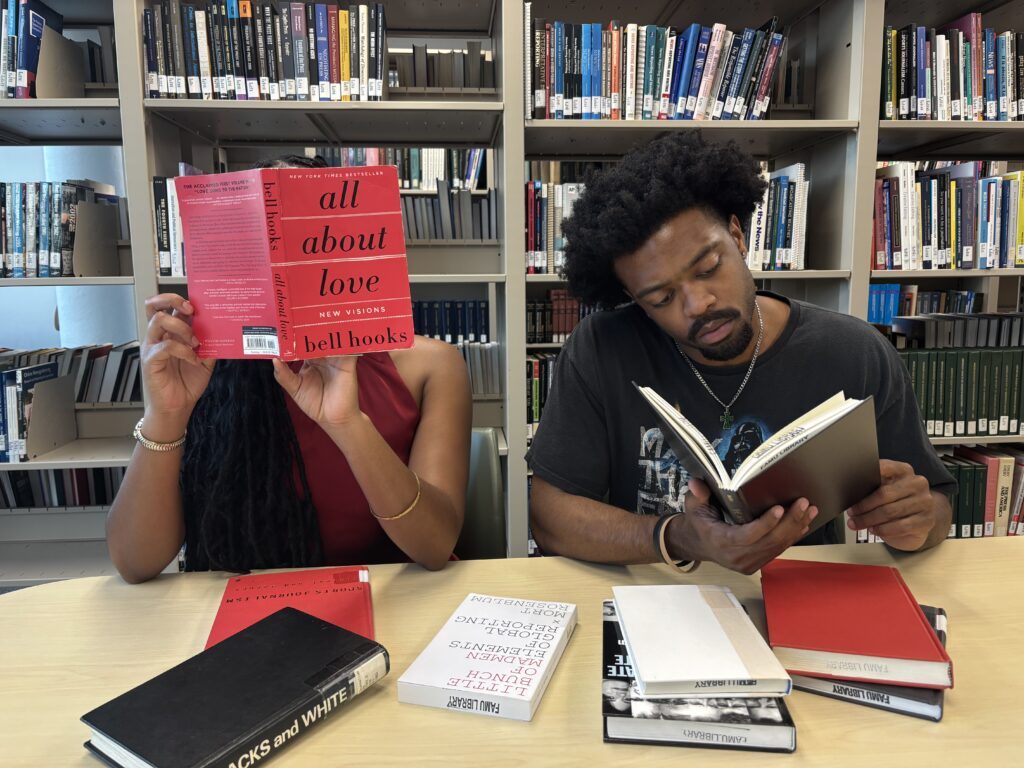
Students indulging in Black literature. (Seanna Miller/FAMUAN)
In an era dominated by scrolling and short attention spans, some Florida A&M University students are choosing to turn pages instead.
“Lately, I have been on this journey of putting down TikTok and Instagram so that I can start reading more,” said Steven Pierre, a graduate student studying health administration at FAMU. “The less Black literature is indulged in, I think we start losing our essence as people.”
As national literacy rates decline and digital media consumption rises, scholars say Black literature remains a critical tool for preserving cultural identity and cultivating empathy.
According to data from the National Endowment for the Arts fewer American adults report reading literature for pleasure compared to previous decades, a trend educators say is especially concerning as culturally diverse voices fight to remain centered in classrooms and curricula.
Professor April McCray, who teaches American literature at FAMU, tells her students on the first day of class that reading Black literature is crucial in helping you garner empathy for your neighbors.
“Black literature is important for not only Black people, but for all Americans,” McCray said. “The numerous contributions made by artists of African descent help elevate the consciousness of all people. Black literature continues to resonate across generations because it’s spiritual and universal.”
For Torren Manning, a FAMU alumna, African American literature represents more than stories of struggle, it represents survival and self-definition.
“The transformation of pain in African American literature is very prevalent,” Manning said. “Although I am tired of the Black struggle story being projected in our literature, I do think it’s important. … I love to see authors transform that pain into a story of triumph and strength and the beauty in the suffering, and also a life beyond that suffering.”
Manning says reading authors such as James Baldwin and Toni Morrison helped her see herself reflected in ways she had not before.
“When you know your identity, you walk and show up in the world differently,” she said. “For a group to know their power even in the suffering, that’s powerful.”
Pierre agrees, comparing Black literature to music that transcends generations.
“You listen to a song from back then, and you get the same feelings,” he said. “It keeps us tied to our essence. It keeps us knowing who we are.”
In classrooms and quiet dorm rooms, the act of reading Black literature becomes an act of resistance, and of empathy. As McCray reminds her students, stepping into someone else’s story teaches them how to step into someone else’s shoes.
“African literature is impactful because when you know your identity, you walk and show up in the world differently,” Mccray said. “Especially when you know your history, you can dictate your future and stand on paths that were laid out for you.”