
Written by Kelly Sanchez on March 25, 2026

Advertisement
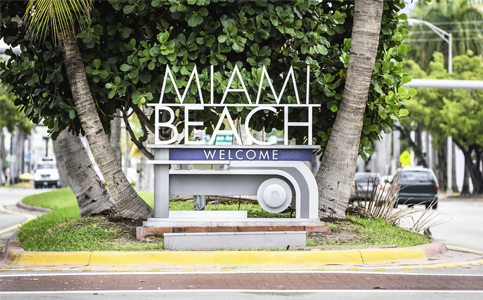
Miami Beach commissioners last week approved a resolution to adopt a strategic plan based on the city’s mission statement, organizational values, strategic vision areas and associated goals and priorities over the next several years.
The strategic plan is organized around five vision areas and is to serve as a guide for policy direction, operational priorities and the allocation of city resources. It includes a cover sheet with a place to indicate whether a commission item being proposed aligns with one of the initiatives as a reference point. It can also be changed by resolution at any time.
“It’s really just a good governance method,” Commissioner Joseph Magazine said. “And while I love that this commission gets down into the details like we just did today, right, because that is the importance of local government, it is when you walk outside of your house what you experience, whether it be the safety of your roads, the cleanliness of your streets, whether your city is safe during March for spring break, whether your streets are esthetically pleasing or not.
“Those are the meat and potatoes of everyday, day-to-day operation of a city,” he continued, “but we also need to think comprehensively and, oftentimes, I think our way of governance tends that we focus solely on some of these day-to-day issues and don’t take a step back, take a breath and figure out those macro issues as well.”
“And the decisions that we make are often piecemeal together and lack being part of a broader context and vision for a comprehensive plan for our city, so this is essentially setting some of those parameters,” Mr. Magazine said. “Now, that’s not to say that we can’t deviate from that. If we have a comprehensive plan or vision, something is outside of that, perhaps we take a step back and explain why we’re doing something that deviates from our comprehensive vision.”
The first strategic vision area is to be a vibrant city. Its goals are supporting a business climate of innovation, entrepreneurship and investment, recognizing and preserving the community’s historic structures, pursuing world-class projects and programs, seeking diversified housing options and affordability/ attainability for current and future residents, leveraging community arts and cultural partners, and exploring opportunities to attract university outposts in the city.
“We have a number of strategic vision areas,” City Manager Eric Carpenter said, “a vibrant city where our objective is to build on our internationally recognized reputation by balancing tourism and development initiatives to enrich the quality of life and vitality of our neighborhood, schools and commercial areas.”
The second vision area is being a safe city, where maintaining one of the lowest crime rates among comparable cities, building partnerships that enhance both the real and perceived safety perceptions in the community, using policing practices to increase the visibility and engagement of police officers and taking measures to ensure a holistic approach to community safety are the goals.
“[A] safe city where our objective is to build resident satisfaction through safety, cleanliness, parks and modern codes,” Mr. Carpenter said.
The third vision area is being a resilient coastal city, with goals like maintaining strong sanitary sewer and stormwater infrastructure systems to help preserve area water resources, exploring multi-funding opportunities for sustainability capital improvements, considering private property adaptation programs to encourage sustainability improvements, exploring design standards and codes to mitigate the impacts of heat, and considering improvements to address Parkview Island water flow and quality.
“Our resilient coastal city where our objective is to protect and enhance our natural and built environments through leading edge resilience, infrastructure initiatives and investments in support of the longevity and sustainability of our community,” Mr. Carpenter said.
The next area is being connected and engaged. Miami Beach aims to develop multi-modal connectivity, work with the Miami-Dade Transportation Planning Organization to improve certain transportation projects outside of the city that impact its transportation corridors, implement blue zone principles and take on initiatives that encourage a multi-generational demographic of residents in the city.
“A connected and engaged city where our objective is to embrace a multimodal philosophy to encourage non-motorized mobility options to reduce congestion and provide enhanced connectivity to our neighborhoods, schools, employment, special events, open spaces, businesses and attractions,” Mr. Carpenter said.
The last aim is being a smart city, which involves recognizing the city commission’s responsibility of providing governance and oversight and understanding the administration’s role in implementing the goals and objectives of the governing body. The city also aims to earn public trust through honesty, transparency, respect and equity and be recognized as an employer of choice.
“Smart city where our goal is to create a high quality and efficient governance, services and employees,” he said.
Mr. Carpenter added that the document would inform the city’s budgeting process along with the day-to-day direction he gives to the teams “on how to deliver the best results for the community.”
“This is obviously a very important discussion,” he said. “We prioritize how we want this organization to be run every year through the budget process, but a document like this is really taking us out further multiple years… This particular document is the culmination of input from the mayor and commission over the past year; it does obviously build on what we’ve done historically.”
Miami Beach’s strategic planning dates from 2006, with formal plans later updated in 2015, 2019 and 2023.