
By Kylee Encarnacion, from the Fall 2025 edition of Reflections magazine
From humble beginnings to its role as a booming tourist center, Orlando encompasses many layers of deep history, connected by its communities and by the way their residents made a living. Beginning in the 1880s, one such community, the neighborhood of Parramore, was originally home to diverse peoples of many ethnic and cultural backgrounds, although it’s now largely known as the oldest and largest African American community in Orlando.
The history of Parramore traces stories that were shaped by the Jim Crow era, the Civil Rights Movement, and the more subtle but ongoing impact of gentrification. Although urban infrastructure development in Central Florida often reinforced racial divides, this neighborhood was a thriving enclave of Black entrepreneurship in the early and mid-20th century. The stories shaped by a racialized urban landscape are reminders that even in the face of systemic exclusion, community members carved out spaces of refuge and enterprise. What follows is a brief look at some of the people, places, and events that illuminate the rich Black history of Parramore.
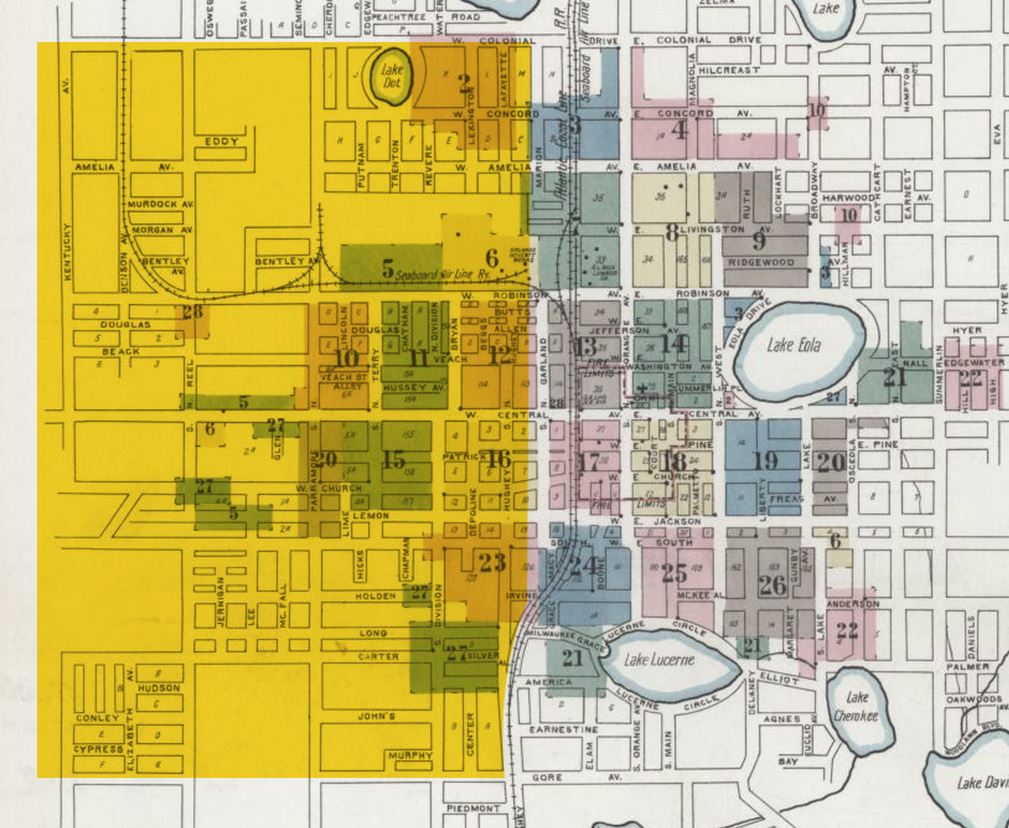
This 1913 map shows what’s now Orlando’s Parramore area before major highway construction through the neighborhood. Sanborn Map Company, Sanborn Fire Insurance Map, Orlando, Orange County, Florida, May 1913.
Parramore Then and Now: People and Places
The community’s name comes from James B. “Buck” Parramore, an early white mayor of Orlando and former Confederate soldier who plotted the area for development beyond Division Street in the late 19th century and inspired the name “Parramore Avenue” for a major commercial street in the area.
According to genealogist Betty Jo Stockton, during Mayor Parramore’s six terms in office, from 1897 until his death in 1902, Orlando matured from a village to a city. We can credit the area’s residents, however – the people who built their lives in the neighborhood named after him – with laying the foundation for a legacy that continues to shape the overall narratives of the city.
Two of them were doctors, their names remembered on important neighborhood landmarks and institutions. Dr. J. B. Callahan, who moved to Orlando in 1908, became the first African American doctor to open a medical practice in the city and to practice surgery at Orange General Hospital, the precursor of Orlando Regional Medical Center. In 1987, the city of Orlando named its new Callahan Neighborhood Center at 101 N. Parramore Ave. for him, incorporating into the building the façade of the historic 1921 Jones High School, long a center of community for Orlando’s Black residents. Today, the Callahan center remains the location for many recreational and neighborhood activities.
Another prominent doctor and business owner, Dr. William Monroe Wells, arrived in Orlando in 1917. In addition to his decades-long medical practice, during which he delivered thousands of babies, Wells served as the coroner who signed many death certificates for Black residents during the era of strict racial segregation, including some who died during racial violence. (At least 33 racial-terror lynchings were recorded in Orange County, according to a historical marker near the Orange County Regional History Center in downtown Orlando.
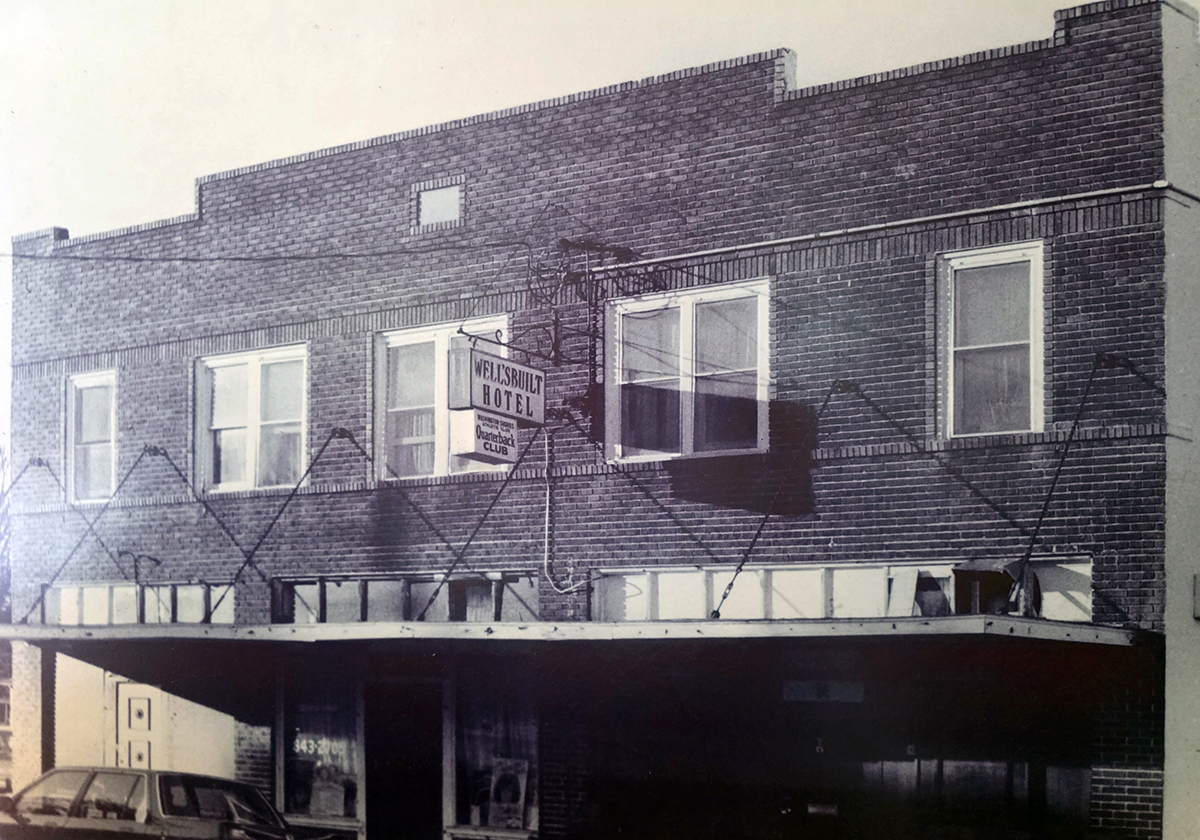
Wells was also the original owner of both the Wells’Built Hotel and the South Street Casino, important businesses in the history of Parramore with roots in the 1920s. The hotel, which opened in 1929, provided a safe haven for those who needed to travel or who worked in white neighborhoods beyond Division Street, as signified by its inclusion in The Negro Motorist Green Book. First published in 1936, the Green Book offered Black travelers essential information on safe lodging in many American cities, including Orlando.
Next door to the hotel, Wells also built the South Street Casino, a vibrant nightclub that welcomed legendary performers such as Ray Charles and served as a Black social and cultural hub during the Civil Rights era.
Today, the Wells’Built Hotel building houses a museum of African American history and culture that stands as a powerful testament to the community’s resilience. The museum’s founder, Geraldine Thompson, who died in February 2025, was also a member the Florida House and Senate for nearly two decades and a vital force in preserving the heritage of Parramore.
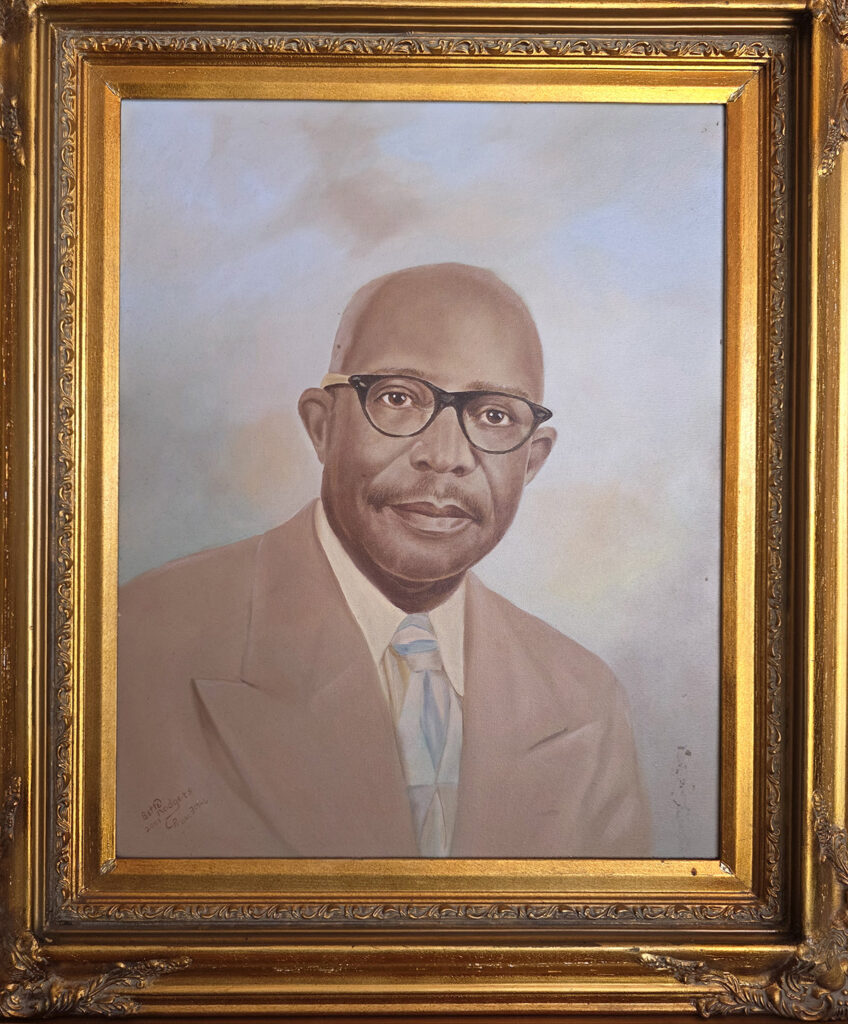
Dr. William Monroe Wells
Sacred and Historic Grounds
For decades, many future leaders of the Parramore community were educated at Jones High School, which opened in the 1920s at the intersection of Parramore Avenue and West Washington Street as a segregated school for Black students. (As noted above, the site is now home to the Callahan Neighborhood Center).
The school’s namesake, L.C. Jones, was a longtime principal and donor of the property. In 1952, Jones High moved to its present location on Rio Grande Avenue, and the historic building on Parramore Avenue became the only elementary school serving this Black community. During the desegregation era, it was the only school in Orange County to close permanently.
Another significant heritage spot in Parramore, the site of Tinker Field, marks both a sports and civil rights landmark in the community. Built as a wooden ballpark in 1922 and rebuilt in 1963, Tinker Field was originally a segregated sports venue for white fans and players, before the integration of Major League Baseball, as well as a spring-training site for several teams. The stadium was demolished in 2015. In a memorable event unrelated to baseball, Dr. Martin Luther King Jr. delivered his only speech in Central Florida at Tinker Field in 1964, from the pitcher’s mound. Titled “Integration Now,” King’s historic call to action still echoes across the historic site, where Tinker Field History Plaza features a bust of King. Designated an official historic landmark by the Orlando City Council in 2015, the site stands as a powerful symbol of Black history to the Parramore community.
Like other historically Black neighborhoods across the nation, Parramore has faced challenges not just from racism but also from urban development. The construction of Interstate 4 and the East-West Expressway in the 1960s physically split the community, reinforcing long-standing racial and economic segregation. Maps from the 1913 Sanborn Fire Insurance Atlas show a thriving Parramore before these disruptions.
Decades later, gentrification continues to raise property values and push out longtime residents, while development pressures alter the neighborhood’s cultural fabric. These changes are the result of systemic decisions that continue to displace Parramore residents and businesses.
The city also recognizes the neighborhood’s significance, however. Today, it’s part of the Orlando Main Street Program within the Central Business District Downtown, and the Holden area of Parramore is listed on the National Register of Historic Places. The Main Street Program supports local businesses while keeping the neighborhood’s history alive. It helps communities grow without losing the stories and culture that define their distinctive character. Parramore’s Mainstreet Program Map from 2022 shows the core of revitalization efforts. Parks, walkability initiatives, and business incentives seek to preserve the heritage of the area.
Over time, religious life constituted another cornerstone of Parramore. Residents attended seven major historic African American denominations: African Methodist Episcopal, African Methodist Episcopal Zion, Christian Methodist Episcopal, National Baptist Convention USA Inc., National Baptist Convention of America Unincorporated, Progressive National Baptist Convention, and Church of God in Christ. Despite limitations imposed on Black residents about where to live, learn, gather, and speak out, these churches helped grow the community and empowered their members through leadership and collective action.
From 1880 through the 1920s, African American churches became anchors of faith, hope, and self-determination. Churches such as St. John, Shiloh Baptist, and Mount Pleasant Missionary Baptist created safe gathering spaces, schools, and libraries, including the Brooker T. Washington Branch Library, when few others existed. Many remain anchors of faith and neighborhood pride today, reminding us how deeply religious life shaped Paramore’s identity.
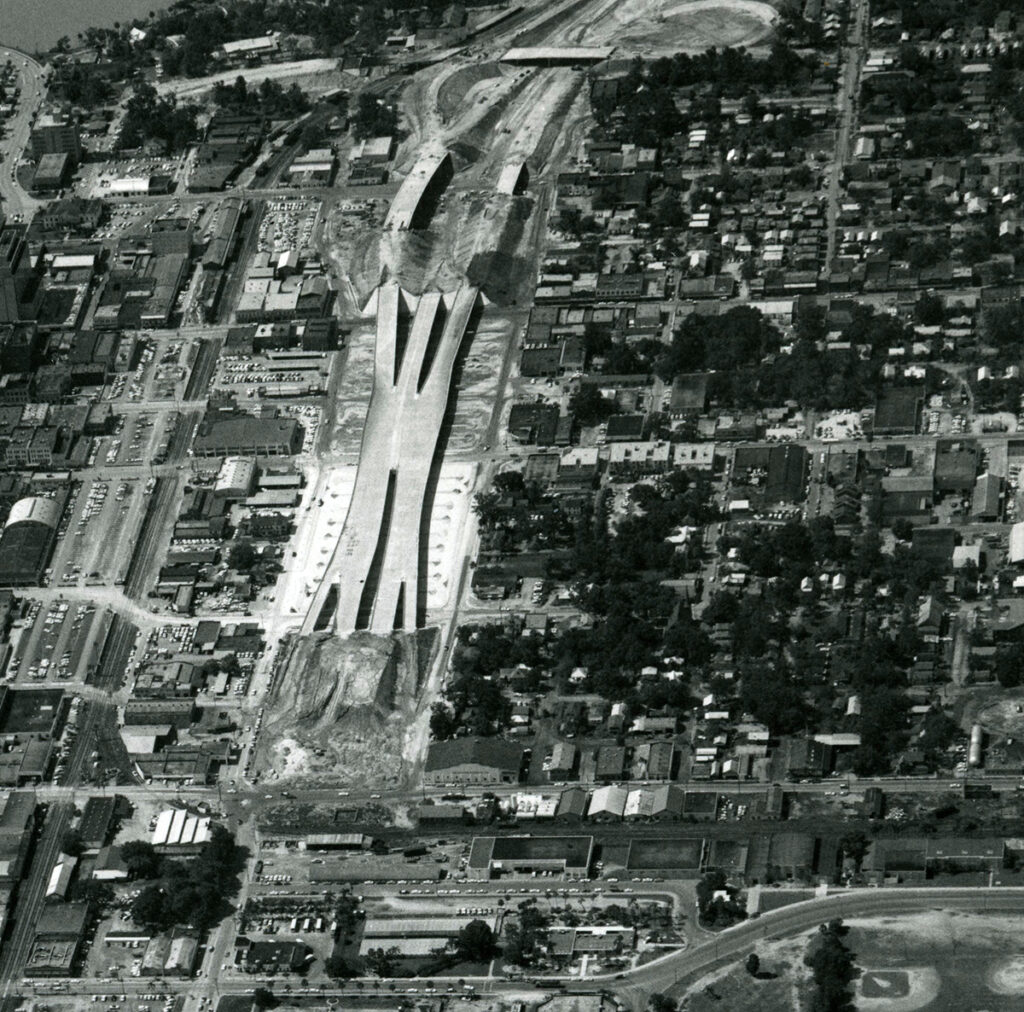
Interstate 4 construction through downtown Orlando east of Parramore.
A Legacy of Resilience and Outreach
All in all, the people, places, and events that shaped this historic neighborhood illuminate more than buildings or street names. Their stories reveal a legacy of communal resilience and creativity that provides a powerful narrative in the broader story of Orlando.
In 1952, for example, Parramore faced tragedy when a jet plane crashed near homes and schools, as the pilot sought to steer the aircraft to avoid higher losses of life. When residents rushed in to help and stand side by side with emergency crews, their response showed just how strong and connected Parramore really was. Even in a moment of crisis, there was compassion, care, and a deep sense of togetherness that spoke to the community’s strength.
Parramore’s history breathes through its people and pulses through its places far beyond what has been mentioned here. It echoes in barbershops still buzzing, in churches that doubled as community centers, and in stories passed down over porches and pews. Although challenges from urban development and gentrification continue to pressure the community’s historic characteristics. entrepreneurship in Parramore is far from a relic of the past: it’s a living, evolving tradition, despite the pressures of displacement and development, Current projects are intentionally bringing this spirit of entrepreneurship to the present using modern technology and storytelling as tools for preservation.
These efforts include public history projects that are undertaking the important work of centering Parramore’s story within both the larger histories of the South and the microhistories that exist within the community itself. The “Parramore Speaks” project, a collaboration between the City of Orlando and the University of Central Florida’s RICHES digital archiving project, is actively gathering oral histories, images, and memorabilia from community members to preserve and honor their past.
Another key initiative, titled “The Roots of Entrepreneurship in Parramore,” features a digital, map-based exhibit that traces the legacy of Black entrepreneurship in Orlando from its early development to the present, also supported by RICHES and the city. Together, both projects offer a foundation for meaningful recognition, preservation, and investment in Parramore’s past, present, and future. These projects lay the groundwork for future community-centered initiatives, including digital walking tours of historical landmarks, augmented reality experiences, and more comprehensive archival or oral history collections that could help educators, residents, and tourists alike understand the significance of this neighborhood. As development continues around Parramore, so too must its commitment to honoring the people and places that made such growth possible.
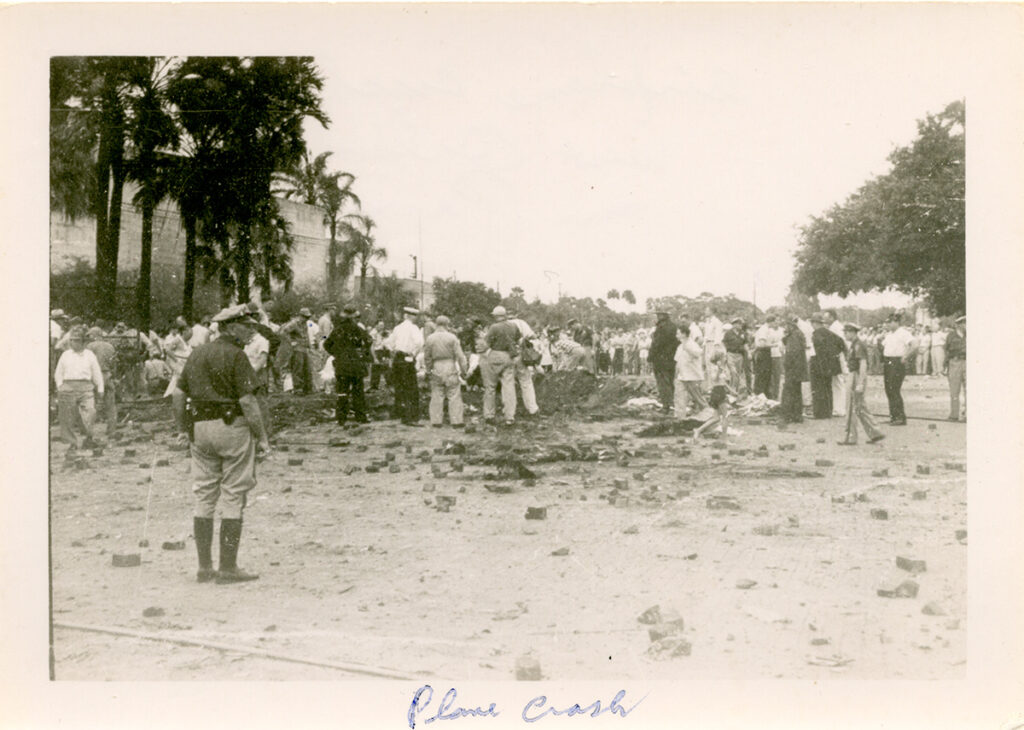
Residents gather around wreckage from a 1952 plane crash near Parramore Avenue and Livingston Street.
Remembering the Past, Honoring the Present
Parramore’s story is a reminder that the heart of a city isn’t its skyscrapers or theme parks, but its people. The builders of culture, economy, and community in Orlando included people who dared to dream in a city that often excluded them. In doing so, they helped shape Florida through the spirit of resilience that embodies those who lived in and developed the community of Parramore. As Orlando continues to reimagine itself for the future, remembrance of the stories embedded in the sidewalks of Division Street or the echo of Dr. King’s voice on a ballfield shall not be forgotten.
Parramore is not a footnote in Orlando’s past but a cornerstone that deserves preservation and celebration for its continued significance in the broader narratives of Florida’s history. Its legacy lives beyond historical markers or revitalization maps. It is in every resident who remembers, rebuilds, and reclaims the spirit of Black entrepreneurship and resilience that made the neighborhood thrive.