
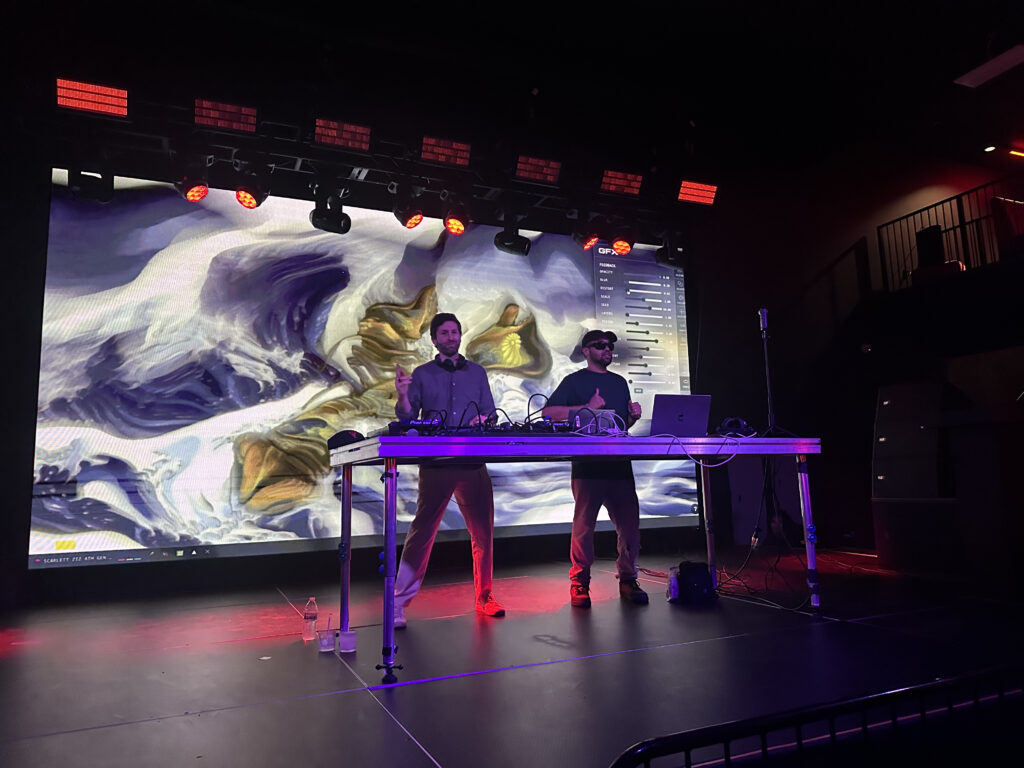
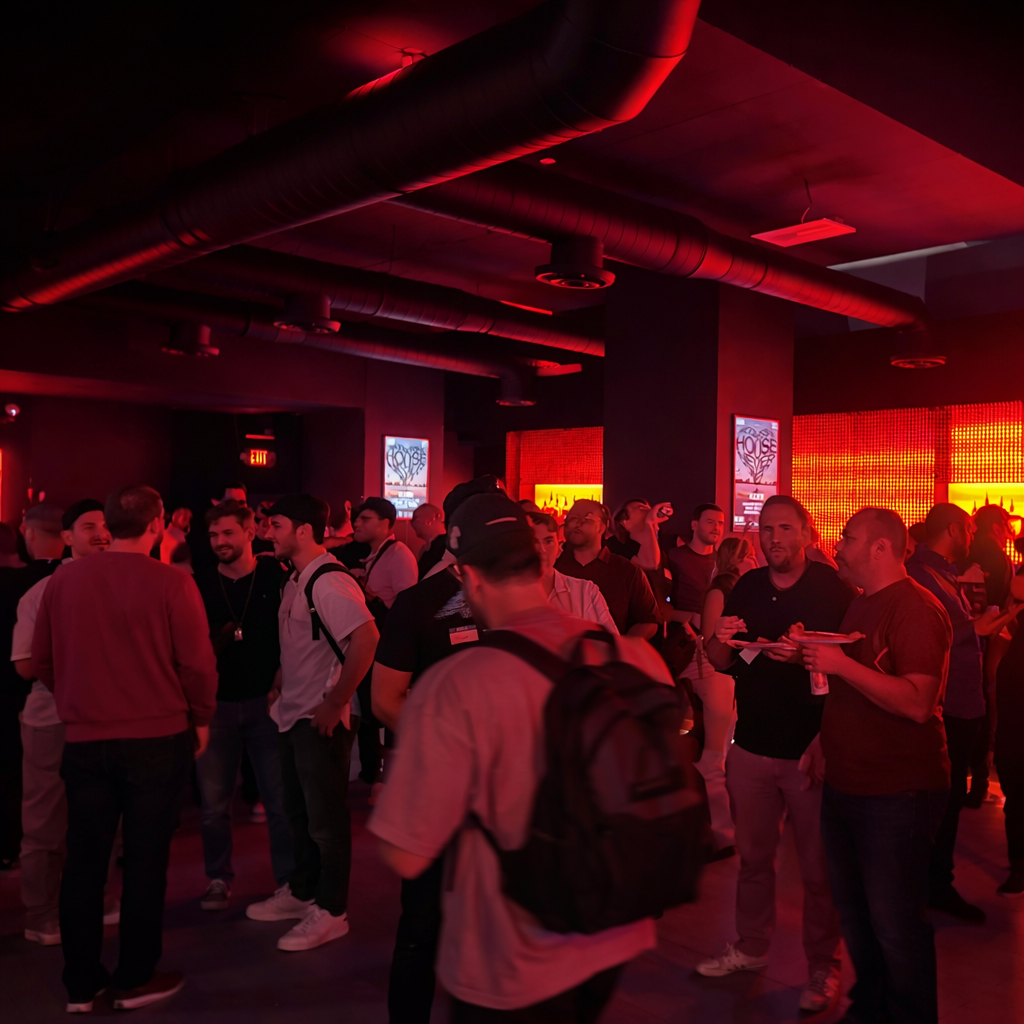
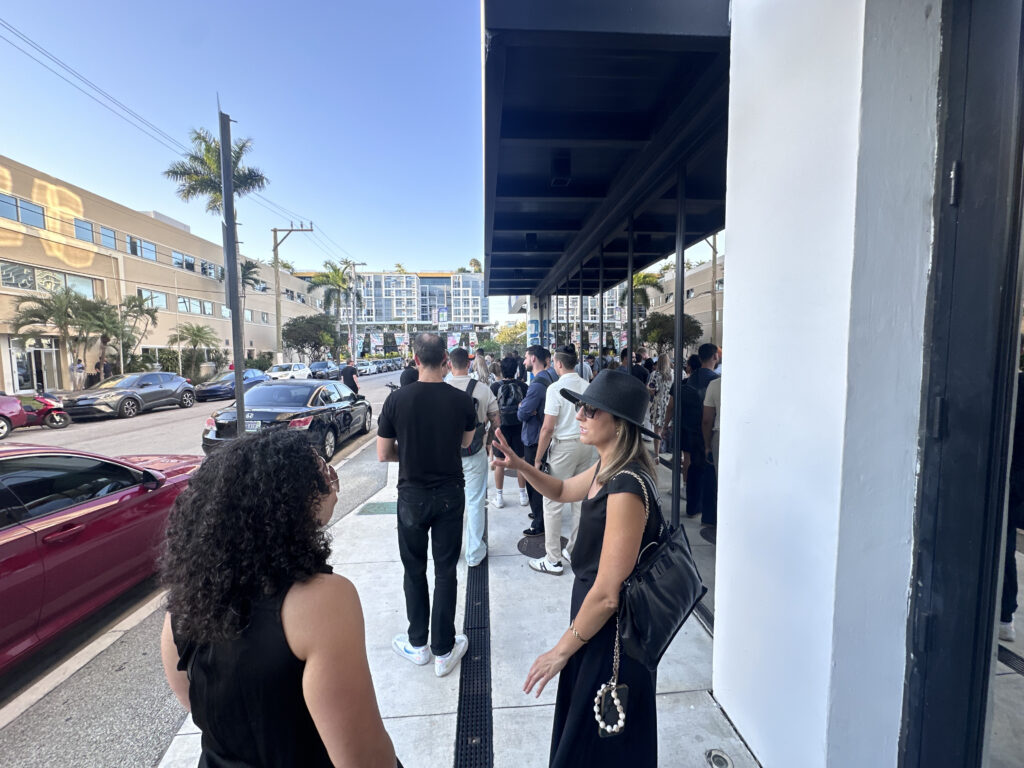
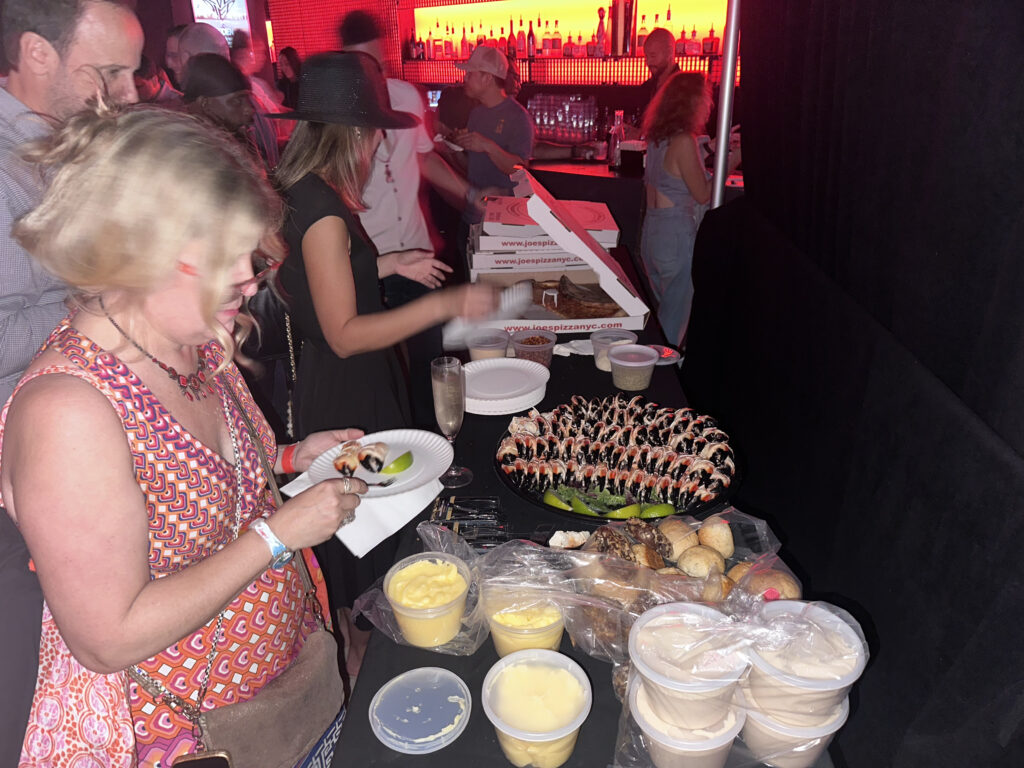
A line stretched outside Midline Miami on Wednesday afternoon as hundreds of attendees waited to get in. Inside, a DJ set pulsed through the room while the crowd helped itself to boxes of pizza and crab claws.
But this wasn’t a typical Miami Music Week party.
On the performance stage, founders demoed AI tools as attendees gathered closer to watch AI agents build apps, generate content and automate workflows.
The event, ClawCon Miami, was part of a growing series of gatherings centered around OpenClaw, an open-source movement focused on personal AI. What started as a meetup in San Francisco quickly gained momentum, drawing far larger crowds than expected and expanding to cities like New York, Madrid and Austin before landing in Miami. “No one here asks for your LinkedIn, no one asks for your GitHub. It’s for everybody,” said organizer Michael Galpert.
Founders were opening their laptops and showing what they had, live. When something broke they fixed it, when something worked, you saw it live.
Making AI Accessible
Many of the demos focused on making AI easier to use. Instead of requiring complex setup, tools like KiloClaw showed how an agent could be launched in seconds, connected to platforms like Slack or Telegram and put to work immediately. “You can set the whole thing up in about 30 seconds,” presenter Brian Turcotte said.
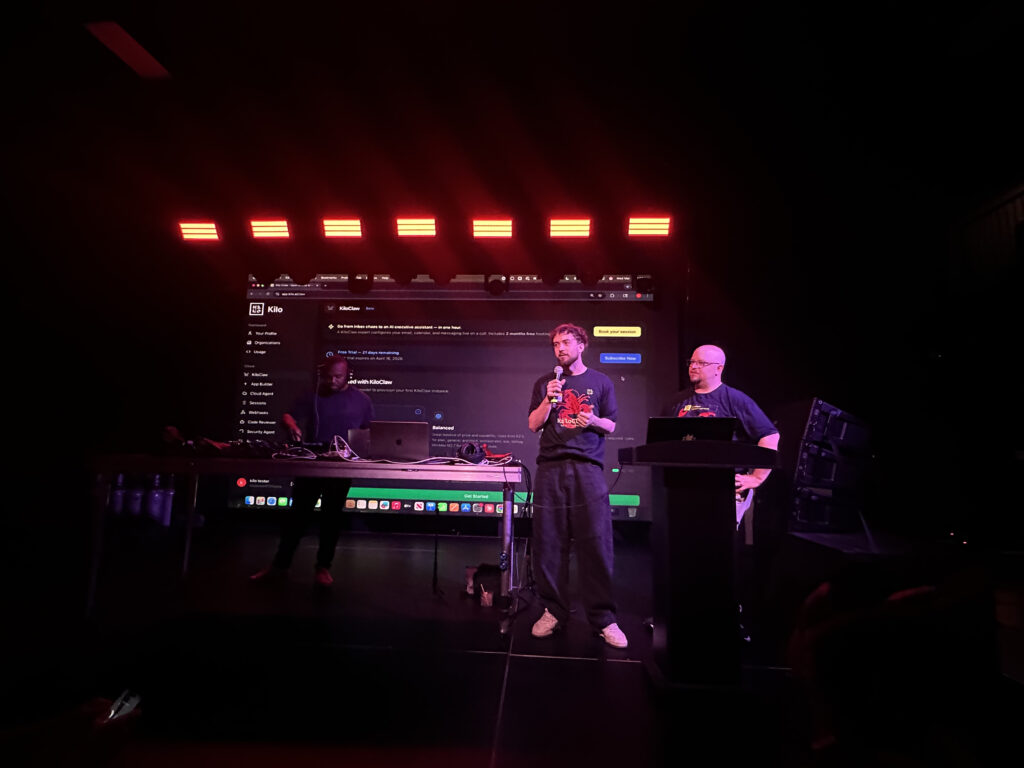
Others pushed that idea further. Zo introduced what it calls a “personal cloud,” a system designed to give individuals their own space to run, host and manage AI agents without relying on large platforms. The company believes the next billion dollar developers need a simpler computer. “This movement is fundamentally about community and ownership of AI,” co-founder Ben Guo said.
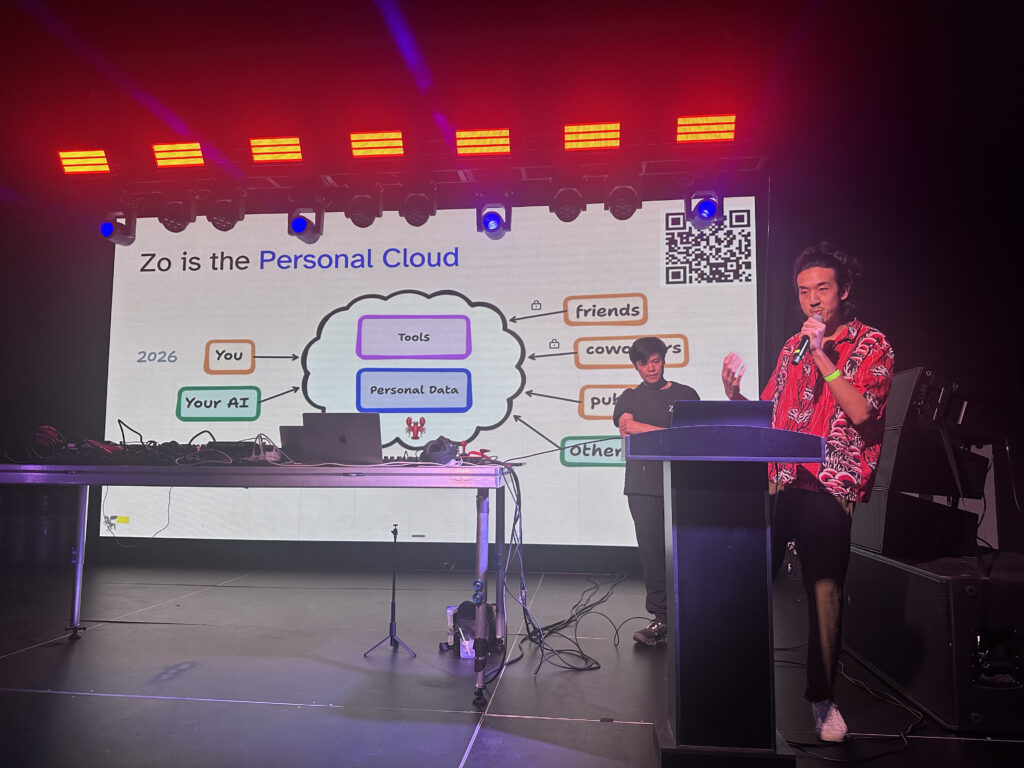
Automating Everyday Tasks
Codebake showed how to leverage AI for day-to-day tasks. The platform built for project managers and engineering teams, can update tickets, progress reports and standup summaries automatically, cutting down on the manual status work that usually slows teams down. During its demo, an AI agent took a bug report, analyzed the issue, fixed the code and generated a pull request.
For Miami-native Brian Gonzalez, co-founder of Center Console Only, a marine content creator, the problem was different but just as time-consuming. After years of producing content, his team had built an archive of more than 140,000 files and 80 terabytes of footage, much of it difficult to search or retrieve. Using AI, they created a system that automatically generates scene descriptions, tags content and allows them to search their library using natural language, allowing them to retrieve specific clips. “It has done in two weeks what we couldn’t do in eight years,” Gonzalez said.
Agents Getting Creative
Toward the end of the night, more creatives began making an appearance on stage. During one set, Matt Medved, co-founder of NOW Media, used an AI agent to help organize his music library, build a tracklist and even generate original songs live. The visuals behind him, powered by a project called GFX, were generated while reacting in real time to the music through a system of AI agents working together.
Memelord showed how agents could generate and schedule meme videos simply by texting prompts to them. The agent filters for trending content, and automates what has traditionally been a manual, fast-moving process in the content creation world. What would normally take hours of editing and posting could be done in seconds and distributed across multiple platforms automatically.
On Gamathon agents can design and play their own games, competing against each other or against humans. The platform was created to give agents something to do beyond work. Users can prompt their agents to create new games, join matches or explore a growing library of AI-designed experiences.
Some founders were also rethinking how people interact online. Jeff Weisbein, founder of Nod Social, introduced a model where users don’t follow each other directly, instead, their agents do. By texting prompts to an AI, users can surface and share content based on what they’re actually interested in, rather than sorting through hundreds of accounts. “Instead of you following someone, your agent follows that person’s agent,” Weisbein said. Agents to connect people automatically, matching users based on what they’re working on and facilitating introductions without the usual back and forth.
What Comes Next
For Galpert, the turnout in Miami was unexpected. What stood out most wasn’t just the number of people in the room, but what happened after.
“Everyone was coming to me afterwards saying how inspired they were and excited to apply Open Claw and AI to their business or their personal life,” he said.
With that kind of response, the event is likely just the beginning. More gatherings are already in the works.
MORE SCENES FROM CLAWCON MIAMI
READ MORE IN REFRESH MIAMI:
 I am a University of Florida graduate and Miami native who is passionate about writing stories that highlight Miami’s thriving tech ecosystem. I especially enjoy writing stories about technologies creating a social impact, digital assets, and EdTech. Have a story to share? Contact me via Twitter @anathemarketer or
[email protected]. Latest posts by Anayansy Hernandez (see all)