
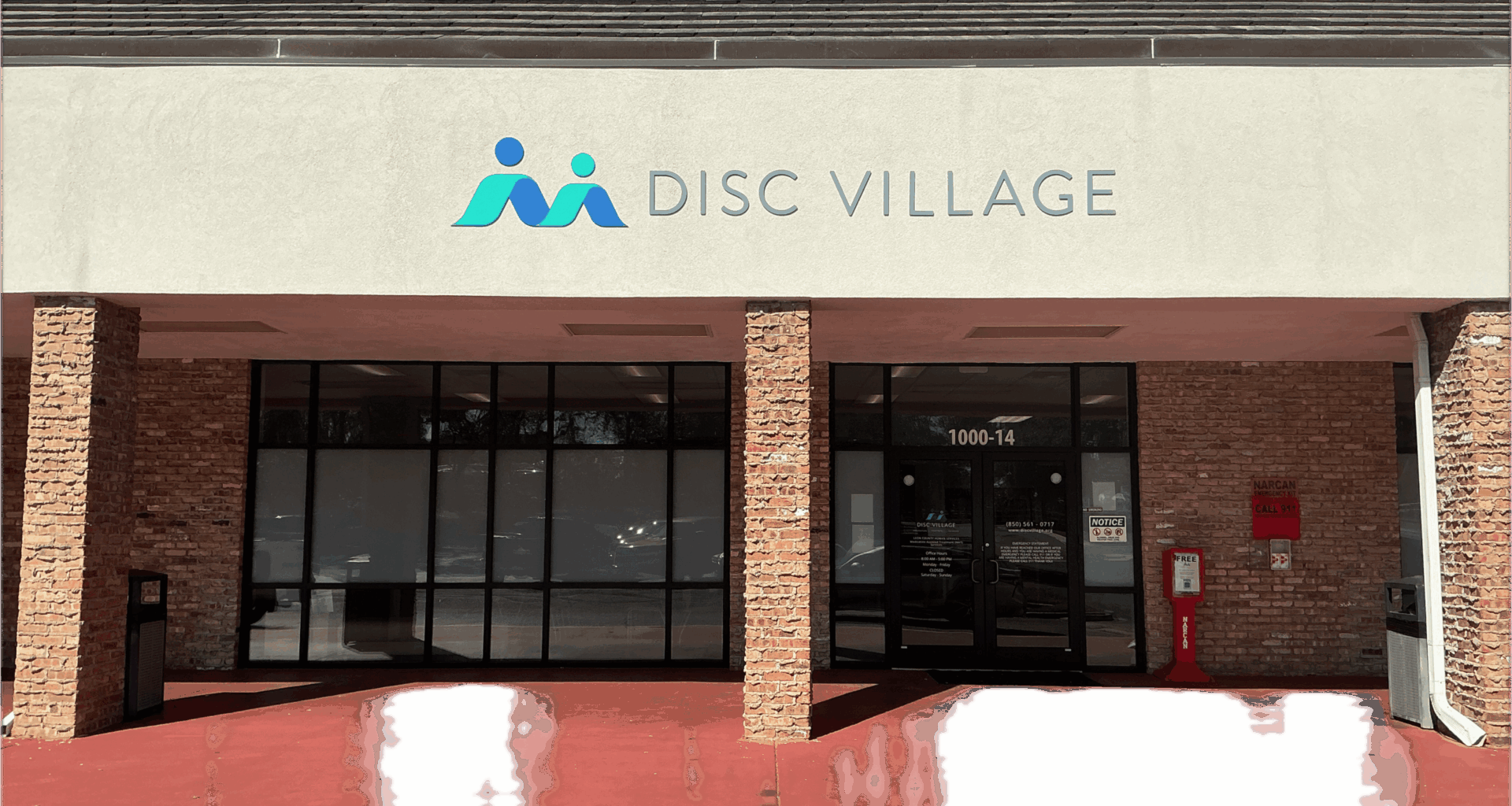
Signage outside of Tallahassee’s Disc Village. (Jada Gordon/FAMUAN)
The Drug Information Service Center Village, known as DISC Village, offers prevention, counseling and recovery programs for students at risk of substance use.
For more than 50 years, the center has served the Big Bend community, helping young adults navigate the pressures of college life.
For college students balancing academics, social life and new independence, the organization provides education, counseling and recovery resources designed to prevent substance misuse and connect those struggling with support before problems escalate.
Lisa Sherry, Disc Village’s community outreach specialist, works with students, families and partners to connect people with resources and spark conversations about prevention and recovery.
“Each person is unique and individual, and what you have to do is assess their needs,” Sherry said. “Everything starts with an assessment, which allows the clinician to determine what treatment plan is applicable. You don’t want to put everybody in the same box.”
Disc Village offers outpatient programs, peer support and medication-assisted treatment for students with more serious substance use disorders.
“For a young adult, it’s about flexibility and treatment options,” Sherry said.
Jacquelyn D. McMillan, assistant professor of social work at Florida A&M University, identifies early warning signs of substance dependency.
“Daytime drinking and the need to use substances to sleep are significant warning signs,” McMillan said. “Dependency is evident when a substance is needed daily to function, and risky behaviors often accompany it.”
McMillan also warns against misconceptions about using marijuana or prescription drugs to manage stress and encourages alternatives such as exercise.
“Programs like DISC village can serve as preventive tools,” she said.
Reducing stigma is key, Sherry added. “Stigma kills, and it keeps people from getting help.”
FAMU health informatics and information management student Jade Elaine offered a peer perspective: “It’s easy to imagine these issues affecting someone else, but the reality is it could be any student.”
Disc Village also partners with schools and law enforcement on diversion programs that provide support and counseling to young adults instead of leaving them with a criminal record for minor offenses.
While many services focus on students and young adults, DISC Village’s work extends beyond college populations. The organization operates high-intensity residential treatment programs for adults who require 30–90 days of on-site care. It also works with the Department of Children and Families to support parents in recovery seeking to maintain or regain custody of their children and serves rural counties across the Big Bend region where behavioral health resources are more limited.
Through individualized care and community collaboration, Disc Village provides students with resources to make informed choices and pursue recovery.
”It’s about providing opportunities so that if somebody has a slip up or needs extra support, we can link them to the services they need,” Sherry said.