
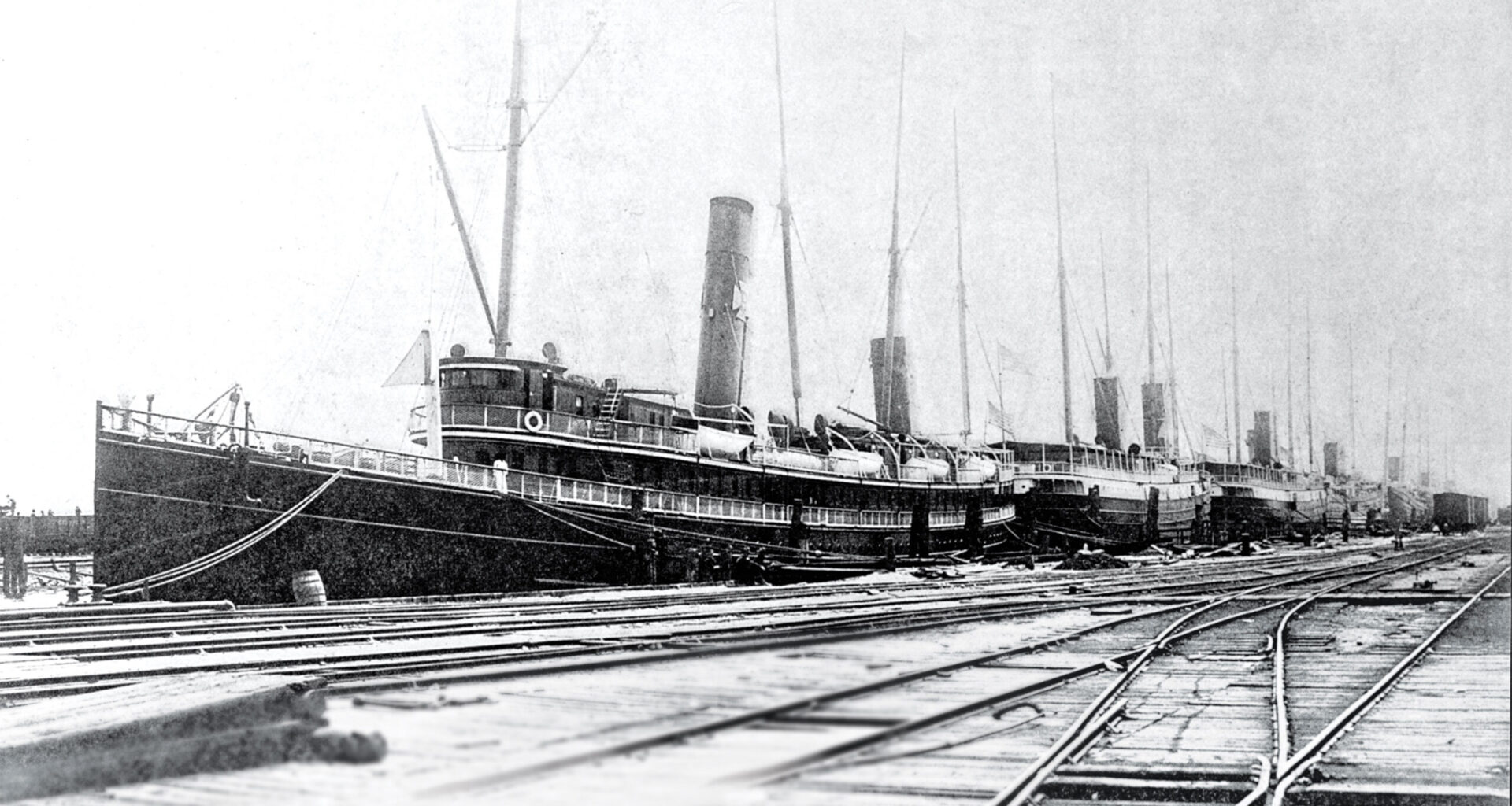
Tampa, at its core, is a port town. During its earliest years, sailing ships provided the town with its connection to the outside world. Shipping is so integral to Tampa’s identity that a passenger steamship, the Mascotte, appears on the city’s seal.
As important as commercial freight shipping was, and is, to Tampa, passenger ships were critical in the days before the widespread use of automobiles and the bridges that cross Tampa Bay. By the turn of the 20th century, dozens of ships moved people in and out of Tampa Bay every day. Those connections began to fade as cars and airplanes came to dominate the transportation landscape. The last ferry to operate in the Tampa Bay area was the Bee Line, which connected Pinellas and Manatee counties until the opening of the Skyway Bridge in 1954. No large-scale passenger ships traveled the waters of Tampa Bay, other than the occasional cruise ships that paid irregular visits to the Port of Tampa during the 1970s.
Cruise lines finally found Tampa, and to a lesser extent St. Petersburg, in the early 1980s. The Tampa Port Authority, now Port Tampa Bay, constructed cruise terminals to attract more ships and year-round service. Today, Port Tampa Bay hosts several cruise lines, including Carnival, Viking, Norwegian, Royal Caribbean and Margaritaville at Sea, with 1.6 million passengers passing through the port in 2025.
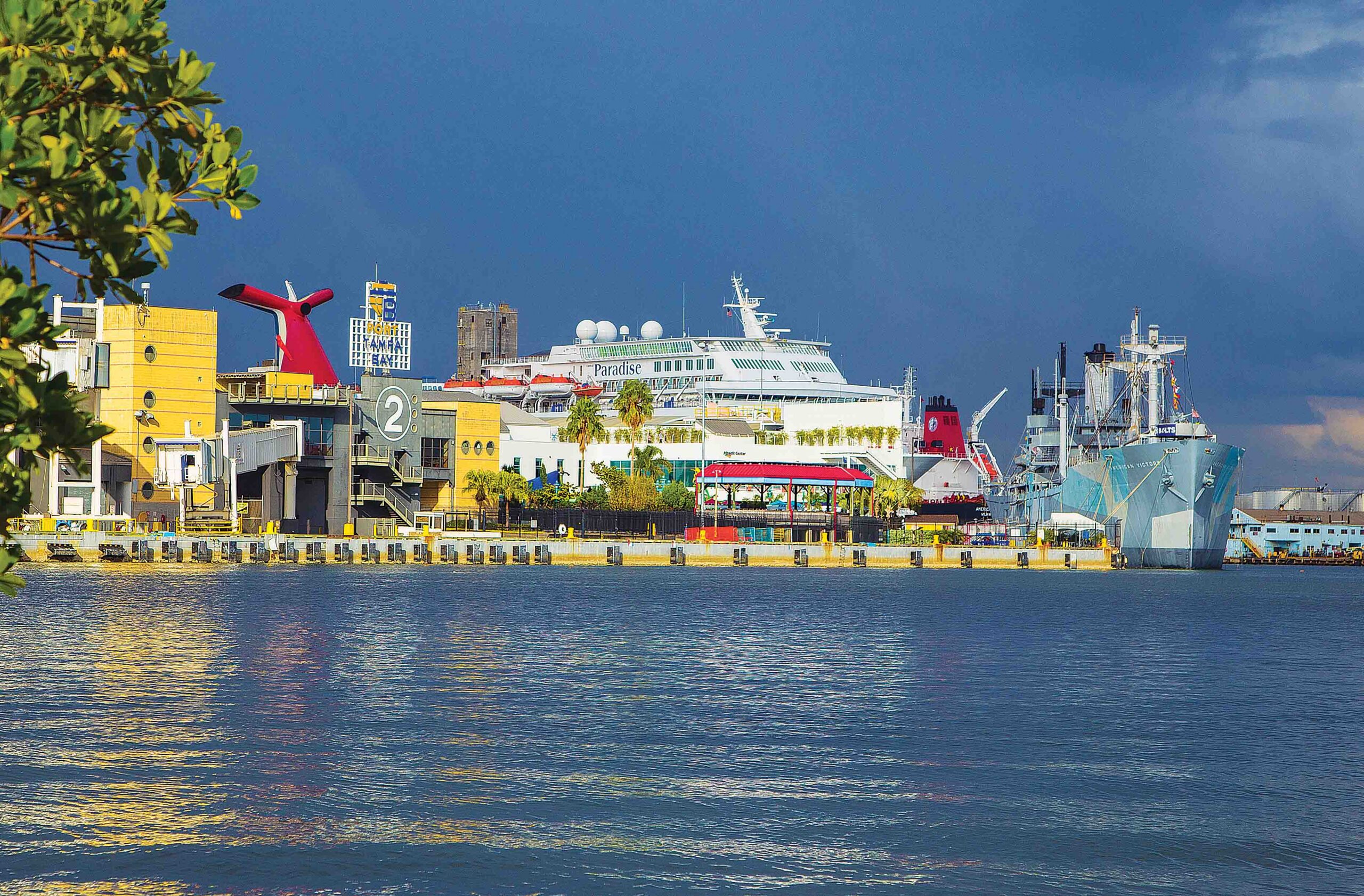 Present-day Port Tampa cruise ship terminal. (Photography by Gabriel Burgos)
Ferry traffic has returned as well. Manthey Hospitality operates the Pirate Water Taxi around downtown Tampa, two dinner cruise ships, the Craft river cruise ship and a pirate ship called the Lost Pearl. In addition, cross-bay ferry service is expected to return in 2026 or 2027, operated by the Pinellas Suncoast Transit Authority with assistance from the Hillsborough Area Regional Transit Authority. Unlike the previous ferry connecting downtown Tampa with downtown St. Petersburg, this service will operate year-round. These successes show that sometimes looking to the past can help solve the problems of today.
Rodney Kite-Powell is a Tampa-born author, the official historian of Hillsborough County and the director of the Touchton Map Library at the Tampa Bay History Center, where he has worked since 1995.
Want to learn more Tampa Bay History? Read on here. Or if you’re looking to advertise, click here.