
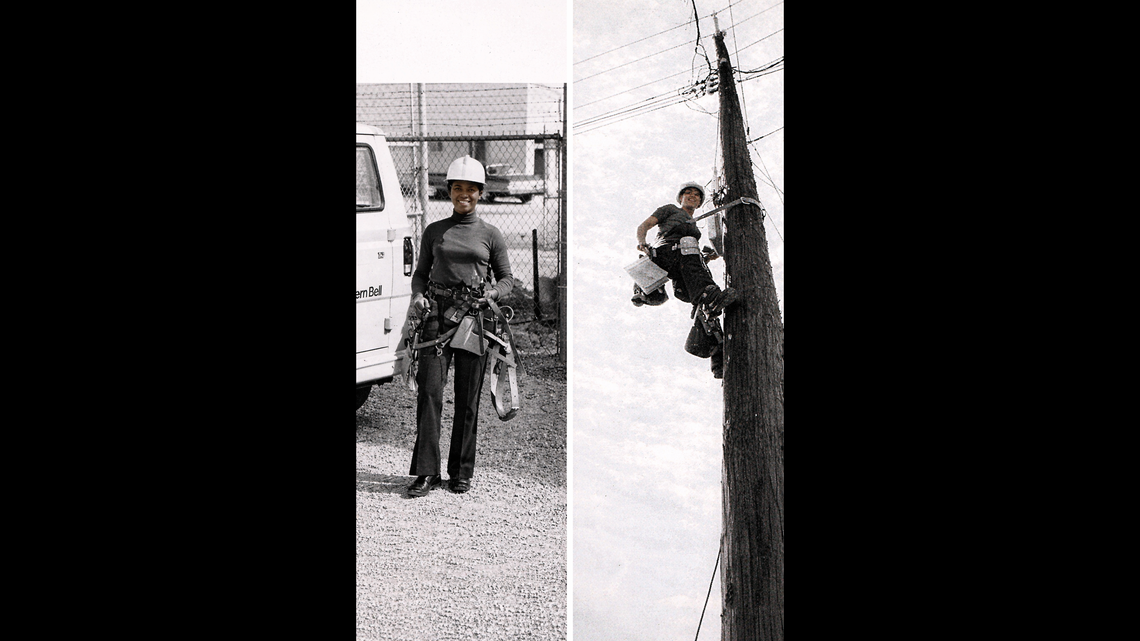
Ivory Jean Ford Strong, who grew up in Miami’s Overtown neighborhood, took at job as a telephone operator with Southern Bell when she was 17 and would become Southern Bell’s first woman telephone installer-repairman in South Florida.
Courtesy Ivory Jean Ford Strong family
Women’s History Month 2026 is almost a memory. It’s been wonderful remembering the contributions women have made to this community, this state and even our country. Especially Black women. I am singling out Black women for this tribute, not because we have made greater contributions, but because too often our contributions go unnoticed.
I am reminded of Katherine Johnson, a pioneer NASA mathematician who helped land humans on the moon during the early space race. It is documented that John Glenn personally requested that she verify the trajectory calculations for his 1962 flight, saying, “If she says they are good, then I’m ready to go.”
Yet, I never knew of the work of this remarkable Black woman until I saw the movie Hidden Figures. Johnson died on Feb. 24, 2020, in her home in Newport News, Virginia. She was 101.
Women of all races in this country have come a long way. Yet, we still have a long way to go.
So, while the official celebrations are almost over, the ghosts of the women who helped shape my life, and the lives of many others in our community and our country, are always with us. They are the surrogate mothers who nursed children who didn’t look like us. They were our birth mothers, our teachers, and “the lady” down the block who always had a watchful eye out for the children in her neighborhood.
Early activists
Some of these brave and heroic women were once unknown — mothers like M. Athalie Range who fought for the simple pleasure of having cool drinking water for the children of the old Liberty City Elementary School. Before she led the fight for proper water fountains at the school, Black children thirsty for a cool drink after recess were led to a faucet attached to a pipe that was laid bare in the hot sun. The water they had to drink was warm enough to make a cup of tea.
Mrs. Range later led the fight to desegregate Orchid Villa Elementary School, so Gary, the youngest of her four children, could attend the school that was near to where he lived. She went on to gain national prominence after being appointed the first Black woman to serve on the Miami City Commission. Later, in 1971, the newly elected Gov. Reuben Askew of Florida appointed her as Florida’s Secretary of Community Affairs. She was the first Black person to serve as head of a state agency.
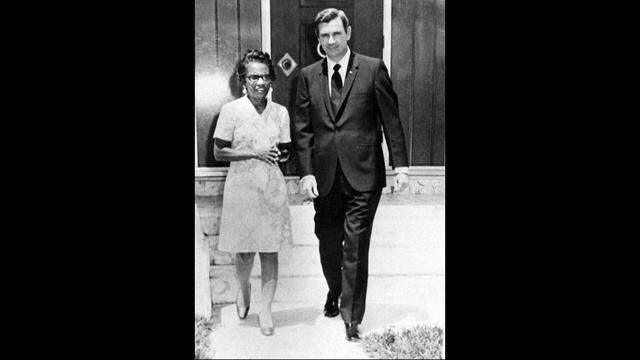 M. Althalie Range with Florida Gov. Reuben Askew in 1970. Range was the first Black woman to serve on the Miami City Commission and Askew appointed her as Florida’s Secretary of Community Affairs, the first Black person to head a state agency. Miami Herald file
While Mrs. Range gained national prominence, others like Eunice Liberty and Marian Shannon did not. Yet, their contributions were no less important.
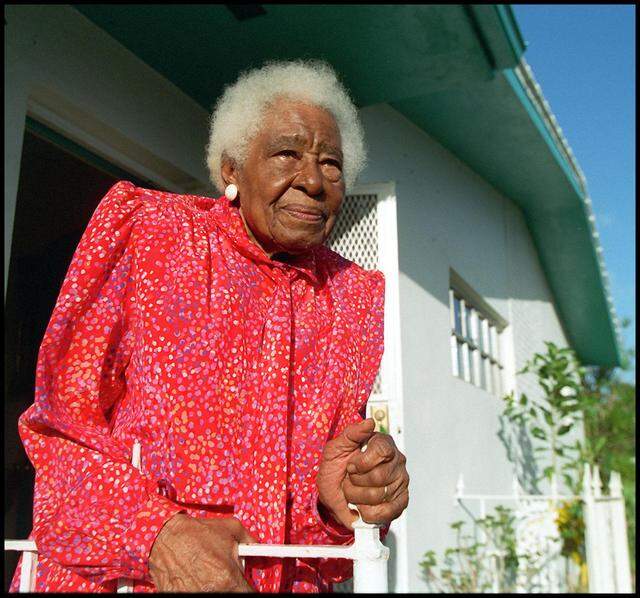 Eunice Watson Liberty brought the teaching of Black History into Dade County Schools. She taught at Frederick Douglass Elementary School in Miami. C.W. GRIFFIN Miami Herald file
Mrs. Liberty was a teacher who taught her young students at Frederick Douglass Elementary about their history when Black History Month was Black History Week. Mrs. Shannon was a journalism teacher at Booker T. Washington who allowed her students to dream big. I know. I was one of them.
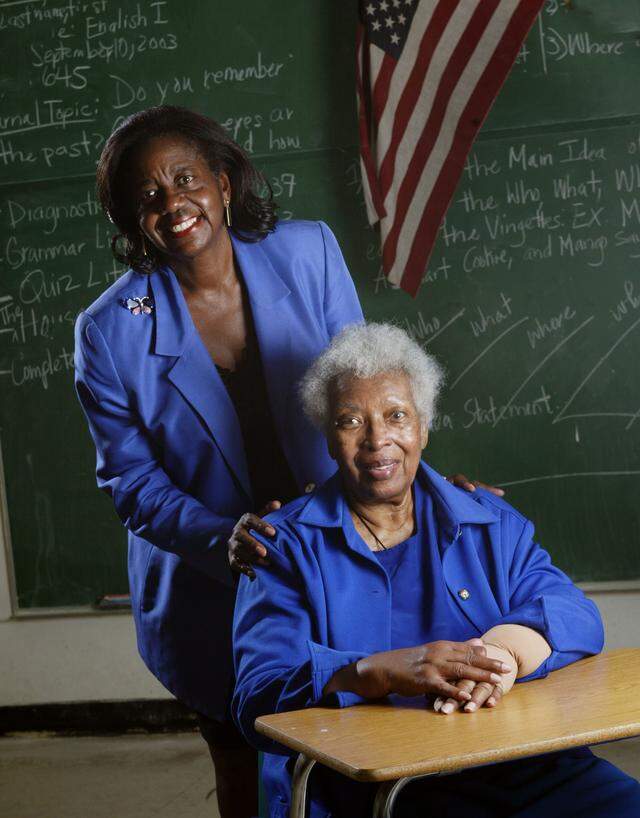 Dorothy Jenkins Fields, left, who founded Miami’s Black Archives, poses with her most influential teacher, Marian Shannon, while visiting Booker T. Washington High School in Miami in 2003. Al Diaz Miami Herald file photo
While Mrs. Liberty and Mrs. Shannon’s names are not that well known, they have joined some of our unsung heroes who were not known outside our community. Some like Eufaula Frazier, Georgia Jones Ayers, Gladys Taylor, and Anne Marie Atkins, to name a few.
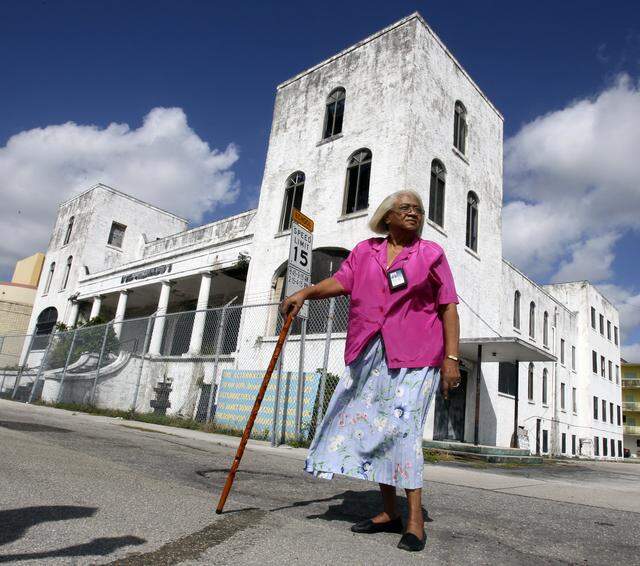 Northwest 22nd Avenue from 135th to 79th streets has been co-designated Georgia Jones-Ayers Way, in honor of the Miami-Dade activist (pictured in 2011), who died at 86 in 2015. CHARLES TRAINOR JR Miami Herald file
They were our heroes, who fought at the grassroots level in our communities for the dignity of human and civil rights, leading voter registration drives, tenants’ rights movements, programs for first-time offenders and such, while never seeking to be recognized. They fought because they loved and believed in justice for all of God’s children.
They fought because they believed that young Black boys whose rite of passage was not a bar mitzvah or a first communion should not be getting arrested at an early age and then turning to a lifetime of crime.
Standing tall
Then there are those, like Ivory Jean Strong, who stood on the shoulders of the early women leaders and decided that telling her three children they could accomplish whatever they set their minds to do was not enough. She had to show them.
Like all the women I have mentioned, Ivory is no longer with us. She died in 2024. But like them she stood tall, literally, on a pole as Southern Bell’s first woman telephone installer-repairman in South Florida. In doing so, she became a role model for young girls who decided to follow a different career path from the one that was presented to them.
Her sister Juanita Marshall is a friend from high school: “Ivory was my hero. She was kind and loving and thoughtful. And she was always giving of herself and of her time. She was the epitome of what it means to be a team player.”
Marshall said Ivory was the kind of person who came into a room talking without ever opening her mouth. “You just knew she was there to do whatever she could to help in any situation.”
Ivory Jean Ford Strong was an ordinary child, born to ordinary parents — George and Irene Ford — in an ordinary Black community, Miami’s Overtown. She was the youngest of four daughters and attended church at the Historic Mount Sinai Missionary Baptist Church, where her family has attended for generations.
She attended Dunbar Elementary and Booker T. Washington High School, where she was awarded a tennis scholarship. She opted for marriage and motherhood.
At 17, she went to work for Southern Bell as a telephone operator. It was the beginning of a career that would last for 32 years, taking her from operator to frame attendant to telephone home repair and installer, and eventually a customer system engineer, making her the first female telephone installer in the southern United States operating area of Southern Bell (now AT&T).
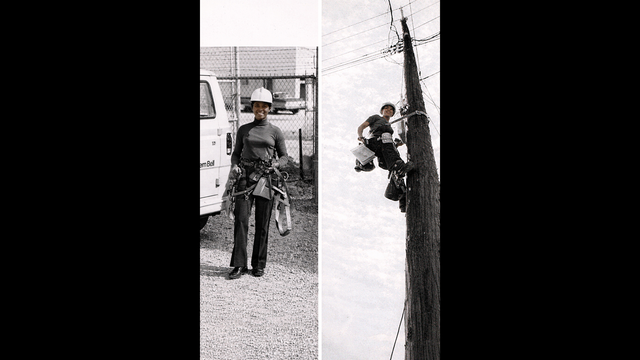 Ivory Jean Ford Strong, who grew up in Miami’s Overtown neighborhood, took at job as a telephone operator with Southern Bell when she was 17 and would become Southern Bell’s first woman telephone installer-repairman in South Florida. Courtesy Ivory Jean Ford Strong family
Because she dared to get off the beaten path and forge her own way, Ivory’s story was featured in Ebony and on television. In 2022, she was featured in a podcast hosted by AT&T honoring pioneers from Southern Bell.
“She paved the way for thousands of women who are currently leading the technical communications industry,” said her sister Juanita.
“Yet, her happiest moments were the times when she was with family and friends. She just lit up a room with her laughter and personality. Ivory loved life. Her motto was: ‘Live life to the fullest.’ And she did that – as a role model and as a decent human being.”
So, as we come to the end of Women’s History Month 2026, I pay homage to Ivory Jean Ford Strong, an ordinary woman who lived an extraordinary life by quietly paving the way for those coming after her.
.JPG "MIA_20231006AD0543BeaHines (6).JPG") Bea Hines Al Diaz adiaz@miamiherald.com
Bea Hines Al Diaz adiaz@miamiherald.com