
A potential deal to fund the TSA and other parts of the government advances in Washington, D.C., and Florida lawmakers prepare for possible open trade with Cuba.

Trump signs executive action to pay TSA employees after Congress fails to agree on DHS funding
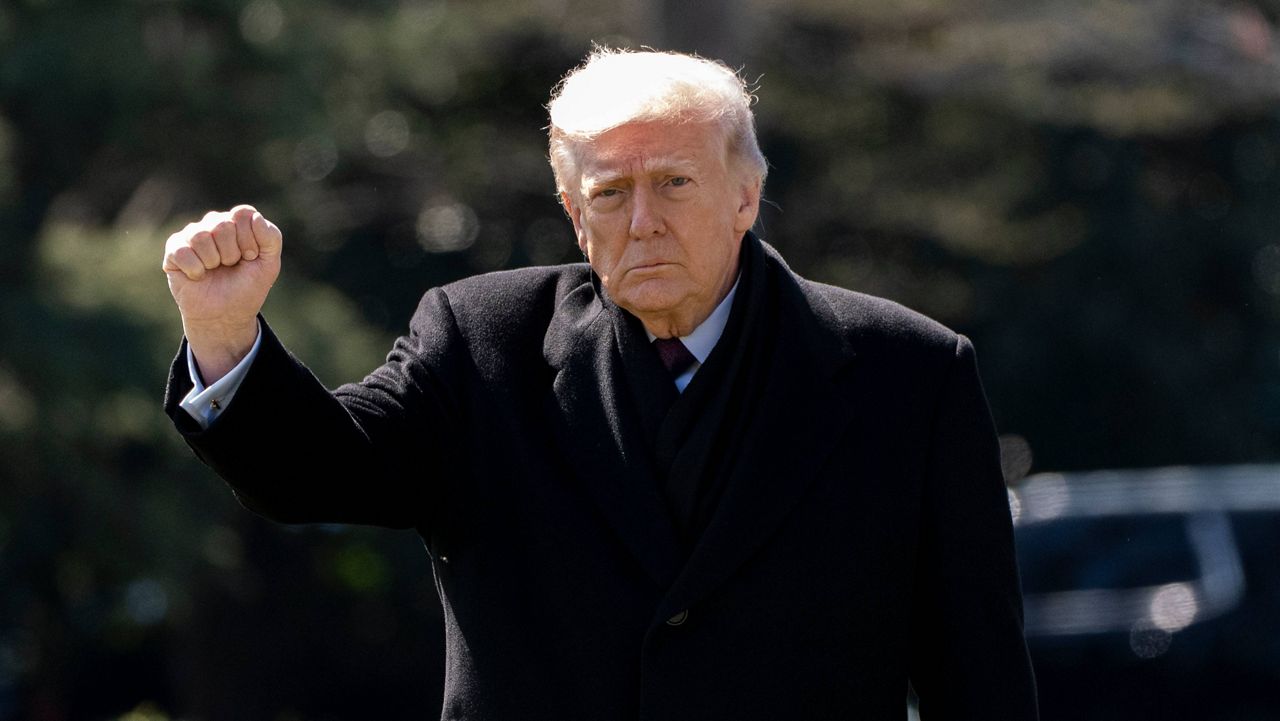
President Donald Trump on Friday signed a promised executive action that will pay Transportation Security Administration employees, after a deal that sought to do the same stalled in Congress.
Trump signed the action with an eye toward easing long security lines at many of the nation’s top airports.
“America’s air travel system has reached its breaking point,” Trump said in the memo authorizing the payments. He added, “I have determined that these circumstances constitute an emergency situation compromising the Nation’s security.”
Trump said his administration would use “funds that have a reasonable and logical nexus to TSA operations” for the payments.
In a statement Friday, Homeland Security Secretary Markwayne Mullin said TSA workers “should begin seeing paychecks as early as Monday.”
On Thursday night, as lawmakers grappled with the issue, a senior administration official said the money would come from the tax bill Trump signed last year. The official spoke on condition of anonymity because they weren’t authorized to discuss it publicly. They compared the move to actions Trump took during a past shutdown to pay troops.
House Republicans reject Senate deal
Trump’s action came after House Republicans rejected a Senate-passed bill to fund most of the Department of Homeland Security, a revolt that risks delaying a resolution to the funding impasse now in its 42nd day that has created long lines at many of the nation’s airports.
“This gambit that was done last night is a joke,” House Speaker Mike Johnson said Friday.
Johnson said that instead House Republicans would seek to pass a bill that would fund the entire department at current levels until May 22. He also said he had spoken with Trump about the House Republican plan and the president “supports it.”
House Republicans are angry that the bill passed early Friday by the Senate does not fund Immigration and Customs Enforcement and Border Patrol. Democrats refused to fund those departments without changes to immigration enforcement practices.
“We’re going to do something different,” Johnson said, challenging the Senate to take up the House’s continuing resolution on Monday, assuming it does pass the House, which is uncertain.
Senators have already left town after acting in the early morning hours to end the partial shutdown, so it would take time for them to return if the House ends up passing a different measure. And Senate Democratic leader Chuck Schumer said in a social media post that the 60-day stopgap measure being considered in the House would be “dead on arrival in the Senate, and Republicans know it.”
That would mean the DHS shutdown that has jammed airports and imposed financial hardship on thousands of federal workers would continue for the foreseeable future.
With pressure mounting this week to resolve the stalemate, the endgame appeared to emerge just before TSA workers were set to miss another paycheck. Trump said Thursday he would sign an order to immediately pay the TSA agents, saying he wanted to quickly stop the “Chaos at the Airports.”
A deal was subsequently reached hours later by senators.
“We can get at least a lot of the government opened up again, and then we’ll go from there,” said Senate Majority Leader John Thune, R-S.D. “Obviously, we’ll still have some work ahead of us.”
Schumer of New York said the outcome could have been reached weeks ago, and he vowed that his party would continue fighting to ensure Trump’s “rogue” immigration operation “does not get more funding without serious reform.”
Florida lawmakers consider the potential for open trade with Cuba
Secretary of State Marco Rubio says Cuba needs new leadership. Recently, the country has had three major power blackouts as it deals with fuel shortages and an aging power grid.
Despite the energy crisis, the U.S. continues its oil blockade, stopping shipments to the island.
“The reason why Cuba is a disaster is because their economic system doesn’t work. It’s a nonsensical system and the people of Cuba are suffering because of the decisions, because of the unwillingness of the people who govern that country to make the changes that need to be made so they can join the 21st century,” Rubio said. “You need to change the people in charge. You need to change the system that runs the country, and you need to change the economic model that it’s following. That’s the only way forward if Cuba wants a better future.”
With Cuba in crisis, Florida leaders are exploring ideas to better manage the state’s relationship with the island.
Lawmakers have considered a wide range of issues, from trade to mass migration.
There’s no telling how this pressure campaign will end between Cuba and President Donald Trump.
Florida is already having conversations about how the state should position itself, given it’s the closest U.S. state to the island’s shore.
“We never forget what was taken from our culture and our community by a regime that doesn’t have human rights, that are dictators, that are just plain and simple bad people,” Florida House Speaker Danny Perez said.
The talks in Tallahassee come as the White House contemplates future trade with Cuba. Or perhaps even regime change.
“Cuba is a failed nation. Cuba also wants to make a deal, and I think we will pretty soon make a deal or do whatever we have to do,” Trump said.
Gov. Ron DeSantis has made it clear that he doesn’t want mass Cuban migration to Florida.
“We don’t want a big migration into Florida. We already have our mass migration plan ready. Like I said, the Trump administration agrees with us,” DeSantis said about a potential deal.
Meanwhile, the Florida House is interested in the island nation. House Bill 905 makes trade possible if the federal government changes Cuba’s diplomatic status.
“This legislation ensures our state is prepared to immediately build lawful trade and economic partnerships that will help rebuild a free Cuba,” State Rep. Juan Porras said.
A free Cuba is indeed a bipartisan interest in Florida, but not everyone is optimistic.
“I think everyone wants to see a free Cuba, but I don’t have faith that Donald Trump can be the leader to safely and peacefully transition yet another regime change,” House Minority Leader Fentrice Driskell said.
It would mark the third attempt at regime change under the Trump administration. First in Venezuela and then in Iran.