
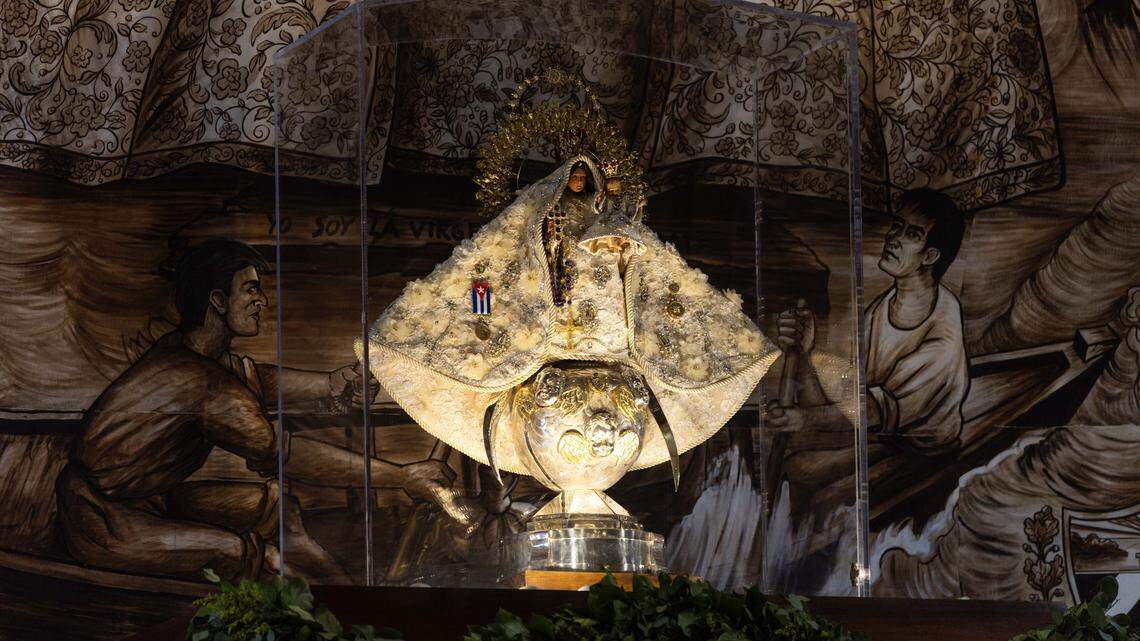
A figurine of Our Lady of Charity atop the church sanctuary inside Ermita de la Caridad during the 2025 celebration of the feast day of Cuba’s patroness at the National Shrine of Our Lady of Charity in Coconut Grove.
D.A. Varela
dvarela@miamiherald.com
Religious freedom is not just a global issue. It matters right here in Miami.
South Florida is home to one of the largest Cuban exile communities in the world. For many families here, faith is more than private belief — it is identity, support and a deep connection to loved ones back home.
So when religious leaders in Cuba cannot worship freely or serve their communities, the impact is felt here. Families worry about relatives. Churches in Miami support those forced into exile. Many congregations are now led by pastors and priests who once served in Cuba but were pushed out.
That is why religious freedom in Cuba should be part of any serious discussion about the island’s future.
My organization has studied restrictions on religious freedom in Cuba, Venezuela and Nicaragua. Cuba stands out for how the government controls religion through a single mechanism: the Office of Religious Affairs.
This office acts like a gatekeeper. It decides which churches can operate, who can lead them and what they are allowed to do. It blocks new churches from registering. It delays or denies permits to repair buildings. It limits how faith communities grow and serve.
A simple but powerful step would be to eliminate this office.
Ending it would not solve every problem in Cuba. But it would remove a major barrier and allow people to worship freely and organize their communities without fear.
Here in Miami, the consequences of these restrictions are personal and visible.
Many religious leaders now living in South Florida did not leave by choice. They were forced out because they spoke up or refused to comply.
Once here, many cannot continue their calling. There are more trained clergy than available positions. So former pastors and priests take whatever work they can find — construction, ride-share driving, manual labor — just to support their families.
I know of a Catholic priest who now celebrates mass in a small living room on Sundays. During the week, he works online to make ends meet. I know of an evangelical pastor from Santiago de Cuba who once led a large congregation. Today, he does manual labor to survive.
These stories are not rare. They reflect both resilience and loss. Faith continues, but ministries are broken and communities are divided.
For decades, Cuba’s government has tried to control religion rather than eliminate it. Some groups are allowed to operate if they cooperate. Others face restrictions or are denied legal status. Many evangelical churches cannot register. Afro-Cuban and Muslim communities face discrimination. Priests and pastors are often harassed, detained or pushed into exile.
This should change — and it can.
If Cuba allowed real religious freedom, the benefits would be immediate. Faith groups already help the most vulnerable, even with limited resources. If allowed to receive support from outside Cuba, they could expand efforts to provide food, medicine and basic services. They could help rebuild communities and support small businesses.
Just as important, faith leaders could speak openly without fear. They could help guide peaceful dialogue at a time when Cuba needs it most.
From Miami, we see both the cost of repression and the promise of change.
For more than 30 years, Outreach Aid to the Americas has worked with communities across Cuba. We have seen how strong and resilient the Cuban people are. We have also seen how much more they could do if given the freedom.
Leaders in Washington, D.C. should make religious freedom a clear priority in any engagement with Cuba. And Cuba’s leaders should recognize a simple truth: repression leads nowhere.
A good place to start is simple: Let people worship freely.
Let churches serve their communities.
And let faith be part of building a better future for Cuba.
Teo Babun is president and CEO of Outreach Aid to the Americas, a Miami-based nonprofit with more than 30 years of experience serving vulnerable communities in the American continent through humanitarian aid, development, and the defense of human rights.