
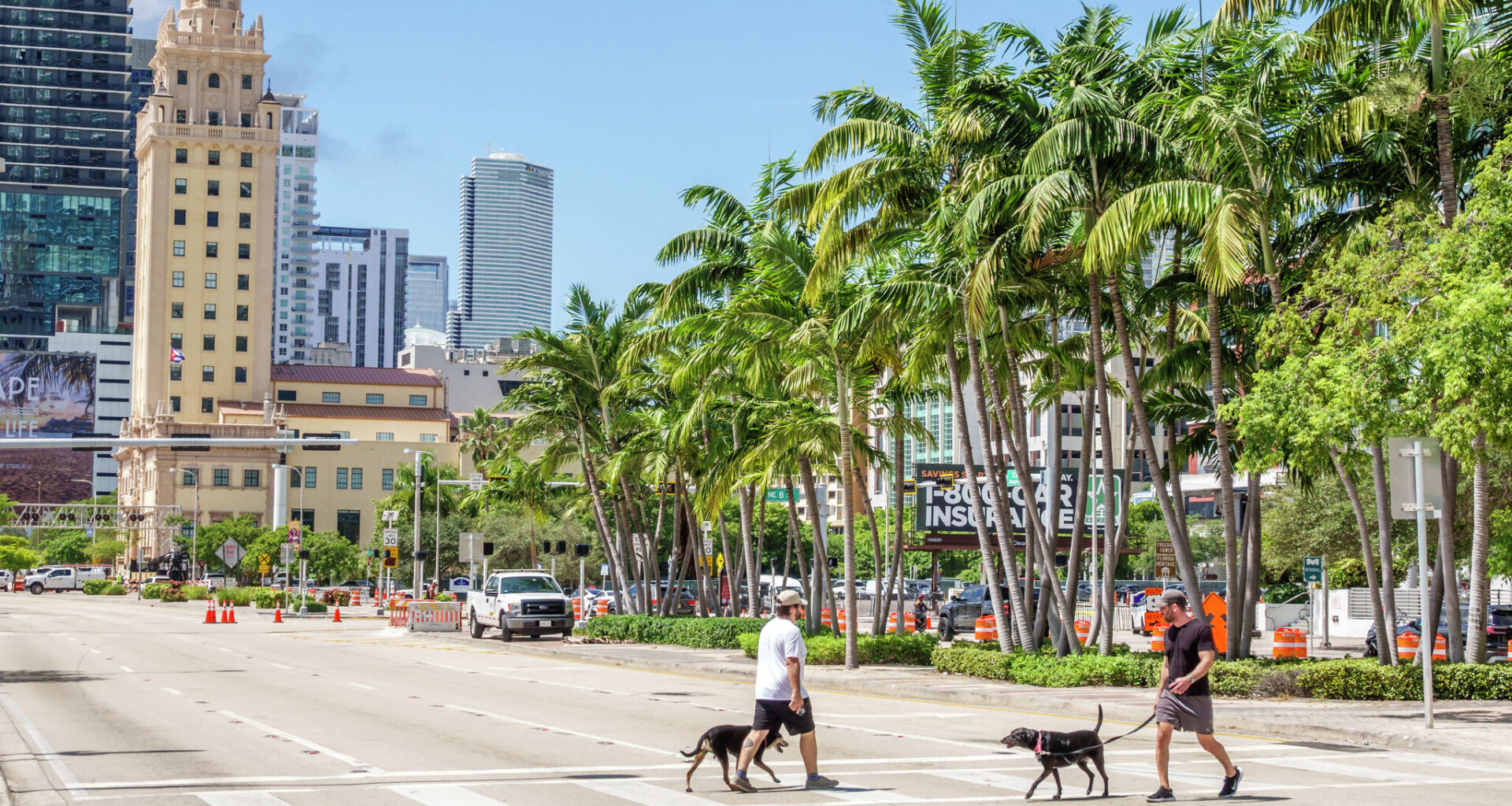
But years later, it’s following another trend previously seen in the Bay Area: more people moving out than coming in.
The Miami metropolitan area saw the nation’s highest share of population loss due to domestic out-migration — about 1.8% of its total population — between July 2024 and July 2025, according to new census data.
As former Biden economic official Jed Kolko put it, “domestic out-migration has moderated in New York and San Francisco since the pandemic, whereas Miami is the new San Francisco — at least in the sense that housing affordability is pushing people out.”
Overall, Miami-Dade County saw only a slight population drop with a net loss of about 10,000 people between July 2024 and July 2025. That’s still a big contrast from the prior 12 months, when the county added just over 64,000 residents, a 2.3% increase that was the second-highest rate among U.S. counties.
Researchers have cited a situation familiar to Californians: Miami has one of the country’s worst housing markets when it comes to affordability. The University of Florida found nearly half of Miami-Dade County households are cost-burdened, or paying more than 30% of their incomes on rent. For those households making less than $75,000 per year, three quarters are cost-burdened.
Both Miami and San Francisco have a significant housing shortfall, particularly for affordable housing. But unlike the Bay Area, Miami doesn’t have an abundance of high-paying tech jobs; researchers expect the majority of fastest-growing local jobs by 2030 to have hourly wages of $19 or less, including cooks and wait staff, housekeepers and warehouse workers.
The San Francisco metro area still hasn’t recovered from its significant population loss during the pandemic, and domestic out-migration remained negative between July 2024 and July 2025. But its out-migration population loss of about 0.6% was lower than Miami or New York and the San Francisco metro area grew slightly by 0.1%.
The Bay Area’s tech sector remains far larger than Miami’s, though South Florida continues to attract companies and, more recently, California tech moguls who may be seeking to avoid a potential billionaire’s tax.
Data software giant Palantir, which was co-founded by Peter Thiel, said last month it was relocating its headquarters to the Miami area from Denver, after previously relocating from Palo Alto in 2020. Meta CEO Mark Zuckerberg and Google co-founders Larry Page and Sergey Brin have also bought property in South Florida.