
The Miami Dolphins made history during the 2026 offseason.
With the cut of quarterback Tua Tagovailoa, the Dolphins took a dead cap hit of $99.2 million, the largest in NFL history. Many blasted the move as critics wondered how Miami could build a roster with such little cap space. There was a method, however, to general manager Jon-Eric Sullivan’s presumed madness.
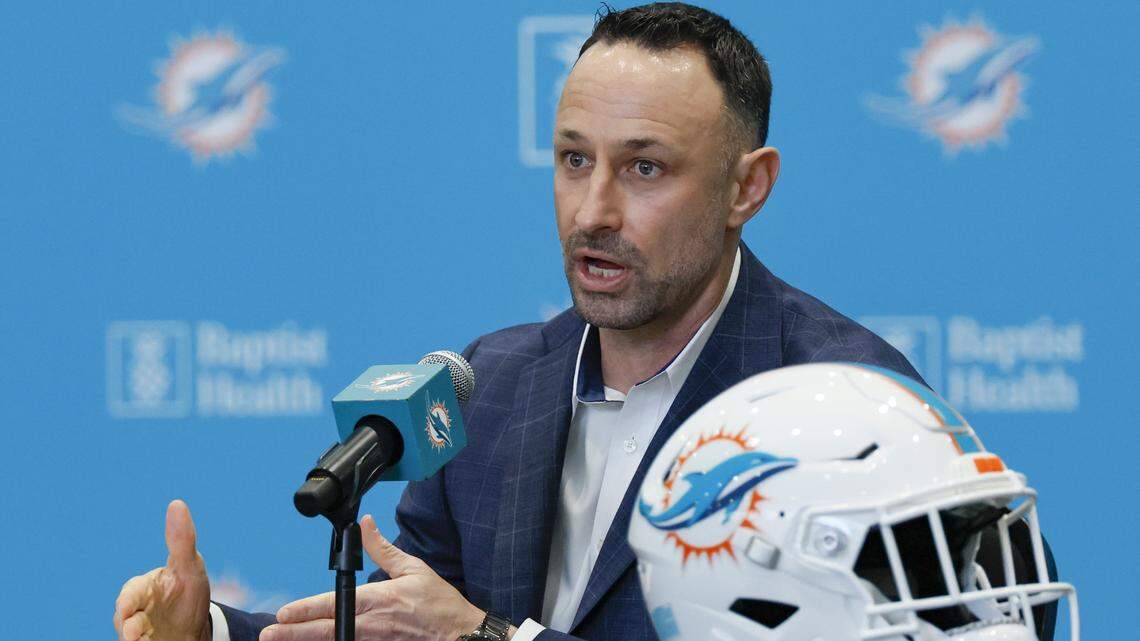
“If you keep kicking the can down the road, you’ll never get healthy,” Sullivan said Monday. “There’s two philosophies that you subscribe to in the National Football League: you pay as you go or you’re living on credit. If we keep living on credit, we’re never [going to] get healthy. We want the flexibility that paying as you go provides. We can’t get there unless we kind of take it on the chin this year.”
The Dolphins, as Sullivan described, happen to be in a very different place than in recent years. Although Sullivan hates the term “rebuild,” that’s essentially where Miami is — albeit in a much healthier way as they do have a quarterback in Malik Willis that they feel can take the franchise to the next level. Tagovailoa’s ousting, in addition to that of wide receiver Tyreek Hill and edge rusher Bradley Chubb, put the Dolphins on a different timeline as they continue to claw themselves up from cap hell.
“We’re not going to live like this every year,” Sullivan said. “But this year we had to move like this to get back to within a healthy salary cap.”
It was just a few years ago when the Dolphins opted to push all their chips to the center, trading draft picks for Hill, Chubb and cornerback Jalen Ramsey as they attempted to cash in on what they believed to be their title window. That time is over and Sullivan deemed a reset necessary.
“Any time that you’re talking about giving up significant draft capital, like we did in Green Bay with Micah [Parsons], I think you do those kind of things when you’re close as a team,” Sullivan said, later adding that “you can’t leverage the future if you’re not in a championship spot.”
The shift in philosophy also somewhat explains the Jaylen Waddle trade, which Sullivan similarly described as important the next area of Dolphins success.
“Waddle is 27 years old,” Sullivan said. “We’re in an era where the market for receivers is through the roof. And eventually, the chickens are going to come to roost with that. So when we hit our stride, I’m not sure that that all meshed the way that we needed to mesh. We’re in a position with our roster where we need to get younger and cheaper. I just thought that it was in the best interest of the Miami Dolphins to get two rookie players – if we do our job right as a personnel staff – that’ll be on rookie contracts that can grow with Malik.”
Miami now finds itself in an unenviable position as they must pay more for players not on the roster than those that will actually don the aqua and orange on Sundays. That means they couldn’t sign a lot of high-profile names, especially after Willis’ deal. Sullivan acknowledged that yet hoped his free agent additions would take advantage of the opportunity.
“These guys are chasing the carrot,” Sullivan said. “Most of these players believe they’re a better player than being on a one-year minimum contract so they’re out to prove something.”
Time will tell whether this strategy ultimately works. For now, fans can rest assured that there’s a larger plan in the works.
“Obviously, two years from now, three years from now when we have multiple draft classes under us, and we’ve been able to be a little more active in free agency, you can draw your own conclusions,” Sullivan said. “But we’re here to be comeptitive, day in and day out, and we’re here to win.”

Miami Herald
C. Isaiah Smalls II is a sports and culture writer who covers the Miami Dolphins. In his previous capacity at the Miami Herald, he was the race and culture reporter who created The 44 Percent, a newsletter dedicated to the Black men who voted to incorporate the city of Miami. A graduate of both Morehouse College and Columbia Graduate School of Journalism, Smalls previously worked for ESPN’s Andscape.