
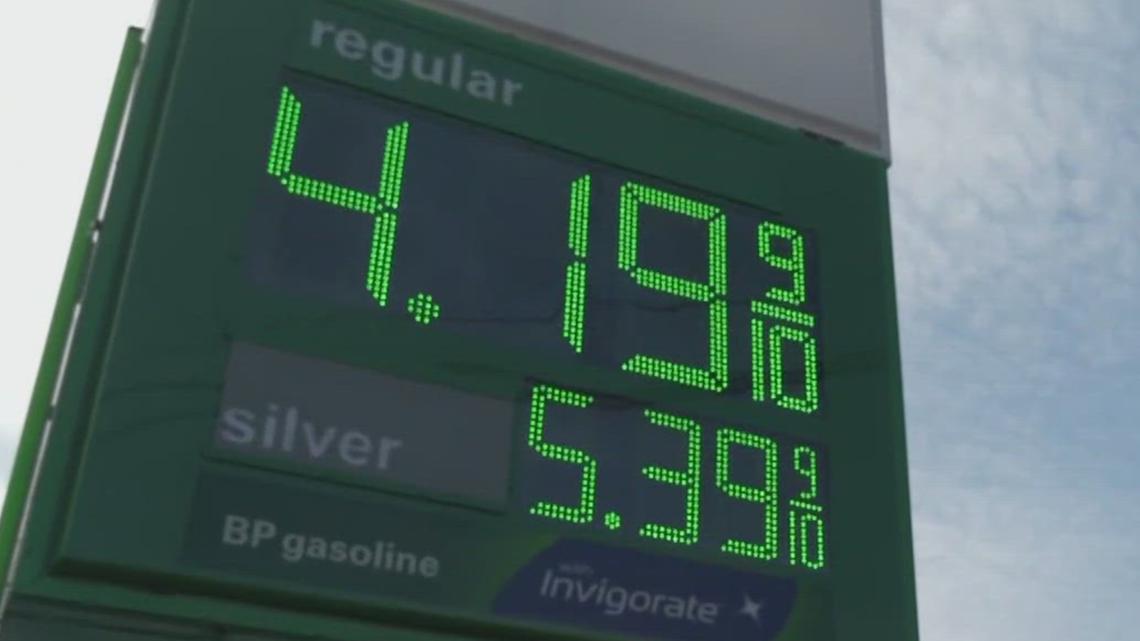
The Tampa Bay region is seeing its own uptick in fuel prices, with an average increase of $1.32 since the beginning of March.
TAMPA, Fla. — Gas prices in the U.S. officially hit a national average of $4 per gallon on Tuesday after weeks of fuel costs continuing to climb.
The national retail average for a gallon of regular gasoline is $4.018, according to AAA. That’s up from $3.990 on Monday and $2.982 a month ago.
No states are averaging below $3.25 per gallon. For context, Florida’s state average is currently at $4.12.
The Tampa Bay region is seeing its own uptick in fuel prices, with an average increase of $1.32 since the beginning of March.
County-by-county gas prices for the Tampa Bay area
Here are the costs per gallon of gas across Tampa Bay-area counties, according to AAA.
Hillsborough: $4.19Pinellas: $4.18Pasco: $4.19Polk: $4.15Sarasota: $4.21Manatee: $4.19Hernando: $4.19Citrus: $4.20
For comparison, here were gas prices in the Tampa Bay area on March 2:
Hillsborough: $2.86Pinellas: $2.87Pasco: $2.85Polk: $2.87Sarasota: $2.89Manatee: $2.86Hernando: $2.84Citrus: $2.89
10 Tampa Bay News keeps a year-round list of gas stations with the lowest prices across Tampa Bay, powered by GasBuddy.
How to save money on gas in Florida
Here are some ways to save on gas in Florida, according to AAA.
Combine errands to limit driving time.Drive conservatively. Avoid aggressive acceleration and speeding, which reduces fuel economy.Remove excess weight in your vehicle. Every 100 pounds taken out of the vehicle improves fuel economy by 1 to 2%Shop around for the best gas prices in your community by using the AAA mobile app. Pay with cash. Some retailers charge more per gallon for customers who pay with a credit card.
Why are gas and diesel prices rising?
Prices began to rise sharply after the U.S. and Israeli attack on Iran on Feb. 28, which led to escalating tensions and military conflicts across the Middle East, where a large majority of global oil is sourced and distributed.
While not the sole factor for rising costs, volatile trade routes and other uncertainties in production have led to higher prices of crude oil, which is refined to make diesel, gasoline and jet fuel.
Crude oil has surpassed $100 per barrel several times in recent weeks, driving higher fuel costs. Rising diesel and jet fuel prices are also expected to increase transportation and air travel costs, potentially pushing up prices for goods across supply chains.
The Strait of Hormuz, through which roughly 20 percent of global oil passes, has effectively been closed off by Iran’s military for several days. The country faces mounting international pressure to reopen, including threats of military action by U.S. President Donald Trump.
Seasonal demand is also contributing to the increase, as warmer weather and spring break travel typically lead to higher gasoline consumption, according to AAA.
In a search for some relief, the International Energy Agency pledged to release 400 million barrels of oil from emergency stockpiles of member nations. That includes the U.S., despite President Donald Trump initially downplaying the need for reserve oil.
The Trump administration has also eased sanctions to free up some oil from Venezuela, and temporarily Russia. The White House also says it’s waiving maritime shipping requirements under a more than century-old law, known as the Jones Act, for 60 days.
TEGNA Digital contributed to this story.