
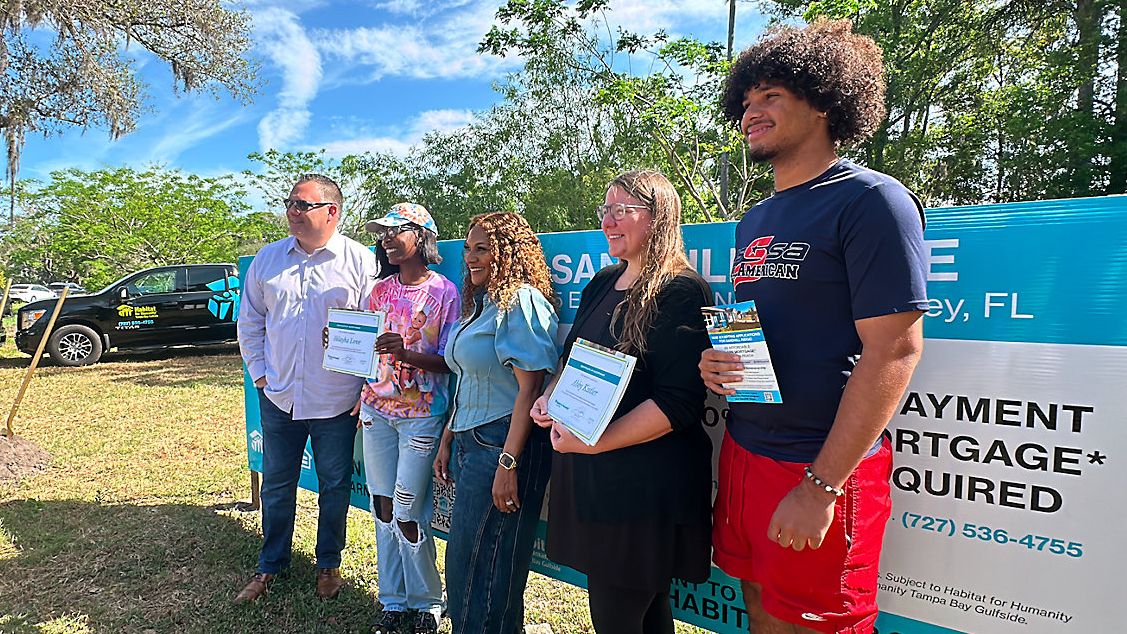
NEW PORT RICHEY, Fla. — A groundbreaking ceremony in Pasco County turned into an unforgettable moment for one local family.
What You Need To Know
The Sandhill Ridge development marks the largest Habitat project to date in Pasco County
Abby Kistler and her son Carter — lifelong Pasco County residents — were among a crowd gathered for Habitat for Humanity Tampa Bay Gulfside’s latest project when they learned they had been selected for a home of their own
Habitat for Humanity Tampa Bay Gulfside President and CEO Mike Sutton says more than half of applicants for their homes are essential workers, including health professionals, teachers and first responders
Sutton says health professionals are vital to the region, but increasingly are priced out of the housing market
Abbey Kistler and her son Carter — lifelong Pasco County residents — were among a crowd gathered for Habitat for Humanity Tampa Bay Gulfside’s latest project when they learned they had been selected for a home of their own.
The announcement came during the official groundbreaking of Sandhill Ridge, a new 20-home affordable housing community in New Port Richey aimed at helping working families find stability in a rising housing market.
Kistler says the moment was overwhelming.
“It happened so fast,” she said.
A single mom and health professional, Kistler said that homeownership had long felt out of reach.
“Recently I had a change in housing, and my savings were wiped out just paying for renting,” she explained.
Her story reflects a growing reality for many in the workforce — especially those in public service roles.
Habitat for Humanity Tampa Bay Gulfside President and CEO Mike Sutton says more than half of applicants for their homes are essential workers, including health professionals, teachers and first responders.
“A lot of the families that we serve, they are moving every year because their rents are going up,” Sutton said.
The Sandhill Ridge development marks the largest Habitat project to date in Pasco County. The community will feature 20 single-family homes with two-, three-, and four-bedroom floor plans designed to provide long-term affordability.
Sutton says there are common misconceptions about how the program works.
“There is nothing free about the program, but we remove the barriers to homeownership,” Sutton explained. “So there is zero down payment and we provide them with a zero interest rate. The families that are able to qualify, they don’t make enough to qualify or they make too much to qualify for government assistance.
“But, they don’t make enough to qualify for a traditional home loan,” he said. “And so nowadays, there’s no such thing as a starter home anymore. When you have homes that are starting at five, six, $700,000 a family, you know, an average family, a school teacher, someone that works in health care, they can’t qualify for that, those types of mortgage notes. And so that’s what Habitat is doing, is they’re providing these families that otherwise would not be able to own a home, own a home here in our community.”
Through financial education, sweat equity and affordable mortgages, Habitat partners with families to make homeownership possible.
For Carter, the experience still feels surreal.
“It’s been like a dream,” he said. “Glad I can live here and have a home.”
Construction is now underway, with some families expected to move into their new homes by Christmas.
For Kistler and her son, the opportunity represents more than just a house — it’s a chance to remain in the community they’ve always called home.