
ORLANDO, Fla. — March marks Developmental Disabilities Awareness Month, and one obstacle a person with a disability can experience is obtaining something that many people may take for granted – a government-issued photo ID. One organization in Central Florida is working to help disabled people get those IDs.
What You Need To Know
March marks Developmental Disabilities Awareness Month, and one obstacle a person with a disability can experience is obtaining something that many people may take for granted – a government-issued photo ID.
A 2024 report from the University of Maryland Center for Democracy and Civic Engagement reported that 20% of people who self-identified as having a disability don’t have a license, compared to just 6% of non-disabled people.
A 2022 report by the U.S. Election Assistance Commission reported that nearly 5% of disabled people eligible to vote reported they tried to vote but weren’t able to.
Quest says people with disabilities can struggle with penmanship, and so if they have to verify their signature at the polls by writing that out, those signatures might not match.
Quest’s Director of Curriculum and Instruction, Frances Torres, is teaching a class about proving you are who you are. Quest helps children and adults with developmental disabilities increase their capabilities and overall quality of life. Torres teaches Quest clients the practice of using an ID, by starting with an in-house identification card.
“It’s important we keep track of those ID’s. We don’t want to lose them; they have important information,” said Torres.
Their goal is to take their clients through the steps of maintaining and using a government ID at various places, like doctor’s offices, stores and at the airport. But the biggest challenge for many disabled people is obtaining those IDs in the first place.
“Most of our guys, they didn’t have ID’s, they didn’t have a wallet to keep their ID. They really, really wanted an ID,” said Torres.
A 2024 report from the University of Maryland Center for Democracy and Civic Engagement reported that 20% of people who self-identified as having a disability don’t have a license, compared to just 6% of non-disabled people. And an additional 9% of disabled people have a license that does not have their current name and/or address. That’s often because disabled people have a guardian who takes care of most of their day-to-day tasks.
“With the majority of our population, they don’t have access to those documents, so then we have to go to a list of other corresponding community groups that will assist,” said Crystal Whitelaw, Quest’s Director of Residential. “Maybe they have a guardian or maybe they don’t have a guardian, and then we’ll have to work with our local health department to retrieve some of those documents if they don’t have a birth certificate and if we don’t have a copy.”
Quest can go with their clients to the DMV, where they say even with all the proper documentation. There can still be challenges.
“They don’t really understand the population that we deal with until we’re actually there at the appointment, and then it’s like – oh, okay, this person needs ADA accommodations,” said Whitelaw. “Or, maybe the person isn’t tall enough to take the picture and now we need to make an adjustment on the camera.”
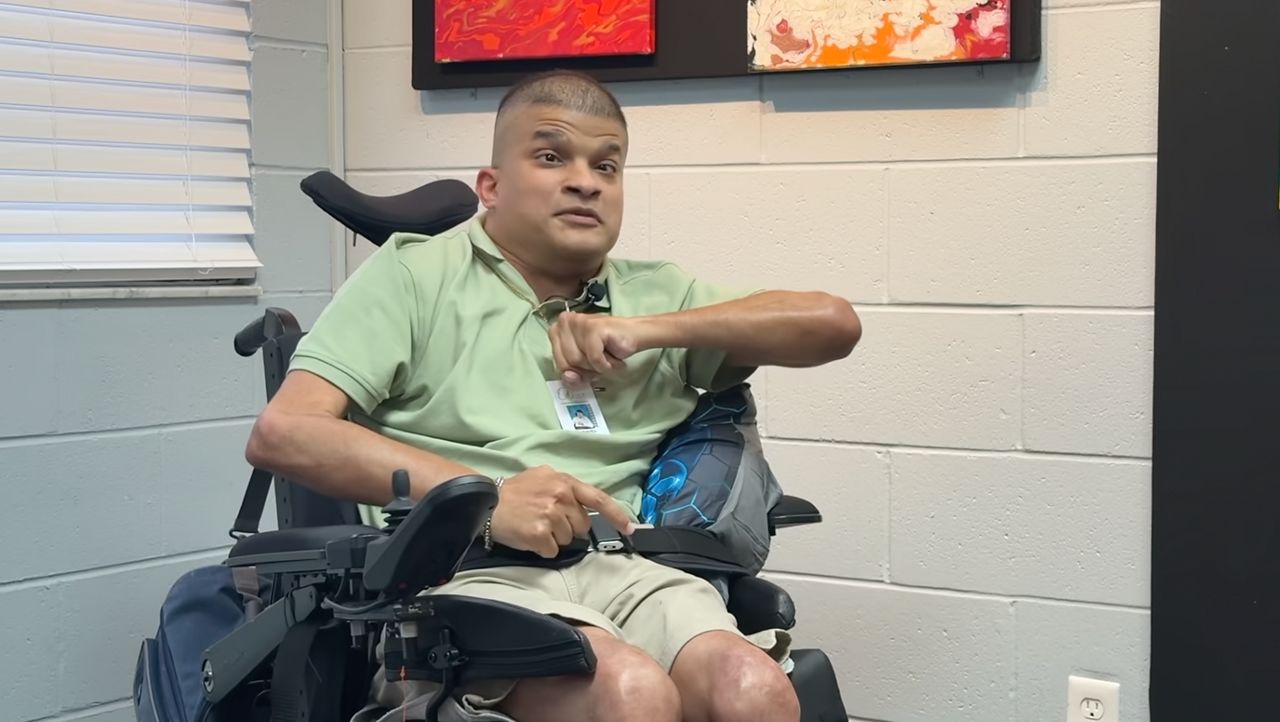
Quest was able to help Roberto Perez get his REAL ID. Perez had difficulties proving he was an Orange County resident.
“Going to (be) easier for us to get into doctor’s appointments, or clubs,” said Perez.
Perez is happy about the many ways he could use his ID. But jokes aside, the ability to carry his own ID is something that has really opened his life up to a new level of independence.
“I feel like a new person, and I feel proud to do my own stuff,” said Perez.
Another obstacle disabled adults can face is when voting. A 2022 report by the U.S. Election Assistance Commission reported that nearly 5% of disabled people eligible to vote reported they tried to vote but weren’t able to. Quest says people with disabilities can struggle with penmanship, and so if they have to verify their signature at the polls by writing that out – those signatures might not match. Quest works with its clients on making those signatures consistent and uniform, and they can also provide a legal representative to go with them to the polls to help.