
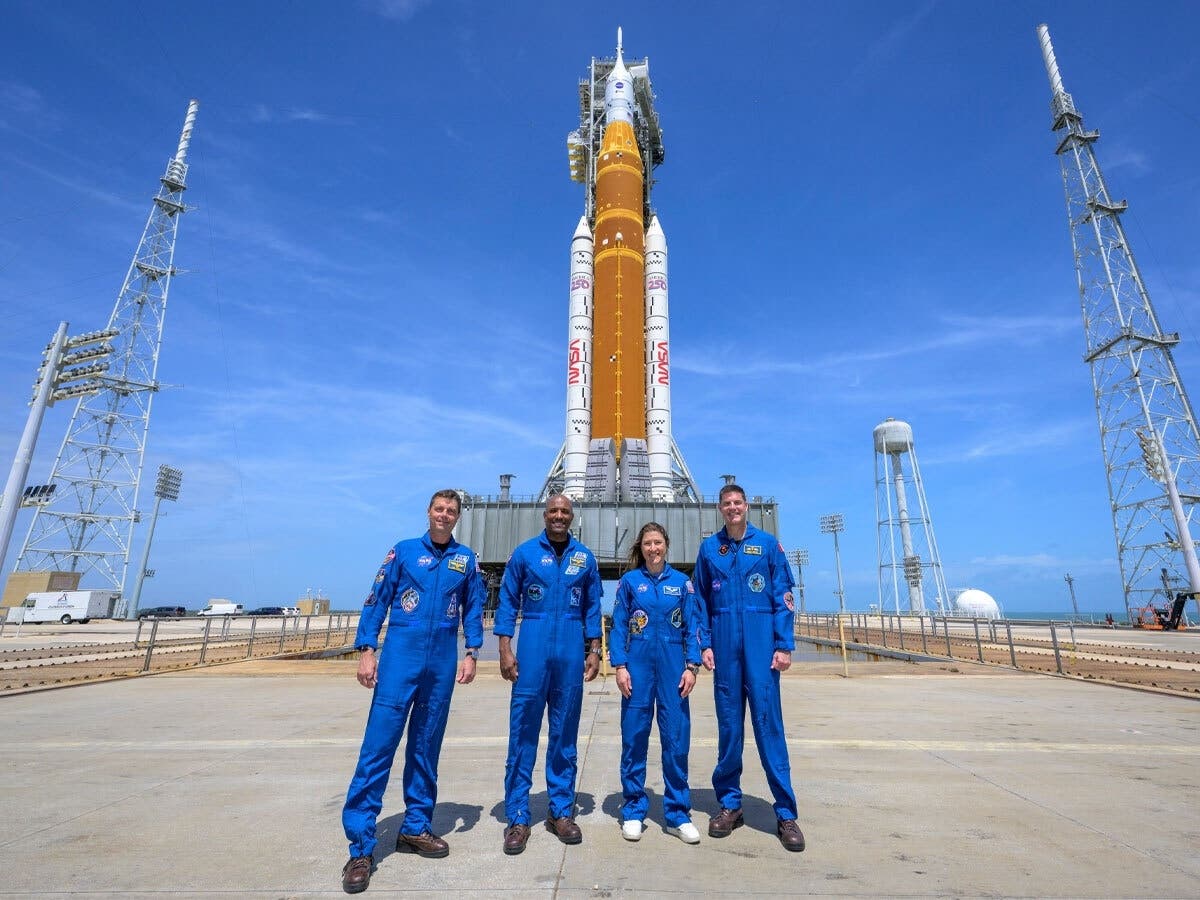
Residents in some parts of Florida will be able to see Wednesday’s historic launch of an Artemis rocket that will carry four astronauts to the moon, nearly 55 years after humans last landed on the moon.
Liftoff is set for no earlier than 6:24 p.m. from Launch Complex 39B at the Kennedy Space Center in Cape Canaveral.
Will The Weather Allow FL To See The Launch?
Residents may spot the rocket launch in or near Daytona Beach and Melbourne about 10 seconds after liftoff. Further out into the St. Augustine and Ocala areas, the launch may be seen about 30 seconds after liftoff.
Find out what’s happening in Tampafor free with the latest updates from Patch.
The chance for residents in Tampa, Sarasota, Port St. Lucie, Clearwater and St. Petersburg to see the launch is around 30 to 40 seconds after liftoff.
During this time, the weather should be partly cloudy after showers in the Melbourne and Daytona Beach regions, according to the National Weather Service. Tampa will be mostly sunny during the day and clear by nightfall.
Find out what’s happening in Tampafor free with the latest updates from Patch.
Meanwhile, in the remaining aforementioned towns, some clouds may arise after a sunny day.
Can you see our Moon rocket lift off from your backyard?
Skywatchers in Florida and southern Georgia will have a shot. Check out this map to see when you should look up! Artemis II is targeted to launch no earlier than April 1. pic.twitter.com/3WsJlEVufK
— NASA (@NASA) March 31, 2026 Why Is The Artemis II Moon Mission Historical?
Wednesday’s rocket launch will be the first trip to the moon since the three-man Apollo 17 mission in December 1972, and will be the first time a crew is aboard the Space Launch System rocket and Orion spacecraft.
The mission will send into space NASA astronauts Reid Wiseman, commander; Victor Glover, pilot; Christina Koch, mission specialist; and Canadian Space Agency astronaut Jeremy Hansen, mission specialist.
The flight comes after NASA launched the un-crewed Artemis I in 2022. The Artemis II mission will later benefit deep-space missions, NASA stated.
The crew will perform a flyby around the moon for 10 days in efforts to pave the way for future missions to the moon and Mars, according to the National Aeronautics and Space Administration.
Why send the crew to the moon? NASA says the answer is simple: scientific discovery.
What Setbacks Did NASA Face Ahead Of Launch Day For Artemis II?
NASA faced multiple concerns ahead of launching Artemis II.
The federal agency stood to lose 41 space missions due to proposed budget cuts from the White House in May 2025, according to the Planetary Society. The budget cuts would spiral into staff cuts and financial loss.
Additionally, the former problematic flow of helium plagued Artemis II team members earlier this month, Spectrum News reported.
The leak was reportedly due to “a faulty seal in the quick disconnect section of the rocket.” Repairs have since been made.
Brisket and cobbler and quiche, oh my!
Curious what astronauts eat on a 10-day trip around the Moon? Read about how we design and prepare meal plans for Artemis II: https://t.co/eVNGSQpM04 pic.twitter.com/SDRi5guFb3
— NASA (@NASA) March 31, 2026 What Will The Crew Eat While In Space?
According to NASA, crew members will be able to feast on more than 189 food items during their 10-day journey.
Barbecued beef brisket, a tropical fruit salad, wheat flat bread and couscous with nuts are among the crew’s common food options.
Flavor will not be compromised. NASA is sending five various hot sauces into space, along with foods tasting of maple syrup, almond butter and spicy mustard.
Desserts will include cobbler, pudding, cookies and candy-coated almonds.
How Can I Watch?
There are multiple ways to watch the Artemis II launch if your backyard is not an option.
NASA was broadcasting on its YouTube page as the launch team fueled up the rocket. The official broadcast starts at 12:50 p.m.
The launch can also be viewed via NASA’s Facebook, Twitch and X.
NASA+, with no subscription mandates or ads, will also stream the prominent event.
Other streaming services that will show the launch are Amazon Prime, Apple TV, Hulu, Netflix and Roku.
Get more local news delivered straight to your inbox. Sign up for free Patch newsletters and alerts.