
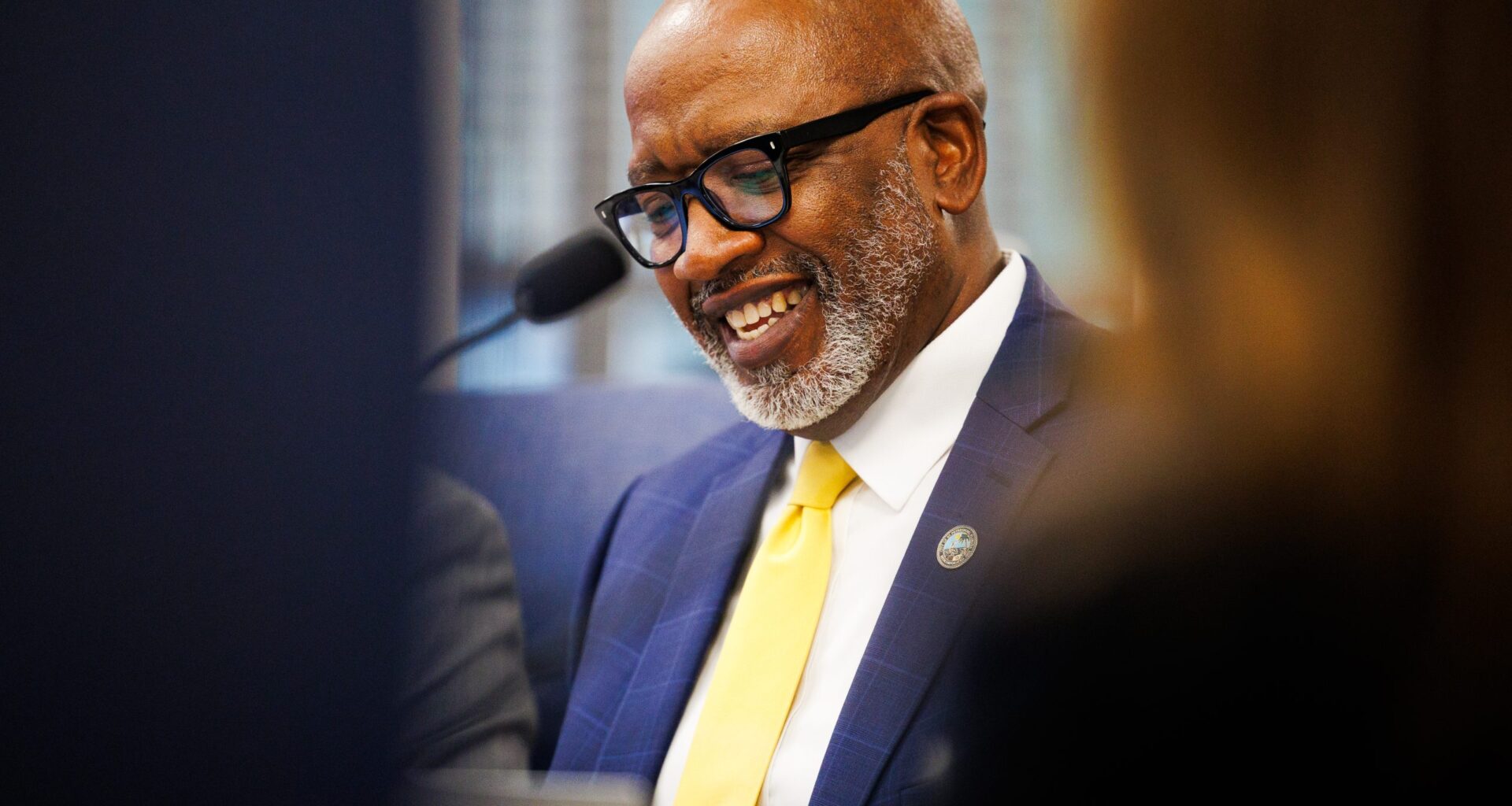
 St. Petersburg Mayor Ken Welch on Oct. 26, 2023. Credit: cityofstpete / Flickr
Ken Welch is St. Pete’s first African American mayor and was the first Pinellas County commissioner to represent District 7 in the city. The 61-year-old is running for re-election, too.
Welch’s PAC, the St. Pete Pelican PAC, will generate its last contribution report this quarter. The PAC had a rough start after former committee treasurer Yolanda Brown embezzled $207,500 from it last fall.
For his campaign, Welch told Creative Loafing Tampa Bay he plans to kickstart major investments in storm resilience. He has faced five hurricanes in his first four years, and he said hurricanes Helene and Milton brought unprecedented damages to the city in 2024.
After the storms, Welch’s administration also faced a high volume of permit requests for repairs.
“There’s no disputing that we’ve never had the number of permits, obviously, or the number of resources that we’ve applied to it,” Welch said. “So, it’s just a matter of time, resources, and scope.”
Welch said that even while the city prioritized permits, residents’ needs were far greater than what St. Pete was equipped to handle.
“The state even helped us with additional staff, plan reviewers and inspectors, but we just did not have enough—and no city did—to meet the need without having an extended period for those permits,” Welch told CL.
Welch believes his administration did well in the 90-day period the city took to recover, but he wants to improve the city’s infrastructure to ensure it won’t be a problem again.
To speed up repairs for the city’s stormwater infrastructure, Welch said he’ll present his St. Pete Agile Resilience—or SPAR—referendum, which proposes a $600 million bond to speed up repairs for the city’s stormwater infrastructure.
Moving forward, Welch said he’ll also continue his five-pillar plan for the city, known as “Pillars for Progress,” with goals ranging from education and business opportunities to neighborhood safety and housing.
On that note, Welch doesn’t just want to streamline infrastructure—redevelopment is next on his list.
As a third-generation resident from the Gas Plant district—which was razed to make way for Tropicana field in the ‘80s—Welch said he wants to honor decades-long promises made to his displaced community.
After the Rays backed out of a redevelopment deal for the stadium and the district, Welch is open to new proposals, as development rights now belong to the city.
But St. Petersburg City Council approved a resolution in February to put Welch’s redevelopment plans on hold. The resolution was mainly endorsed by District 2 Councilwoman Brandi Gabbard, who’s running against him this year.
Welch said that while he wants to respect the council’s decisions, he believes the delay is unnecessary—and deliberate.
“How can we, at this point, not have enough planning when we had it two years ago?” Welch said.
Welch told CL that he’s still looking to make selections and finalize term sheets by the end of the year for his plans.
For Welch, those plans include affordable housing and a location for the Woodson African American Museum of Florida. He claims he identified two parcels of land in the termination agreement with the Rays where those can be developed.
Welch believes that opponents to his plans—like Ron Diner’s No Home Run Group, which Welch claimed wants to bring million-dollar condos to the site—delayed him further for the excuse of additional planning.
Welch claimed those members didn’t present any further plans in later workshops.
“The promise wasn’t, ‘We’re going to build high-cost condos on this property,’” Welch said. “The promise was, if the community’s dislocated, if you give up your homes, your churches, your businesses, there will be economic opportunity for everyone and opportunities for y’all to come back and be a part of that economic growth.”
While Welch supports redevelopment and a revamped infrastructure for St. Petersburg, he said he also vouches for protecting the city’s renowned art scene the entire way.
In his past as commissioner, Welch said he supported arts organizations like Creative Pinellas and proposed allocating a portion of the county’s bed tax to fund the arts.
That’s where he believes funding is the “most stable source.”
“It certainly, I think, can be justified in terms of tourism, but also the economic impact of having local artists who are funded,” Welch told CL. “The mindset of the county needs to be supportive of that.”
Welch said that it’s not sustainable for the city to constantly relieve all funding cuts. He recalled how when SNAP benefits and arts funds were slashed, his administration stepped in—but all the while, the state was trying to “decimate” the city’s property tax revenues, which go toward law enforcement and fire rescue.
“Long-term, I think we need to look at things like a portion of the bed tax with the city, also being a partner in that as well to support the arts community,” Welch said.
Welch doesn’t just support upholding the city’s art scene. He made his support for diversity, equity and inclusion clear after the Florida Senate passed bills in February preventing municipalities from participating in or endorsing DEI events.
“They can’t do it at the ballot box, and they could never get a council or mayor elected on those,” Welch said. “But they’re going to do it via legislation from Tallahassee, 200 miles away. That’s not American. That’s not Democratic.They know it.”
Pitch in to help make the Tampa Bay Journalism Project a success.
Subscribe to Creative Loafing newsletters.
Follow us: Google News | NewsBreak | Reddit | Instagram | Facebook | BlueSky
This article appears in Mar. 26 – Apr. 1.
Related