
FORT LAUDERDALE, Fla. — Nap time is over for South Florida’s wildlife.
It’s spring, and this is the season for native animals to migrate, feed, breed and nest. The Florida Fish and Wildlife Conservation Commission and South Florida parks departments say we should be on the lookout for lots of creatures emerging as the weather warms. The agencies are offering tips to make sure we live peaceably with these indigenous critters that came here before us.
Bats
Bats get a bad rap, but they help us humans in many ways. According to the FWC: “All of Florida’s bat species eat insects, and a single bat can consume hundreds of insects each night, including mosquitoes and other pests that affect gardens and agriculture.”
Their maternity season, when they give birth and raise their pups, begins April 16 and lasts four months. So by April 15, the FWC recommends homeowners inspect their properties, confirm no bats are around and seal potential entry points. If you find they have made a home in your home, install a properly designed bat exclusion device that allows them to leave safely but prevents reentry.
In Florida, home to 13 native bat species, it’s illegal to kill or harm these flying mammals. To keep them plentiful, the FWC recommends homeowners preserve trees with cavities or peeling bark, leave dead fronds on palm trees to provide roosting spots, add native plants when landscaping to attract pollinators and install a bat house on your property.
Broward County Parks & Recreation will be hosting several Bat Walks in the coming months. The next one is scheduled for 8 p.m. Friday, April 3, in Coconut Creek. Got to broward.org/parks.
Bears
You never know when a bear is going to make its way into a suburban neighborhood. Make sure they cannot access human food, including in your garbage bin. A bird feeder or pet food in an outdoor bowl can also become potential bear fare. “As temperatures rise, bears become more active, and mothers begin teaching their cubs what to eat and how to survive,” according to the FWC. Don’t panic if you see one: “When bears can’t find an easy meal in your yard or neighborhood, they typically move on.”
Gopher tortoises
Florida’s only native tortoise becomes more visible in the spring as it searches for food and looks to breed, the FWC says: “If you spot a gopher tortoise or its distinctive half-moon-shaped burrow entrance, please give it space and avoid disturbing it. If you see a gopher tortoise crossing the road and it’s safe to help, you may gently move it in the direction it was headed (not in your vehicle). And remember, gopher tortoises are land animals that cannot swim, so they should never be put in water.” You can see gopher tortoises at Deerfield Island Park in Deerfield Beach and Fern Forest Nature Center in Coconut Creek.
Manatees
Boaters beware: You’re likely to see manatees, currently listed as “threatened” under the Endangered Species Act, this time of year as they leave their winter habitats and travel through the Intracoastal Waterway and other local waters. According to South Florida veterinarian Dr. Shelby Loos: “The leading causes of deaths in manatees include trauma from boat strikes, starvation from lack of sea grass due to pollution, cold stress due to loss of warm water habitats, increased and worsening episodes of red tide events, and other human-related causes such as plastic ingestion and entanglement in fishing lines.” Boaters should show respect for these gentle sea cows and always follow the speed limit.
Sea turtles
March 1 marked the beginning of sea turtle nesting season. Environmental officials in Broward and Palm Beach counties are busy collecting monitoring data and enforcing sea turtle lighting laws, ensuring that moms and their babies have the dark skies they need to lay their eggs on our beaches.
The Department of Environmental Resources Management for Palm Beach County, where 2 million baby sea turtles are expected to be born, offers these tips:
— Do not dig holes on the beach during nesting season.
— Never use flashlights on the beach at night during nesting season and never approach a nesting sea turtle unless you are attending a permitted sea turtle walk with experts who have FWC authorization.
— When boating, be sure the captain is wearing polarized sunglasses and be extra vigilant when operating boats near shore as turtles are actively mating in this zone throughout the season.
— Reduce your reliance on single-use plastic products. Sea turtles and other marine mammals swallow plastic tossed into the ocean, and it can severely damage their digestive tracts or kill them.
Snakes
The FWC says not to be surprised if you see native snakes as they become more active in this season. Don’t be scared: “Snakes are shy and usually try to avoid encounters; however, it is not unusual to find them basking in the sunlight on artificial surfaces.” If you see one, just steer clear — and make sure your dog stays away, too.
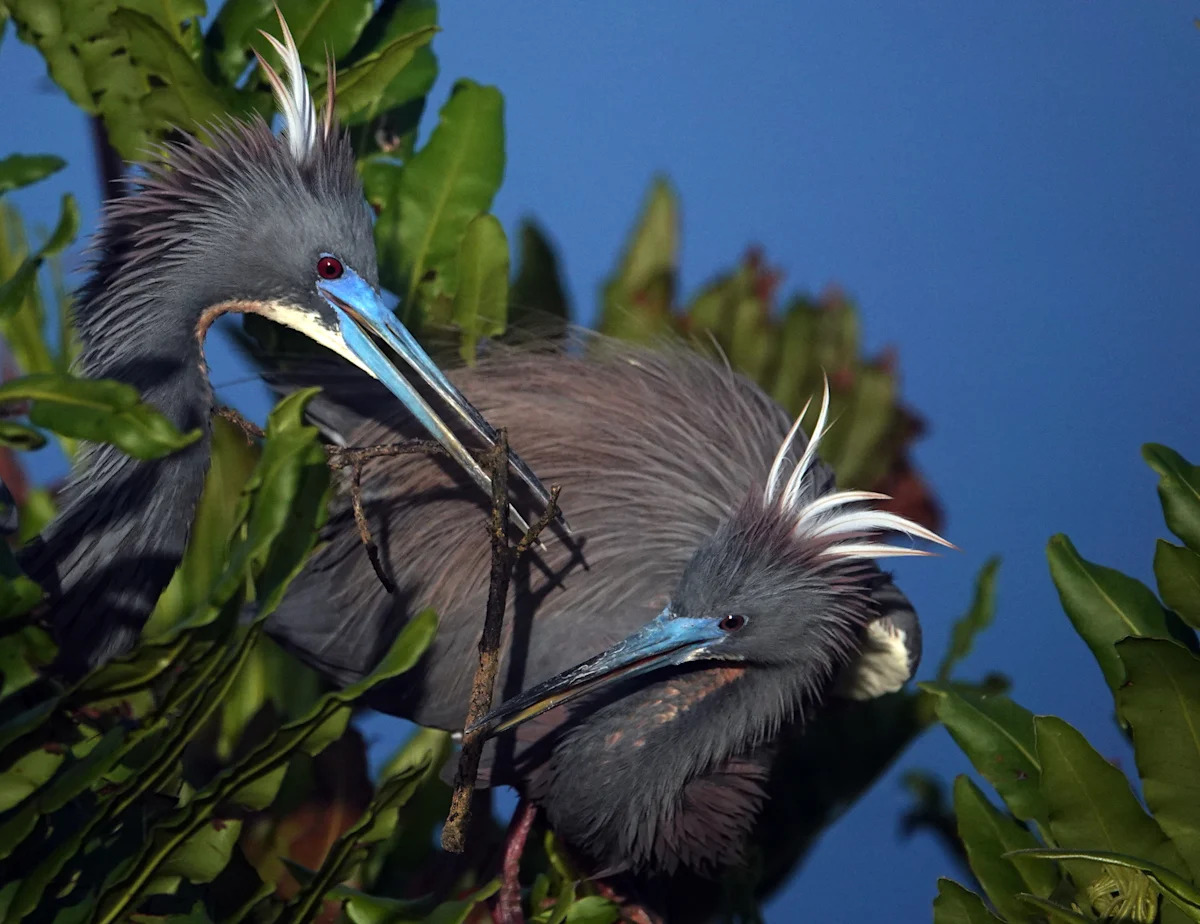
Nesting waterbirds
Herons, egrets and pelicans are putting on quite a show in mangroves and tree islands throughout South Florida. A great place to see them is Wakodahatchee Wetlands in Delray Beach, where you can get super-close to the storks and rookeries that have practically taken over the park’s water-surrounded trees. In the vibrant Facebook group “Wakodahatchee Wetlands and Green Cay Nature Preserve,” visitors have also recorded hawks and herons catching fish and taking care of their young, purple gallinules and blue jays in flight, and the occasional bobcat family hunting for food. Go early in the morning as parking becomes sparse as the day proceeds.
Other avian creatures
South Florida parks are aflutter with all kinds of feathery vertebrates building nests. Benji Studt, who is in charge of outreach and science communication at the Palm Beach County Department of Environmental Resources Management, says among his favorites is the swallow-tailed kite, which he calls “the iconic aerial acrobat of our summer skies.”
“These birds are arriving after making a 5,000-mile migration back to our area after spending the winter in southern Brazil,” he says. “And they only have five months to find their mate, build their nest, lay their eggs, hatch out their chicks, and then get those babies strong enough to make the 5,000-mile journey back down to Brazil when they are only 3 months old!”
Studt recommends heading over to one of Palm Beach County’s larger nature preserves, such as Cypress Creek Natural Area in Jupiter or Loxahatchee Slough in Palm Beach Gardens, to catch a glimpse of the spirited flocks.
Final tips
— If you see an injured animal, leave it where you found it. According to the FWC: “The parents are often nearby, foraging for food.” If you suspect the animal might be injured or orphaned, call a licensed wildlife rehabilitator or the nearest FWC regional office.
— Be alert to animals crossing roads. Obey the speed limits, particularly in panther zones and areas with road signage identifying known wildlife crossings.
— It’s tempting, but don’t feed wild or stray animals. “Animals that are fed can become aggressive and harass people,” according to the Palm Beach County Parks & Recreation Department. Not to mention, feeding these creatures is also a violation of county laws.
The FWC encourages the public to report suspected violations to its Wildlife Alert Hotline at 888-404-3922.