
Tampa’s rainy season is just a few months away. Like every year, we all try to hope away major flooding. But every family knows hope is not a plan, and we owe our residents more than that.

The reality is that heavy downpours are inevitable, and in some neighborhoods, even the most aggressive maintenance is never enough.
Right now, our teams are vacuuming drains, digging ditches and cleaning out ponds. I’m proud to say we’ve doubled that work from last year. We are also staging backup generators and pumps for rapid deployment.
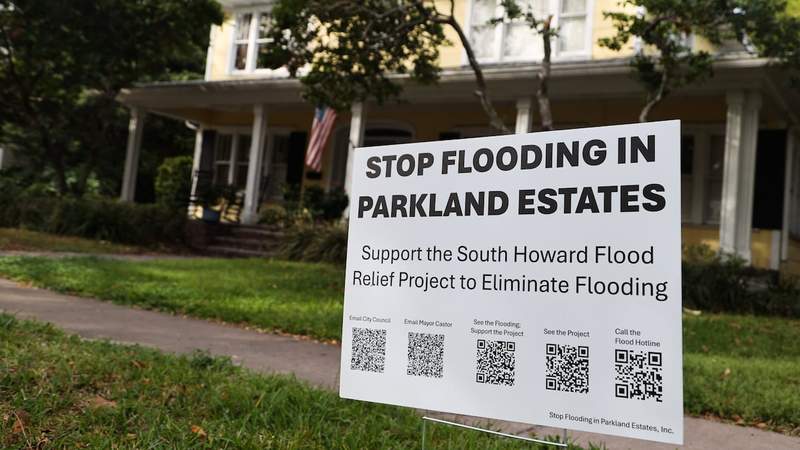
But no amount of maintenance will ever overcome the millions of gallons of water that consistently overwhelm some neighborhoods in and around South Howard Avenue, including Palma Ceia Pines and Parkland Estates. They’re shaped like bowls, and the drain pipes are woefully undersized. The problem is massive, and won’t get better on its own. It is basically like trying to drain a bathtub with a straw.
Anyone telling you otherwise is either willfully lying, a paid lobbyist or terribly misinformed. If the issue were just pipe cleaning, we would have resolved it years ago.
Hundreds of homes and more than 50 South Howard businesses have already suffered tens of millions of dollars in repeated flooding, not to mention the devastating impact of back-to-back hurricanes. They’re still hurting today, and if the pipes don’t get super-sized, everyone knows it’ll happen again as soon as the next hard rain falls.
At its core, local government exists to keep people safe, ensuring roads are passable for first responders and that families and businesses are protected from flooding.
Are we to ignore the residents and businesses literally begging for help?
The bottom line is we’ve explored every option to drain these neighborhoods.
From stormwater ponds, so huge the neighborhoods would be wiped off the map, to massive pumps, which are loud, can fail without power, and still need a pipe to the Bay to discharge water, among several other options. They all cost more, are less effective, and are more disruptive to the very neighborhoods we are trying to protect. I encourage everyone to read about all the options we studied at SHStormwater.com.
You don’t have to be an engineer to see why the current South Howard project rose to the top of the list. It protects the most families and businesses, is the most feasible to build, and works whether the power is on or not. It’s also the least expensive option.
We delayed the project to consider other routes. We listened to the concerns of residents and business owners at numerous public meetings and amended the route. Don’t take my word for it. Read it for yourself.
So let’s be clear, there’s no Plan B or cheaper option for flooding on this scale.
If there were a simpler, better plan, we would have implemented it long ago. It speaks volumes that not a single engineer has been willing to sign and seal such a plan — not one.
For the record: Phase One of this project delivers 95% flood reduction in Palma Ceia Pines and Parkland Estates with zero structural flooding during a strong summer storm, and up to 70% less structural flooding under Hurricane Milton-type conditions. That means we’re protecting more than 200 homes and businesses, even if it rains up to 14 inches.
The project’s Preliminary Engineering Report also notes that the South Howard, Historic Hyde Park, New Suburb Beautiful, Palma Ceia, and Bayshore Gardens neighborhoods will experience reduced flooding.
The project is not without cost or inconvenience. The price tag is more than $90 million in 2026. It is true that the price has risen from the 2022 estimate, but the 2024 hurricane season showed the problem was larger than originally thought. Materials are also more expensive today.
Construction will take time, and we hear the concerns of residents and business owners, so we will use a phased approach to ensure no business has its main access blocked for an extended period. And we are working to ensure that every business has alternative access routes well-marked with signage. We’ll do all we can to minimize disruptions and encourage visitors to shop at Howard. The good news is the pain will be temporary.
Afterwards, there’ll be a much more inviting, business-friendly streetscape with 10-foot-wide sidewalks in many areas, with less intrusive utility poles, improved crosswalks, landscaping, and more — and again, fewer flooded residents who’ll be able to spend more at their favorite spots.
City staff have worked hard to be transparent by sharing project details much earlier than is typical for large-scale projects. We did this to gather feedback and address concerns.
This has never been about choosing sides. It is about coming together to solve a massive problem. The City of Tampa is committed to listening and working together to solve it. We hope even the harshest critics can see that, but hope only goes so far.
Jane Castor is the mayor of Tampa.