
It had been 53 years, 3 months and 17 days since the Apollo 17 crew left lunar orbit, headed back to Earth and ended an era.
But a new era has finally begun with the Wednesday launch of the Artemis II mission from Kennedy Space Center and its Thursday move toward the moon, an event that will kickstart the agency’s plans to venture back to a place not visited for generations.
“NASA is back in the business of sending astronauts to the moon,” said NASA Administrator Jared Isaacman after witnessing the most powerful rocket ever ridden hurtle the Orion spacecraft into orbit on the way to a 10-day, lunar flyby that aims to ensure Orion is safe enough for the agency’s grand lunar plans.
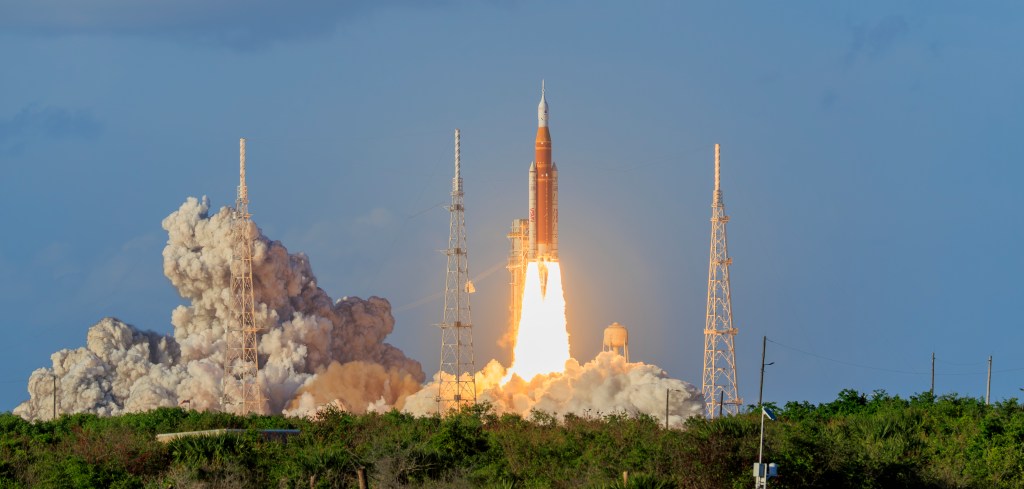
NASA astronauts Reid Wiseman, Victor Glover and Christina Koch along with Canadian Space Agency astronaut Jeremy Hansen strapped into the spacecraft and launched atop NASA’s Space Launch System rocket, which lit into Florida’s skies like the tip of a burning candle.
Riding the 8.8 million pounds of thrust, the SLS bested the power seen by the space shuttle and the Apollo program’s mighty Saturn V rockets.
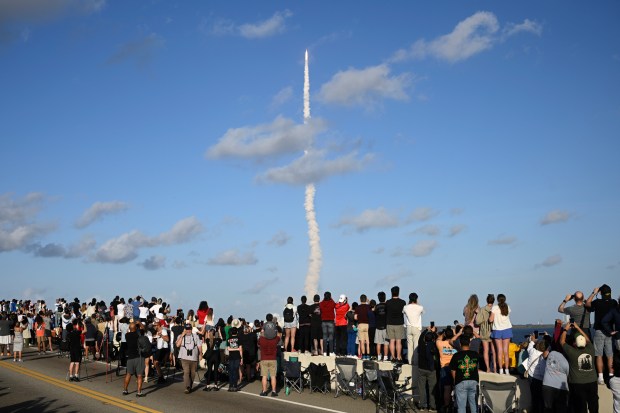 Spectators look on from the A. Max Brewer Bridge as NASA’s Artemis II moon rocket lifts off Wednesday, April 1, 2026, as seen from Titusville, Fla. (AP Photo/Phelan M. Ebenhack)
Estimates that more than 200,000 could be on hand to witness the event seemed to come to fruition as beaches, parks and roadways jam were packed with crowds muscling for their place to see the fiery spectacle make its way out over the Atlantic.
Minutes after the 6:35 p.m. liftoff, Wiseman chimed in over the radio.
“We have a beautiful moonrise and we’re headed right for it,” he said.
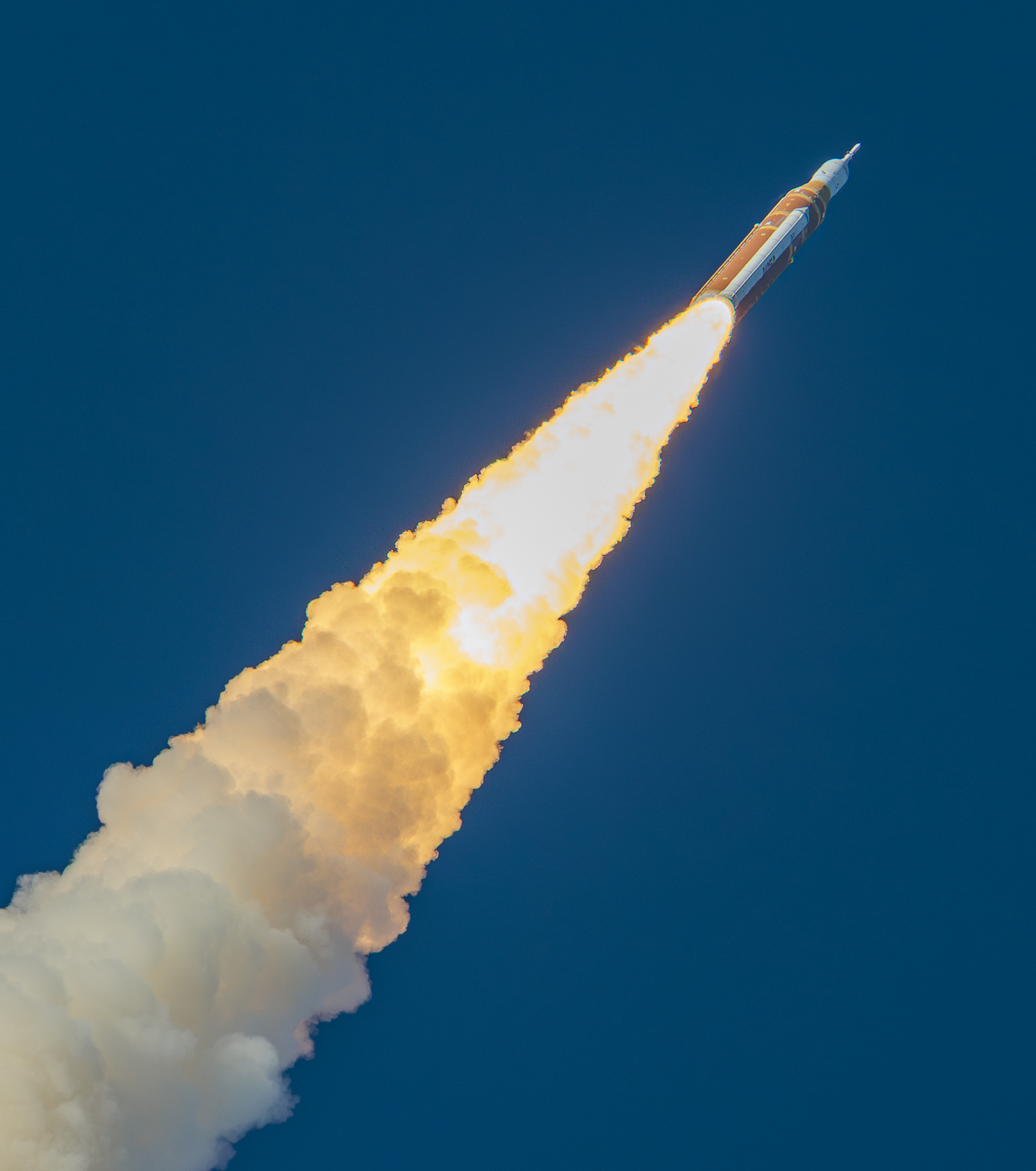
The Space Launch System rocket topped with the Orion capsule carrying the four astronauts of the Artemis II mission launches from Kennedy Space Center’s Launch Pad 39-B on Wednesday, April 1, 2026. (Roger Simmons/Orlando Sentinel)
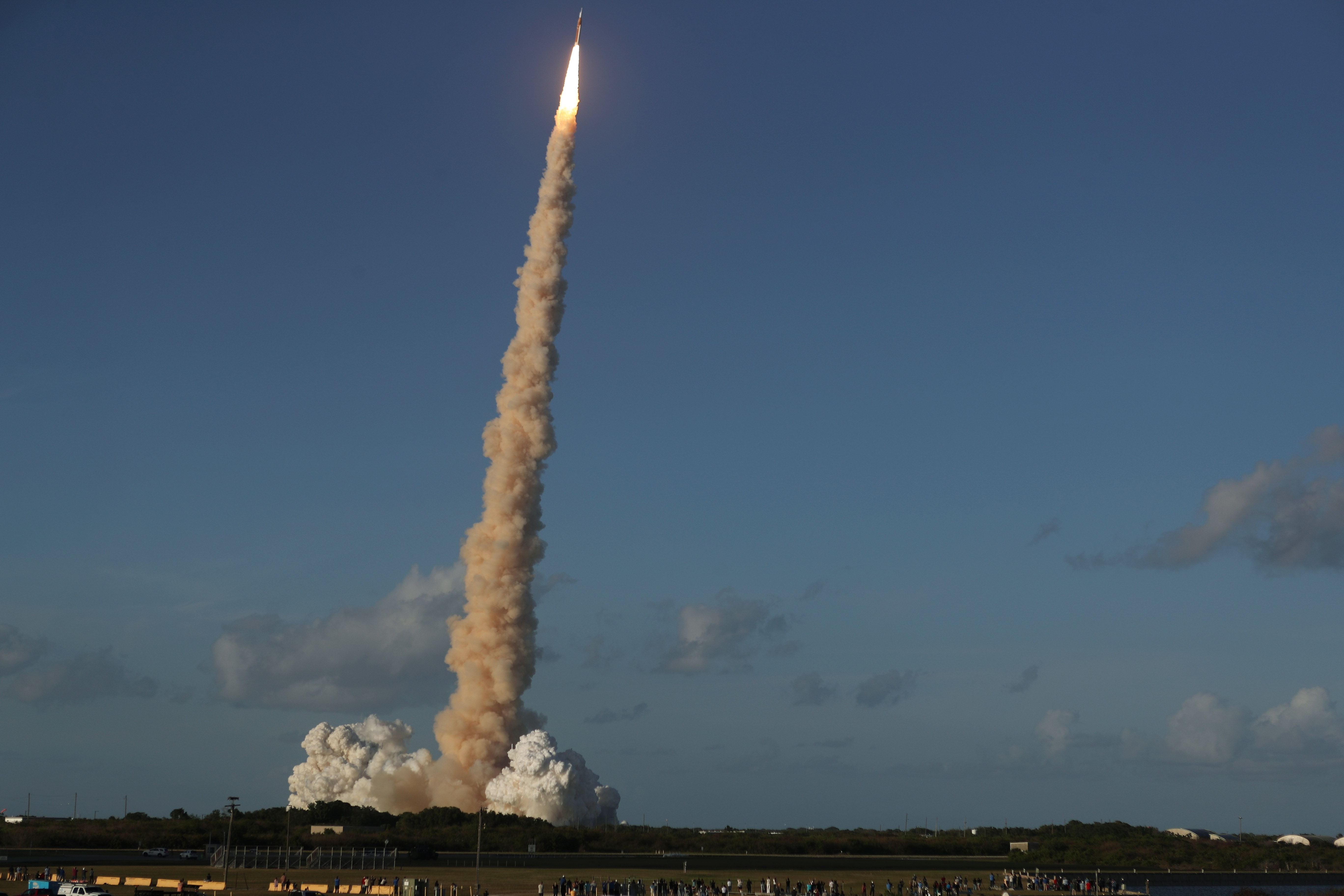
Artemis II astronauts, commander Reid Wiseman, pilot Victor Glover and mission specialists Christina Koch and Jeremy Hansen, take off from Launch Complex 39B for their mission to the Moon, on Wednesday, April 1, 2026. (Ricardo Ramirez Buxeda/ Orlando Sentinel)

The Space Launch System rocket topped with the Orion capsule carrying the four astronauts of the Artemis II mission launches from Kennedy Space Center’s Launch Pad 39-B on Wednesday, April 1, 2026. (Roger Simmons/Orlando Sentinel)

The Space Launch System rocket topped with the Orion capsule carrying the four astronauts of the Artemis II mission launches from Kennedy Space Center’s Launch Pad 39-B on Wednesday, April 1, 2026. (Roger Simmons/Orlando Sentinel)
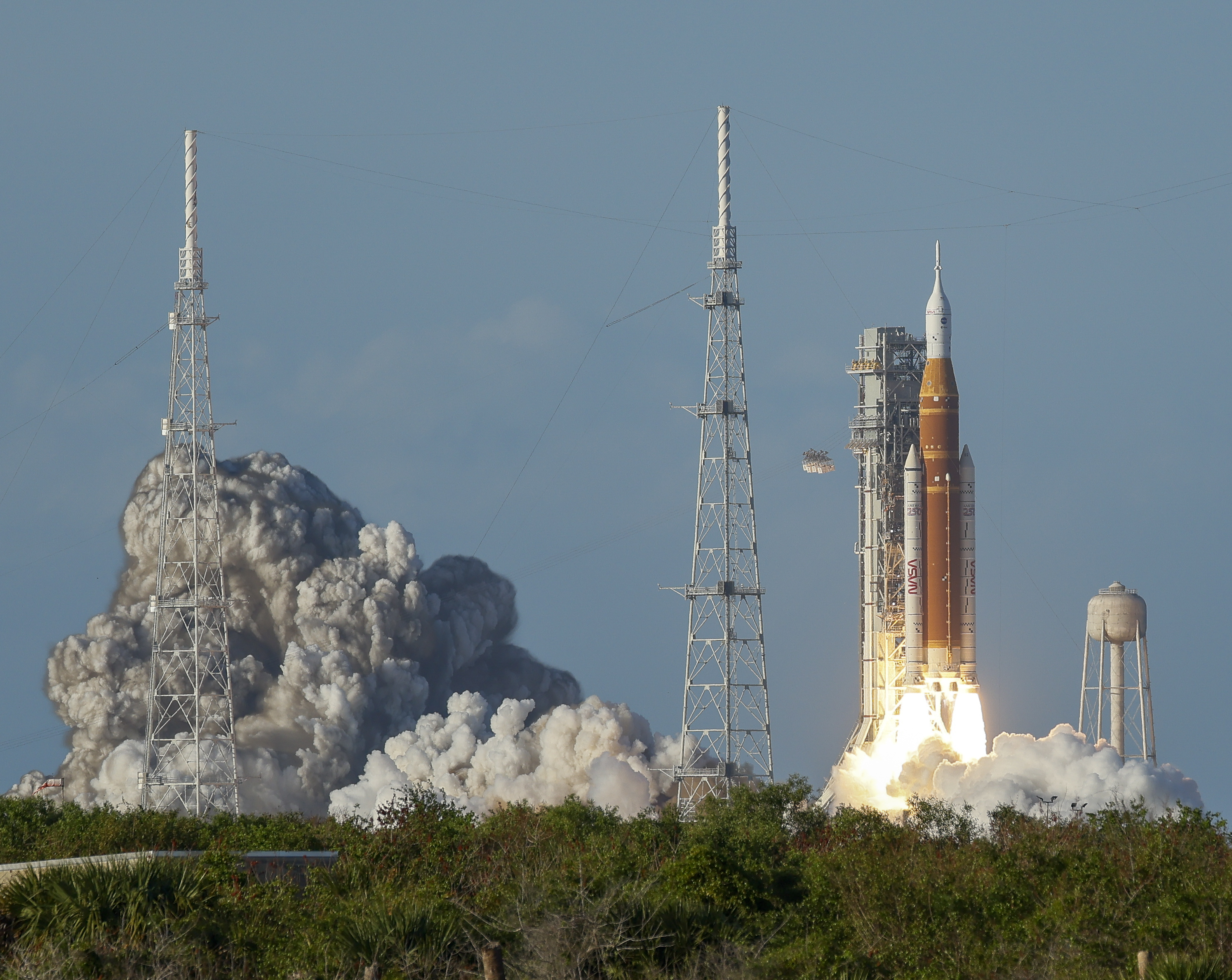
The Space Launch System rocket topped with the Orion capsule carrying the four astronauts of the Artemis II mission launches from Kennedy Space Center’s Launch Pad 39-B on Wednesday, April 1, 2026. (Roger Simmons/Orlando Sentinel)
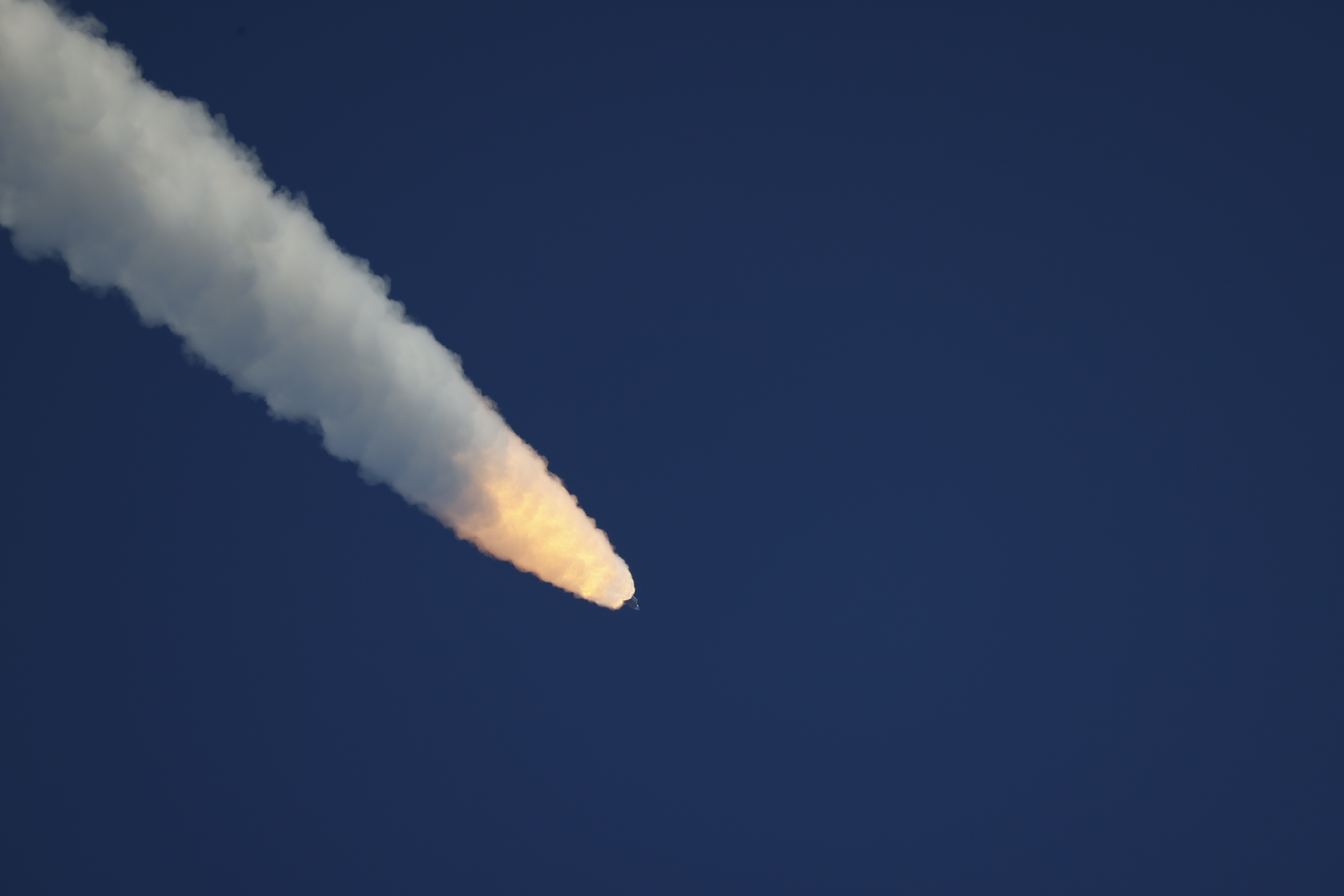
The Space Launch System rocket topped with the Orion capsule carrying the four astronauts of the Artemis II mission launches from Kennedy Space Center’s Launch Pad 39-B on Wednesday, April 1, 2026. (Roger Simmons/Orlando Sentinel)
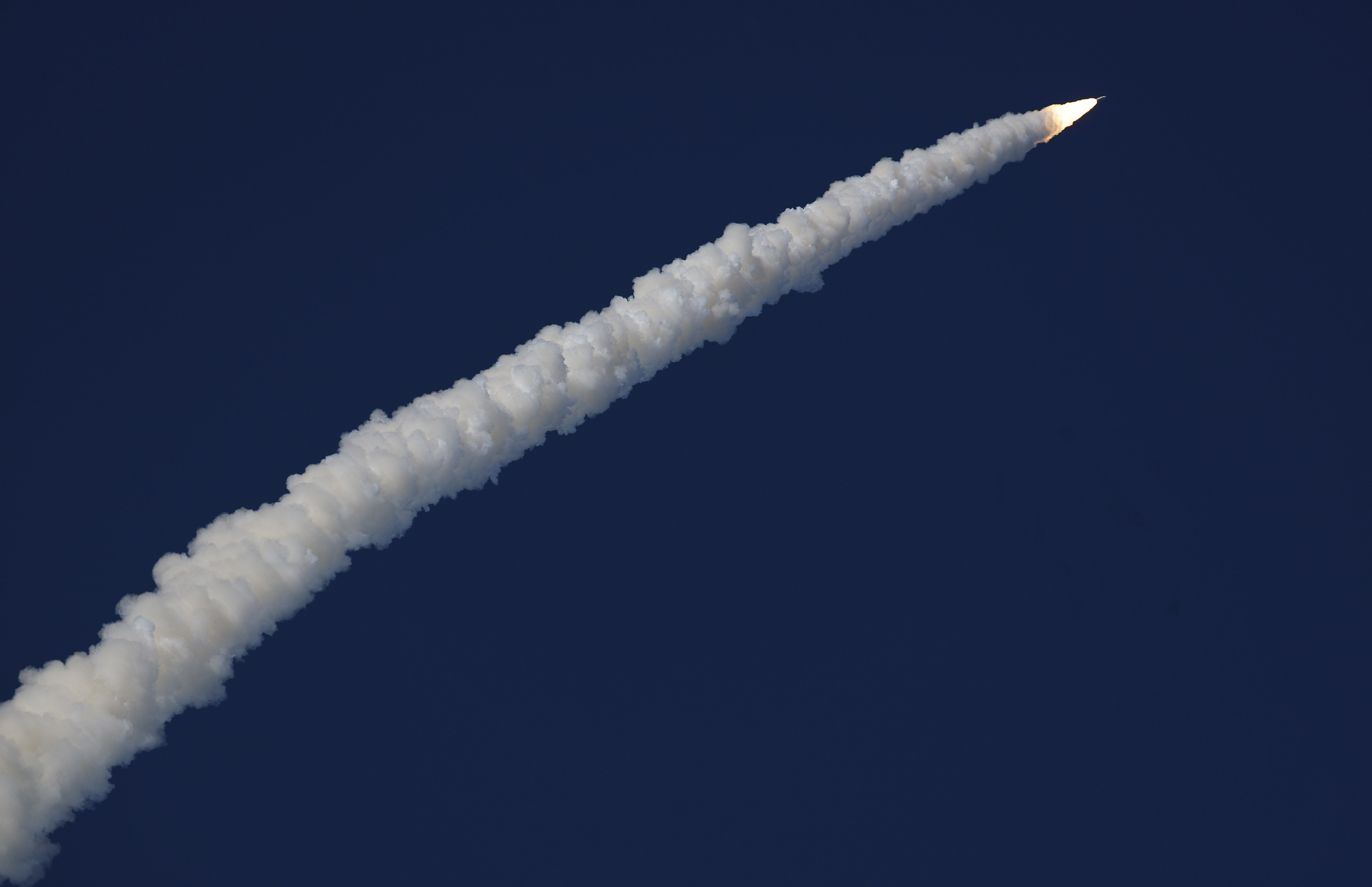
Artemis II astronauts, commander Reid Wiseman, pilot Victor Glover and mission specialists Christina Koch and Jeremy Hansen, take off from Launch Complex 39B for their mission to the Moon, on Wednesday, April 1, 2026. (Ricardo Ramirez Buxeda/ Orlando Sentinel)
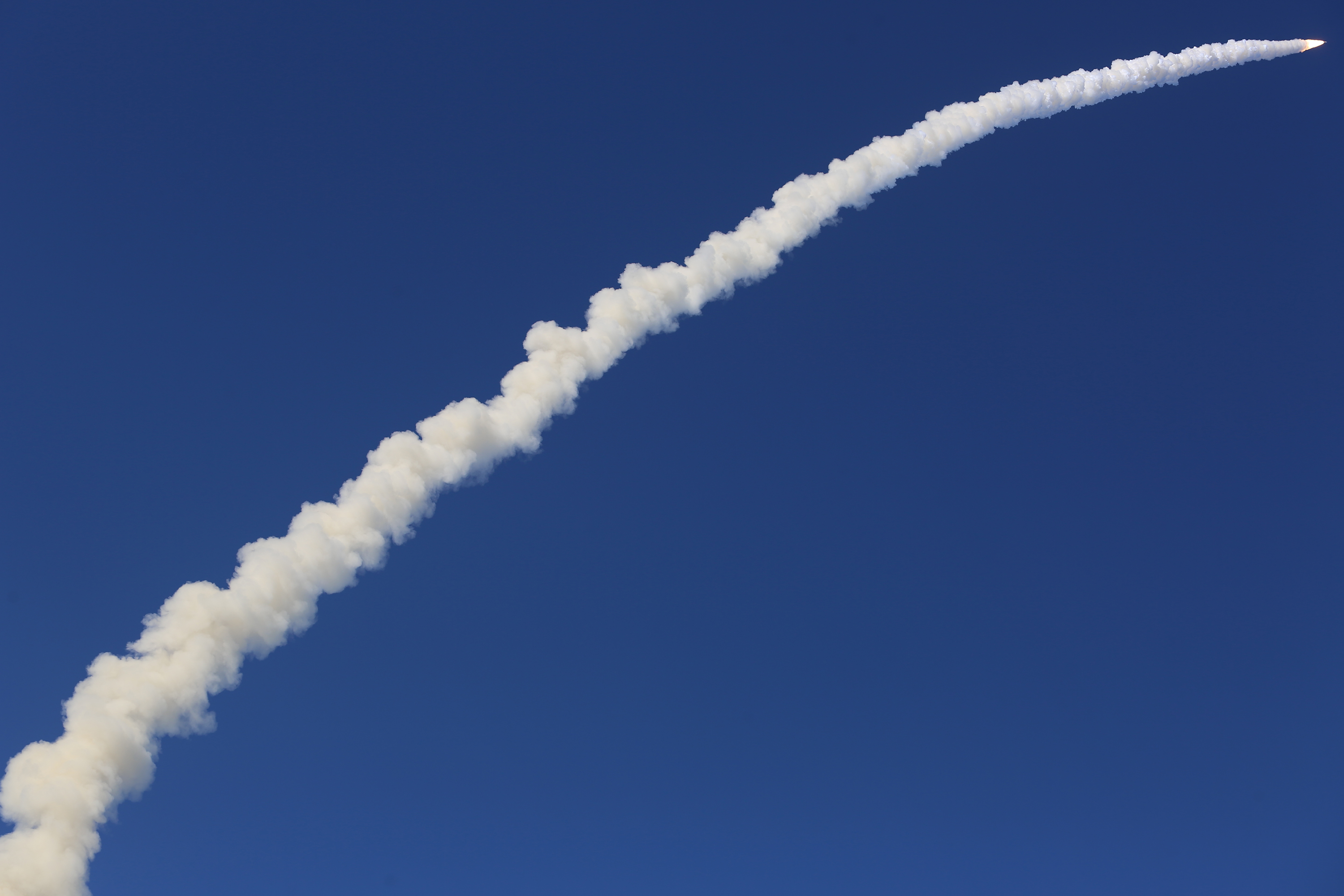
The Space Launch System rocket topped with the Orion capsule carrying the four astronauts of the Artemis II mission launches from Kennedy Space Center’s Launch Pad 39-B on Wednesday, April 1, 2026. (Richard Tribou/Orlando Sentinel)
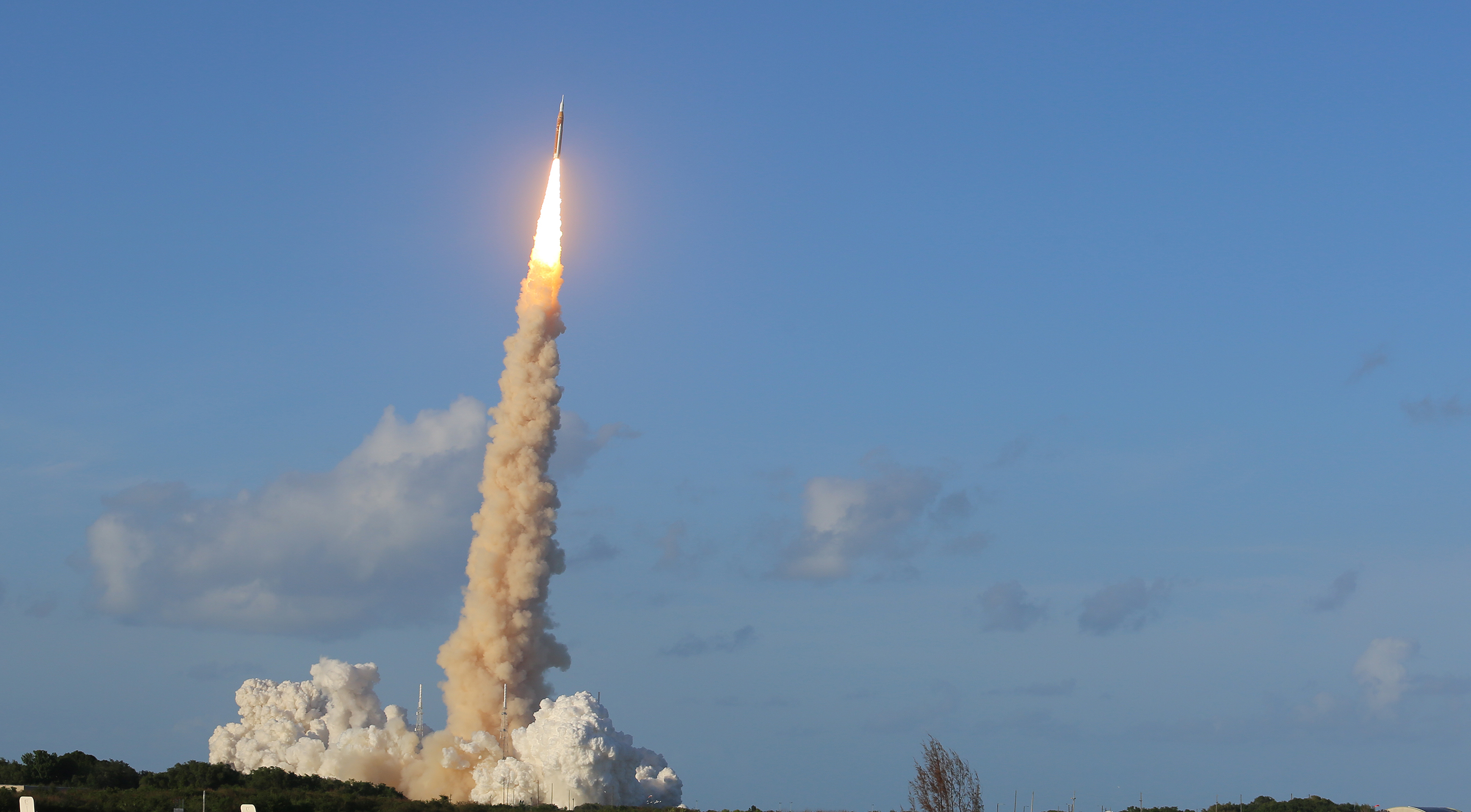
The Space Launch System rocket topped with the Orion capsule carrying the four astronauts of the Artemis II mission launches from Kennedy Space Center’s Launch Pad 39-B on Wednesday, April 1, 2026. (Richard Tribou/Orlando Sentinel)
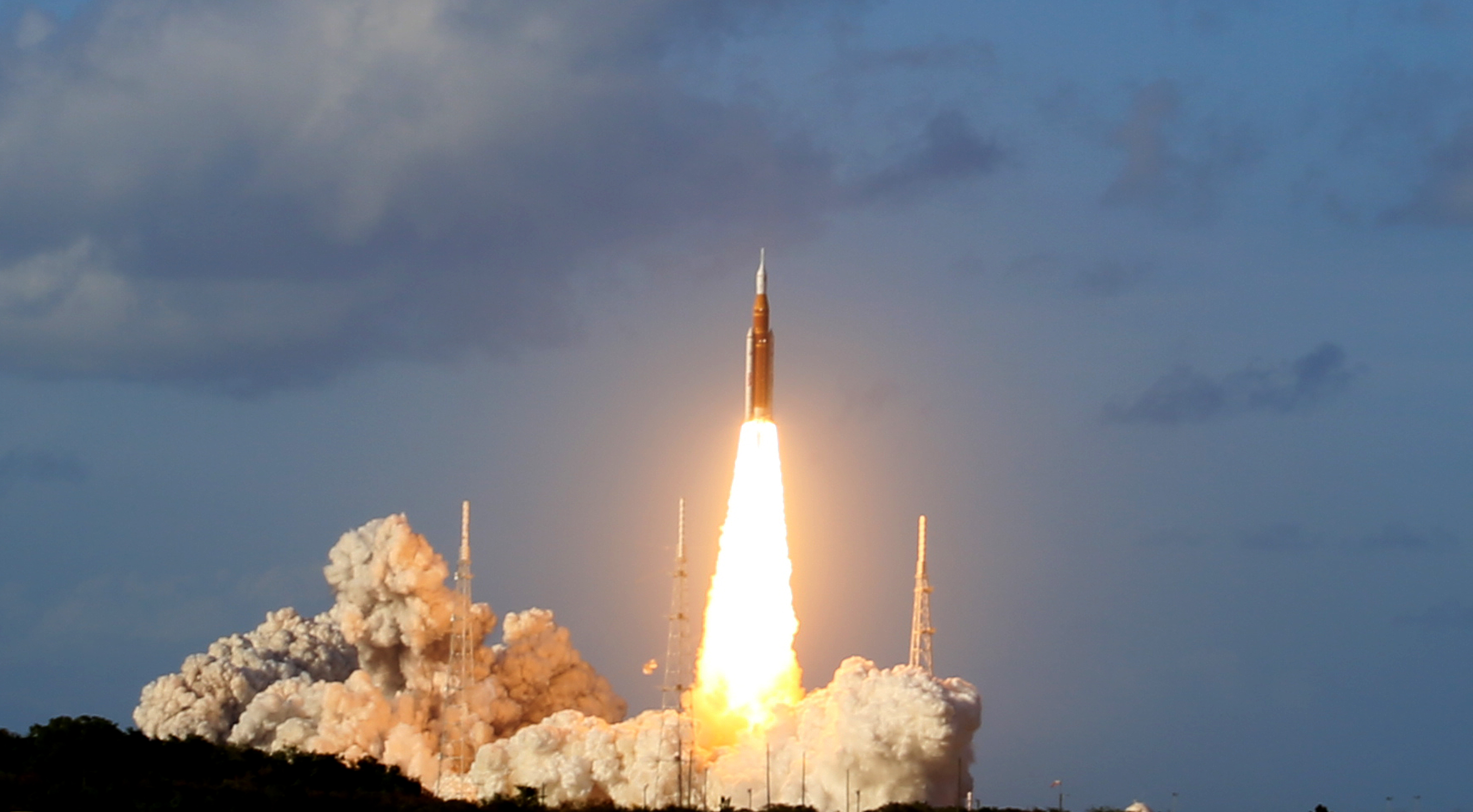
The Space Launch System rocket topped with the Orion capsule carrying the four astronauts of the Artemis II mission launches from Kennedy Space Center’s Launch Pad 39-B on Wednesday, April 1, 2026. (Richard Tribou/Orlando Sentinel)
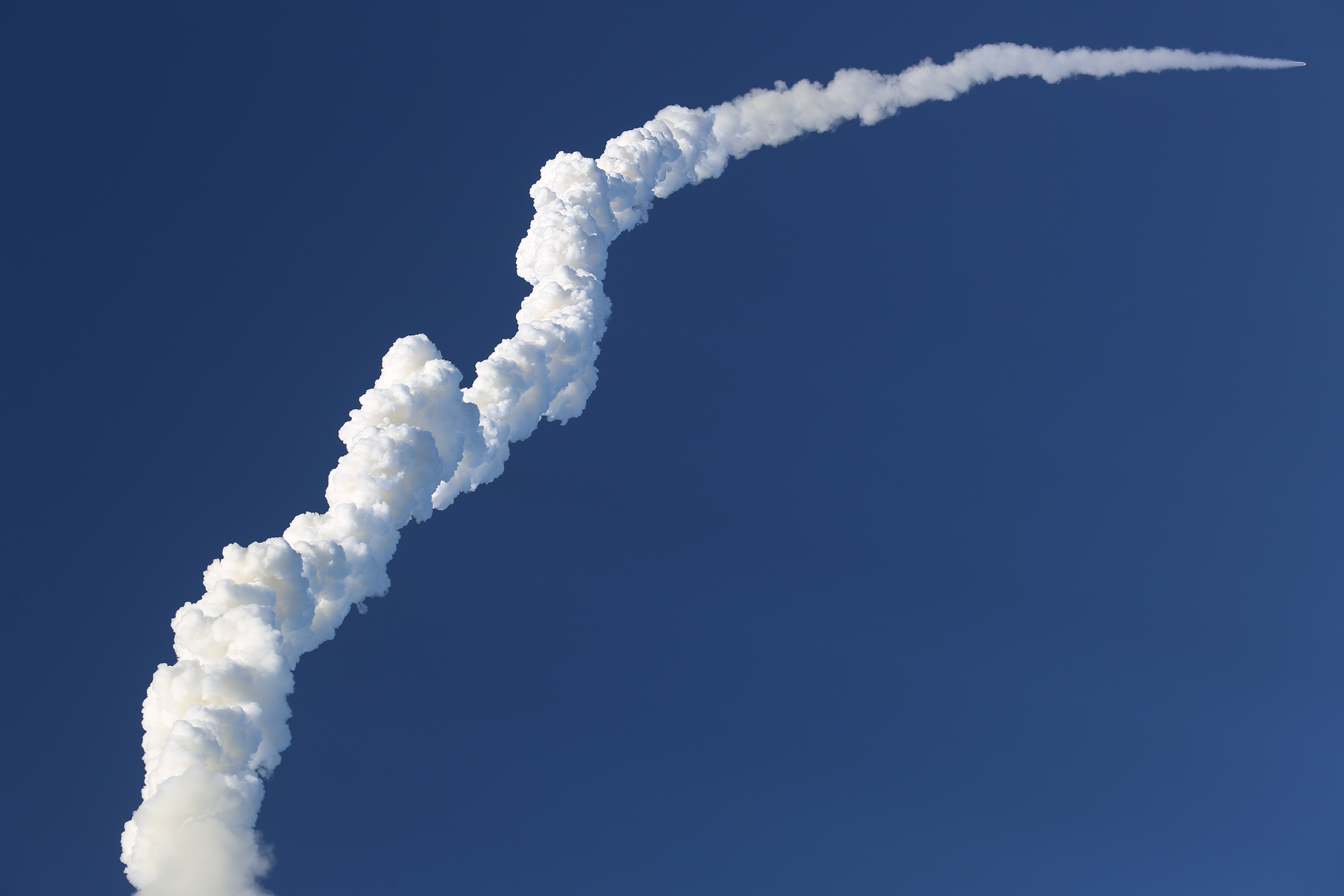
The Space Launch System rocket topped with the Orion capsule carrying the four astronauts of the Artemis II mission launches from Kennedy Space Center’s Launch Pad 39-B on Wednesday, April 1, 2026. (Richard Tribou/Orlando Sentinel)
Show Caption
1 of 11
The Space Launch System rocket topped with the Orion capsule carrying the four astronauts of the Artemis II mission launches from Kennedy Space Center’s Launch Pad 39-B on Wednesday, April 1, 2026. (Roger Simmons/Orlando Sentinel)
Crew members spent their first day in space making sure the life-support systems on the spacecraft worked and testing out Orion’s manual engine control. On Thursday evening about 25 hours after liftoff came the so-called translunar injection (TLI), which sent them on a more-than-three-day burn to pass by the moon in what could be the farthest any humans have traveled from Earth.
The mission management team gave the go for TLI at 7:49 p.m., with the burn lasting five minutes, 49 seconds, increasing Orion’s velocity by 868 mph.
Mission control stated “looks like a good burn.” Hansen was on the coms as Orion rounded Earth for the last time.
“With that successful TLI, the crew’s feeling pretty good up here on our way to the moon,” Hansen said. “And we just wanted to communicate to everyone around the planet who’s worked to making Artemis possible that we firmly felt the power of you perseverance during every second of that burn. Humanity has once again shown what we are capable of and it’s your hopes for the future that carry us now on this journey around the moon.”
Hansen then described what the crew was seeing.
“We are getting just a beautiful view of the dark side of the Earth right now lit by the moon. Phenomenal,” he said. “Yeah, none of us can get to lunch ’cause we’re glued to the window. We’re taking pictures.”
The burn was executed by the flight operations team in Houston.
“It was flawless,” said Lori Glaze, the acting associate administrator for NASA’s Exploration Systems Development Mission Directorate during a post-TLI press conference. “The burn was the last major firing of this mission. From this point forward, the laws of orbital mechanics are going to carry our crew to the moon, around the far side and back to Earth.”
The day before, after launch, Isaacman weighed in the caliber of the four astronauts and gravity of their mission.
“You have a truly exceptional crew up there that have been training for years on this,” Isaacman said. “That gives you the confidence to undertake this mission, especially knowing the implications that it is part of a much bigger program. This is America and our partners’ return to the moon, and we’re trying to do it this time to stay.”
In history, only the men of nine Apollo missions have ever flown into deep space beyond low-Earth orbit, with six of those missions making successful landings on the moon.
NASA plans to follow this mission with Artemis III, staying closer to Earth to test out Orion’s ability to dock with one or both of the new lunar landers being developed. It won’t be until at least 2028 on the Artemis IV mission that humans will return to the lunar surface.
NASA then plans to begin building out a robust lunar base, spending $20 billion on rovers, habitats and other infrastructure targeting the lunar south pole into the 2030s.
 NASA Administrator Jared Isaacman smiles while waiting for the Artemis II crew walkout, on Wednesday, April 1, 2026. (Ricardo Ramirez Buxeda/ Orlando Sentinel)
“Incredibly important mission, certainly felt the pressure of it,” Isaacman said.
Orion is only the seventh iteration of a crew-capable spacecraft used by NASA astronauts, following Mercury, Gemini, Apollo, the space shuttle, SpaceX’s Crew Dragon and Boeing’s Starliner.
“Understanding the Orion spacecraft is paramount in this one, to progress on to integrated operations of Orion with a with a lander. Every day we’re getting data,” Isaacman said.
Astronaut Nichole Ayers, who flew to space on Crew-10 in 2025, was part of the NASA broadcast team Wednesday evening and became emotional after seeing the launch surrounded by an exhilarated crowd.
“The energy was wonderful,” she said. “We’ve got four friends and family members headed to the moon. It’s pretty amazing. …We don’t have the words in the English language to describe this kind of event. Pride. Love. So many emotions. They are truly breaking some barriers.”
Orion flew Artemis I uncrewed in 2022, which orbited the moon on a much longer mission. The quartet won’t be on the same trajectory, simply flying by Earth’s biggest satellite, but are on track to break the record for humans’ distance from Earth held by the three astronauts of Apollo 13 in 1970.
Also, Glover will be the first Black man, Koch the first woman and Hansen the first non-American to travel to deep space.
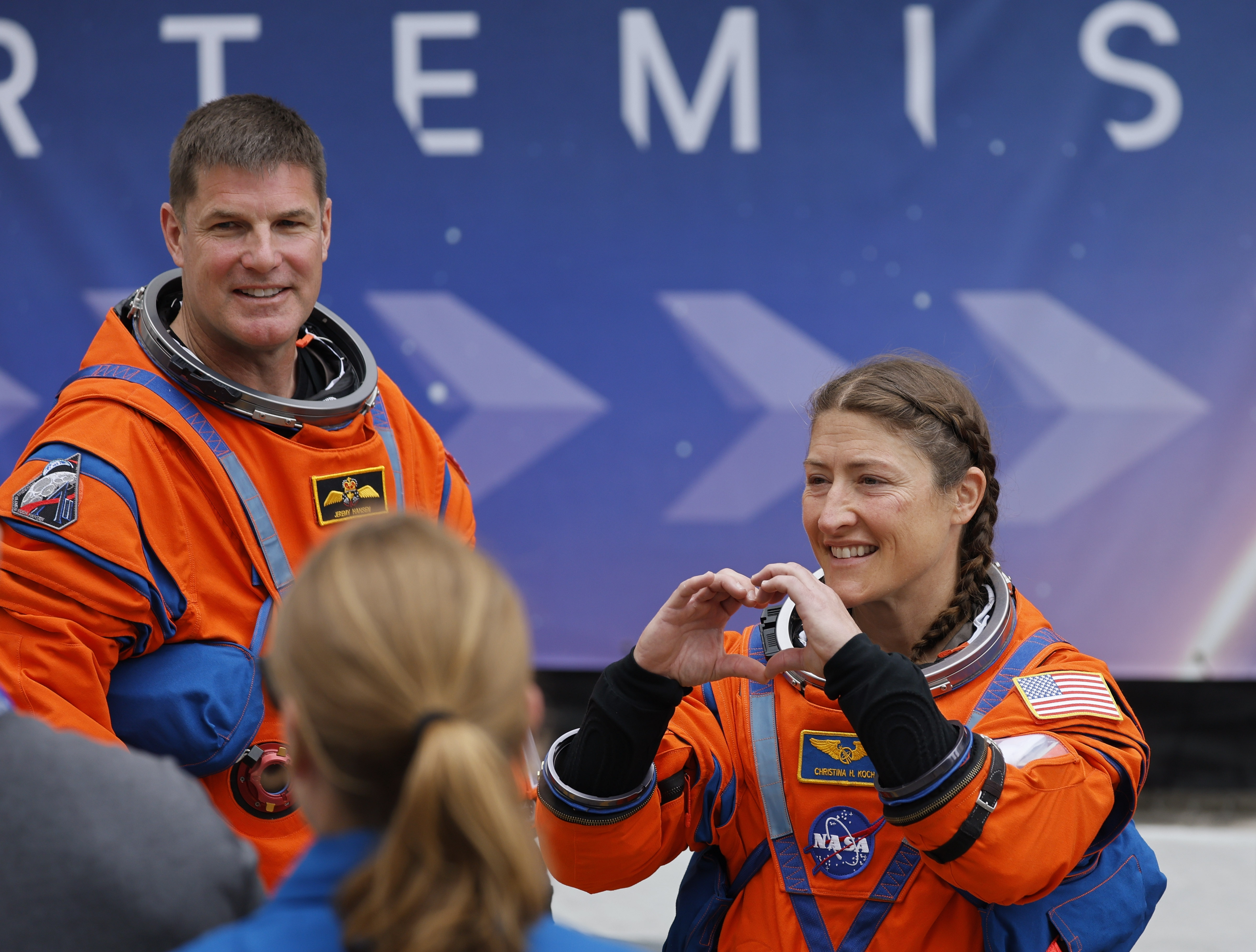
Artemis II mission specialists Jeremy Hansen and Christina Koch walk out on the way to Launch Complex 39B for their mission to the Moon, on Wednesday, April 1, 2026. (Ricardo Ramirez Buxeda/ Orlando Sentinel)
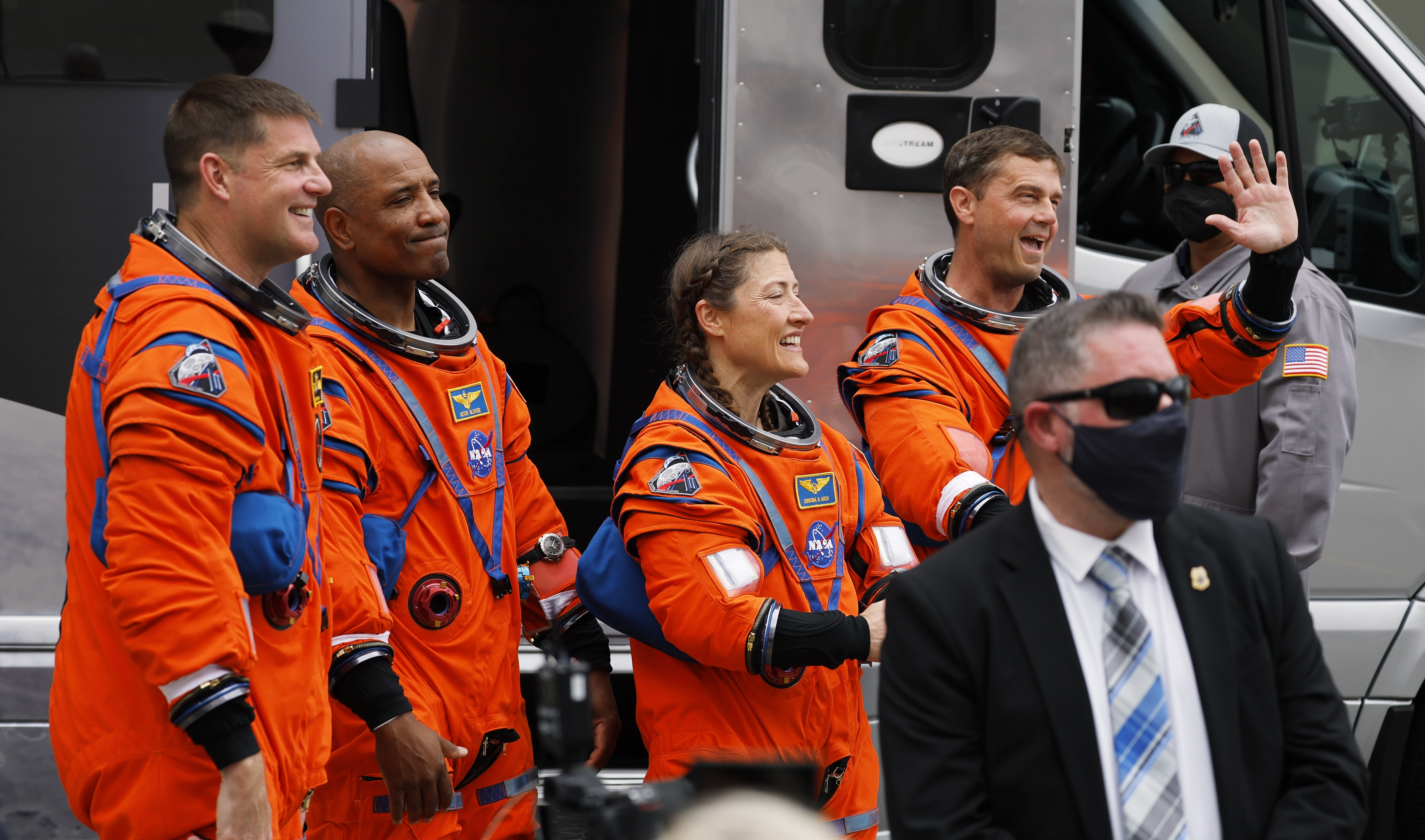
From left, Artemis II mission specialist Jeremy Hansen, pilot Victor Glover, mission specialist Christina Koch and commander Reid Wiseman walk out on the way to Launch Complex 39B for their mission to the Moon, on Wednesday, April 1, 2026. (Ricardo Ramirez Buxeda/ Orlando Sentinel)
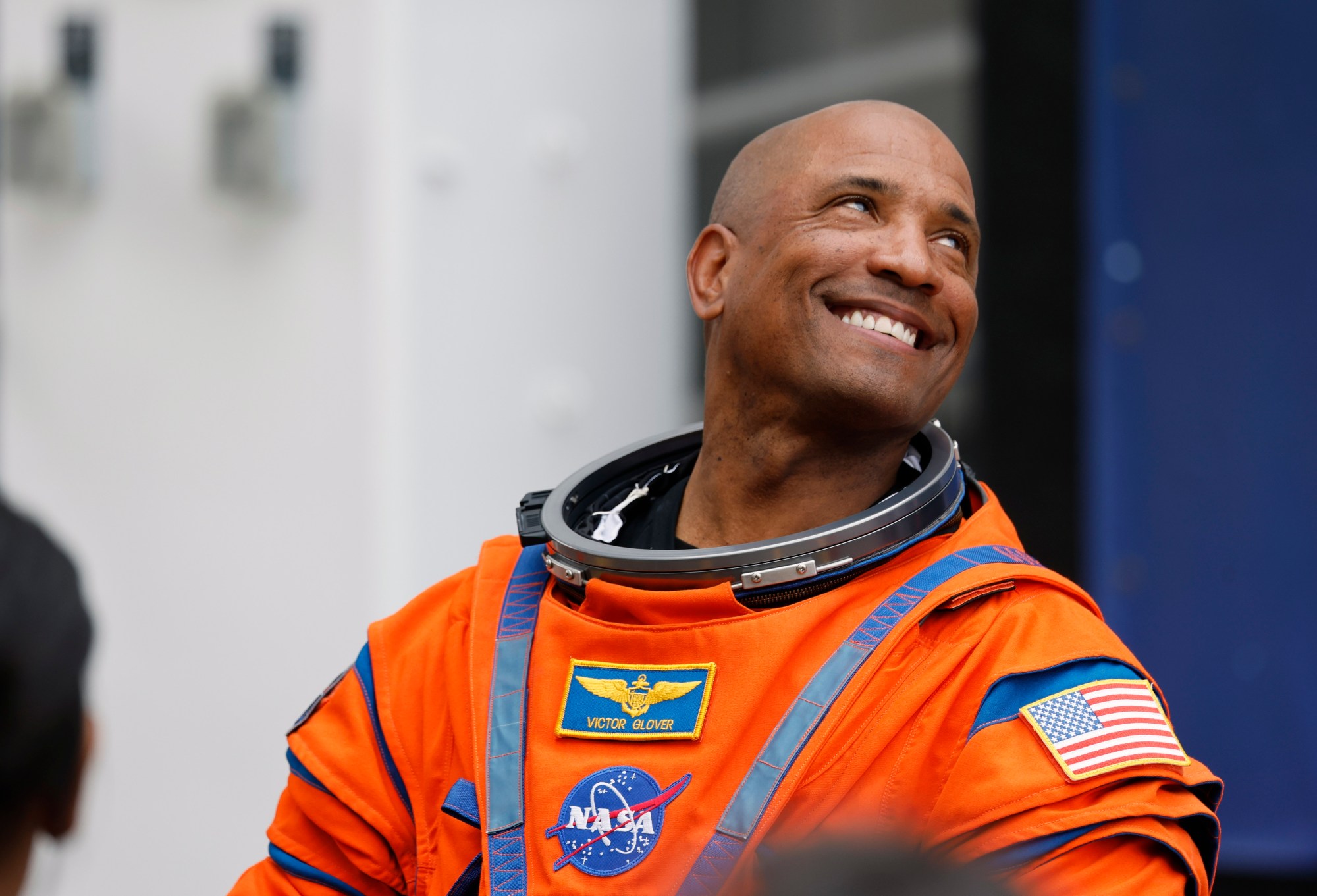
Artemis II pilot Victor Glover talks with loved ones during the walk out on the way to Launch Complex 39B for their mission to the Moon, on Wednesday, April 1, 2026. (Ricardo Ramirez Buxeda/ Orlando Sentinel)
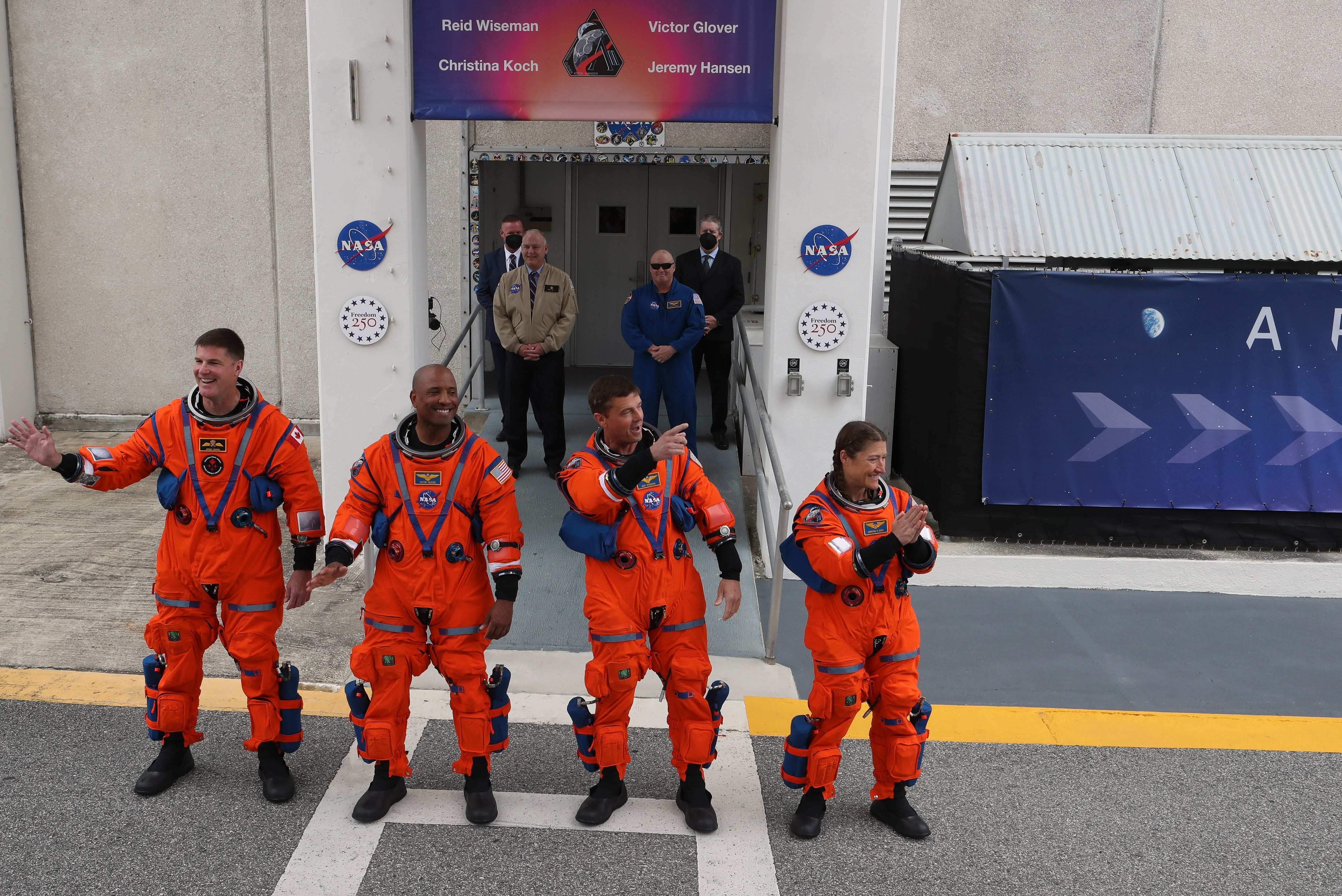
From left, The Artemis II crew mission specialist Jeremy Hansen, pilot Victor Glover, commander Reid Wiseman and mission specialist Christina Koch wave as they walk out on the way to Launch Complex 39B for their mission to the Moon, on Wednesday, April 1, 2026. (Ricardo Ramirez Buxeda/ Orlando Sentinel)
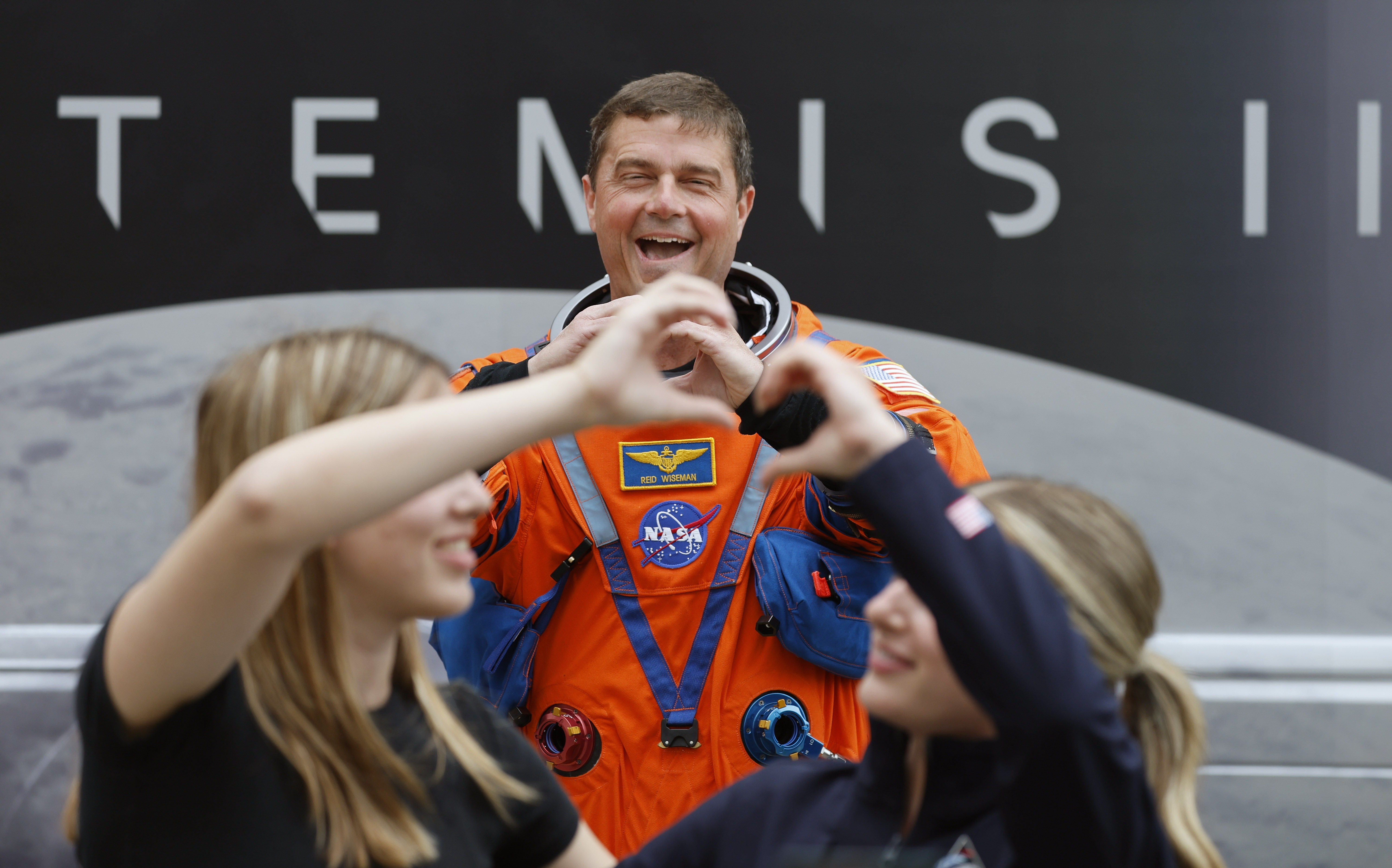
Artemis II commander Reid Wiseman poses for photos during the walk out on the way to Launch Complex 39B for their mission to the Moon, on Wednesday, April 1, 2026. (Ricardo Ramirez Buxeda/ Orlando Sentinel)
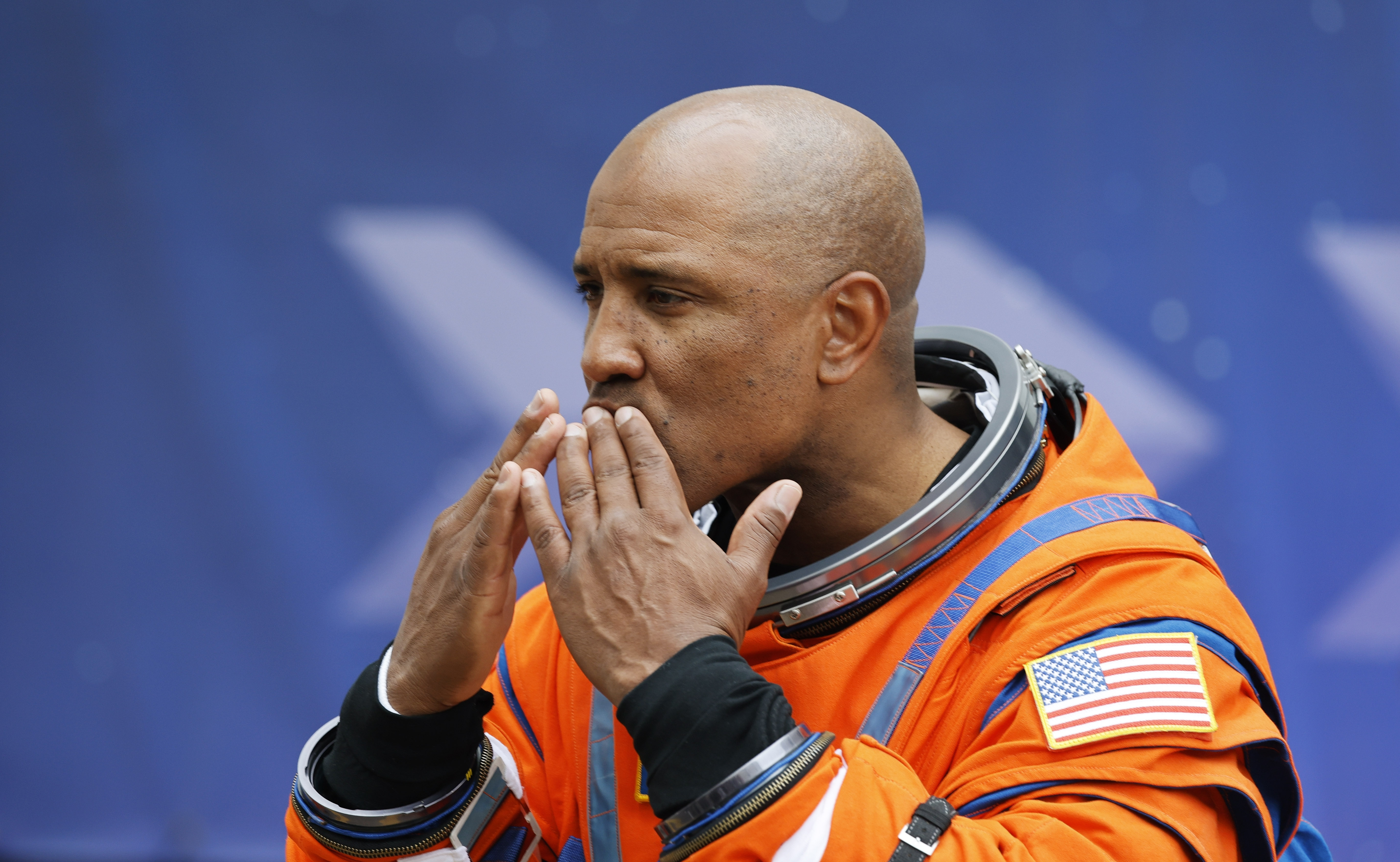
Artemis II pilot Victor Glover blows kisses to loved ones during the walk out on the way to Launch Complex 39B for their mission to the Moon, on Wednesday, April 1, 2026. (Ricardo Ramirez Buxeda/ Orlando Sentinel)
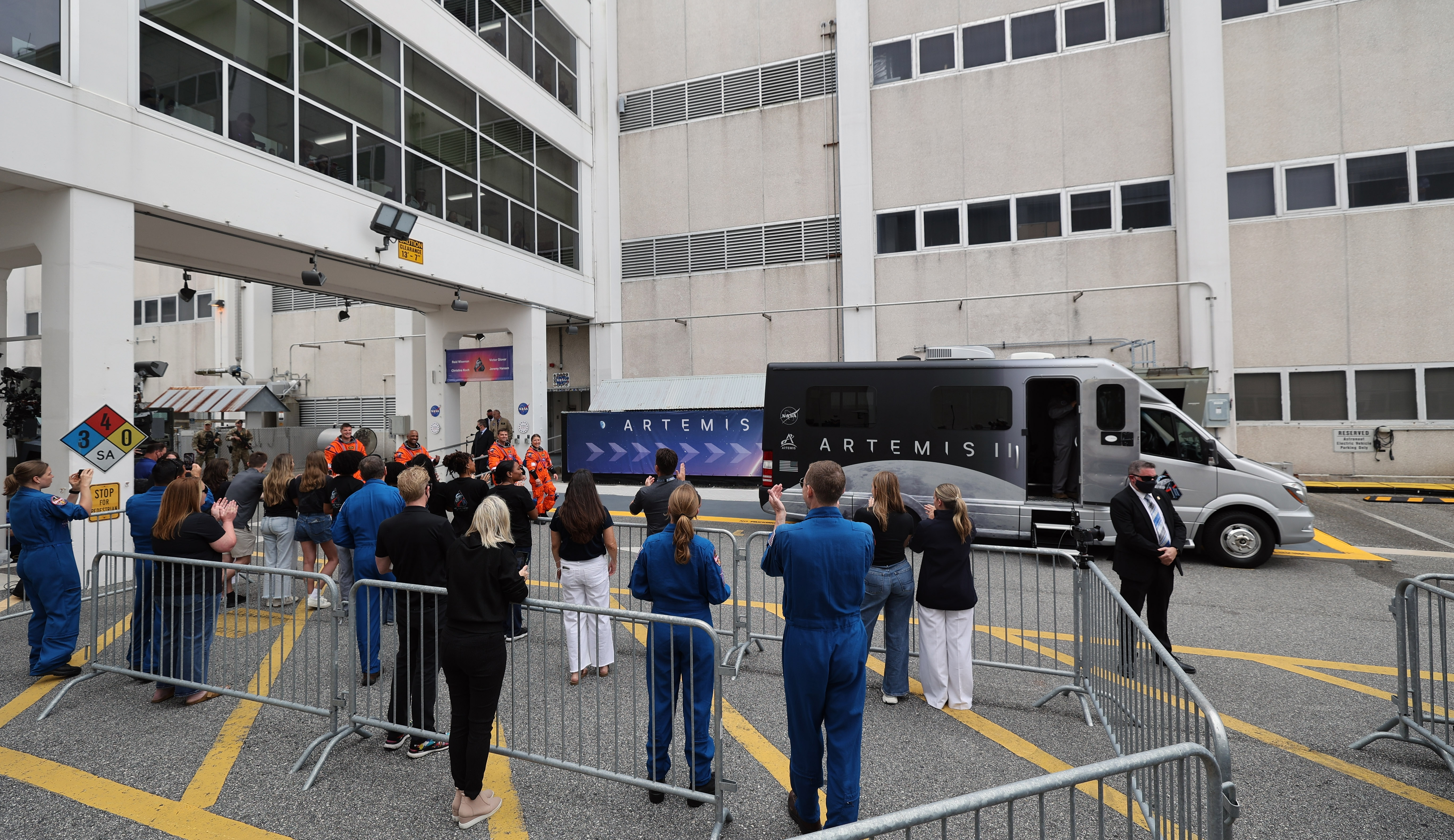
From left, The Artemis II crew mission specialist Jeremy Hansen, pilot Victor Glover, commander Reid Wiseman and mission specialist Christina Koch walk out on the way to Launch Complex 39B for their mission to the Moon, on Wednesday, April 1, 2026. (Ricardo Ramirez Buxeda/ Orlando Sentinel)
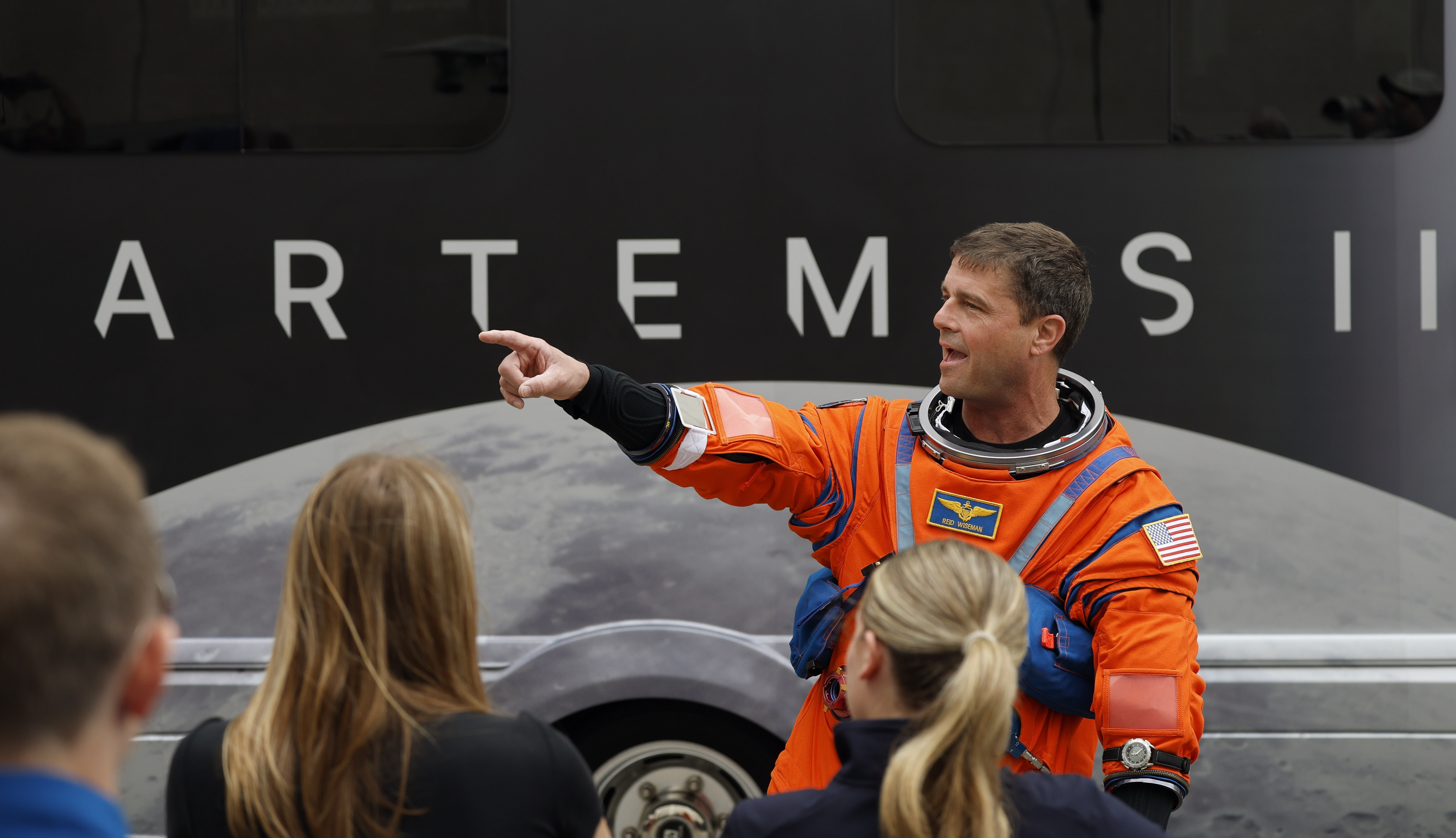
Artemis II commander Reid Wiseman talks with loved ones during the walk out on the way to Launch Complex 39B for their mission to the Moon, on Wednesday, April 1, 2026. (Ricardo Ramirez Buxeda/ Orlando Sentinel)
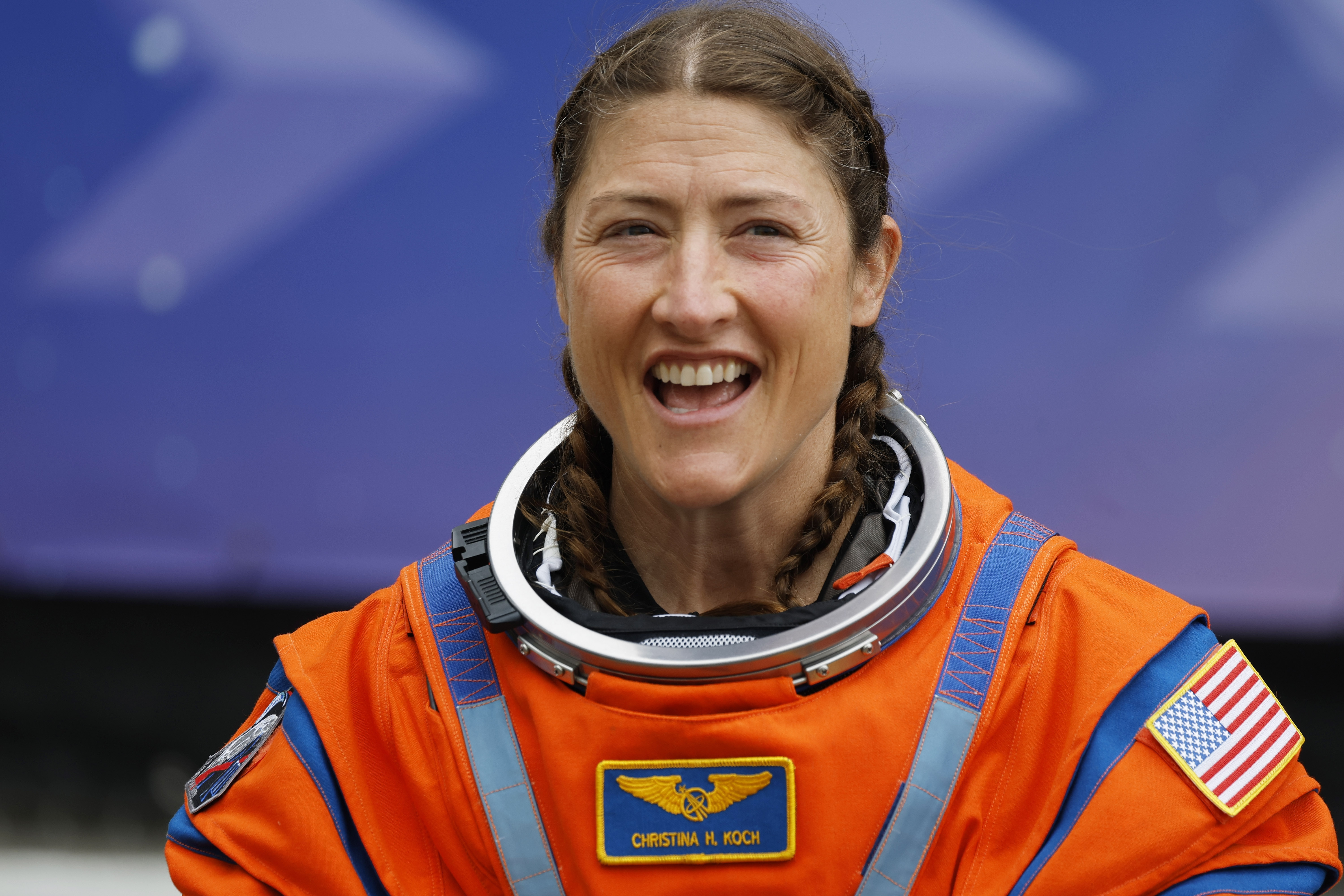
Artemis II mission specialist Christina Koch talks with loved ones during the walk out on the way to Launch Complex 39B for their mission to the Moon, on Wednesday, April 1, 2026. (Ricardo Ramirez Buxeda/ Orlando Sentinel)

Artemis II mission specialist Jeremy Hansen talks with loved ones during the walk out on the way to Launch Complex 39B for their mission to the Moon, on Wednesday, April 1, 2026. (Ricardo Ramirez Buxeda/ Orlando Sentinel)
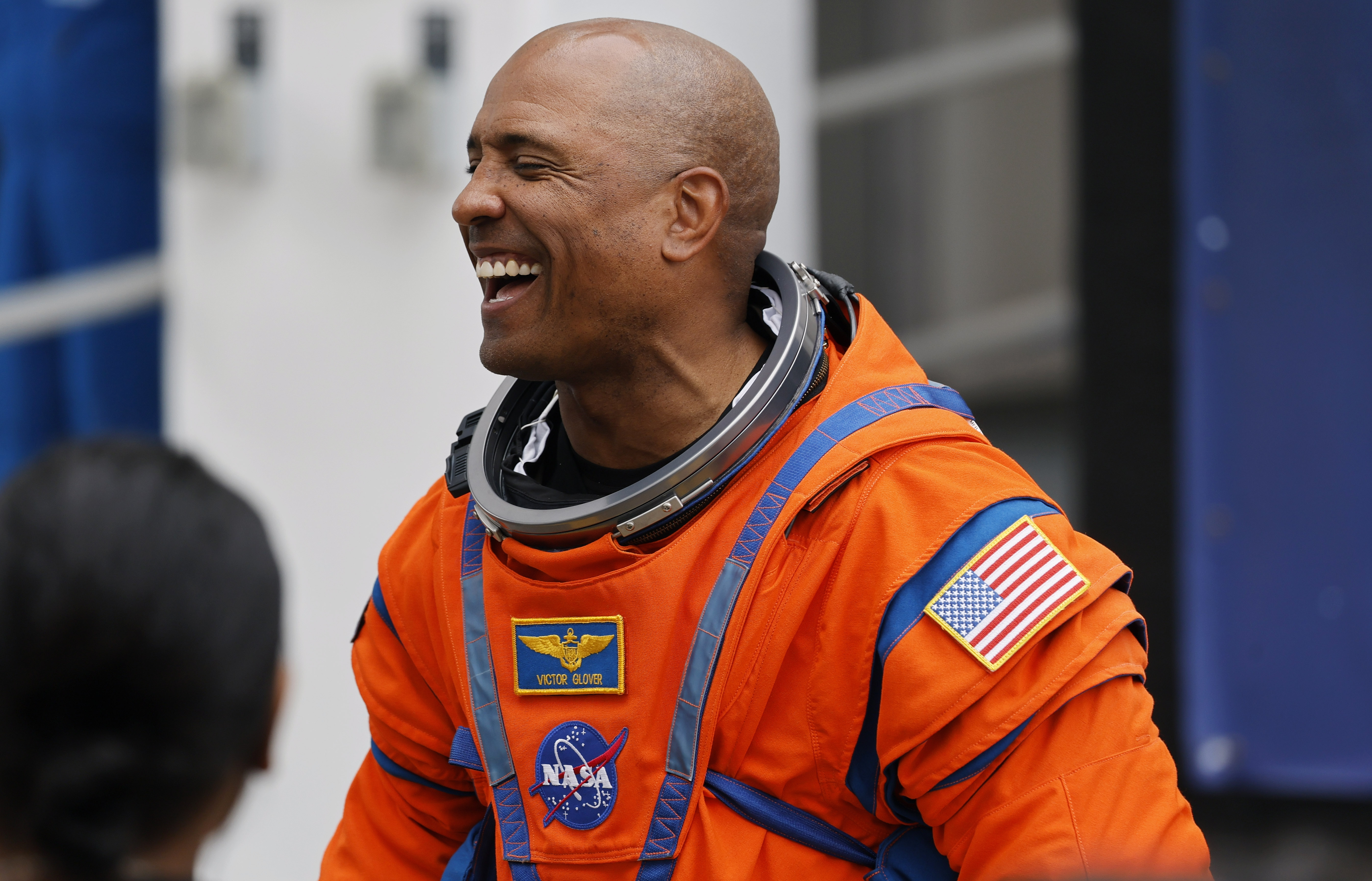
Artemis II pilot Victor Glover talks with loved ones during the walk out on the way to Launch Complex 39B for their mission to the Moon, on Wednesday, April 1, 2026. (Ricardo Ramirez Buxeda/ Orlando Sentinel)
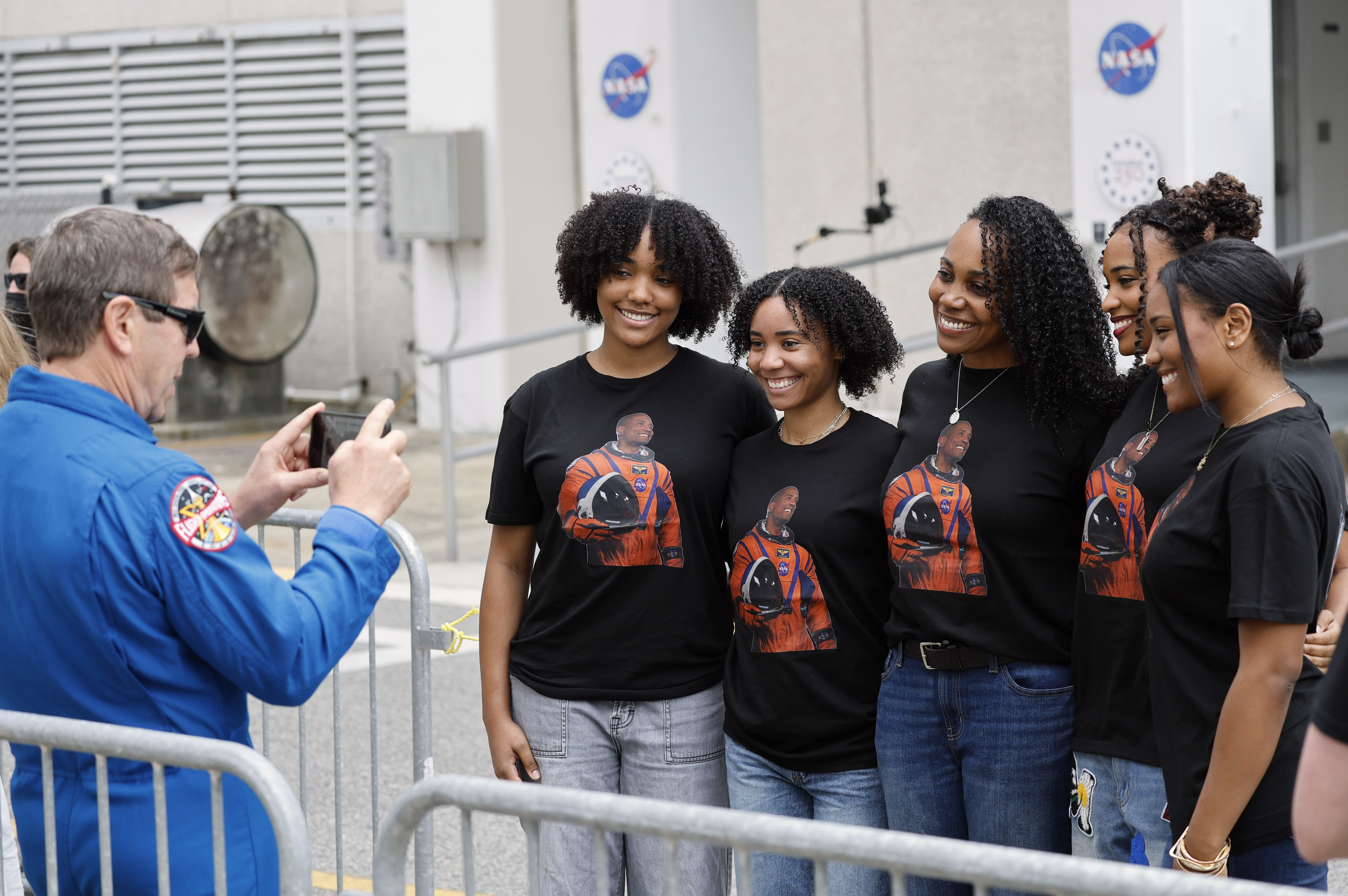
Astronaut Michael Barratt takes a photo of Victor Glover’s family before the Artemis II crew walks out on their way to Launch Complex 39B for their mission to the Moon, on Wednesday, April 1, 2026. (Ricardo Ramirez Buxeda/ Orlando Sentinel)
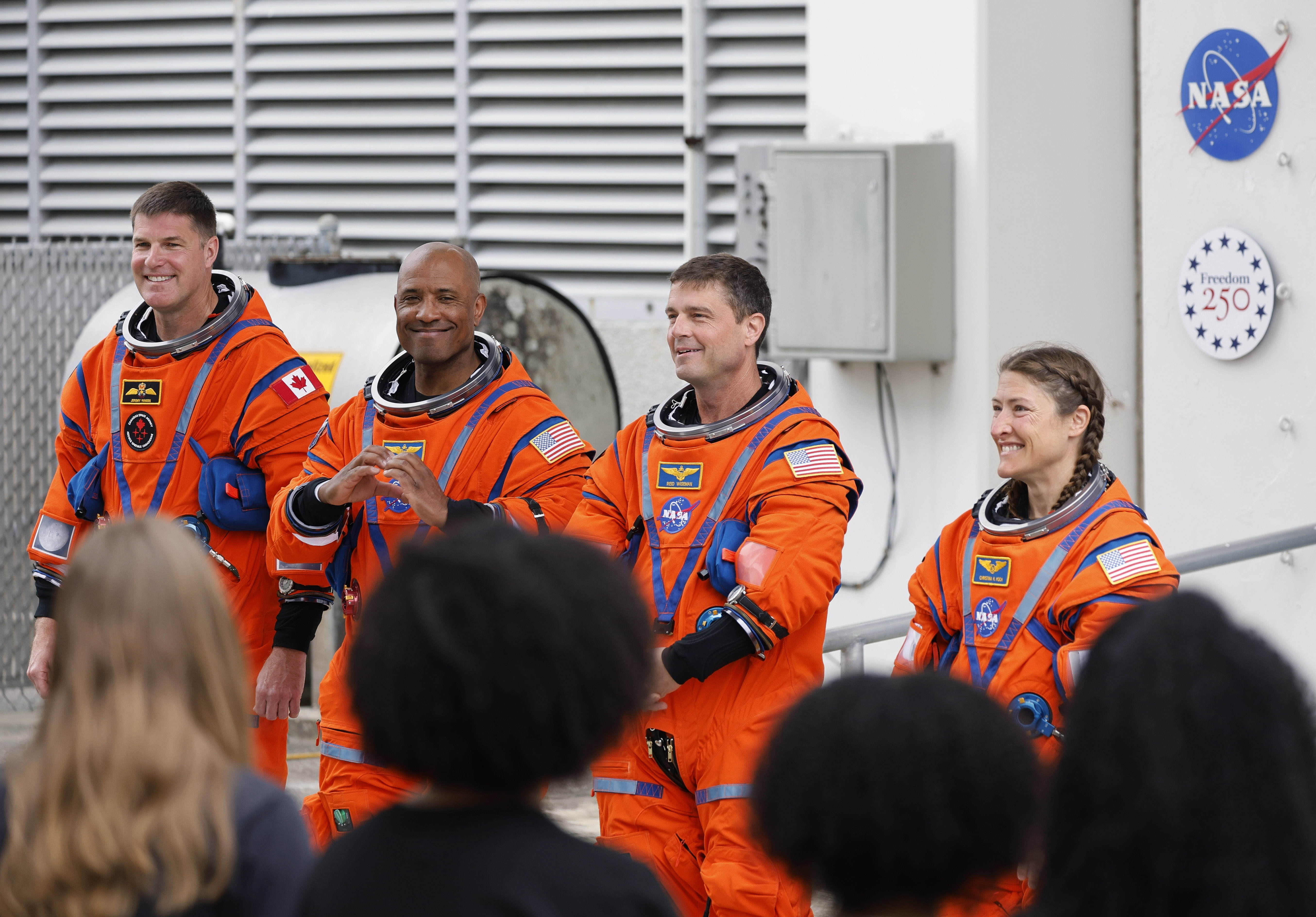
From left, The Artemis II crew mission specialist Jeremy Hansen, pilot Victor Glover, commander Reid Wiseman and mission specialist Christina Koch pose for photos as they walk out on the way to Launch Complex 39B for their mission to the Moon, on Wednesday, April 1, 2026. (Ricardo Ramirez Buxeda/ Orlando Sentinel)
Show Caption
1 of 13
Artemis II mission specialists Jeremy Hansen and Christina Koch walk out on the way to Launch Complex 39B for their mission to the Moon, on Wednesday, April 1, 2026. (Ricardo Ramirez Buxeda/ Orlando Sentinel)
Their closest approach will come on Monday, flying within 4,000 to 6,000 miles from the moon. They could end up 252,799 miles from Earth, which exceeds Apollo 13’s distance by 4,144 miles.
While Artemis II opens the door for the future, Isaacman said getting the crew home safe is NASA’s primary concern. It’s targeting a landing on April 10 off the coast of California in the Pacific Ocean.
“This is a test mission, for sure,” he said. “No crew have ever ridden this before. We’ll keep gathering data over the next 10 days. We’ll share updates, but we’ll call it a success when they’re in the water safely. And then we’ll start working on the next mission.”