
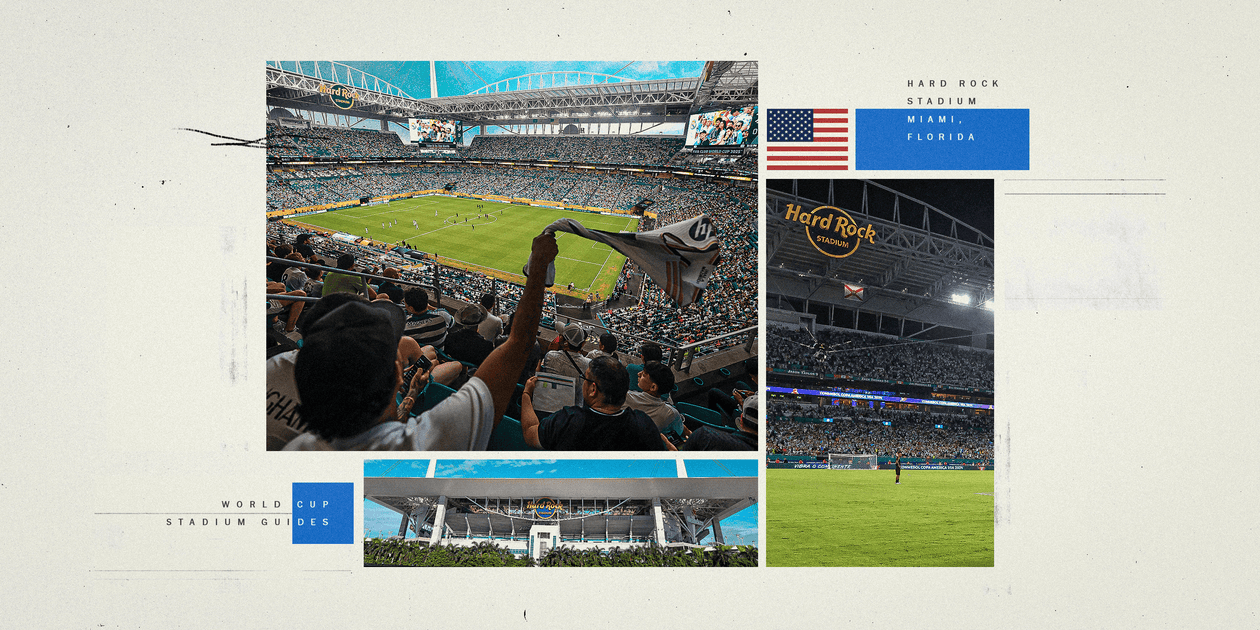
This article is part of our World Cup Stadium Guides series, in which we look at the 16 venues that will host matches at the 2026 tournament.
Miami is not just a party capital; it is also one of America’s great sporting cities.
It is home to the Miami Heat, where basketball legend LeBron James won his first and second NBA championships on his way to becoming one of the greatest ever to grace the hardwood. It also plays host to one of soccer’s greats, Lionel Messi, who lines up for Inter Miami in nearby Fort Lauderdale.
This summer, however, Miami Stadium will be the city’s soccer destination. With a long history of hosting sporting events, from the Super Bowl to the Miami Grand Prix, it has been the site of memorable moments across various sports. Here, The Athletic provides a comprehensive guide to the stadium and how to make the most of the experience as it prepares to host the World Cup.
What is it known as normally?
Hard Rock Stadium, after the Hard Rock Cafe brand, a chain of restaurants, cafes, casinos and memorabilia stores founded in London in 1971. It is now headquartered in Davie, Florida, around 13 miles north of Miami Gardens, and has 165 locations in more than 70 countries. It bought the naming rights to the stadium in 2016 for $250million spread across the contract, which runs until 2034.
In 2022, a year and a half before Messi joined Inter Miami, Hard Rock launched the ‘Messi Burger’. Then, to celebrate his move to Miami, Hard Rock later added the ‘Messi Chicken Sandwich’, inspired by ‘Milanesa’, an Argentinian dish that was reportedly one of Messi’s childhood favourites. If you want a taste of the Messi/Miami experience, there’s a Hard Rock cafe in the Bayside Marketplace in downtown.
What will it be called for the World Cup?
Miami Stadium, despite actually being in Miami Gardens, a city 16 miles north of downtown Miami. Miami Gardens is the most populous predominantly Black city in Florida, with the African-American community forming around 67 per cent of its 111,640 population (as per the 2020 census).
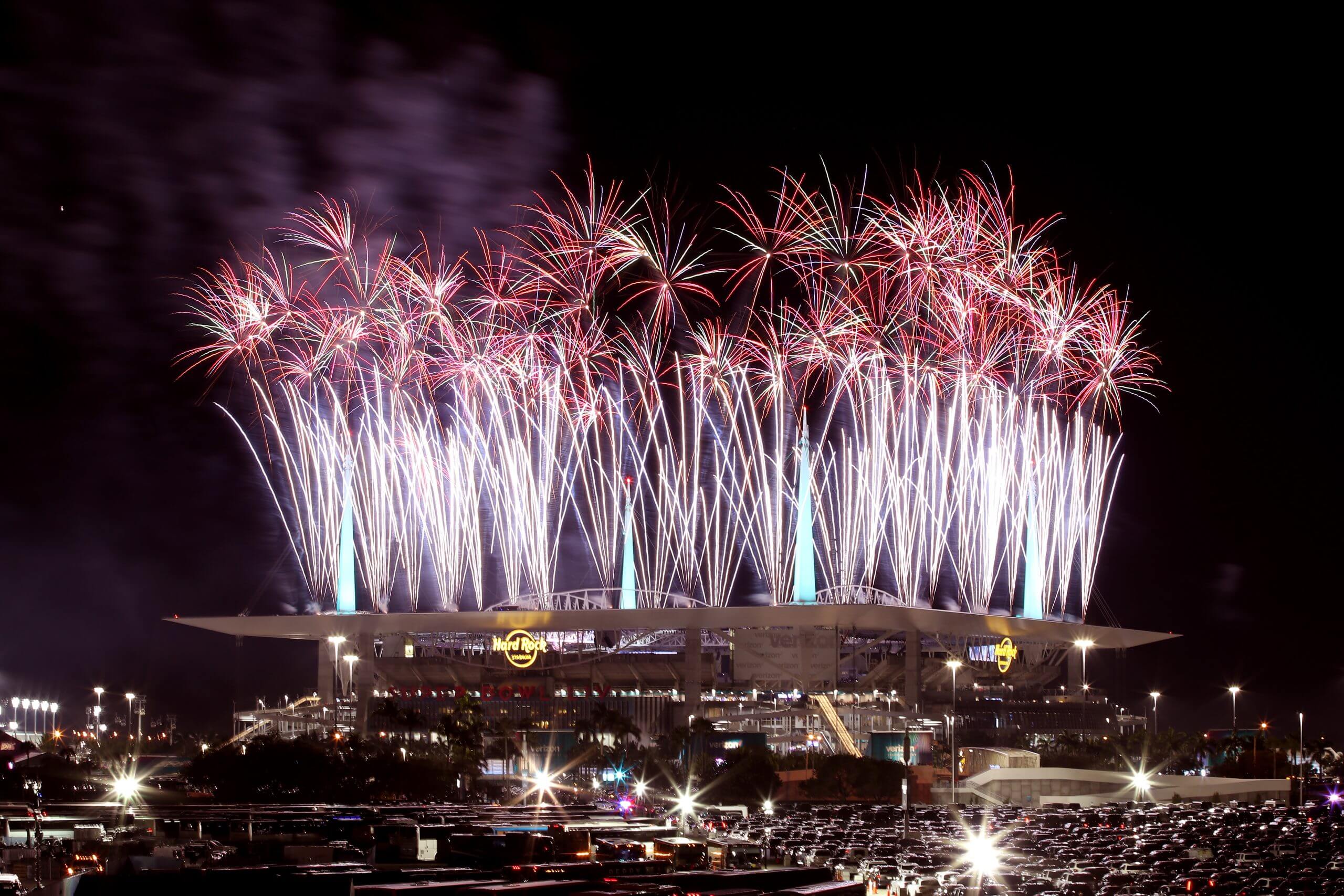
Fireworks during the half-time show of Super Bowl LIV, in 2020 (Buda Mendes/Getty Images)
When was the stadium opened, how much did it cost, and who plays there normally?
It opened in 1987, making it one of the older stadiums at the World Cup. Back then, it cost around $115million to build, which equates to around $344m in today’s money.
But it’s almost unrecognisable now from when it opened as Joe Robbie Stadium, having undergone a major modernisation overhaul between 2015 and 2017, costing over $500m. The work improved the stadium’s monitors, replaced every seat in the house, and spruced up the hospitality boxes. Most importantly, a canopy was installed on the stadium’s existing structure, designed to provide shade and protect against category four hurricanes, with tropical storms common in Miami over the summer months.
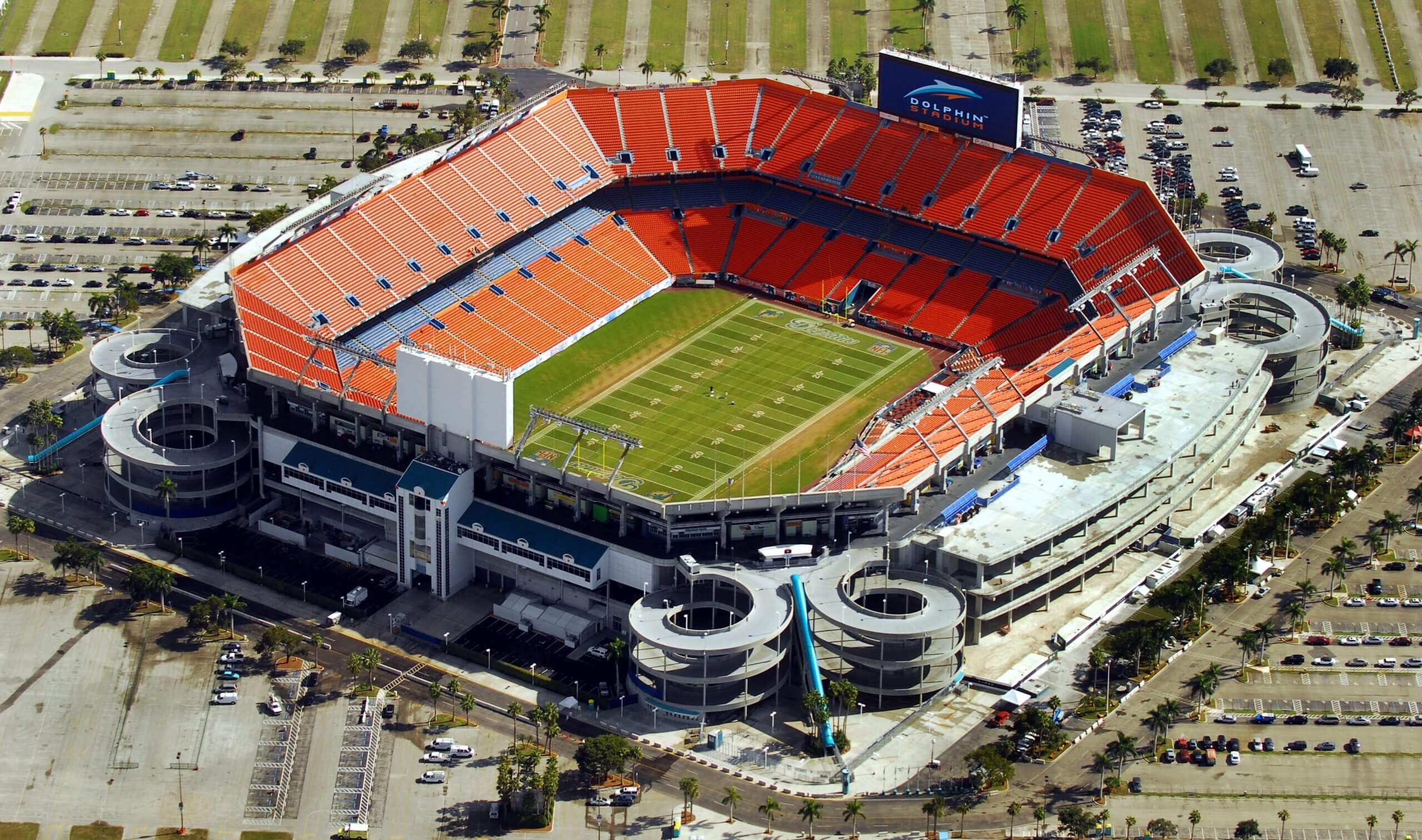
The stadium, here in 2007, has undergone a huge transformation (Marc Serota/Getty Images)
The Miami Dolphins have been the stadium’s primary tenants, but they lost their only conference championship game since moving in, a 29-10 defeat to the Buffalo Bills in 1992. Since then, the Hard Rock Stadium has had many tenants, including the Florida Atlantic Owls college football team and the Miami Marlins, who spent 18 years at the stadium before moving into LoanDepot Park, a purpose-built baseball park.
Now, it also hosts the Miami Hurricanes football team, the Orange Bowl game, the Miami Open tennis tournament, and the grounds even transform into a racing circuit for the Formula 1 Miami Grand Prix.
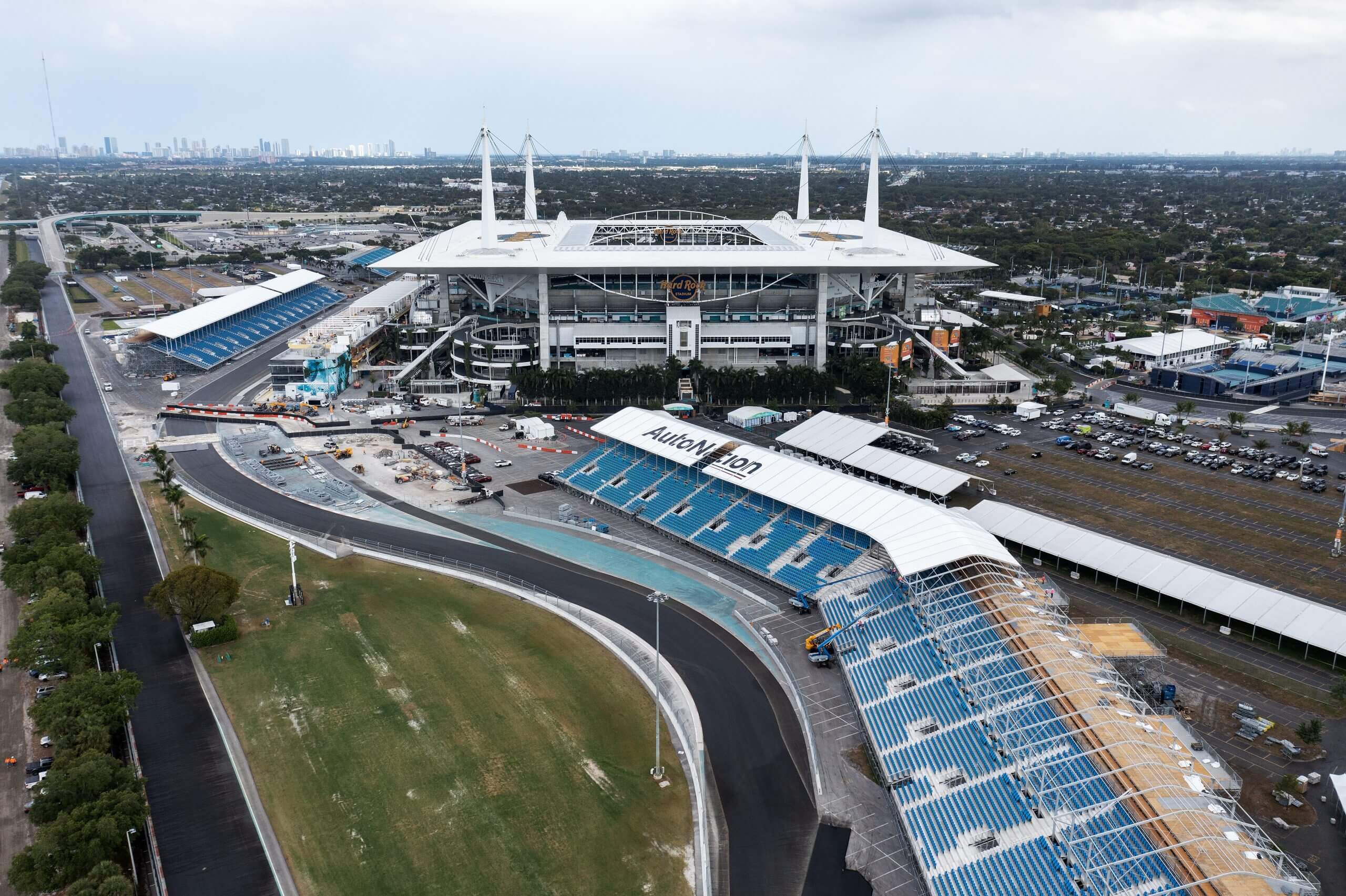
The grounds of the stadium host Formula 1’s Miami Grand Prix (Al Bello/Getty Images)
What are the most famous moments that have happened there?
While the Dolphins haven’t had great success at Hard Rock Stadium, there have been more than a few legendary moments for the hometown crowd to cheer. The Miami Marlins (then known as the Florida Marlins) twice won the MLB Championship as tenants in 1997 and 2003. The latter was sealed in game six at Yankee Stadium — with the Marlins overcoming a heavily favoured New York Yankees team to secure their second World Series title — but they won their first in Miami Gardens, beating the Cleveland Indians in seven games in front of a home crowd.
And though fans of the Miami Hurricanes have not had much to cheer about in recent years, quarterback Fernando Mendoza, who was raised in Miami, became a national champion and national championship offensive MVP with the Indiana Hoosiers in January. He did beat the Hurricanes at Hard Rock Stadium in that Championship game, though.
It has also successfully hosted six Super Bowls, but came under fire for its handling of the 2024 Copa America final, with several legal claims lodged against the stadium and the event organisers over a horrifying crush as fans tried to enter.
Away from sport, it’s a regular stop for the world’s most famous artists. It has also been featured in several famous Hollywood films, including Any Given Sunday, a sports drama directed by Oliver Stone and starring Al Pacino.
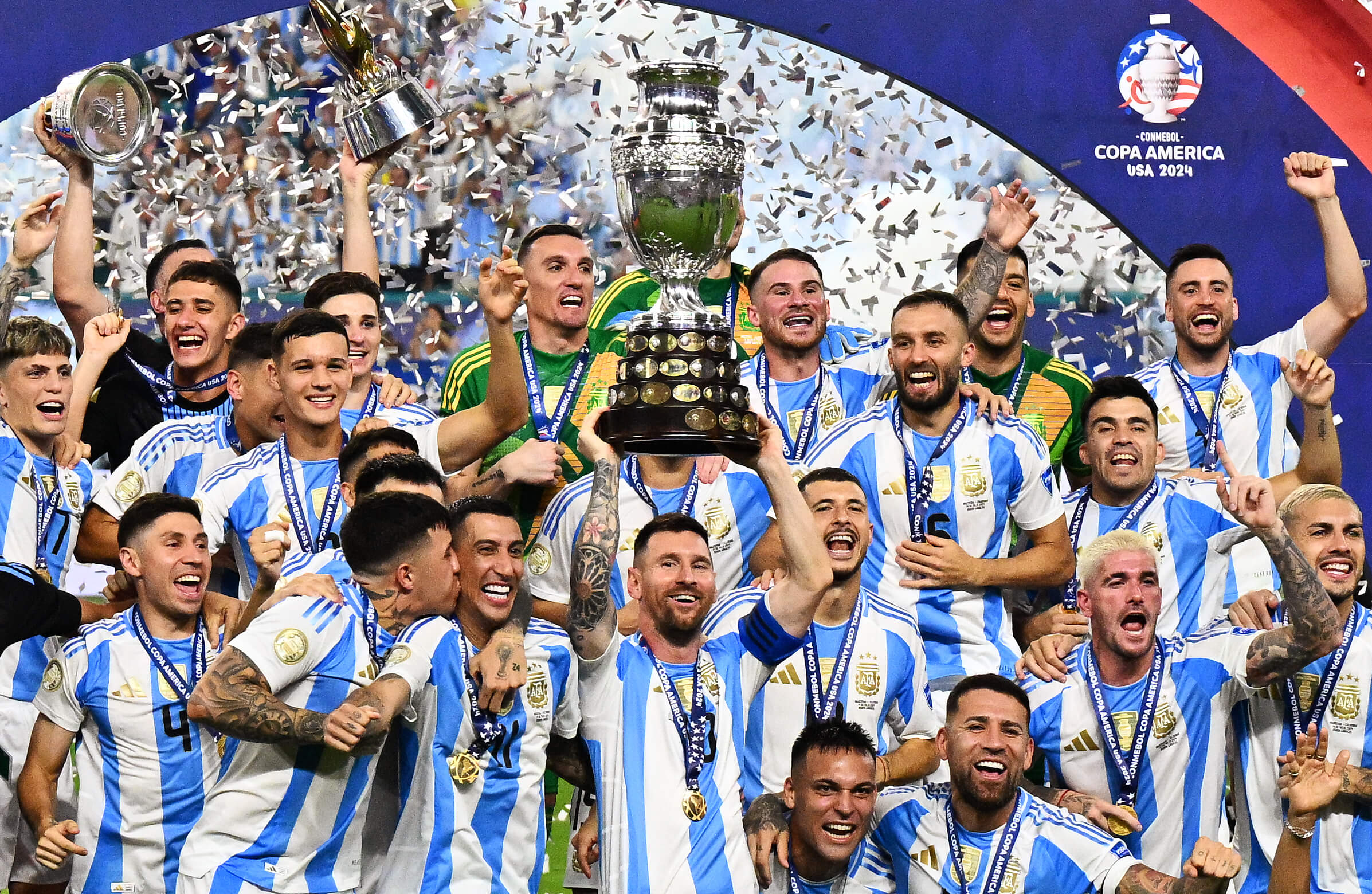
Lionel Messi and Argentina won the 2024 Copa America in Miami (Chandan Khanna / AFP via Getty Images)
How many fans can the stadium hold?
Before Messi joined Inter Miami, Floridians had the opportunity to watch him represent Barcelona as they faced Real Madrid in a pre-season El Clasico in 2017. A reported 66,014 saw Messi open the scoring in a 3-2 win, which remains the highest soccer attendance recorded at Hard Rock Stadium.
That record looks unlikely to be broken this summer, as FIFA’s website lists the capacity for this summer’s tournament at 64,091, lower than the 65,300 who attended the 2024 Copa America final.
What kind of pitch does it have, and has it had to change for the World Cup?
Hard Rock Stadium is one of the few venues at this summer’s World Cup that will not need a surface change for the tournament, as its gridiron football tenants have installed a ‘Tifway 419 Bermudagrass’ turf — “grass” being the operative word, as FIFA requires a sod-based surface.
The current field is also large enough to accommodate a soccer pitch, so it will not have to undergo many of the structural renovations to the lower bowl that other host stadiums will require. But, with an F1 race scheduled just over a month before the action starts, there will be a manageable race against time to build the necessary auxiliary media seating and booths.
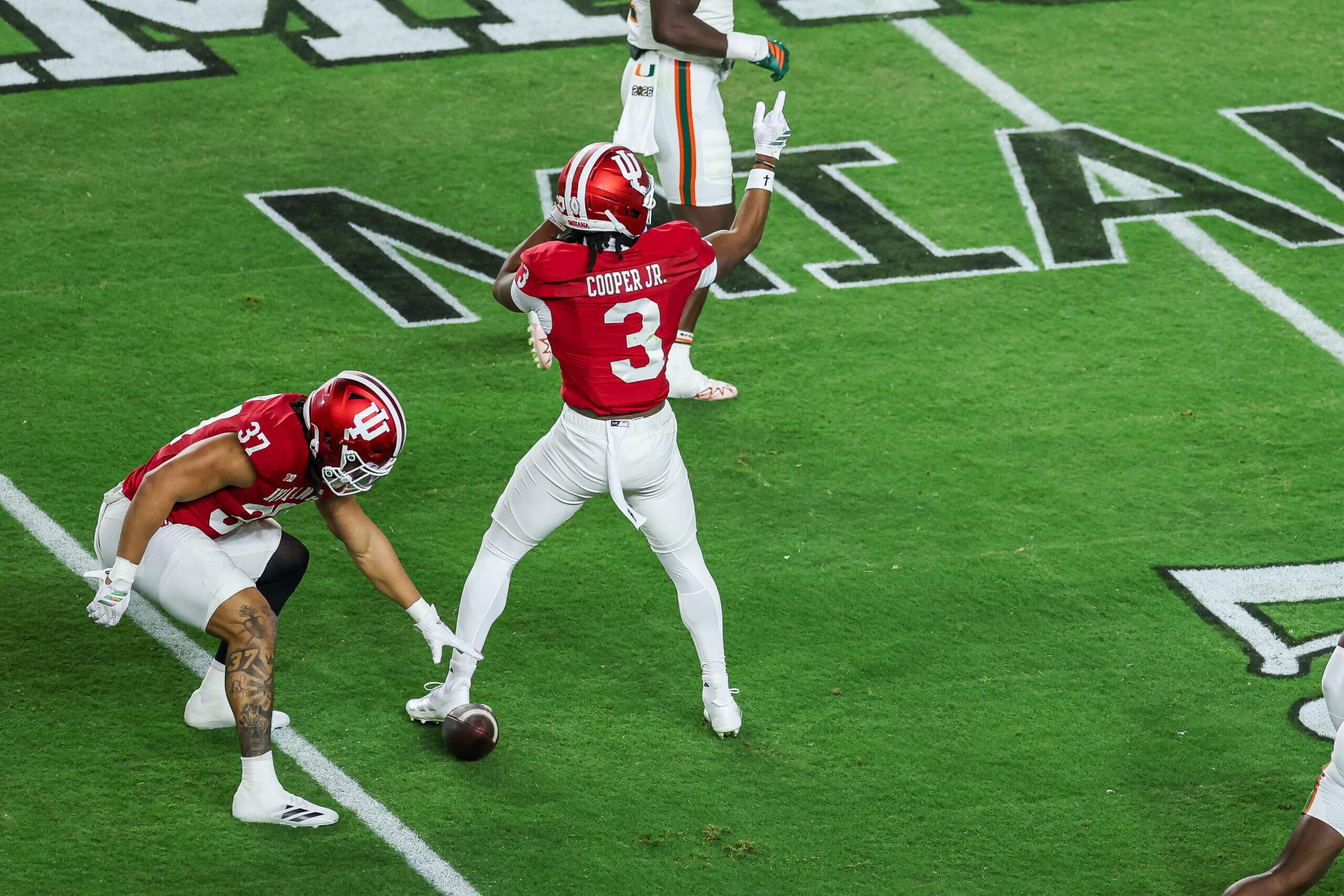
The stadium has a grass pitch all year round, so will not need to change for the World Cup (Ishika Samant/Getty Images)
The climate
Fans heading to Miami will likely experience the scope of its tropical climate in June and July. It will be hot, with temperatures ranging from around 24C (75F) to 32C (90F), and humid, with frequent and intense thunderstorms. Miami averages around 178mm (around seven inches) of rainfall in June, which is very high compared to more temperate climates. For context, Wiltshire, a rural county in the west of England, received 178mm of rainfall in January, its wettest January in 64 years. In March, 37 games across 10 courts were cancelled at the Miami Open tennis tournament due to relentless rain and thunderstorms.
To protect against rain and possible hurricanes, Hard Rock Stadium has a canopy that covers 92 per cent of the fan seating area and parts of the pitch, but there is no roof. At last summer’s Club World Cup, several games across the United States were suspended due to thunderstorms, including two matches in Orlando (a city in Florida with a similar climate to Miami). Both games experienced breaks in play for more than an hour.
Are they changing anything else for the World Cup?
Aside from the added booths and media seating, there will be the standard practice of covering up (or attempting to) all signage relating to non-World Cup-related sponsors.
How do I get there?
Without a comprehensive public transport system, driving is the most straightforward way to get from Miami to Hard Rock Stadium, but parking will cost upwards of $175, not including the cost of a rental car or fuel for tourists. If you’re set on driving, however, it’s a 15-mile trip from downtown, which usually takes between 45 minutes and an hour on gameday due to heavy traffic on Interstate 95. To avoid parking costs, some locals suggest downloading a parking app like ‘Parkd’ to find a spot in a nearby residential driveway at a significantly lower price.
If you’d prefer to take public transportation, FIFA ran complimentary shuttles between Brightline Aventura Station and Hard Rock Stadium for last year’s Club World Cup. Patrons could catch a Brightline train to Aventura from Miami, Fort Lauderdale, Boca Raton, West Palm Beach, and Orlando. It is not yet confirmed whether it will run again, so keep an eye out for updates.
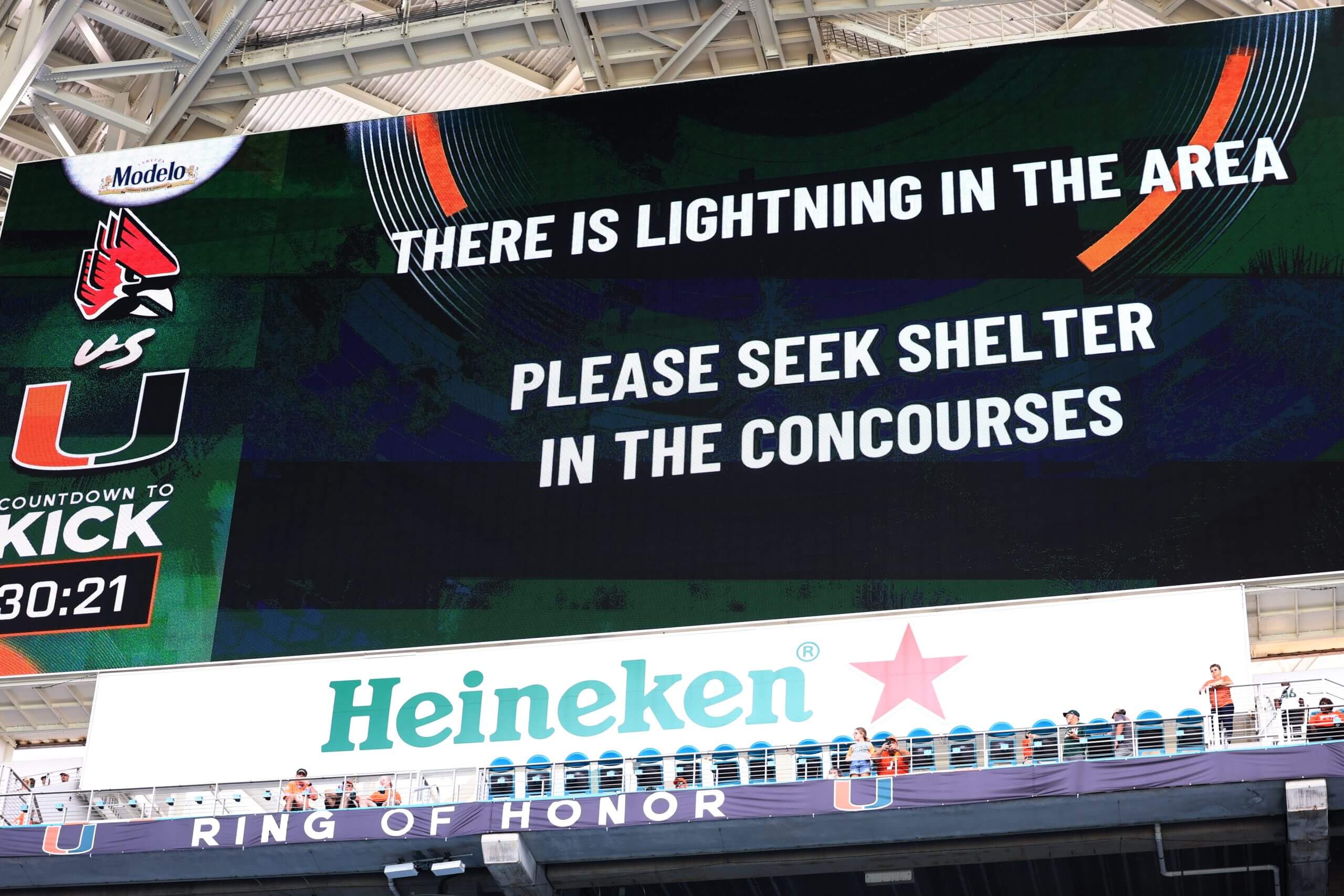
The Florida weather is an ever-present factor at the stadium (Carmen Mandato/Getty Images)
What can fans expect at the stadium?
Miami prides itself on being the party capital of the East Coast of the United States, and Hard Rock Stadium has modelled itself on the city. If you’ve managed to snag yourself a hospitality seat, try one of the stadium’s “clubs” (particularly the West Endzone Club), where dance music blares as though you’re partying at LIV or E11even.
If you’re not a fan of the club vibe, well, you’re in the American South, where gameday is as much about the tailgating experience as the game itself. If you’re with a small group, why not start a conversation with a local in the parking lot and join in the pre-game fun? If you’re reading this ahead of time, join the Miami Dolphins Tailgate Town group on Facebook. While the Dolphins won’t be in action, it’s a safe bet that one of the group’s 5,000 members will be there to set up a tailgate.
Once you’re inside, locals recommend the “Midnight Sandwich” from the Cafe Versailles concession stand to get a taste of Miami’s famous Cuban cuisine.
Is there anything else we should know about this stadium?
It’s probably the greatest multi-sport venue in the United States… if not the world. How many stadiums can claim to have hosted a Super Bowl, a World Series, a Copa America final, an ATP 1000 tennis tournament, and an F1 grand prix? Obviously, just Hard Rock Stadium, because the idea is absurd.
Throw in a few college football national championship games and a Wrestlemania, and it’s difficult to see how any other stadium can compare to its variety of sporting events.
Which games are being played there?
While Inter Miami striker Luis Suarez no longer represents Uruguay, fans will have two opportunities to watch Real Madrid star midfielder Federico Valverde in person as Marcelo Bielsa’s side play their opening two group games at Hard Rock. Then, the five-time World Cup champions Brazil face Scotland on June 24, before Cristiano Ronaldo’s Portugal play their final group match against Luis Diaz’s Colombia, in what could be one of the best games of the group stages.
June 15: Group H: Saudi Arabia vs Uruguay (6pm local, 10pm GMT)
June 21: Group H: Uruguay vs Cape Verde (6pm local, 10pm GMT)
June 24: Group C: Brazil vs Scotland (6pm local, 10pm GMT)
June 27: Group K: Colombia vs Portugal (7:30pm local, 11:30pm GMT)
July 3: Round of 32 – 1J vs 2H (6pm local, 10pm GMT)
July 11: Quarter-final (5pm local, 9pm GMT)
July 18: Third-place match (5pm local, 9pm GMT)
The Stadium Guides series is part of a partnership with StubHub.
The Athletic maintains full editorial independence. Partners have no control over or input into the reporting or editing process and do not review stories before publication.