
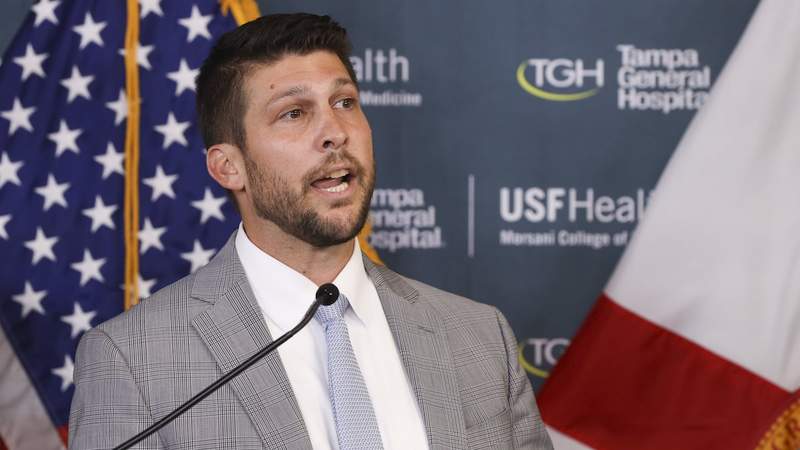
The big story: As Good Friday and Easter Sunday approached, Florida Attorney General James Uthmeier announced he will not enforce any state law that prohibits religious schools from accessing public funds.
In an 11-page written opinion, Uthmeier laid out his argument why any laws preventing religious individuals or organizations from having the same benefits as anyone else are unconstitutional.
“Many have tried to force a modern secular gloss on the First Amendment,” Uthmeier said in a video he circulated on X. “But that reality cannot be squared with Christianity’s overwhelming influence at the founding.”
For one example, he pointed to the state’s Effective Access to Student Education grant, saying it is limited to students who attend a secular college or university. He also referred to the state’s charter school system, which statute states must be nonsectarian.
“This blanket exclusion of all religious entities also violates the First Amendment,” Uthmeier wrote.
His declaration came amid a national debate, started in Oklahoma, over whether religious groups may operate publicly funded charter schools that teach religious dogma. The U.S. Supreme Court in 2025 rejected a Catholic virtual school from becoming the nation’s first religious charter school.
A South Florida-based Jewish school has now taken up the fight in Oklahoma. Some observers have suggested that Uthmeier is serving up a Florida centered case that could land in the Supreme Court without the possibility of Justice Amy Coney Barrett needing to recuse herself, as she did in the initial Oklahoma decision.
The announcement also came weeks after education commissioner Anastasios Kamoutsas unveiled a new email hotline for parents to file complaints if they feel public schools have violated their children’s religious rights. The Freedom From Religion Foundation later warned that the system offers a one-sided protection of constitutional freedoms.
“The department’s new reporting mechanism focuses exclusively on alleged restrictions of religious expression, without any parallel mechanism to address violations of the Establishment Clause,” foundation counsel Chris Line wrote.
Uthmeier said the government cannot deny public benefit to someone simply because they are religious, and he took an oath to uphold the Constitution and the right to practice religious beliefs without government interference.
He did not mention a bill recently passed by the Legislature that could prevent Islamic schools from receiving state voucher funding. Gov. Ron DeSantis has not said anything about Uthmeier’s unilateral decision to stop enforcing certain state laws, unlike when he removed Andrew Warren as Hillsborough County’s state attorney in 2022, saying state attorneys are not supposed to pick and choose which laws to enforce based on personal agendas.
Read more from News Service of Florida.
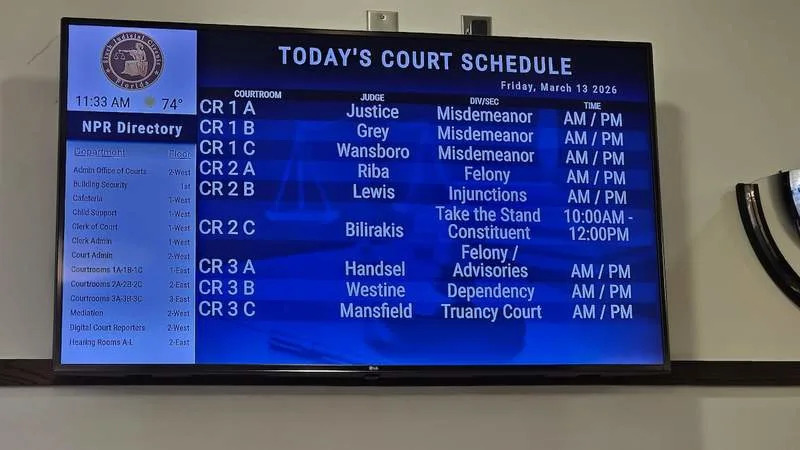
Absenteeism: Pasco County has begun bringing its most chronically absent students to court, in hopes the truancy process will steer them back to classes.
Board races: Brian Perras announced his bid for Pasco County school board in early February. The district barred him from substitute teaching soon after. Find out why.
Bomb threat: A suspicious package near the University of South Florida Tampa campus prompted a campus-wide alert and road closure. It turned out to be a non-threat.
Budget cuts: The Sarasota County school district plans to cut 180 teaching jobs to counteract budget shortfalls, Suncoast Searchlight reports. • The Orange County school district is cutting $8 million in mental health services amid declining enrollment, and some parents are worried, WFTV reports.
Career training: Hundreds of Hillsborough County students met with potential future employers to learn about careers and how to prepare for one.
Contract talks: The Palm Beach County school district rejected a mediated settlement for teacher pay raises, handing the final decision to the school board, WPEC reports.
Financial emergency: The State Board of Education established a financial emergency board to address declining financial conditions in the Glades and Union county school districts, First Coast News reports.
Literacy lessons: The Jacksonville Public Education Fund is recommending nine steps to improve literacy in Duval County, Jacksonville Today reports.
Political speech: Manatee County teachers soon might face new restrictions on political expression in schools, the Bradenton Herald reports.
School closures: Broward County plans to close six schools. The district unveiled more details about its plans for the sites and their students, the Sun-Sentinel reports.
Student ID cards: The Santa Rosa County school district is exploring the possibility of requiring student to wear ID cards on lanyards while at school and sponsored events, the Pensacola News-Journal reports. Some parents have safety concerns related to the idea.
Superintendent selection: Escambia County voters decided to move to an appointed schools superintendent eight years ago. They’re being asked to reconsider that decision in November, WEAR reports.
Supplements for advanced courses: The Duval County school district has seen student success in advanced courses grow. It’s losing state revenue as a result, after the Legislature capped funding for accelerated options, WJXT reports.
Vouchers: A Florida based virtual school operated by a Tallahassee church has found a loophole to become the first non-Texas school to participate in Texas’ voucher program, the Houston Chronicle reports.
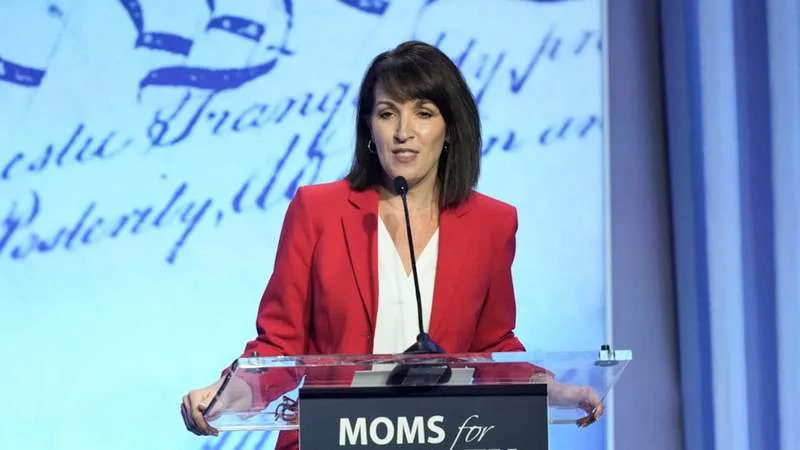
“We have a seat at the table in so many policy discussions throughout the administration.” — Tina Descovich, Moms for Liberty co-founder, on advising President Donald Trump on education issues (Associated Press)
“The things we’re talking about are Band-Aids when what we need is surgery.” — Alva Smith, Leon County school board member, on budget cuts (WFSU)
“The teachers, they feel safer. The students feel safer knowing that help is on the way.” — Lori Alhadeff, Broward County school board member, on panic button alert systems in schools (WLRN)
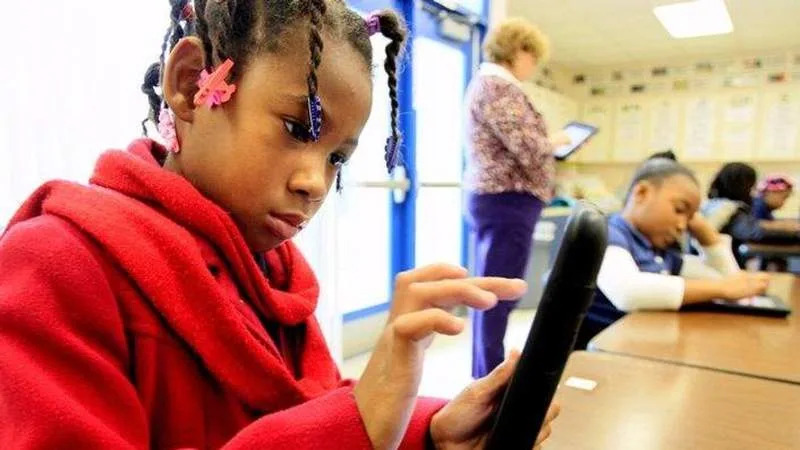
Parents across Florida and the nation are speaking out about the use of computers and tablets in the classroom. What are they saying?
a) They want more YouTube videos and online tutoring help
b) They seek limits on student screentime
c) They would like all devices removed
Find out the answer in this story from Hechinger Report.
Don’t miss a story. Here’s a link to Thursday’s roundup.
The Tampa Bay Times Education Hub reports on Florida’s schools and universities and the students they serve. You can contribute to the hub through our journalism fund by clicking here.