
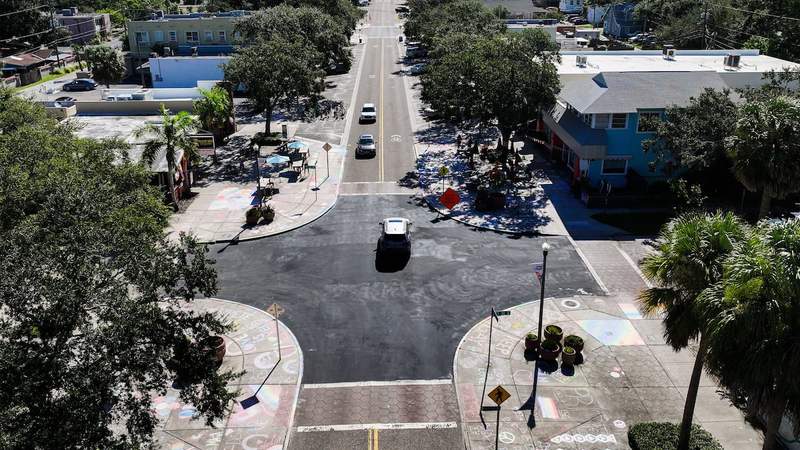
In most cities across the United States, if you want to get anywhere or do anything, you need a car. The Tampa Bay region is no different.
Transportation advocate Max McCann is working to change that.
He co-founded a group called Activate St. Pete which focuses on making it safer and easier to walk, bike and take transit in the city. He also sits on the board of directors for the Pinellas Suncoast Transit Authority.
McCann said St. Pete has a lot going for it: an easy-to-navigate street grid, plenty of car-free public parks along the waterfront, vibrant neighborhoods that encourage foot traffic. But, he said, the city could be doing more to build on those attributes.
In this interview, he lays out his vision for what a truly walkable city could look like and what roadblocks are preventing us from achieving that goal.
This interview has been edited for clarity and length.
I’ve lived in places that are very car-dependent, like Memphis, where I grew up. And then I’ve lived in places with great transit like New York City and Boston and Chicago, where you didn’t really need a car to get around at all.
I always found that my life was a lot happier when I didn’t have to own and maintain and insure and register an expensive, depreciating asset just to participate in society.
We ended up leaving New York City when my daughter was born. We went from New York City to Tallahassee. And that kind of radicalized me in terms of urban planning. It forced me to see what the world could be — as opposed to what it is.
I can’t help but try and make my environment a little bit more friendly for walking, biking and transit because I think it can vastly improve the quality of life for the residents of a city.
I think it means an environment in which people feel safe and comfortable as pedestrians. It’s not enough that a sidewalk exists.
It’s got to be an inviting space. It has to have enough buffer between vehicles. Hopefully the vehicles are going at a moderate speed. Preferably there’s shade from trees.
It also has to include an interesting streetscape. Meaning you’re not just walking past block after block of hot, empty parking lots. You can walk for miles in New York City and not feel exhausted because there’s stores that face the street and interesting things to look at.
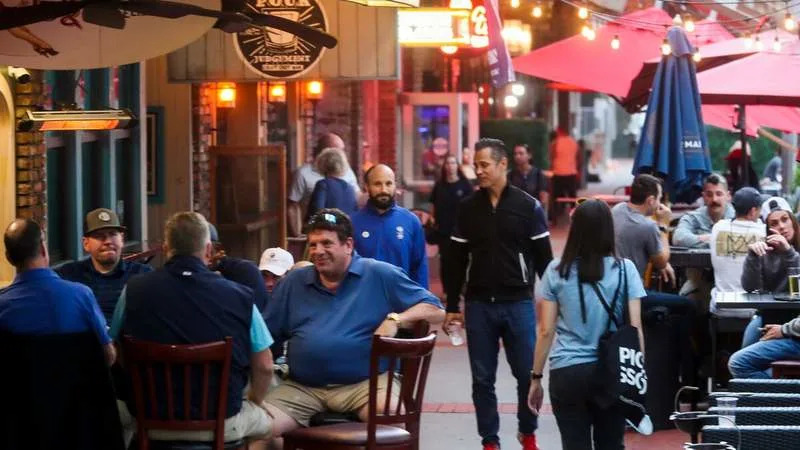
St. Pete is so much better than a lot of other cities in the southeast for active transportation. But there’s still so much room for improvement. I go back and forth between feeling grateful and feeling frustrated.
When you look at the Grand Central District — it’s very walkable, very pedestrian-scale, everybody loves it. It’s also a very productive part of the city.
That would be illegal to build right now. Under the current zoning rules, you could not build the Grand Central District. A lot of those buildings don’t have off-street parking (which is often required under current zoning rules.)
I think St. Pete benefits from having a lot of infrastructure that was built before we outlawed walkable development.
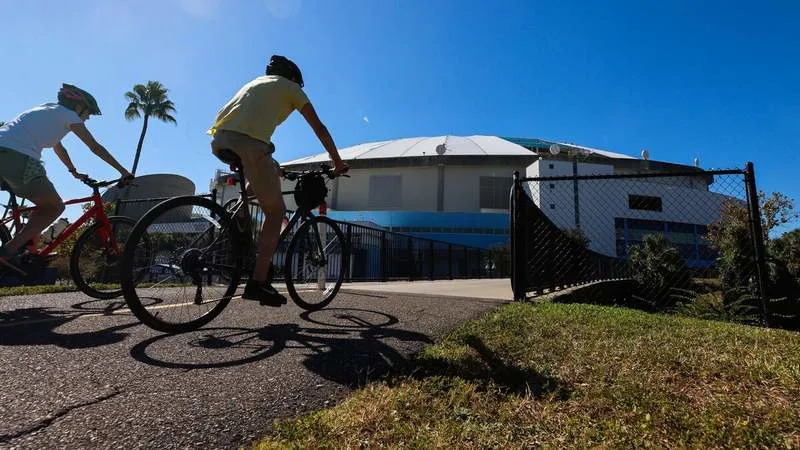
I think people in St. Pete, maybe a little bit more than other places, value an active lifestyle. Having the Pinellas Trail has been a catalyst for people here to realize that a bike trail can be a form of transportation and not just recreation. That trail is a bit of a habit-builder for people.
It’s still frustrating, though, because you’ll see the road bike crowd in their Lycra do a 20-mile ride and then get home and go shower and drive half a mile to the grocery store. So you still have to convert a lot of people to understand that their bike can be a form of transportation, too. You shouldn’t have to burn a gallon of gas to buy a gallon of milk.
We should all do the best we can with what we’re given and take advantage of the infrastructure we do have.
There are days when I’ve got a choice between driving for a trip or walking or riding my bike. For almost every trip around here it’s going to be easier to drive. But if you want to see improvements, you have to be the change you want to see. So I try to drive as little as possible.
On the weekends we barely touch the car at all. We live in the Warehouse Arts District, and it’s pretty walkable. It’s close to the Pinellas Trail, so it’s good for biking. We’re near the SunRunner.
It’s good for people to get out of their comfort zone and do something that’s challenging. And it helps to raise awareness about what people’s lives are like when they can’t drive for various reasons.
Our environment encourages it. We have things like minimum parking regulations that force property owners to build off-street parking when they develop a parcel. That’s a subsidy for driving.
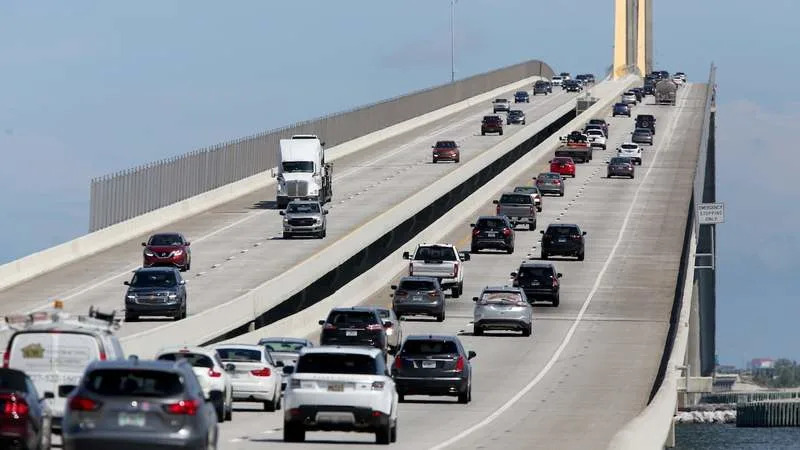
We subsidize interstates. That encourages people to live far away from their jobs. I know people in St. Pete who live in Ruskin and have an hour commute each way because we’ve made it artificially cheap and easy to drive.
It’s the default option. That’s how our built environment is set up.
There’s so many downsides to that. From a public health perspective, an environmental perspective, a financial perspective, a community perspective: the American experiment in car centricity has been a disaster.
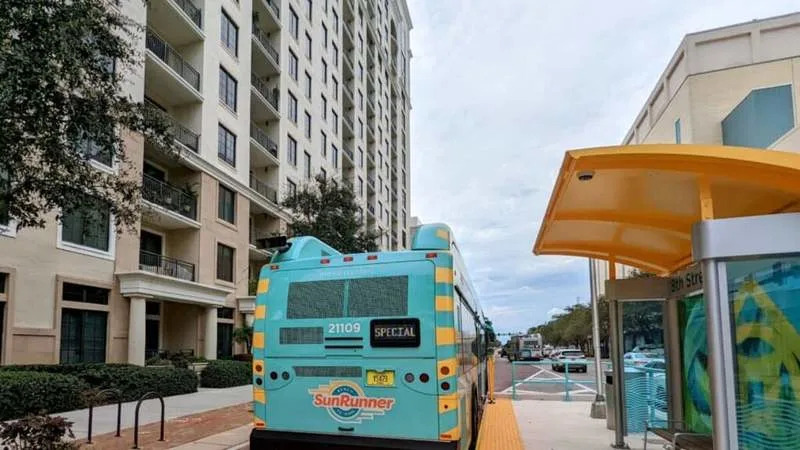
The city is going to release a draft of new zoning regulations along the SunRunner corridor. These are supposed to be transit-oriented development zoning laws that will encourage small-scale, mixed-use, walkable development that incentivizes people to take transit. It’s the opposite of what we have in most places.
The city, unfortunately, is planning to include parking mandates in that overlay. That means in this overlay, where you’re supposedly trying to incentivize transit, you’re going to force property owners to build off-street parking regardless of if there’s a demand.
I think that’s a huge mistake and a missed opportunity and just one of many examples of how this mayoral administration is more interested in the status quo than offering real leadership.
So we’re going to be advocating to remove parking mandates from the SunRunner corridor.
We went through this already. The city has reformed a little bit of zoning around 22nd Street S. In the original plan, the city had parking mandates. We had to go to city council and do some really heavy lobbying to get the city to remove those.
The administration didn’t learn anything, so we’re going to have to do this all over again.
When you create roadscapes that are safe for pedestrians, you’re also making them safer for other road users, including cyclists and drivers.
These kind of traffic calming projects are benefiting everyone. They can turn places from somewhere that’s nice to drive through to a place that’s worth getting to.
There’s a project that Dunedin is doing on Skinner Boulevard, it’s got a lot of pedestrian improvements on it.
The funny thing about those kinds of projects is that before and during construction, the adjacent business owners will kick and scream and fight it tooth and nail. And then afterwards, revenue always goes up.
It turns out, slowing people down and increasing foot traffic is great for business.