
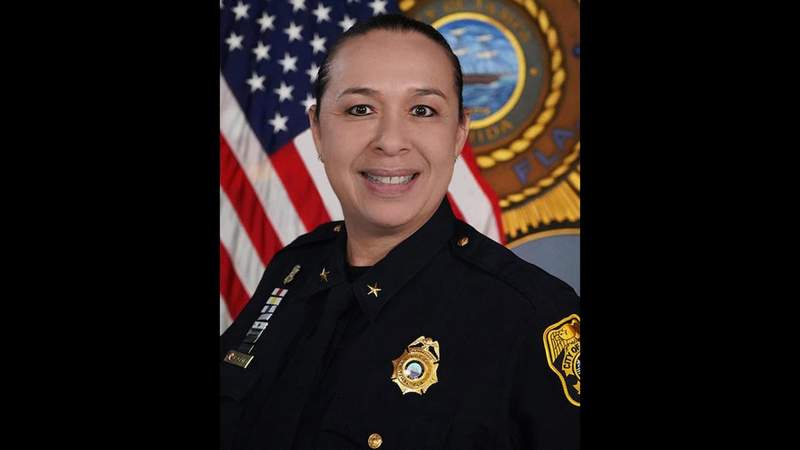
About six months ago, Tampa police Chief Lee Bercaw wrote a performance evaluation for Ruth Cate, one of his two assistant chiefs.
Across 11 metrics, Bercaw rated Cate consistently “outstanding.” In a follow-up letter, he praised her “steady and reliable” leadership and “calm and logical” style, which he said fostered accountability and trust among the rank and file.
“Through her dedication, professionalism and ability to balance operational demands with strategic vision, Assistant Chief Cate is excelling in her role and continues to contribute meaningfully to the effectiveness of the Tampa Police Department,” the chief wrote.
He followed up with a handwritten personal note: “Ruth, I truly appreciate your leadership in moving this department forward.”
On March 25, Bercaw fired Cate. More than two weeks later, no one has publicly explained why.
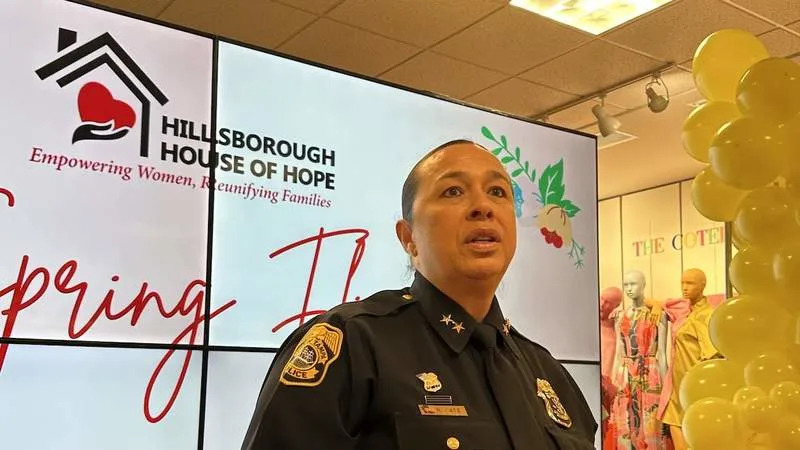
Not Bercaw. His only comments came in an agency news release that described Cate as “failing to meet the expectations required of the role,” a marked contrast to the glowing evaluation he’d given her less than a year earlier.
Not Cate herself. She did not respond to numerous phone calls, emails and text messages seeking comment.
Not Mayor Jane Castor or members of the City Council. None of the city’s elected leaders have publicly weighed in, though rumors are rampant.
Public records reflect no hint of recent misconduct or investigation of wrongdoing.
In fact, Cate’s personnel file showcases a long and decorated career, wherein her investigative expertise and leadership skills consistently drew notice and praise.
As the agency’s highest-ranking woman, she helped spearhead an initiative that aimed to increase the agency’s female workforce to 30% by 2030. She helped recruit and hire new female officers, was credited with inspiring two young women to become executive-level managers and was seen as a role model and mentor to many.
Two years ago, she stoked a minor controversy over a mass email she sent to the agency’s female officers in response to public criticism of women in law enforcement following the assassination attempt against President Donald Trump. The email encouraged women cops to support each other and expressed a belief that in many cases they did their jobs better than men.
Her words spurred a complaint from the Tampa Police Benevolent Association, alleging a “sexist mentality.”
When questioned amid a formal investigation, Cate said she meant no offense and cited studies showing women in law enforcement use less force in some situations and tend to have strong interpersonal and communication skills.
Bercaw concluded Cate’s email did not violate department policy. But in a final disposition letter, the chief wrote that the situation “should be used as an opportunity for everyone to be more thoughtful in all forms of communication.”

Cate showed early interest in police work. While attending C. Leon King High School, she was a member of Temple Terrace Police Explorers, a volunteer program that allows youth to gain law enforcement experience. She rode with patrol cops, helped dispatchers and records clerks and learned sharpshooting.
She worked six months for the Florida Division of Alcoholic Beverages and Tobacco as an investigative aide. The jobentailed undercover visits to retail establishments to catch people selling booze to minors.
She earned a bachelor’s degree in criminology in 1993 from Florida State University. She earned a law enforcement certificate in 1995 from Hillsborough Community College.
Her first job out of college was as a state probation officer. In 1996, she applied to join the Tampa Police Department.
She was asked a battery of questions in a preemployment questionnaire. Among them:
“Are you willing to stop arguments and fights in spite of the danger of physical harm to yourself?”
“Can you resist bribes, ‘easy money,’ and chances to pick up cash and goods even when there is no chance of being caught?”
“Are you willing to tolerate verbal abuse and insults and not let it interfere with doing your job?”
Beside each question, she marked “yes.”
She entered service as a full-time Tampa police officer on Oct. 6, 1996.
About a year later, she moved from patrol to the criminal intelligence division. A year after that, she joined a squad tasked with combating street-level drug crimes.
Her supervisors praised her investigative skills and quick thinking. She earned notice for cases in which she disarmed a suspect alone while responding to a disturbance call, drafted and executed a search warrant that led to seven arrests and assisted federal agents.
She consistently earned high marks in annual performance evaluations. Then-Sgt. John Newman complimented Cate’s high energy and thoroughness in a 2000 review.
“Her contributions to this unit, the City of Tampa Police Department and the community she serves is greatly appreciated,” Newman wrote.
In 2003, Cate led an investigation that resulted in the arrests of 34 people and dismantled two inner-city crack cocaine trafficking organizations. A year later, she was credited with leading an investigation that brought down five more drug trafficking groups.
She transferred in 2009 to the agency’s sex crimes and child abuse division, where she garnered continued recognition in handling some of the agency’s most complex and mentally taxing investigations. She later spent time in the internal affairs bureau, probing officer misconduct complaints.
Castor, while serving as the city’s police chief, approved Cate’s promotion to sergeant in 2012. She thanked Cate personally in an annual review.
“Ruth, thank you for all you have done to serve our community and make this organization great,” Castor wrote.

Cate returned to the sex crimes division in her first supervisory role. She was described as loyal to her subordinates, a competent and effective leader, a sympathetic ear for crime victims and well-versed in the law. Beyond her investigative duties, Cate worked with the Crisis Center of Tampa Bay, the Tampa Bay Lightning and community organizations to help sexual assault victims with housing, clothing and other needs.
In 2015, she received the Distinguished Victim Services Award from the Florida Attorney General’s Office. That year, she was promoted to lieutenant. Two years later, she became a captain. Three years after that, she ascended to major.
In 2020, Cate was commended for managing the agency’s response to the citywide protests and civil disturbances that sprang from the murder of George Floyd at the hands of Minneapolis police. She also handled security for large events at Amalie Arena.
“I truly appreciate your leadership and dedication at TPD,” Bercaw, then an assistant chief, wrote that year. “Thank you for being a difference maker.”
In 2023, Bercaw made Cate one of two deputy chiefs, a position that the department historically has used to groom potential future chiefs. The move brought her an annual salary of $181,000.
Two years later, her job title changed to assistant chief of operations. She became a prominent public face of the department in community events and in news conferences.

Her ouster came suddenly.
Cate was told on March 20 she would be fired for “failing to meet the expectations of your position,” according to a dismissal letter Bercaw wrote. The letter does not indicate why.
Cate, according to the letter, asked for the opportunity to retire. She was allowed to take the weekend to confirm her intentions before announcing her retirement the following Monday, the letter stated.
But when she returned to work March 23, Cate refused to retire. She alleged she was being retaliated against and indicated she’d obtained a lawyer, according to the letter. She was then placed on administrative leave.
The next day, Cate filed a complaint with the city’s Human Resources division. Its contents have not been made public.
Bercaw terminated her employment the next day. Her complaint did not affect his decision to fire her, according to his letter.
“Thank you for your service to the City of Tampa,” he wrote.
Discussion of Ruth’s firing was scarce in the next day’s City Council meeting. Community activist Connie Burton mentioned it briefly during the meeting’s public comment period, referencing the agenda’s planned discussion of a new police substation and the future of the department’s downtown headquarters.
“Until the chief of police can come and tell the community at large as to why a 29-year veteran has been terminated, we should not have any discussion with them about moving, building or doing anything,” Burton said. “The community deserves to know why.”
The council members said nothing.
In their next meeting on April 2, Bercaw was a featured attendee. He was there to present an award to the department’s latest Officer of the Month.
He brought with him four newly promoted commanders, including the two new deputy chiefs, Tampa police veterans Eric DeFelice and Patrick Messmer, who’d been promoted to replace Cate.
Once again, no one spoke of Cate’s departure.