
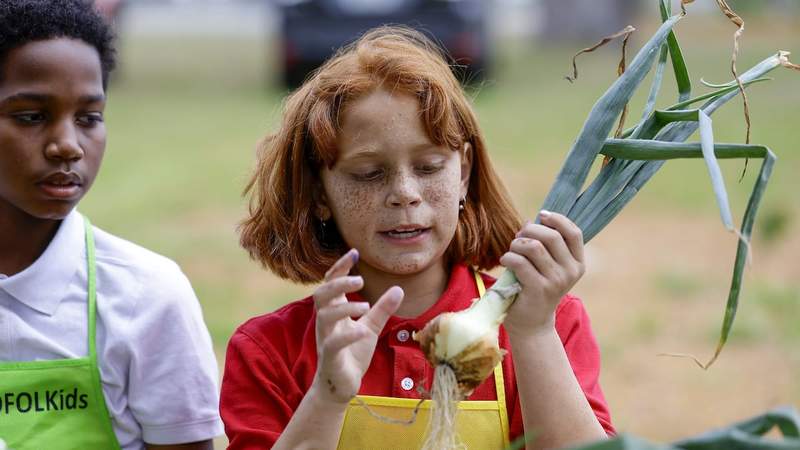
Every Tuesday from September to April, Jeanette Bradley, a community volunteer with Seedfolkids, meets with about two dozen third and fourth graders after school at Edison Elementary, tending to individual and shared gardens.
Through the leadership program, which has been running for almost 10 years at the southeast Seminole Heights school, she hopes she’s teaching them about more than gardening.
“We’re planting seeds,” she said. “We don’t say good kids, bad kids. We just says good decisions, bad decisions. You know, that’s not a good decision. Try again. Try to make a better decision.”
She hopes the lessons spread through the school.
Each week, students meet and tend to their own garden beds filled with cabbages, onions, carrots, radishes and other crops. Starfruit trees sit in the school courtyard and the rest of the school looks on as the plants begin to blossom.
After spring break, Bradley said, the whole school tends to get excited.
Third grader Alantis Howard’s favorite part of gardening is pulling out radishes. For fourth grader Leighlen Gonclaves it’s growing every kind of kale you could think of: purple kale, dinosaur kale and curly, along with some carrots. He said he prefers growing them over eating them.
For Alana Cannon, it’s like a canvas.
“You can do whatever you want,” Cannon said.
Cannon is currently growing a “very, very big radish” that is the “coolest but weirdest” thing she’s seen.
Recently, the students held a market for the community, where they sold some of the veggies they grew and honey, made at a Franciscan apothecary and infused with some of the plants they grew, including jalapeño peppers. The honey can be found at several local pop-up markets and online.
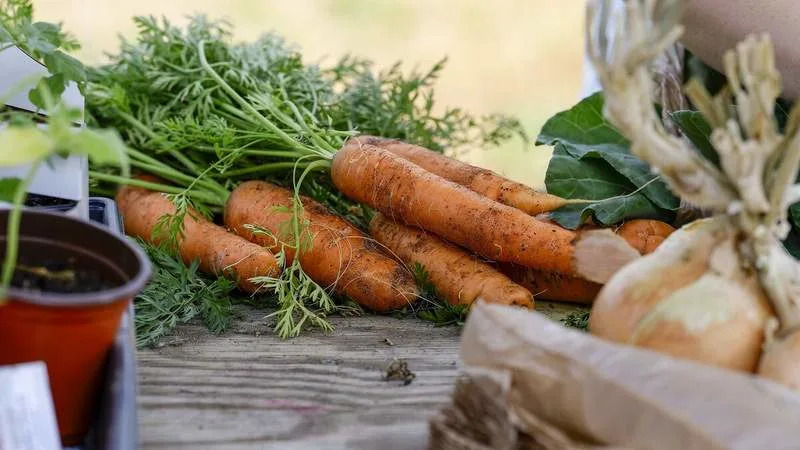
The money collected goes back toward the program — and toward rewarding students both for their gardening and academic feats. Students are rewarded with cash prizes for the biggest cabbages as well as meeting school testing goals.
At the market, one student whose first language was not English, panicked when handed cash and had to do math on the spot to figure out how much change to provide.Bradley told her “you’ve got this,” and that she already knew how to figure it out. She said the student calmed down and handed back the correct amount.
Lisa Wilson, a school social worker, said the program teaches a variety of skills and said she’s seen the impact in how students perform in the classroom.
“So they’re growing the food and all of those things, but they’re learning about the soil, and they’re learning about temperature, and they’re learning how to keep track of things,” she said. “They’re getting to put the scientific method to use. It’s a real world application of the things they’re learning in the classroom, which is how you cement information into your mind.”