
By historic benchmarks, Florida’s annual budget preparations aren’t all that late. But House and Senate leaders have been dragging their heels and are still miles apart — triggering a fake sense of urgency that will probably lead to a final spending plan mostly crafted in darkness, with decisions made by staff and lobbyists instead of elected lawmakers.
There’s still time to get the process back on track, and give the public — heck, give legislators — the chance to review and debate major policy choices before a final deal is struck on a plan to spend as much as $115 billion for the fiscal year that starts July 1.
Both House and Senate have approved spending-plan proposals, but the two chambers are so far apart that it’s hard to imagine what the final budget will look like. That’s a disservice to the public, because the big numbers flying back and forth often translate into significant impacts on the daily lives of Florida’s households and could significantly impact the state’s economy.
What can be seen
A few things are clear. First, both chambers are determined to make big cuts. The House’s $113.6 billion budget proposal is more austere, slicing almost $3.4 billion from the current year’s spending, while the Senate’s $115 billion plan proposes cutting about $1.9 billion.
Florida Legislature stalls over budget disagreements. Again.
Second, neither House nor Senate showed much interest in raising revenue — not even in collecting taxes that should be paid by powerful business interests who currently take advantage of Florida’s exemption-riddled tax code to avoid paying their fair share. This is not a sustainable path forward, because economic forecasts for the state’s immediate future are not rosy. The time is fast approaching when lawmakers will have to choose between closing taxpayer-funded loopholes that benefit powerful corporations —or making cuts to health care, affordable housing, transportation infrastructure, senior citizen assistance and other priorities that keep Florida households afloat.
According to the Florida Policy Institute, more than 4 million Florida households — more than ever before — will struggle to afford the basic necessities of life in the coming fiscal year. Helping them also puts money back into the state’s economy, sending revenue flowing to grocery stores, gas stations and pharmacies. Yet both chambers’ budgets whittle away at programs that help the state’s lowest-income residents.
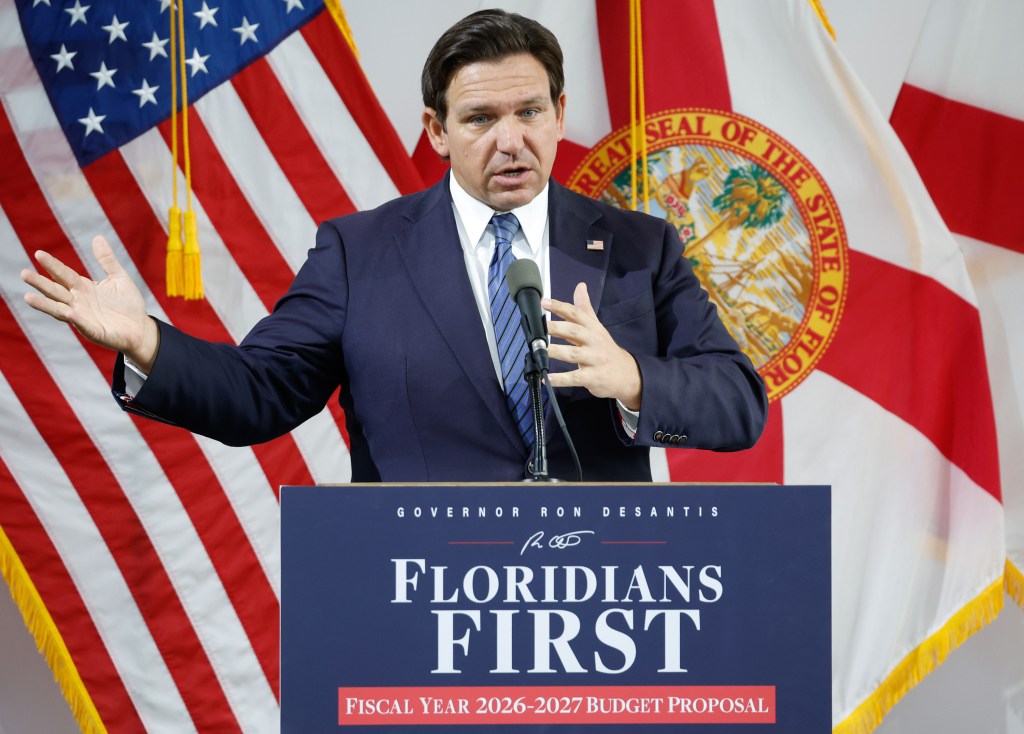
At this point, a few other things are clear. Both House and Senate have taken steps to clip Gov. Ron DeSantis’ wings. In his $117.4 billion budget proposal, released before the start of this year’s session, DeSantis asked for $500 million in unrestricted slush funds he could spend for emergencies. The Senate is offering $250 million, the House $100 million — which comes with a definition of the word “emergency,” something that might keep DeSantis from blowing funding on his political whims. Either proposal is generous, especially in light of the fact that DeSantis’ term ends in January.
But legislators failed to stop other unlimited cash flows, such as the ever-expanding school voucher program that’s currently bleeding billions from public education — with zero proof that voucher students’ needs are being adequately met. And both chambers intend to break commitments to Florida taxpayers. For example, under the terms of a constitutional amendment approved by voters, the land-preservation program Florida Forever should be funded at about $300 million in the coming year. The Senate wants to slash that to $35 million; the House proposes zeroing the program out entirely.
Yet both House and Senate budgets are larded with pay-to-play spending, directing state revenue to specific, well-connected vendors. This kind of spending flourishes in secrecy, and this year’s artificial rush toward a last-minute deal suggests that many of those giveaways will be tucked into the final spending plan..
Too fast to follow
And why is there a rush? By historic guidelines, this year’s budget-writing schedule isn’t that far behind: Before 2020, every legislative session started the first week in March and wrapped up nine weeks later, with both chambers passing their budgets about halfway through. The work then shifted to conference committees, where legislators negotiated accords that resolved differences one by one. The process was still rushed, and could be difficult for an average citizen to follow — but the meetings were public along with comparison spreadsheets that detailed each deal as it was cut.
This year’s session started in January, following a constitutional amendment that allows earlier sessions in election years. Both House and Senate passed their budget bills on time. But neither chamber made a move to start serious talks or set up conference committees. As of earlier this week – two weeks after the regular session ended — Senate Appropriations chairman Ed Hooper was answering most budget-related questions with some variation of “I don’t know.” But he did say he thought the budget session would take no more than a week and a half — including a mandatory three day cooling-off period before final passage, during which time the budget cannot be amended. That leaves just a few days for actual, public negotiations on spending.
As a result, it’s doubtful that conference committees will do any significant work. So who is? The most likely answer is that deals are currently being negotiated behind closed doors, without participation or input from most lawmakers, let alone the public.
This rushed darkness creates the perfect environment for special-interest profiteering, coupled with cruel cuts to desperately needed programs that don’t come to light until it’s too late.
There’s plenty of time to slow down, hold open committee meetings and do this right. And that’s what lawmakers should demand.
The Orlando Sentinel Editorial Board consists of Opinion Editor Krys Fluker, Executive Editor Roger Simmons and Viewpoints Editor Jay Reddick. Use insight@orlandosentinel.com to contact us.