
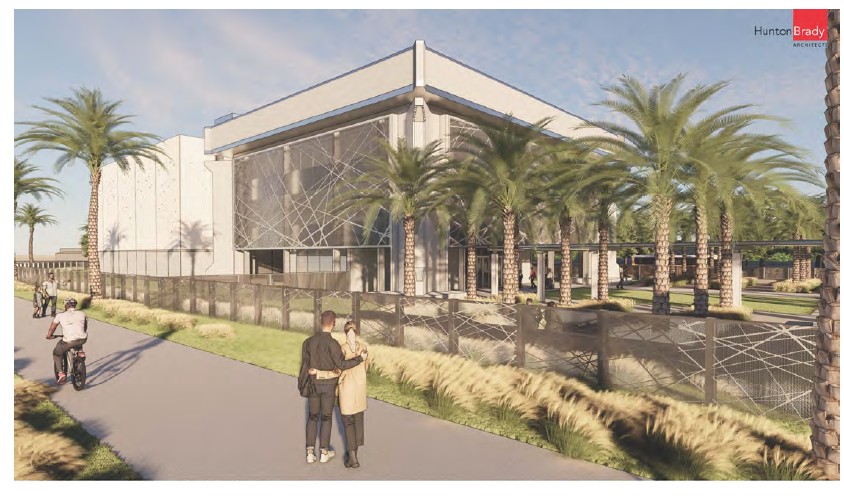
A year after pulling the plug on the proposed $106 million Holocaust Museum for Hope & Humanity, leaders of the Maitland-based Holocaust Center have unveiled a new scaled-down design that repurposes the former chamber of commerce building in downtown Orlando’s Ivanhoe district.
Board Chair Ronald Schirtzer told GrowthSpotter that if the new design is approved, the center would break ground before the end of the year.
The budget and scope of the proposed museum have varied since the project was announced six years ago. Schirtzer said the Holocaust Center has raised $44 million of its $63 million goal to build, operate, and endow the museum.
“We have funded the bricks and mortar, and we are at approximately 70% of our project goal for a complete, turnkey project — bricks and mortar and museum content,” Schirtzer said. “Our current schedule is to break ground sometime late this year, and the goal is to have a soft opening by January of 2028.”
Museum officials and members of their design team from HuntonBrady Architects have requested a courtesy review from Orlando’s Appearance Review Board on April 16 — two days after Holocaust Memorial Day, known as Yom HaShoa.
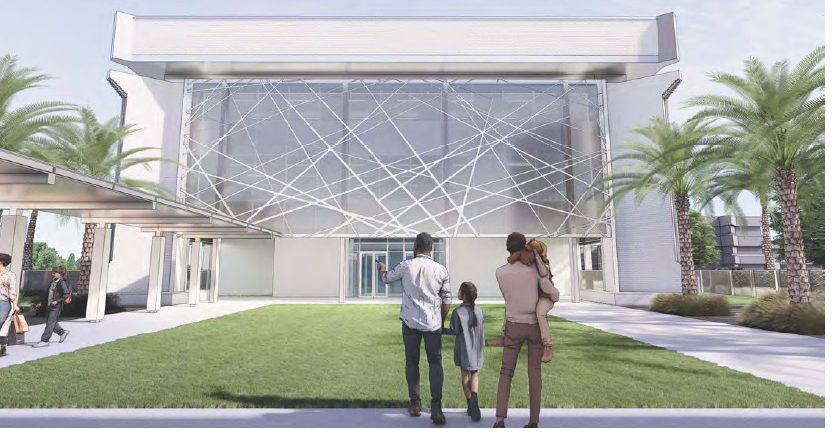
The vertical louvers on the existing building would be removed and replaced with a semi-transparent screen, designed to reflect the diaspora of Holocaust survivors. (Rendering by HuntonBrady Architects)
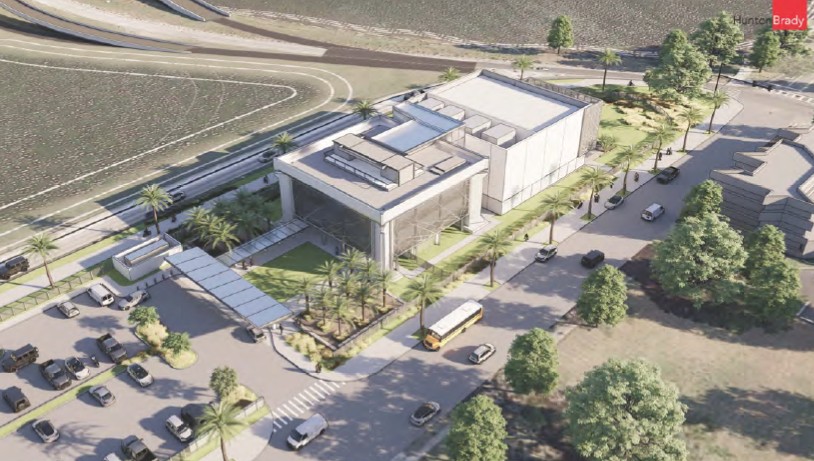
The new design is scaled down from 44,500 square feet to about 25,345 square feet. (Rendering by HuntonBrady Architects)
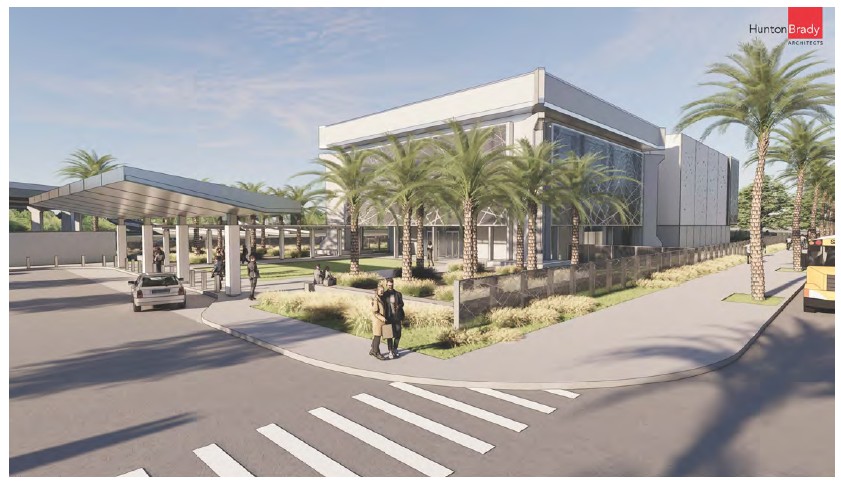
The plan calls for a covered walkway and vehicle drop-off area. (Rendering by HuntonBrady Architects)
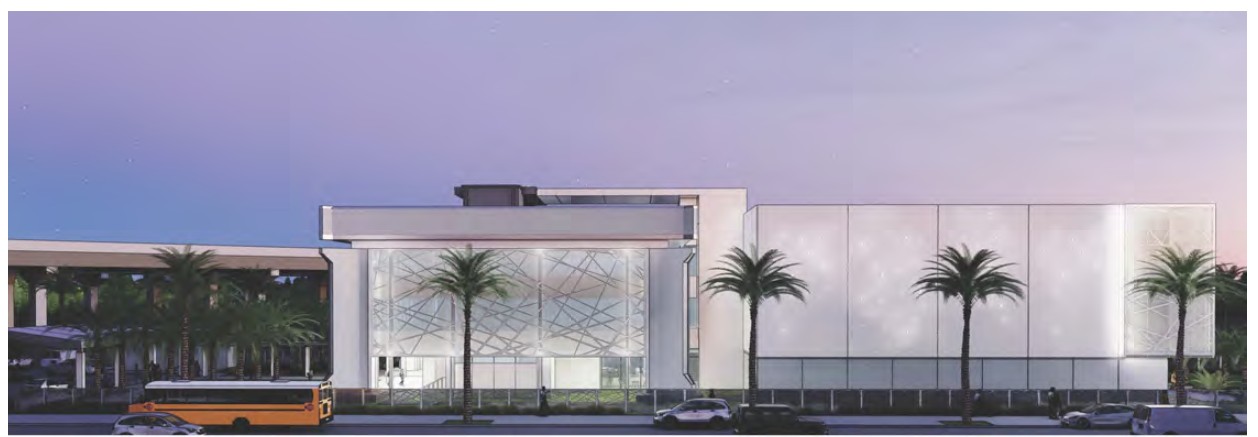
At night, the metal screens would be backlit, and the LED lights embedded in the concrete panels would create a twinkling starlight effect. (Elevation by HuntonBrady Architects)
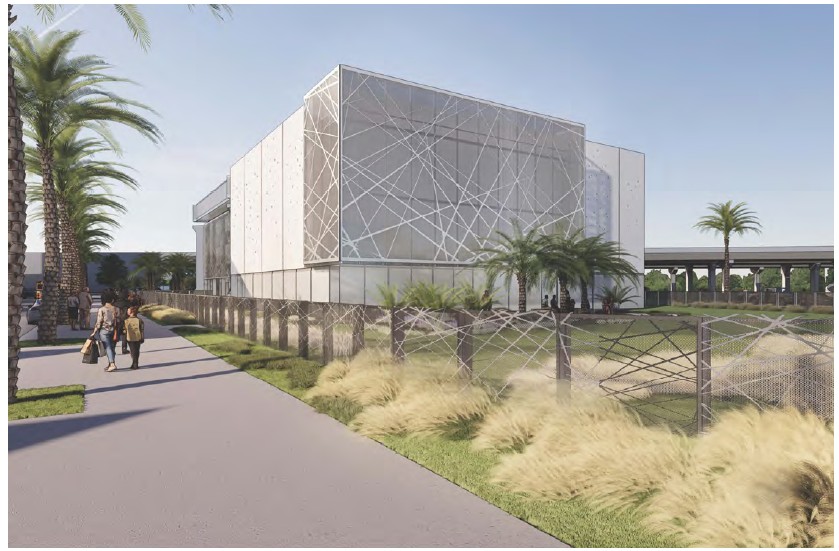
A matching screen would add visual interest to the new exhibit hall, but ARB staff voiced concerns about the lack of windows in the new building. (Rendering by HuntonBrady Architects)
Show Caption
1 of 5
The vertical louvers on the existing building would be removed and replaced with a semi-transparent screen, designed to reflect the diaspora of Holocaust survivors. (Rendering by HuntonBrady Architects)
The Holocaust Center board scrapped the previously approved plan for a 44,500-square-foot museum at 75 S. Ivanhoe Blvd. and parted ways with CEO Talli Dippold last year after determining the project wasn’t financially feasible.
The new proposal calls for a 10,000-square-foot exhibition hall to be constructed east of the existing building, bringing the project’s total to 25,345 square feet — 3.5 times larger than its current space.
“We are proud to have landed on a right-sized concept that strengthens our vision,” Schirtzer said.
The plan calls for a complete reimagining of the 1968 office building, inside and out. The vertical louvers covering the windows would be replaced with a perforated metal screen system designed to reflect the diaspora of Holocaust survivors.
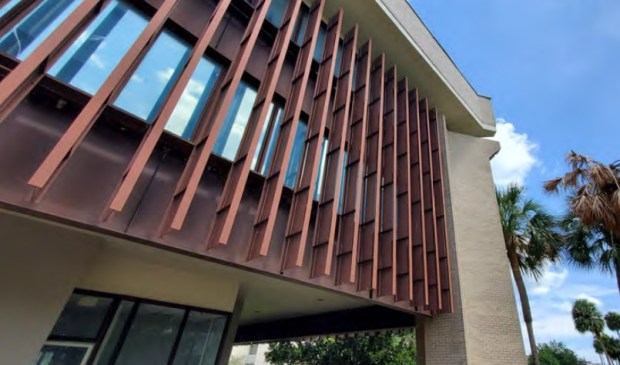 The vertical louvers that cover the windows on the former chamber building will be removed and replaced with a perforated metal screen system. The brick will be whitewashed or painted. (City of Orlando)
The addition would be attached by a small extension that leaves the eastern façade of the existing building relatively intact. The existing roof deck would be retained, and a matching screen would be affixed to the eastern side of the new addition, adding visual interest and cohesiveness.
The floor plan calls for a security office, a welcome center, men’s and women’s restrooms, and a gift shop on the first floor. The second floor would include a permanent classroom, an open gallery, and two temporary exhibit halls. It would connect to a balcony overlooking the main exhibit hall. Museum offices and flex space would occupy the third floor.
The exterior bricks would be freshened up with white paint. And a new courtyard entrance would shift to the west side of the building. The campus would be surrounded by a decorative fence that repeats the same perforated screen design as the building.
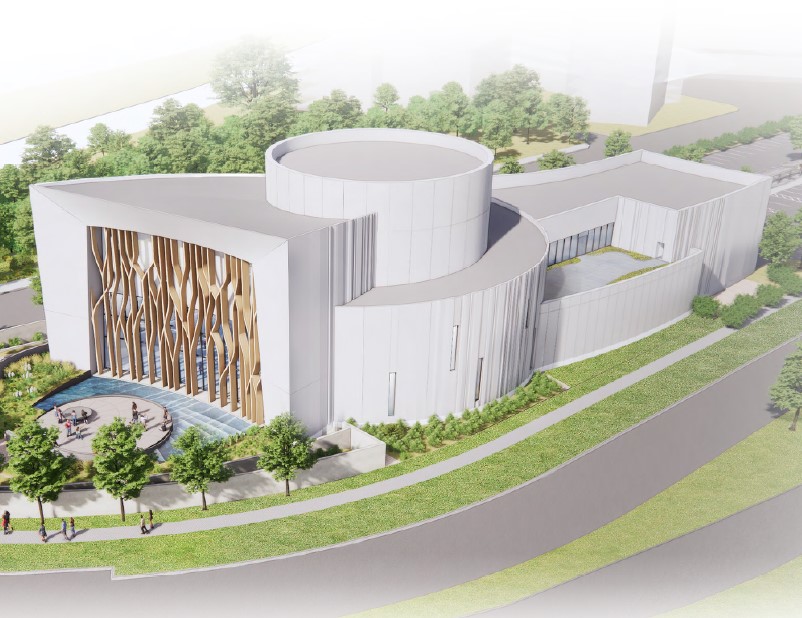
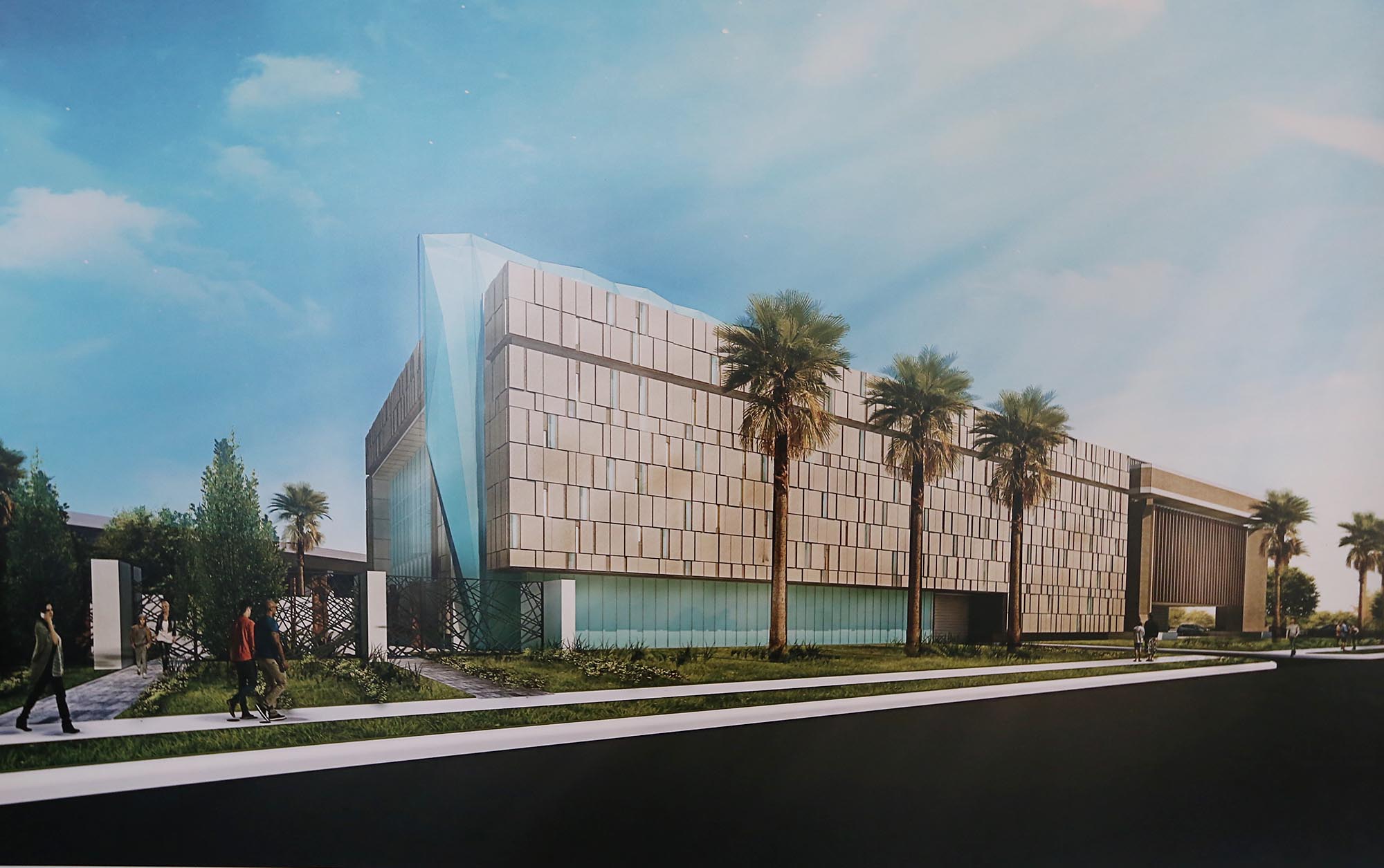
The city-approved plan called for a 44,500-square-foot building, but the price had ballooned to $106 million. (Rendering by Beyer Blinder Belle)
An earlier iteration showed the addition being built on the west side of the existing building. It was unveiled in 2018 during a ceremony at the Dr. Phillips Center for Performing Arts. (Stephen M. Dowell/Orlando Sentinel)
Show Caption
1 of 2
The city-approved plan called for a 44,500-square-foot building, but the price had ballooned to $106 million. (Rendering by Beyer Blinder Belle)
The addition will be home to the center’s new core exhibit, titled “Hope & Humanity,” which documents the stories of 10 Holocaust survivors who settled in Central Florida.
“There’s hours and hours of interviews with the survivors, and the technology is such that you essentially can speak or type in a question, and they will answer it,” Schirtzer said.
Orlando-based MDSX will spearhead exhibit design.
“Instead of a traditional, perpetrator-focused chronology, the exhibition invites visitors to move alongside local Florida survivors and encounter events as they were experienced and understood in real time, revealing how injustice, othering, and unbelonging took hold and the role we each play in confronting them today,” said Holocaust Center Senior Director of Museum Experiences Suzanne Grimmer.
The ARB courtesy review is the first step in the permitting process for the new museum, and it gives the applicant a chance to present the design and receive feedback from board members on the proposed architecture, building materials, streetscape, lighting plan, and landscape design. Those critiques can be addressed before the applicant submits a specific parcel master plan (SPMP) and applies for a major certificate of appearance approval. Both are required before seeking building permits.
The museum’s development team had a pre-application meeting with city staff on March 6. They have until April 20 to file the SPMP for consideration by the Municipal Planning Board in June.
In his staff report, ARB Director Richard Forbes called out the building’s lack of transparency. The decorative screen obscures the existing windows, and the new addition, which is to be built of tilt-up concrete panels with embedded LED lighting, has no transparency.
Although the building falls short of the code requirements for transparency, Forbes did not suggest any major changes to the architecture.
The City of Orlando donated the 2.5-acre site, which is valued at $10 million, and Orange County allocated a matching amount in Tourist Development Tax funds. The State of Florida has contributed $5 million to the museum.
Have a tip about Central Florida development? Contact me at lkinsler@GrowthSpotter.com or (407) 420-6261. Follow GrowthSpotter on Facebook and LinkedIn.