
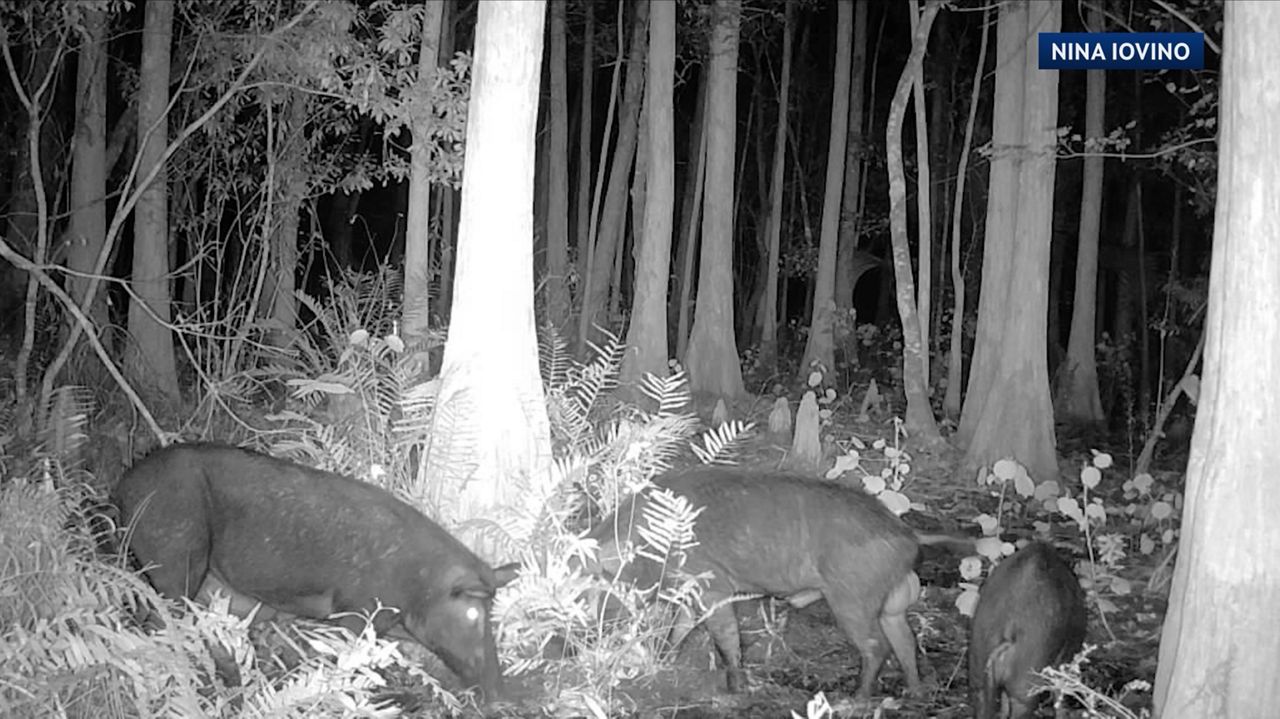
LAKEWOOD RANCH, Fla. — An unpleasant neighbor is damaging front yards, fences, and leaving some residents fearing for their lives.
Wild pigs are a problem not just in Lakewood Ranch, but across the Tampa Bay area.
What You Need To Know
Many homeowners from Lakewood Ranch to New Port Richey have opened up about wild pigs ruining their yards and even following them while they ride their bikes
After hearing stories of wild pigs destroying properties and chasing pedestrians, a PhD student at USF has dedicated her degree to understanding the affects of wild pigs throughout the Tampa Bay area, and she is looking for more people to share their stories
So far in her study, Nina Iovino has found that wild pigs can help spread seeds, allowing new plants to grow in the areas where they root for food
A researcher from USF is dedicating her PhD program to finding solutions to the wild pig problem.
Not everyone in ecosystems throughout Lakewood Ranch is living in harmony. Ashley Garcia recalls her first encounter with one of her biggest fears, and it was not even an apex predator.
“And all of a sudden, you see something fast and black moving, and I’m on my bike. I’m like, ‘Oh no, it’s a bear,’” Garcia said.
In that moment, Garcia was not being chased by a bear, but a wild pig.
“And pedaling as fast as I could because I was so scared that it was going to eat me,” she said.
Her typical route along Vision Drive passes a wetland barrier that generations of wild pigs have made into their home.
“Usually at night they come, they dig their little holes. They would be tearing it up everywhere,” Garcia added.
Although Garcia has returned to her typical bike route since the scare, she and her neighbors agree something has to be done about the wild pig problem.
“It had this whole tusk coming in and everything, so it’s a little dangerous, and I would like there to be something done. Maybe population control, because they’re just breeding everywhere,” she said.
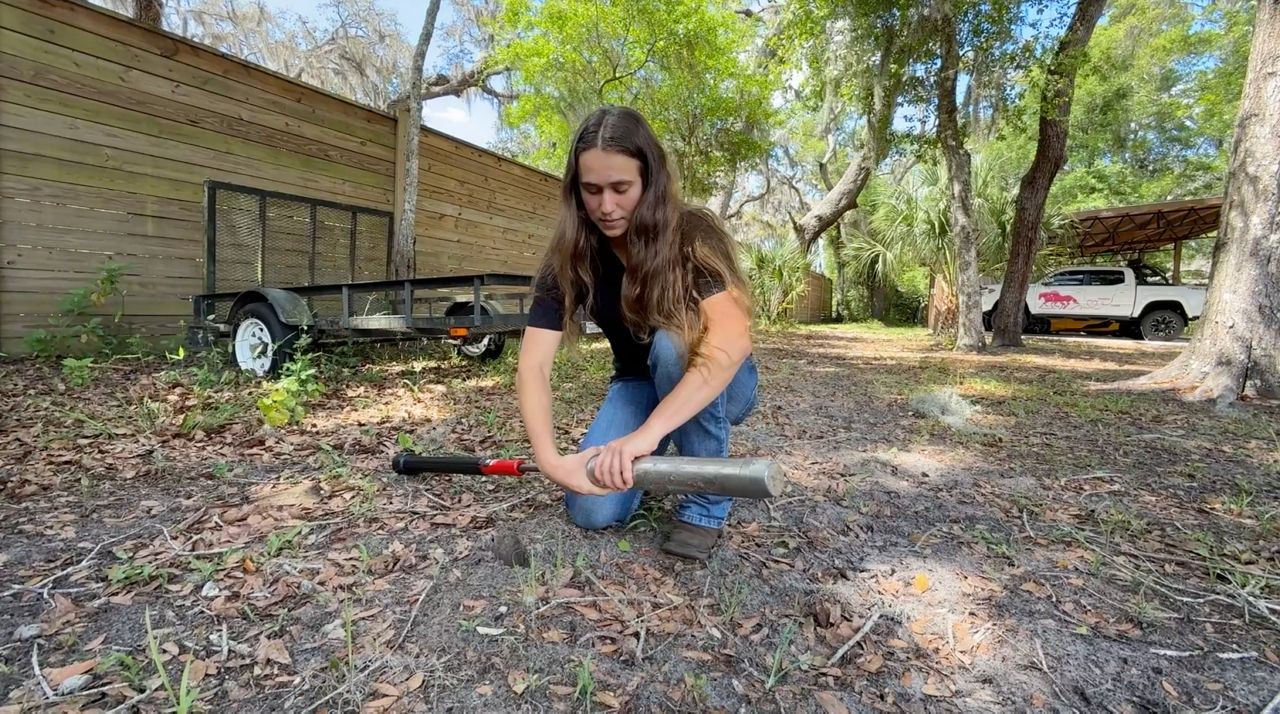
So far in her study, Nina Iovino has found that wild pigs can help spread seeds, allowing new plants to grow in the areas where they root for food. (Spectrum News/Claire Alfree)
To find that solution, Nina Iovino has dedicated her entire PhD program at USF to researching wild pig habits throughout the Tampa Bay area.
In her videos, captured through surveillance cameras she set up at different wild pig hot spots, dozens of pigs can be seen rooting for food.
“The species is causing this damage, but there are a lot of diverse perspectives on whether the species now belongs because it has been here for so long. It has been here since the 1500s. What is to say that an introduced species cannot become part of the environment, or that eradicating them would cause damage to the ecosystem now,” Iovino explained.
Some positives she has already found in her research include wild pigs acting as seed carriers, with spores sticking to their fur and traveling from place to place, helping diversify plant life in ecosystems.
“You see this fennel growing all over where they rooted. You do not really see that everywhere, but it is growing in those rooted areas,” Iovino added.
Iovino has sent out surveys for residents to better understand what it is like living among wild pigs. Her neighbor, Chris Alexander, says he “gave up” and is now turning his land into a cow pasture just to avoid constantly cleaning up the damage.
“Well, it’s a mess. They are hard to get rid of. You can trap them, but they breed quickly. They can have up to 13 piglets in one litter. We counted about 50 of them three weeks ago,” Alexander said.
Iovino says her research is far from over. From studying plant and soil impacts caused by rooting to identifying areas where wild pigs frequently gather, she hopes more people across Tampa Bay will take her survey to help determine the best way to control the population.
“It is a species that can reproduce very quickly in high numbers, so there definitely needs to be population control efforts,” Iovino said.
We reached out to the FWC for guidance on how homeowners can deal with repeated wild pig encounters. The agency said, “The FWC does not provide removal services for wild hogs, but this species is not protected in Florida. On private property, with landowner permission, wild hogs may be trapped and hunted year round during the day and night, and no hunting license is required.”
If you have experienced wild pigs on your property, you can share your encounters through the USF research survey here.