
ORLANDO, Fla. — A nonprofit organization is helping people experiencing homelessness get access to medical care.
What You Need To Know
The Samaritan Resource Center is partnering with True Health to launch a new street medicine program bringing primary and preventive health care directly to individuals experiencing homelessness in east Orlando. The initiative began its first rounds of outreach in October and is already filling a critical gap in care for some of the community’s most vulnerable neighbors.
Once a week, rain or shine, an outreach team from the Samaritan Resource Center and a nurse practitioner from True Health go out into the community to meet people where they are.
The team listens to any medical concerns they have, takes their vitals and offers advice on how to address any issues they might be facing
The street medicine program is funded through support from Orange County in the amount of $53,000. This funding currently allows the organization to offer the service once per week, bringing medical care directly to individuals experiencing homelessness in the field. At this time, the funding supports the current level of service for the duration of this program year.
The Samaritan Resource Center is partnering with True Health to launch a new street medicine program bringing primary and preventive health care directly to individuals experiencing homelessness in east Orlando.
The initiative began its first rounds of outreach in October and is already filling a critical gap in care for some of the community’s most vulnerable neighbors.
“We know that there are clients that can’t get here for various reasons. Out in the camps, out in the field. And our outreach team sees them all the time. So, we saw the gap, and we talked to our partners at True Health. And they were able to work through the logistics,” Zeynep Portway, executive director for the Samaritan Resource Center, explained.
Once a week, rain or shine, an outreach team from the Samaritan Resource Center and a nurse practitioner from True Health go out into the community to meet people where they are.
The team listens to any medical concerns they have, takes their vitals and offers advice on how to address any issues they might be facing.
“My father, he had low blood pressure, and I don’t know if I have or not, but I’m assuming I do,” said John Brundage, one of the individuals helped by the street medicine program.
The care is well received by those who are so often forgotten. “I feel like I’m loved. I feel like I’m greatly appreciated. I feel like I’m someone. I don’t feel like I’m a nobody,” Brundage said.
Services also include basic medical care, wound treatment, screenings, and referrals for follow-up care.
“If somebody is referred to a medical appointment, we will call a Lyft through True Health for them and get them picked up at the location to go to the appointment. And then they’ll get a Lyft back. However, it can be difficult and challenging because they don’t have phone access. So, if the Lyft comes and they’re letting them know they’re there, if they don’t respond, then sometimes they leave,” said Samaritan Resource Center Outreach Case Manager Brynne Clark.
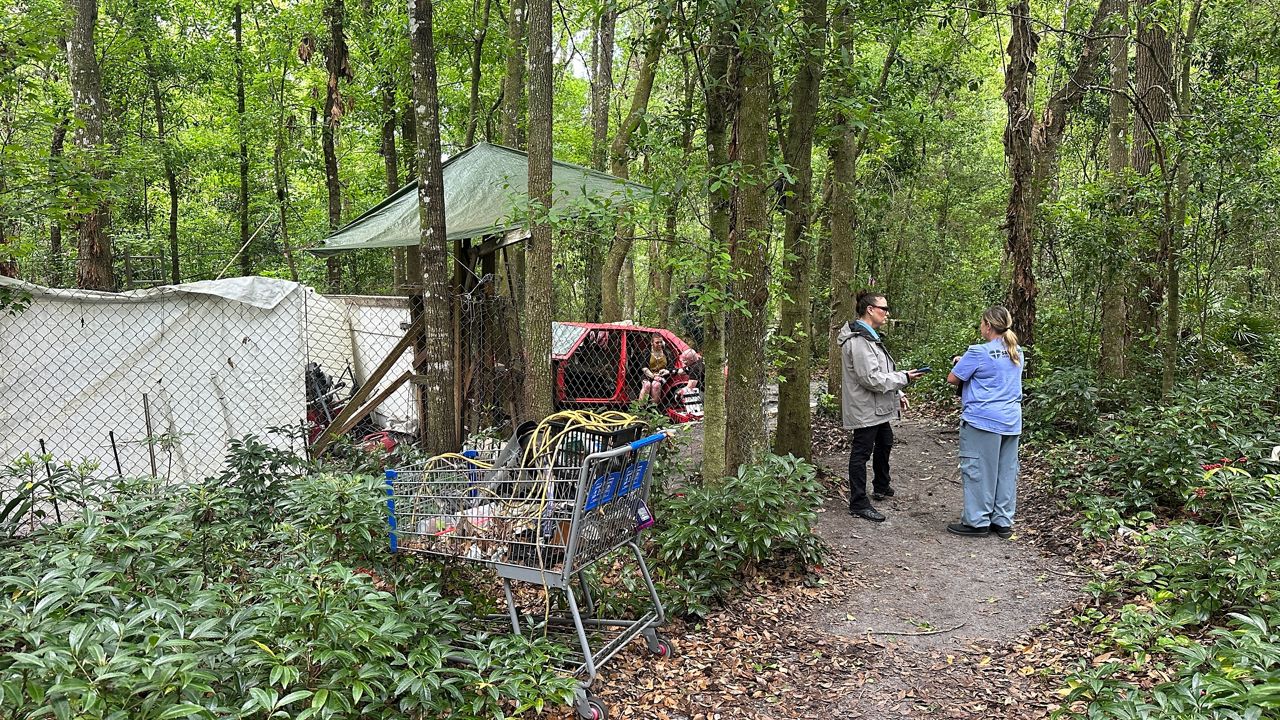
The group drives from one location to the next one looking for people at encampments, parks, and other places where they are living unsheltered. Sometimes, it takes going deep into the woods to find those who need help.
With every step, Clark says she feels grateful to bring the care they need and meet them where they are.
“It’s a blessing being able to help people and empower people to be able to come out of this and bring hope to them,” Clark said.
The initiative began its first rounds of outreach in October and is already filling a critical gap in care for some of the community’s most vulnerable neighbors. Last year, the Samaritan Resource Center served more than 2,000 individuals, including families with children and seniors.
“If we can try and do some preventative maintenance or actually meet them where they are, and get them some services that’s going to prevent them from having worsening conditions, having to go to the emergency room, or having even worse conditions where they actually end up hospitalized,” Dr. Karenna Senors, Chief Medical Officer for True Health, said.
Stacy Reed has been living out in the woods at an encampment for a long time, making the space her home. She has no running water or electricity, but Reed welcomes and appreciates the help offered by the team.
“She’s been so helpful, very helpful. And my doctor’s been very helpful to everybody in the Samaritan has been helpful. But coming out here is actually better,” Reed said about Clark. The two have built a relationship of mutual trust over the years, as the outreach team has helped her.
Like Reed, many of the people the team helps lack reliable access to transportation, health insurance, or regular medical providers, making on-the-ground outreach essential for early detection, chronic care management, and injury prevention.
But she won’t be living there much longer, as the team shared the news that Reed will soon move into permanent housing — another service they offer.
“I am very excited; it’s been so many years that I’ve been homeless and just trying to get back on my feet. It’s very exciting,” Reed said.
Clark said once they get people into housing, the relationship continues. “Helping them retain that, helping retain the relationships that we have, checking in on them, making sure they have everything that they need from furniture to housing supplies, cleaning supplies,” she said.
It’s a labor of love, one that takes perseverance and persistence to make a difference in people’s lives.
“I’m pleasantly persistent. So, like, just because someone says, no, I’ll keep coming, I’ll keep showing up. And then, one of these days, eventually, someone might decide, ‘Hey, let me show up for myself, too,’” Clark said.
The street medicine program is funded through support from Orange County in the amount of $53,000. This funding currently allows the organization to offer the service once per week, bringing medical care directly to individuals experiencing homelessness in the field. At this time, the funding supports the current level of service for the duration of this program year.
Leaders at the Samaritan Resource Center say they look forward to sustaining and expanding the street medicine project in 2026.