Drought continues to be a significant issue across South Florida, despite some recent episodes of rainfall.
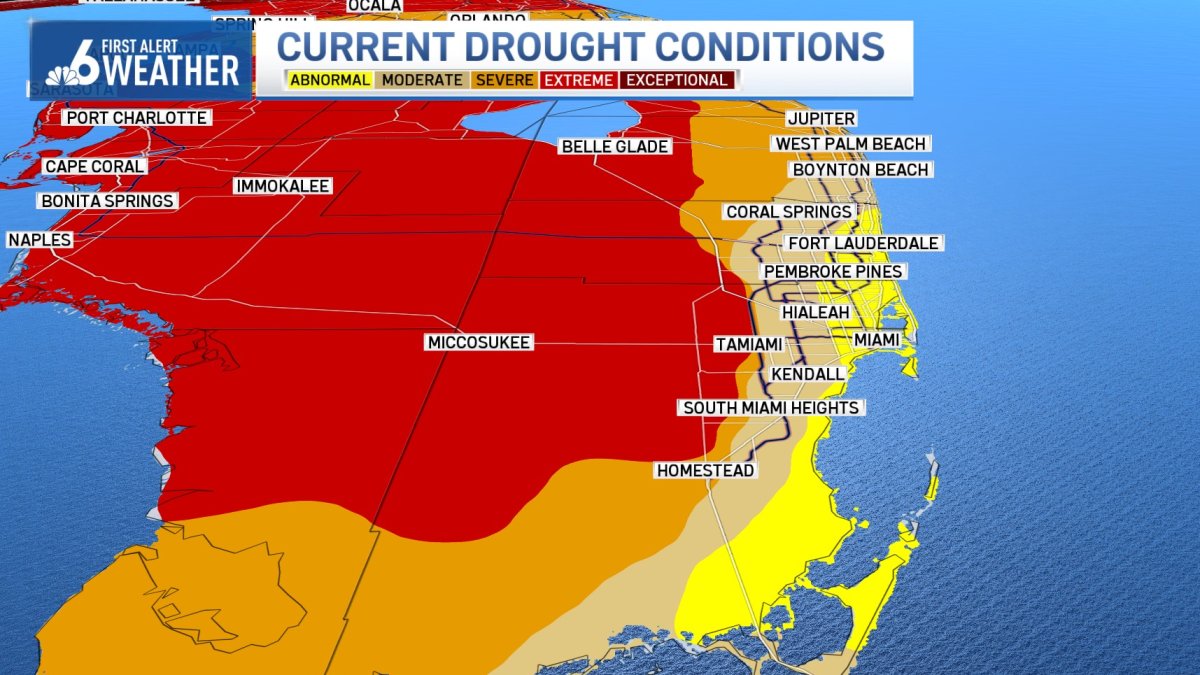
According to the latest National Weather Service report, much of the region remains under severe to extreme drought conditions (D2 to D3), particularly across inland areas and the west coast, while eastern sections are experiencing somewhat less intense conditions, ranging from abnormally dry (D0) to moderate drought (D1).
Although some areas have received near to above normal rainfall in recent weeks, it has not been enough to offset the accumulated deficit since late last year. In fact, several locations across South Florida are still reporting below-average precipitation, with stations recording between 55% and 80% of normal rainfall since November.
For example, Miami has received about 80% of its typical rainfall, while areas such as North Miami Beach and Palm Beach Gardens have only seen around 55-56%. This pattern has kept soils dry, especially across western areas, where soil moisture is only in the 20% to 30% range, well below normal.
The impacts are already evident, with Lake Okeechobee levels currently around 12.06 feet, approximately 1.93 feet below normal. In addition, some areas are facing water shortage warnings, especially in Collier and Glades counties.
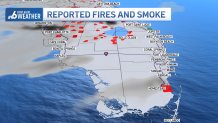
This is compounded by an increased risk of wildfires, with elevated dryness levels ranging between 450 and 500 on the KBDI index across much of the region, when normal values are typically below 200.
Meanwhile, the fire danger level is classified as moderate, or level 2 on a scale of 1 to 5, which has led to burn bans remaining in effect in several areas.
In the short term, little change is expected, with dry conditions forecasted to persist over the next several days, while future weekly rainfall totals remain below 0.5 inches along the east coast and less than 0.1 inches across the west.
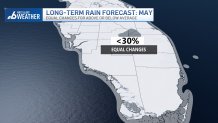
As the rainy season approaches in May, there is hope for some gradual improvement; however, precipitation outlooks do not show a clear trend, with equal chances of above- or below-normal rainfall.
Experts warn that drought conditions could persist through July 2026 in some areas, especially across inland and west coast portions of South Florida.