
PANAMA CITY— The Bay County Historical Society is hosting a fifth‑generation Floridian at its downtown museum to educate visitors about Florida’s early frontiersmen, often known historically as “Florida Crackers.”
Local woman Ann Robbins is the educator for the day and will connect the history of the pioneers to their food culture, in line with the museum’s current exhibit, “Bayside Bounty.”
She’s slated to speak on April 18 between 1 and 1:45 p.m. at the Bay County History Museum, 133 Harrison Ave. in Panama City.
“I’m a storyteller, and I do stories on the Florida crackers that came to live here in the 1800s in Florida, and I tell them about how they came, why they came, (and how) they lived,” Robbins said.
Bay County officials talk about success of spring break policing
1 of 14
Chief JR Talamantez of the Panama City Beach Police Department speaks at a press conference on the success of the area’s high impact zones and spring break season.
She said the culinary portion of her talk comes from the writings of Marlene Womack, the late local historian and veteran News Herald contributor, as well as a personal friend of Robbins.
Many of the early pioneers who could be referred to as Florida crackers came to rural areas in the state around the 1820s, when Florida became a territory of the United States, Robbins said. When the Spanish came to Florida, they brought cows, many of which would escape into the longleaf pine forests.
The crackers largely worked as cattlemen, sometimes claiming and breeding the wild Spanish cows with their own. Because they herded cattle underneath the canopy of dense pines, lassos would prove difficult to use. Robbins said that in place of a lasso, the pioneers would use whips to herd the cattle. The name “cracker” comes from the sound the whip would make.
“With the crack of their whip they could drive 50 head of cattle through a swamp with their dogs,” Robbins said. “They didn’t like to be called cowboys. Cowboys were out west. They were ‘cow men’ or ‘cow hunters’ because the cattle were running wild in the Florida woods.”
Robbins said many of the crackers were single men surviving in a very rowdy setting. The towns that existed also exhibited some elements of lawlessness.
“They liked to drink and cuss and carry on, just like the cowboys out west, and it was very dangerous here,” Robbins said. “When they all started coming here to settle and homestead and make barns and make ranches, things got more hectic, and there were a lot of shootouts.”
Many of those early pioneers could not read or write, often signing deeds with an “X.” Robbins also said that they didn’t tend to believe in the law.
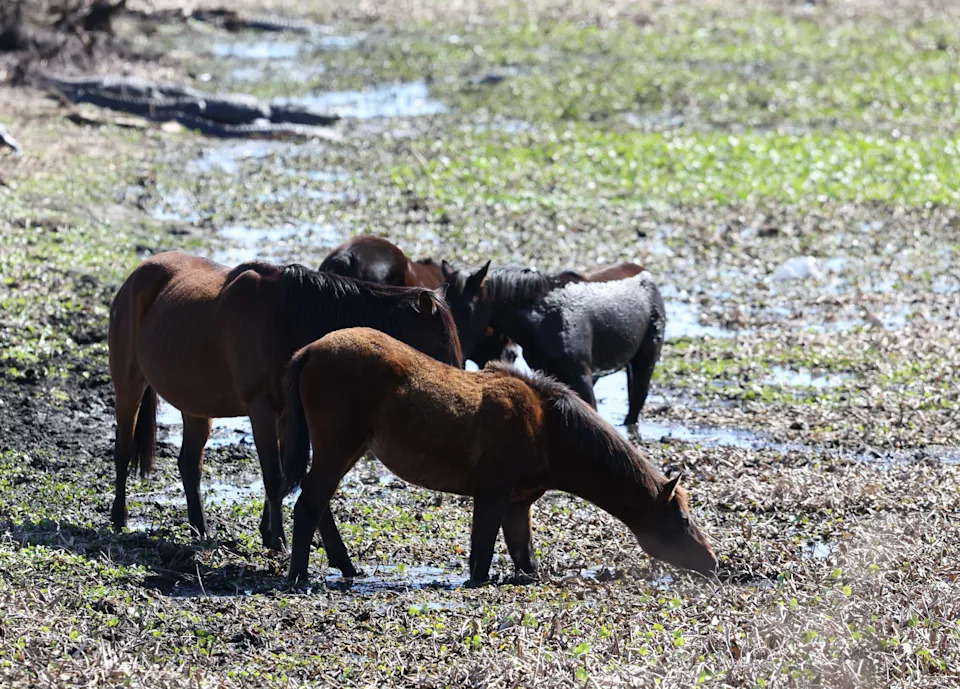
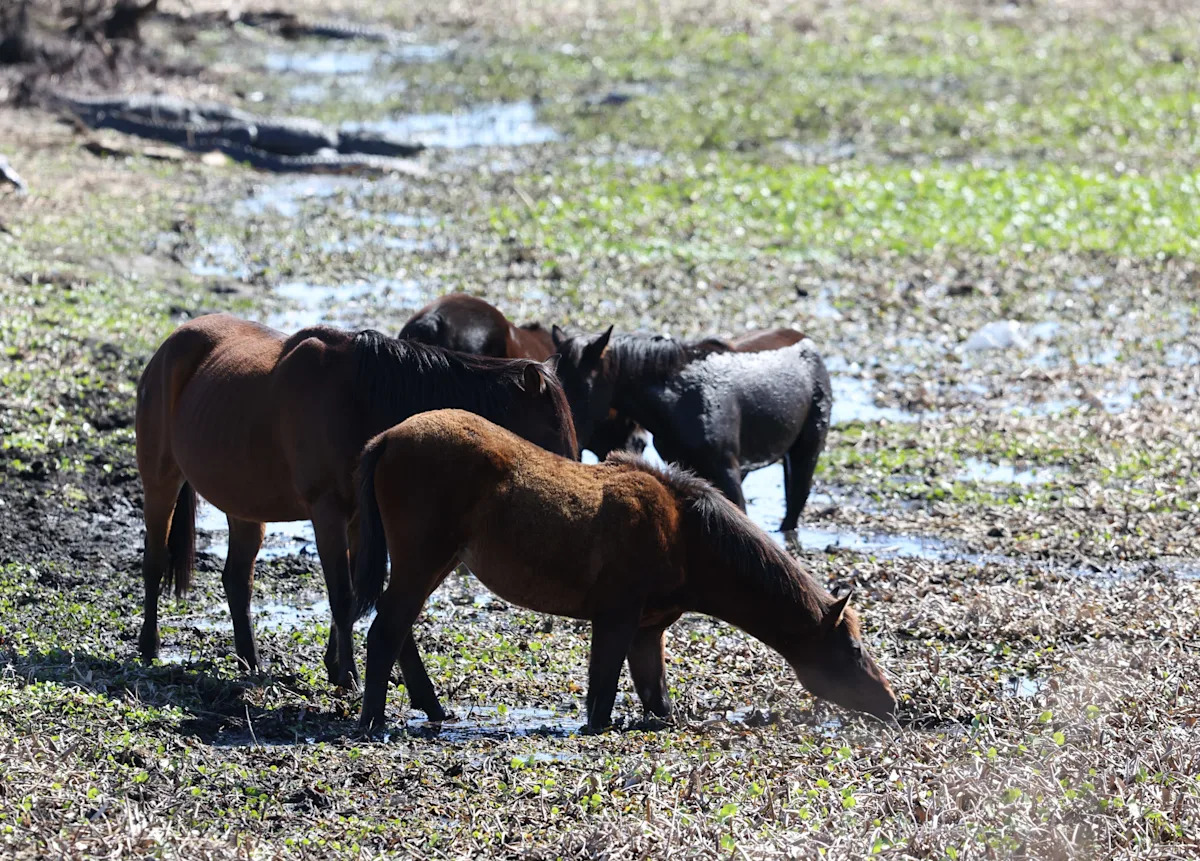
Wild horses ventured near the U.S. 441 boardwalk at Paynes Prairie in Gainesville, Florida, on Tuesday, Feb. 24, 2026. The prairie is home to wild horses descended from Spanish and Florida Cracker stock. The easily accessible boardwalk offers expansive views of the prairie, and unusually low water levels combined with green grass created favorable conditions for viewing horses and bison.
“They were people (who) you couldn’t tell what to do,” said Robbin. “They had their own code of honor.”
How does this all tie back to food? Robbins said their lifestyle influenced what they ate.
“They have no refrigeration, they have no electricity, they have nobody to help them by themselves,” Robbins said. “It was a matter of survival.”
She said their choice in crops largely consisted of sugarcane, sweet potatoes, melons, peas, beans, collards, turnips and mustard. Robbins said oysters were a pretty popular dish of choice when they could get them.
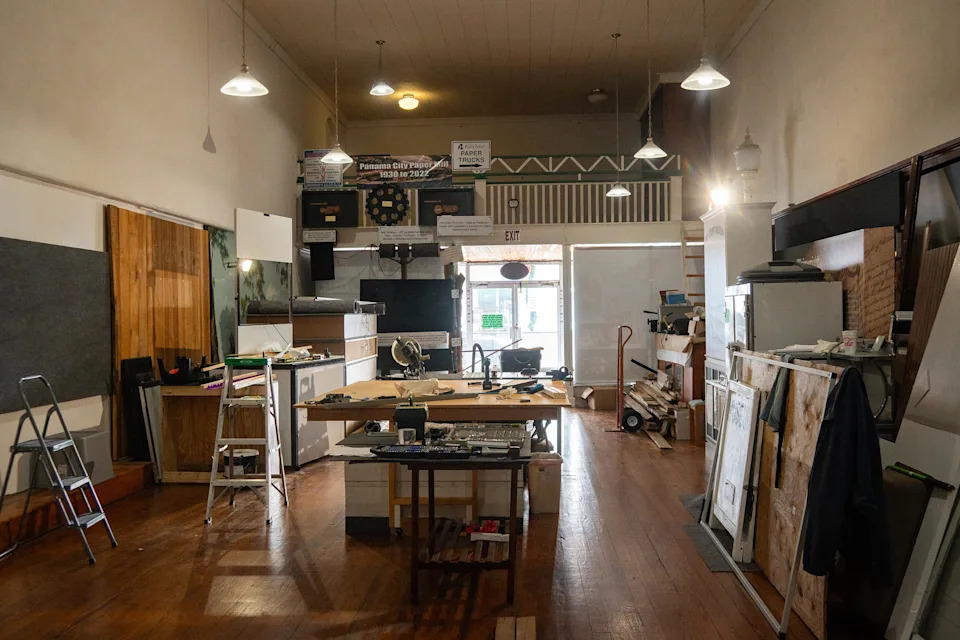
The Bay County Historical Society Museum undergoes renovations ahead of their new Smithsonian exhibit, “Bayside Bounty, the Culinary Heritage of Bay County,” on Jan. 6, 2026, in Panama City, Florida.
“Pot liquor” was also a big deal to the early pioneers, Robbins said. It’s the water left over from boiling various vegetables, sometimes infused with meats.
She said the food that they ate influenced local cuisine to this day. Fish and grits are a lasting legacy of the bygone days.
The traditions of the Florida crackers didn’t really die out until 1949, when Florida introduced fence laws that required livestock to be kept on their property, Robbins said. The free-range cattle were getting hit by trains and by cars when sleeping on roads.
Cattlemen still exist in North Florida. In Bay and Gulf counties, land purchased by Deseret Ranches of Florida is worked by men on horseback parading cows around their vast holdings. In a way, it could be said that the cowboys have made a comeback.
More on local history: Revolutionary War veteran’s 190-year-old obelisk to make comeback
Readers interested in the history of the earlier pioneers and their cooking can see Robbins at the Bay County History Museum on April 18.
This article originally appeared on The News Herald: Who were the Florida crackers? Local history enthusiast explains