
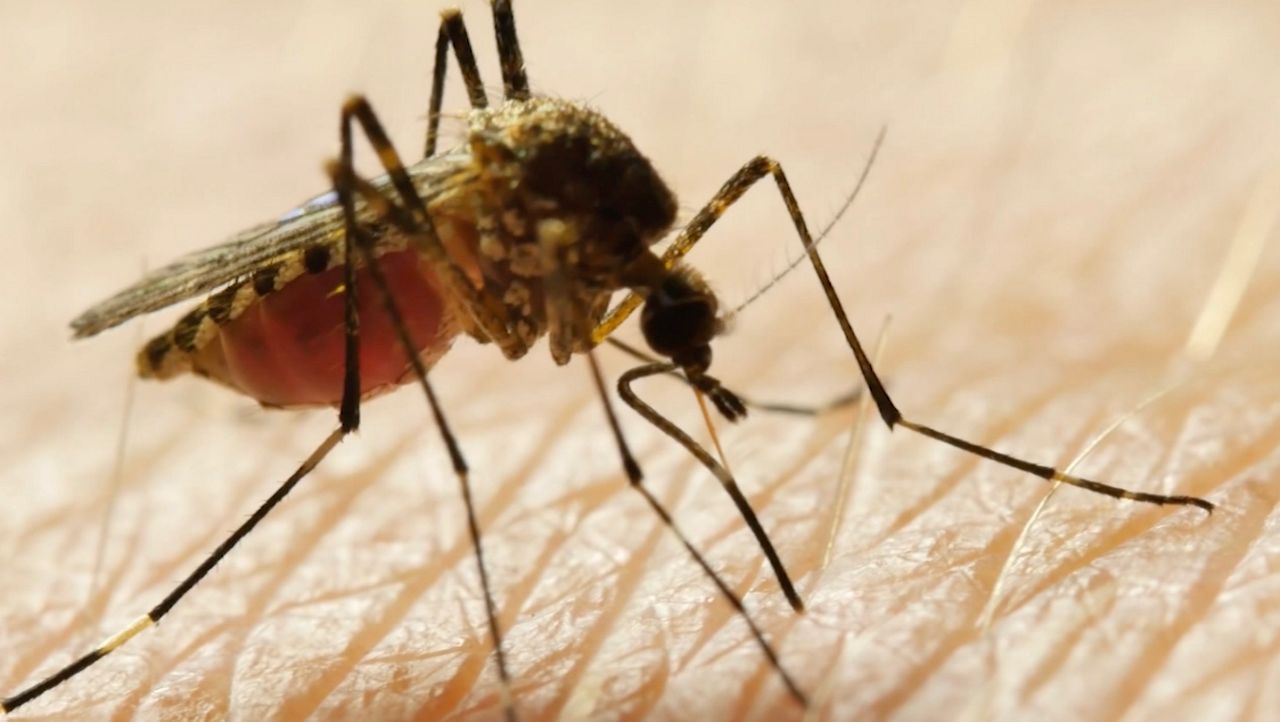
CLEARWATER, Fla. — Despite current drought conditions, the rainy season is approaching — and with it comes mosquito season.
Pinellas County officials are asking for the public’s help to cut down on the mosquito population.
What You Need To Know
The rainy season is coming and Pinellas County Mosquito control want the public to be ready
Officials are asking residents to get rid of any standing water around their homes, even if its as small as to fit in a bottle cap
Experts say mosquitos can carry diseases and are able to breed in large numbers
Experts say it doesn’t take much for mosquitoes to multiply. Larvae can develop in even the smallest amounts of water, with officials noting that as little as a quarter of an inch — about the size of a bottle cap — is enough for breeding.
Caroline Pickart, a senior environmental specialist with Pinellas County Mosquito Control and Vegetation Management, said mosquitoes are highly adaptable and can use nearly any container that holds water. Common breeding grounds include children’s pools, old tires, and potted plants.
Experts say the issue is not to be taken lightly. Mosquito-borne diseases can be fatal, and Florida has seen cases of dengue fever and malaria in recent years. Last year, Brevard County reported more than 60 cases of dengue fever, and officials say being proactive is critical.
During the rainy season, Pinellas County deploys helicopters to spray a non-toxic larvicide. Mosquito Control Manager Alyssa Berro said the substance targets mosquitoes at the larval stage.
The product, known as BTI, is a naturally occurring soil bacteria that specifically affects mosquito and black fly larvae without harming other organisms.
Pinellas County also conducts ongoing testing for diseases such as West Nile virus. One method involves using chickens, which serve as indicators for the presence of mosquito-borne illnesses.
Officials say mosquitoes often feed on birds, and while chickens do not become ill, their blood can show antibodies when exposed to viruses, helping track disease activity.
Residents are encouraged to take simple precautions, including eliminating standing water of any size, using insect repellent, and wearing long sleeves and pants when possible.