
KEY LARGO — Biologists A.J. Sanjar and Michael Cove part a curtain of vegetation and stride into the shadows of a dense forest in Crocodile Lake National Wildlife Refuge to check on a line of possum traps.
A metal trap sits 20 yards into the woods. Inside, a fuzzy white possum, seduced by cat food, sits, befuddled.
Sanjar determines the animal is large enough for a collar — they want animals that weigh 3 pounds or more — and gently carries the cage back to the truck. The possum doesn’t know it, but she’ll be returned to her home in a few hours, fitted with a collar that will tell Sinjar when she dies.
The collar accounts for a grim possibility: A possum meeting its end in the coils of a large invasive Burmese python. The tracker would sit in the snake’s belly, and Sanjar would be able to find the snake and euthanize it, removing it from an ecosystem that’s home to two endangered mammals.
In the past this kind of possum-tracking technique seemed impossible, but in the last two years, Sanjar, Cove and Jeremy Dixon, manager of the refuge, have made significant strides in refining the concept to be a weapon against the invasive and highly destructive snakes.
The tracking collars that once cost $1,500 now cost only $190, and they last almost two years in the field. Sanjar also has figured out that the most efficient time of year to deploy them is summer, when snakes are fattening up for breeding season in late fall.
He has 32 collared animals in the field right now. Today, Sanjar and Cove hope to catch, collar and release as many of North America’s only marsupial as possible, so as to have at least 40 collared animals in the field by summer’s peak.
Connecting the dots
Back in 2022, Dixon and Cove, who works for the North Carolina Museum of Natural Sciences, made a rather macabre discovery, but one that has turned out to be a silver lining in the war against the Burmese python.
They were studying the movements of raccoons and possums, but the mammals they were tracking kept getting eaten by the highly destructive Burmese pythons, which had colonized Key Largo in the early 2000s.
Katie Hanson/courtesy
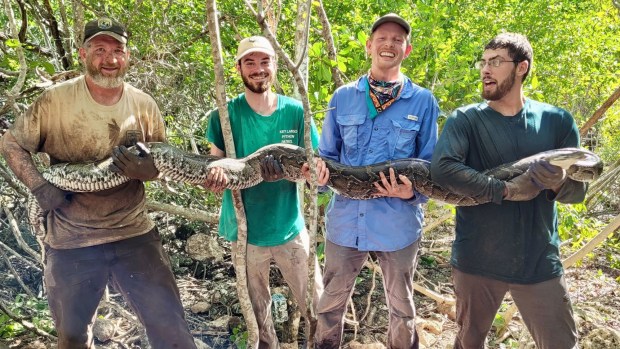
Jeremy Dixon of the U.S. Fish and Wildlife Service, along with North Carolina Museum of Natural Sciences research technicians Brandon McDonald, Isaac Lord and Joe Redinger hold a 12-foot-long, 66-pound female invasive Burmese python that they discovered after it killed and ate a possum they were tracking. (Katie Hanson/courtesy)
When they trekked into the woods to retrieve the expensive GPS collars, they discovered that the collars — still in the snakes’ stomachs — were leading them to some very large snakes. They euthanized the snakes, removing them from the ecosystem.
Taking big breeder pythons out of native ecosystems is a victory for any Florida biologist. Cove and Dixon wondered if tracking mammals could become another weapon against the Burmese python’s seemingly unstoppable invasion.
There were serious hurdles to scaling the technique up — the collars were far too expensive, at $1,500, and they lacked the staff to make it happen. It looked as if the captures were just fortuitous one-offs.
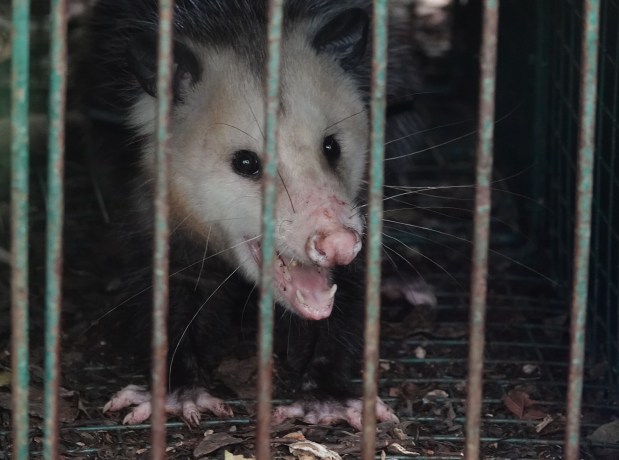 A trapped possum is seen on Wednesday, April 15, 2026, at the Crocodile Lake National Wildlife Refuge in Key Largo. (Joe Cavaretta/South Florida Sun Sentinel)
But Dixon and Cove started tinkering, procured some research funding from the South Florida Water Management District, and brought in Southern Illinois University graduate student Sanjar to help figure out how to optimize their bittersweet discovery.
Of mice and missiles
Sanjar and Dixon head down a gravel road to check on the grounds of an abandoned missile site inside the refuge, both for possums, and to spot two endangered species that the pythons are eating — Key Largo woodrats and Key Largo cotton mice.
The military site was built during the Cold War, before the wildlife refuge existed, to house missiles designed to shoot down high-altitude bombers on their way from Cuba.
Though the missiles, named “Nikes” after the Greek goddess of victory, are gone and the hangers dismantled, the site still has overgrown underground bunkers where a few years ago wildlife officials captured a 16-foot female Burmese python along with several males who’d gathered in a breeding ball. Her skin is now nailed to the ceiling of the refuge office.
Cove and Sanjar creek the rusty metal door of one of the bunkers open and enter, shining flashlights down the old pipes and ventilation shafts in search of woodrats and cotton mice, which often use the pipes as nesting sites.
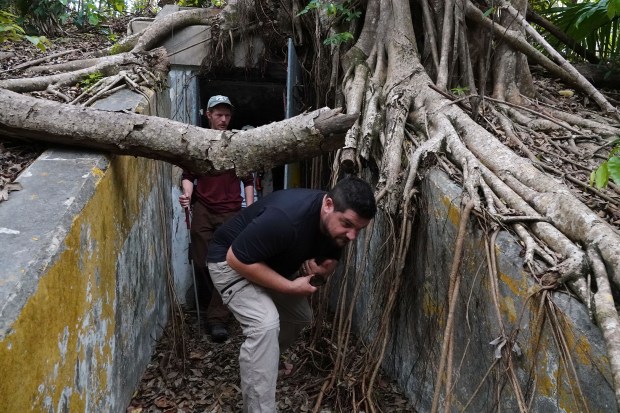 Isaac Lord, left, and Mike Cove inspect an abandoned Cold War-era Nike missile bunker on Wednesday, April 15, 2026, at the Crocodile Lake National Wildlife Refuge in Key Largo. The bunkers attract invasive pythons and the small mammals they prey upon. (Joe Cavaretta/South Florida Sun Sentinel)
They spot a woodrat in a nest in one of the pipes, a good sign. Outside, the rat has piled small sticks over the pipe opening, presumably to block larger animals.
The missile site is where Cove and Dixon’s fellow biologists have used camera traps to film pythons preying on the endangered species, which have much lower reproduction rates than the invasive Asian black rats common to Florida. Key Largo woodrats produce two to six babies per year while black rats can produce 30 to 60.
Burmese pythons were brought to Florida via the exotic pet trade in the 1970s, ’80s and ’90s. When the snakes escaped, or were set free, they thrived, first in Everglades National Park, then farther north, expanding their range 150 miles up the peninsula over the past 40 years to Lake Okeechobee and Fort Myers.
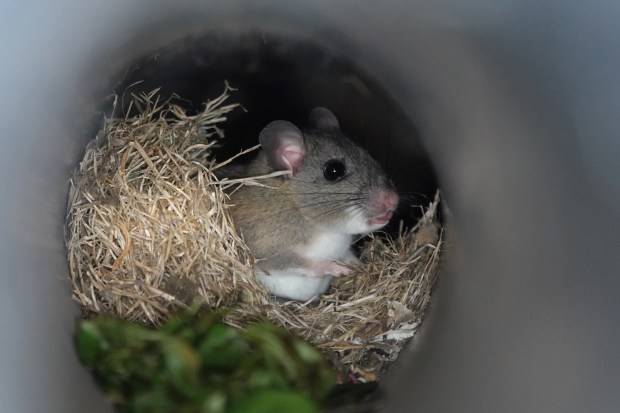 An endangered Key Largo woodrat is seen inside a pipe in an abandoned Cold War-era Nike missile bunker on Wednesday, April 15, 2026, at the Crocodile Lake National Wildlife Refuge in Key Largo. (Joe Cavaretta/South Florida Sun Sentinel)
The snakes are prolific, extremely difficult to find, deadly to native wildlife and have grown to 19 feet in length in Florida. One study found that in areas where they dominate in the Everglades, sightings of mammals have plummeted by 87% to 99%.
Biologists first detected the predators in Key Largo in 2007 — snake captures have since risen while possum, woodrat and cotton mouse sightings have declined.
Collaring North America’s only marsupial
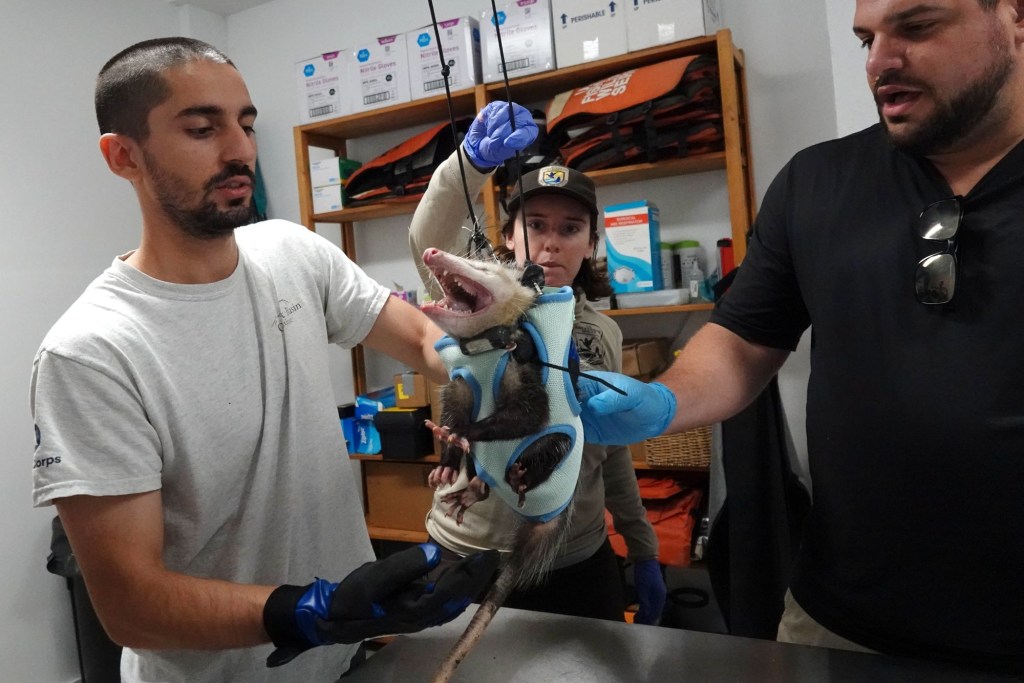
After capturing one more possum, Cove and Sanjar return to the refuge lab to fit them with updated collars.
Sanjar and other biologists don gloves and gingerly place a somewhat docile possum in a harness normally used by dog groomers when trimming nails. She relaxes, drools, and a putrid odor comes over the room, a scent from her anal gland. “They do anything to make themselves too repulsive to eat,” says Cove.
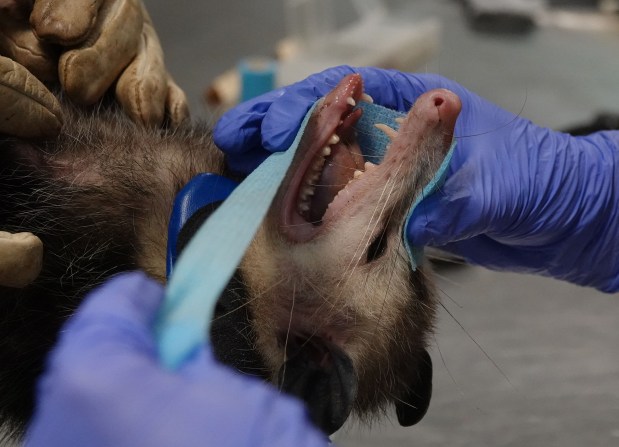 Wildlife officials restrain a possum before fitting it with a VHF collar on Wednesday, April 15, 2026, at the Crocodile Lake National Wildlife Refuge in Key Largo. (Joe Cavaretta/South Florida Sun Sentinel)
The new collars are cheaper because they no longer need GPS capabilities showing where the possums are in real-time. They only need to know when and where they die, so a simple VHF tracker will suffice. The possums can go about their lives as they normally would, foraging for berries, worms, grubs, bird eggs, lizards and frogs and having babies.
Each collar has a mortality switch that sends out a signal if an animal has not moved for six hours. Sanjar drives through the refuge daily listening for it.
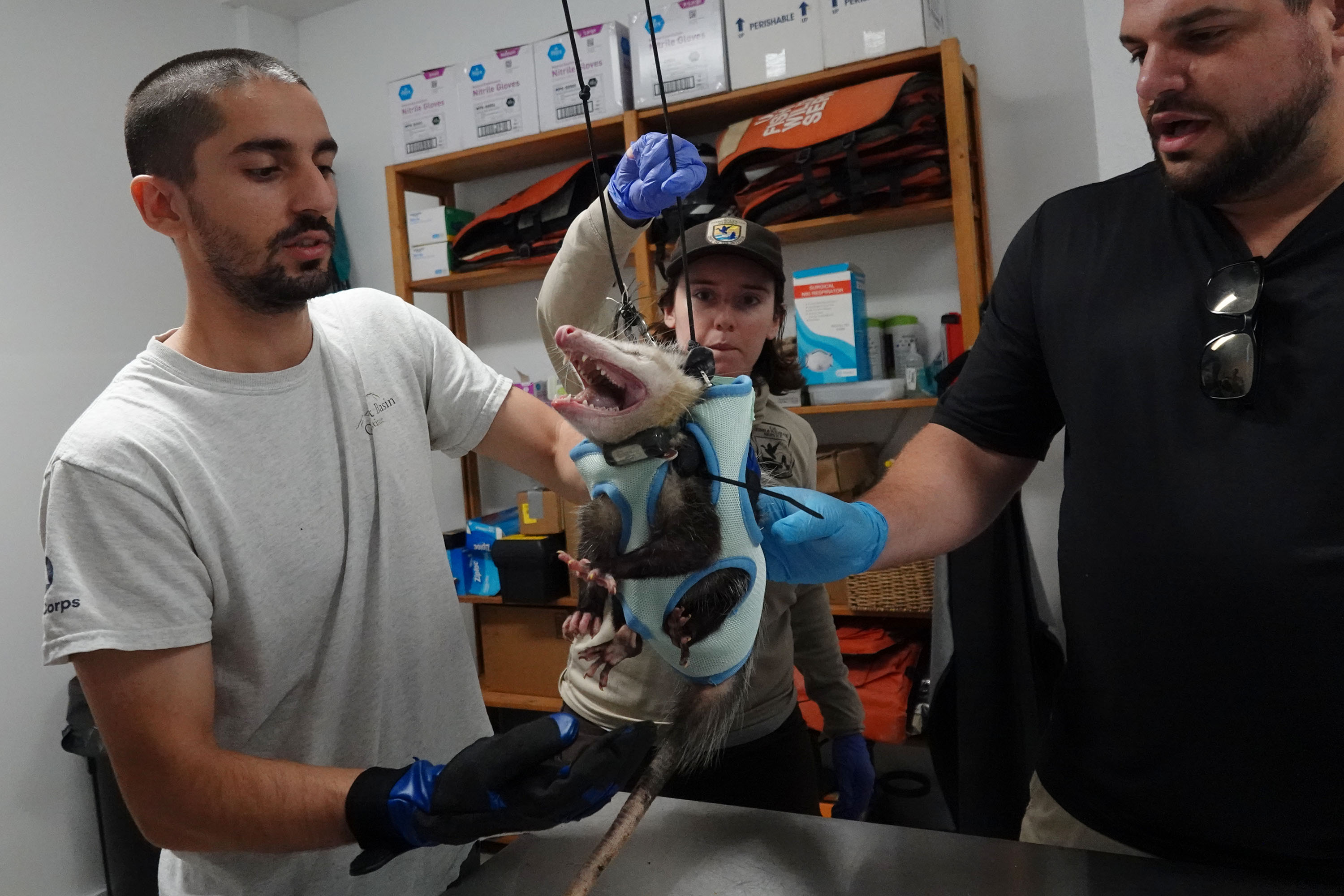
A.J. Sanjar, from left, Isabella Collamati and Mike Cove place a radio collar on a possum on Wednesday, April 15, 2026, at the Crocodile Lake National Wildlife Refuge in Key Largo. (Joe Cavaretta/South Florida Sun Sentinel)
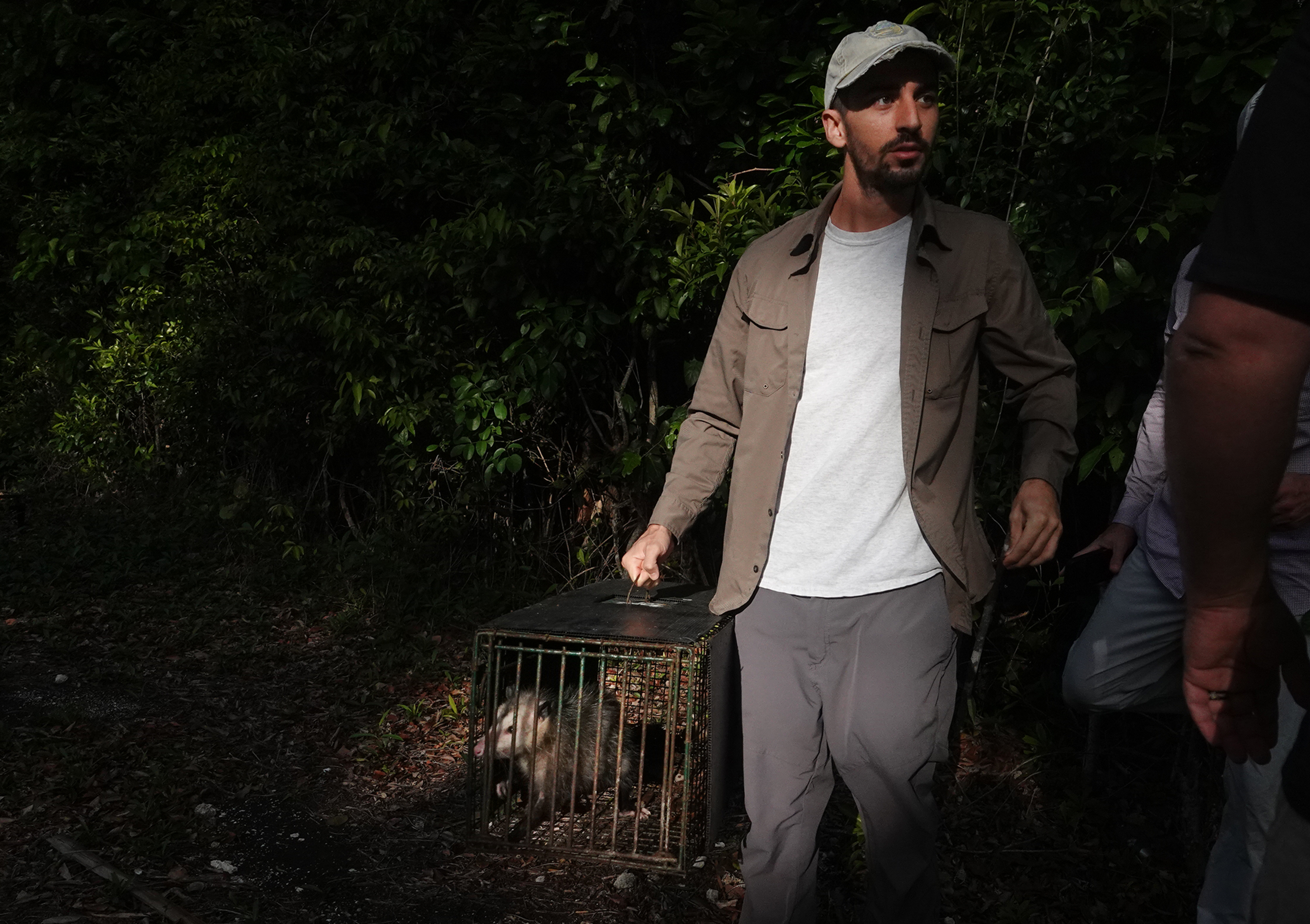
A.J. Sanjar prepares to release a collared possum in the woods from which it was captured on Wednesday, April 15, 2026, at the Crocodile Lake National Wildlife Refuge in Key Largo. (Joe Cavaretta/South Florida Sun Sentinel)
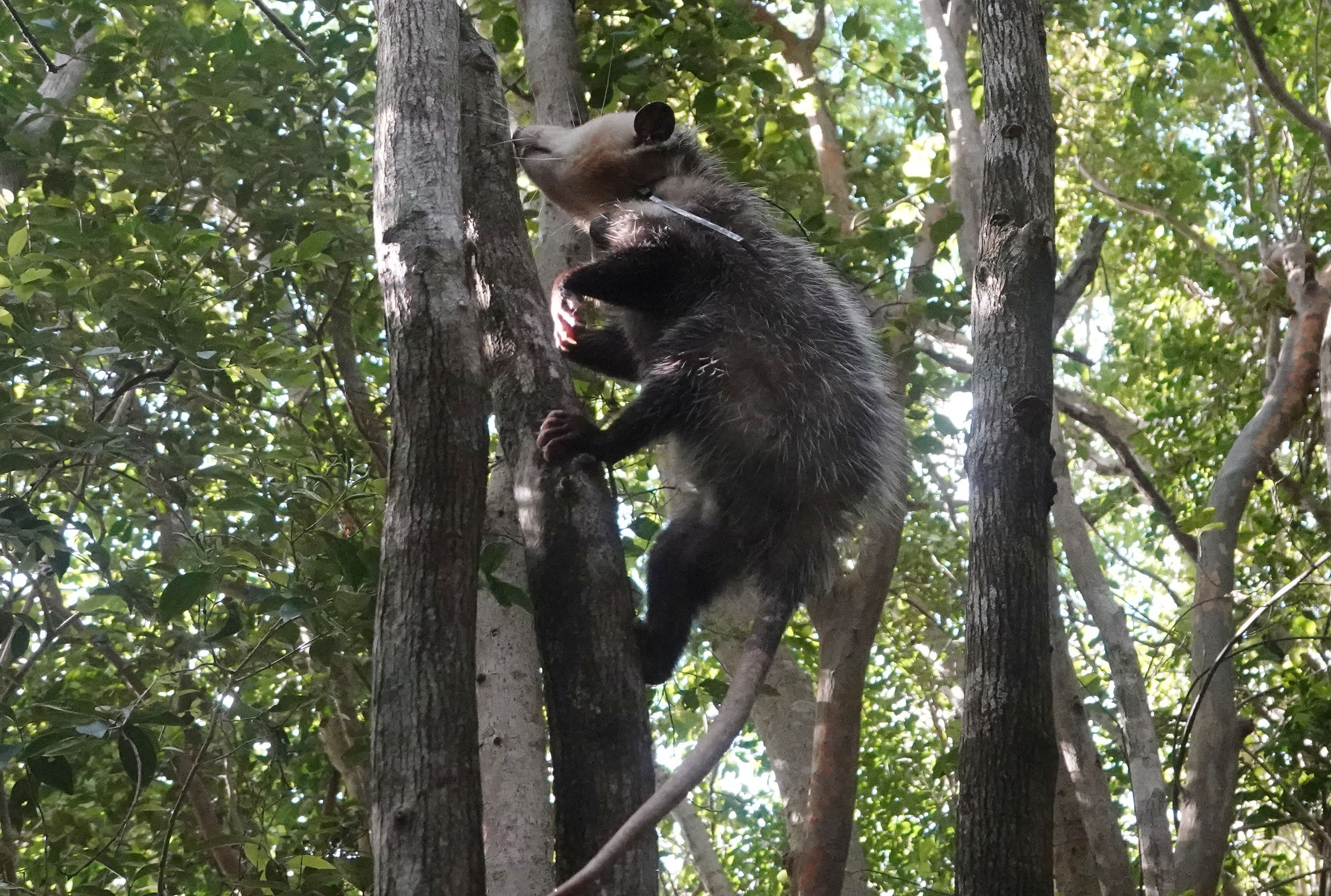
A possum fitted with a radio collar scampers up a tree after being released on Wednesday, April 15, 2026, at the Crocodile Lake National Wildlife Refuge in Key Largo. (Joe Cavaretta/South Florida Sun Sentinel)
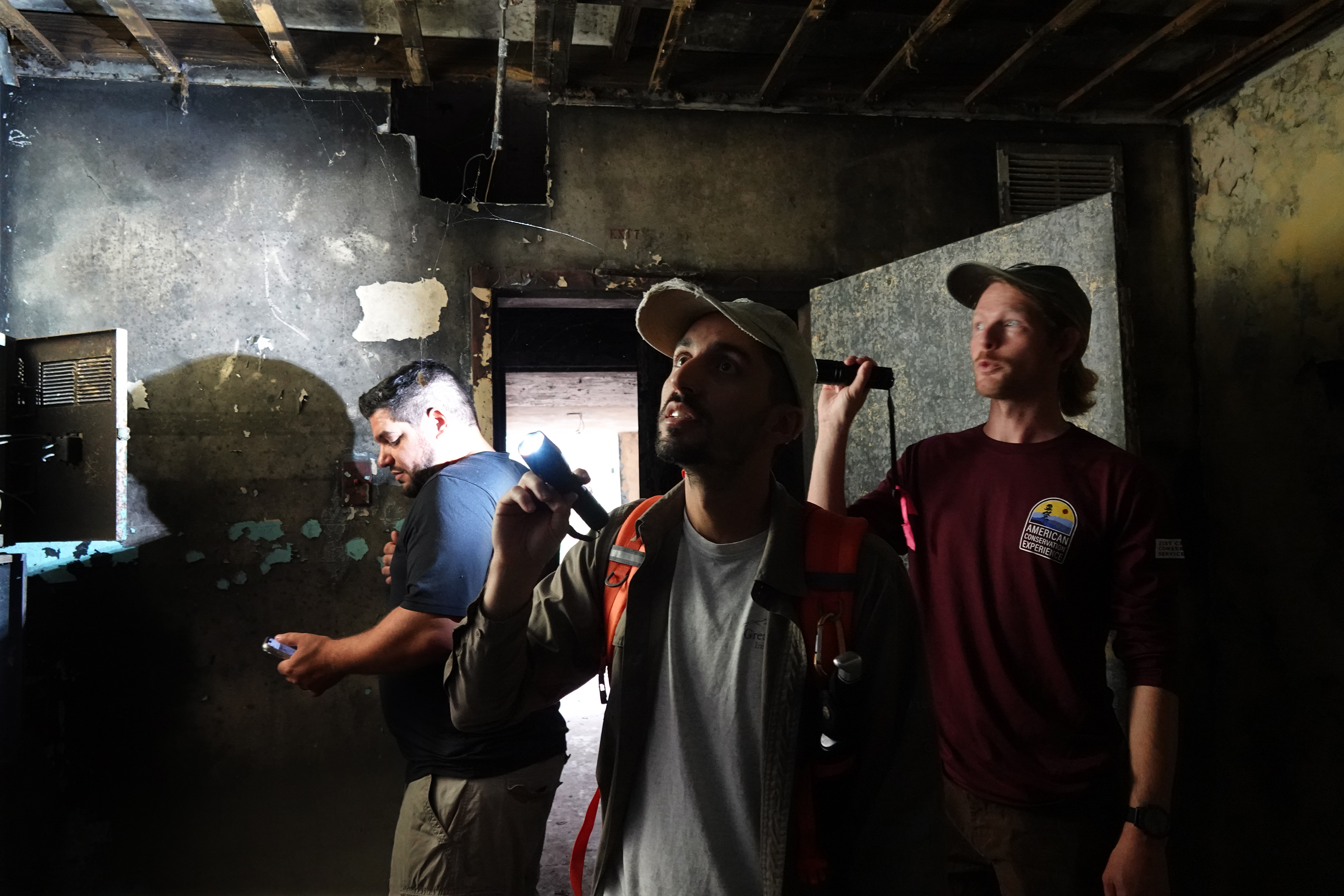
Mike Cove, from left, A.J. Sanjar, and Isaac Lord inspect an abandoned Cold War-era Nike missile bunker on Wednesday, April 15, 2026, at the Crocodile Lake National Wildlife Refuge in Key Largo. The bunkers attract invasive pythons and the small mammals they prey upon. (Joe Cavaretta/South Florida Sun Sentinel)
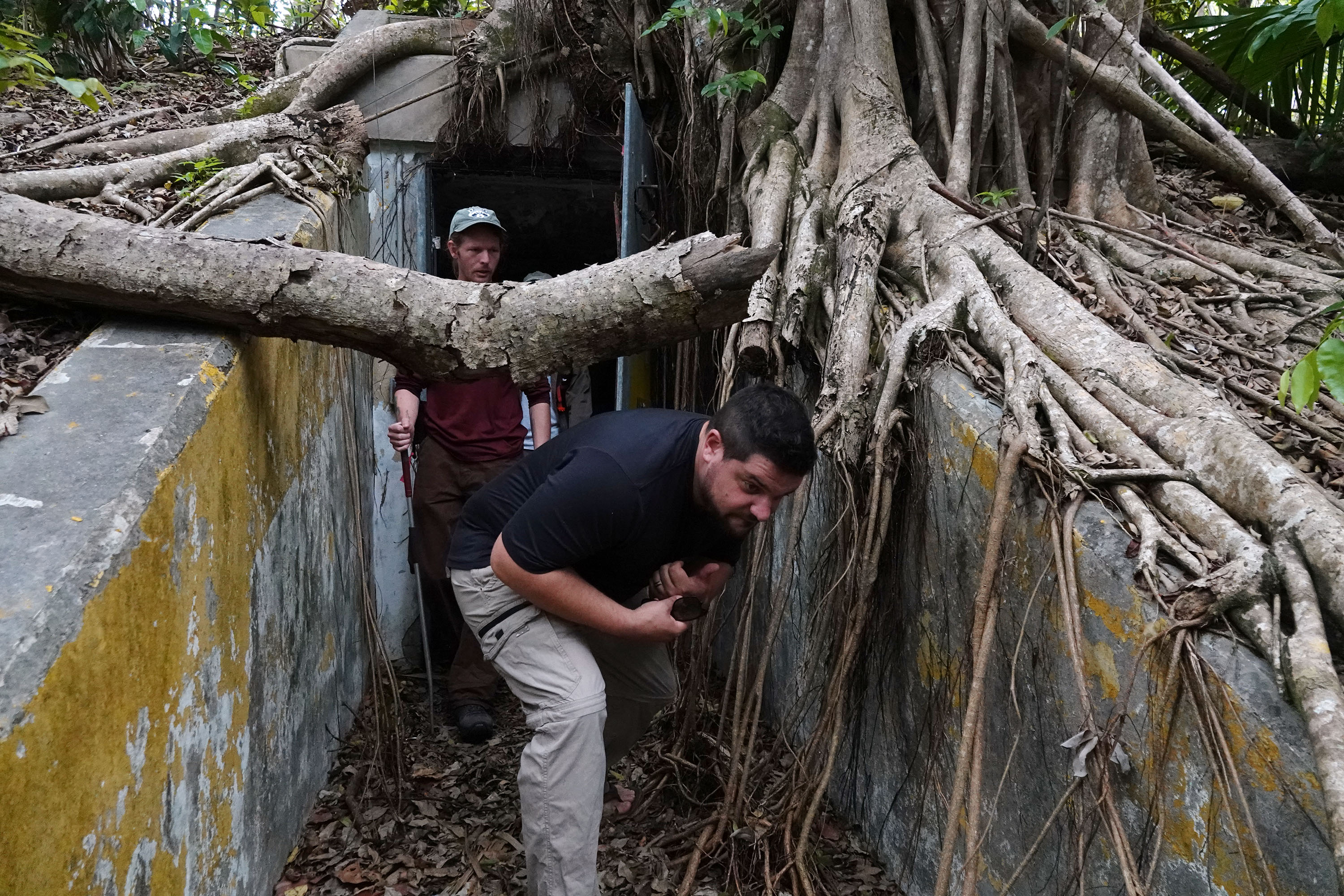
Isaac Lord, left, and Mike Cove inspect an abandoned Cold War-era Nike missile bunker on Wednesday, April 15, 2026, at the Crocodile Lake National Wildlife Refuge in Key Largo. The bunkers attract invasive pythons and the small mammals they prey upon. (Joe Cavaretta/South Florida Sun Sentinel)
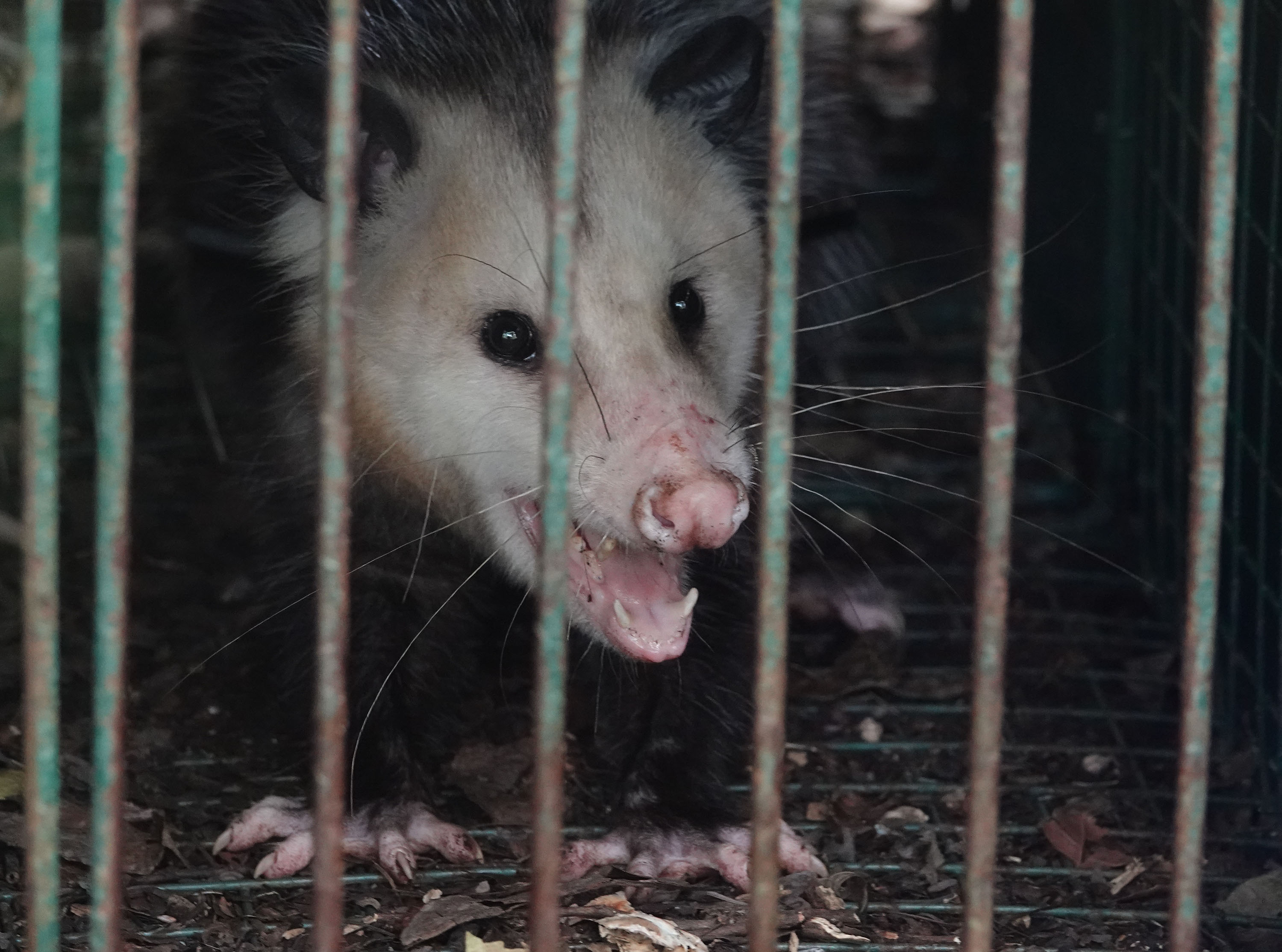
A trapped possum is seen on Wednesday, April 15, 2026, at the Crocodile Lake National Wildlife Refuge in Key Largo. (Joe Cavaretta/South Florida Sun Sentinel)
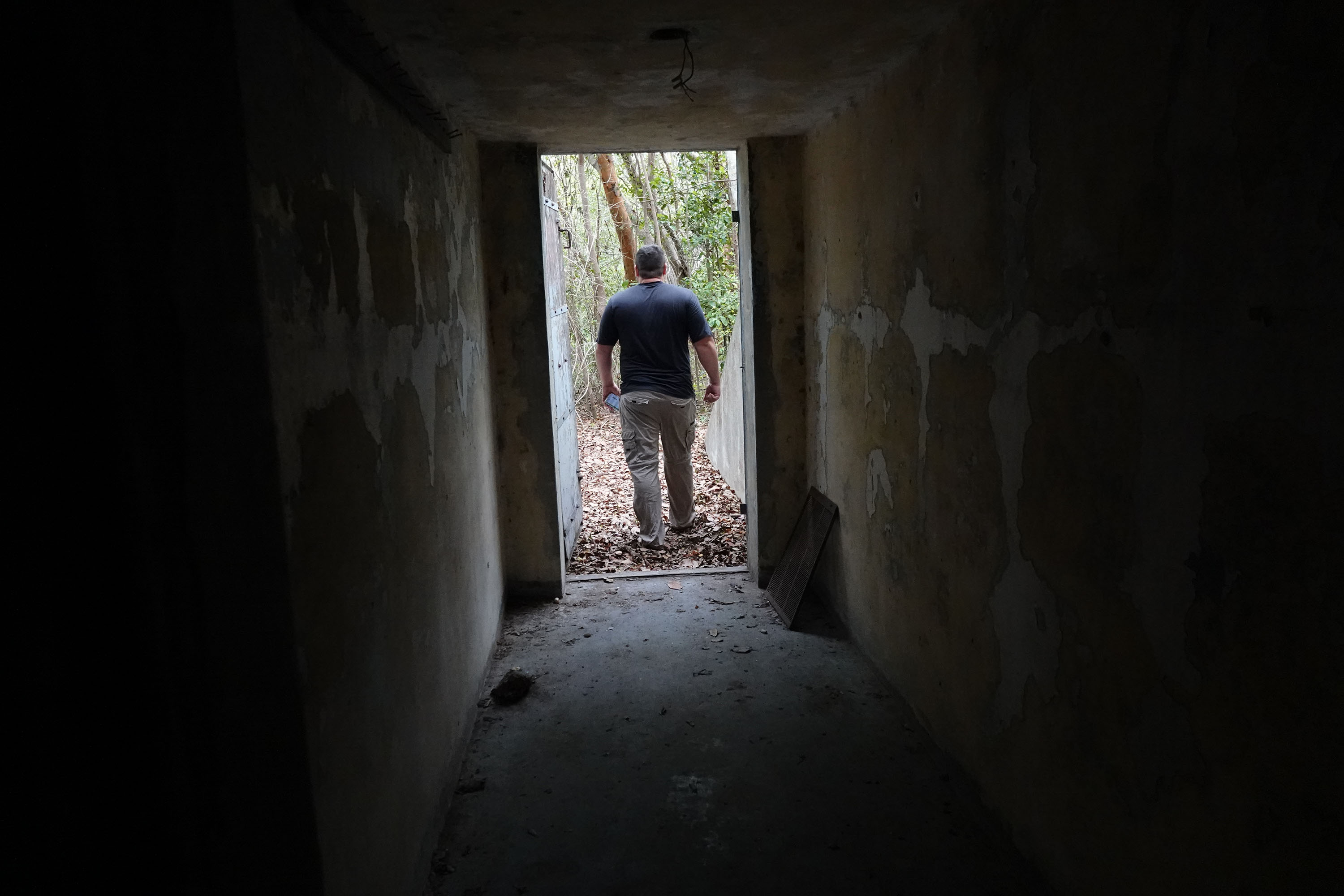
Mike Cove inspects an abandoned Cold War-era Nike missile bunker on Wednesday, April 15, 2026, at the Crocodile Lake National Wildlife Refuge in Key Largo. The bunkers attract invasive pythons and the small mammals they prey upon. (Joe Cavaretta/South Florida Sun Sentinel)
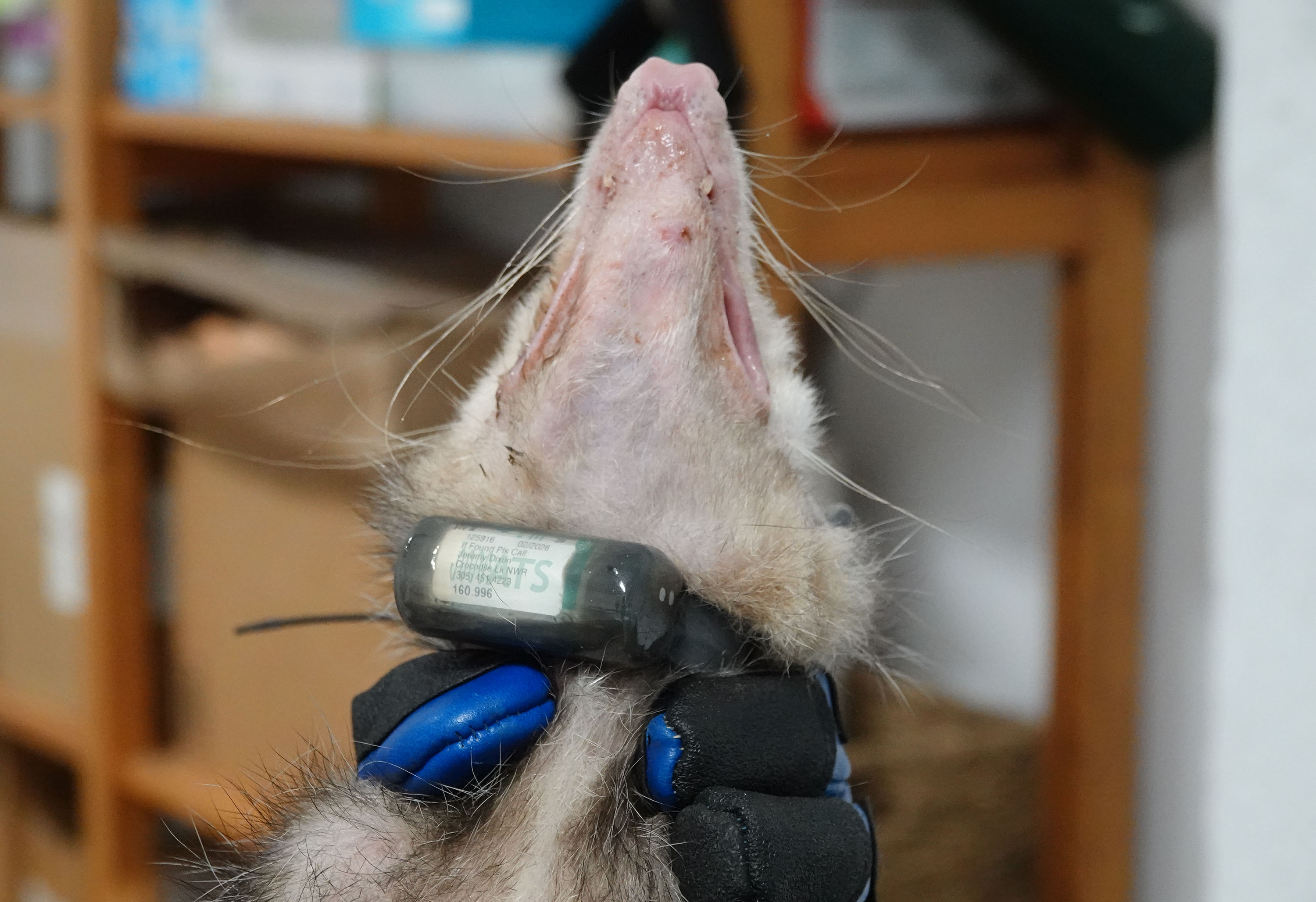
A radio collar fitted on a possum is seen before the animal is released on Wednesday, April 15, 2026, at the Crocodile Lake National Wildlife Refuge in Key Largo. (Joe Cavaretta/South Florida Sun Sentinel)
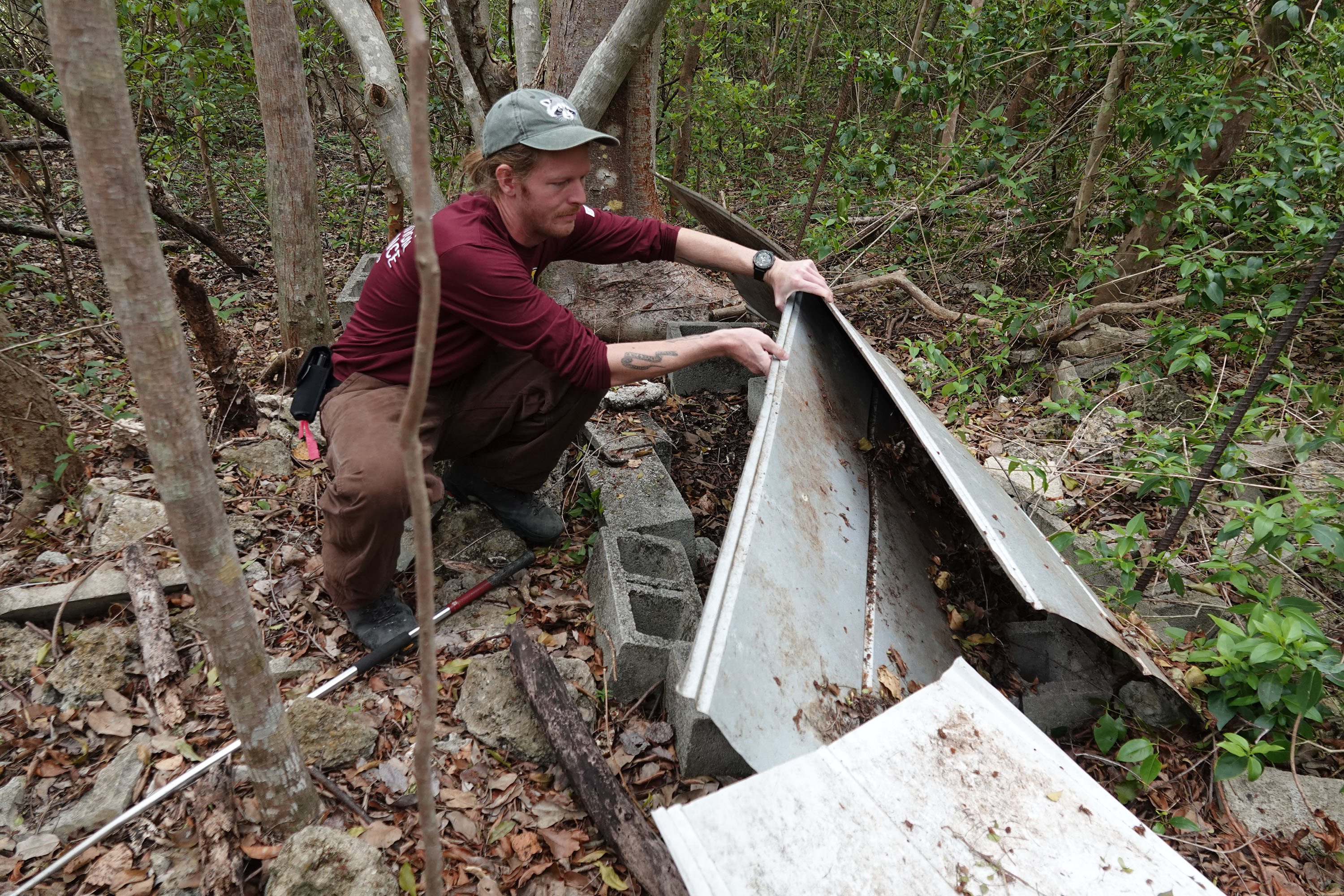
Isaac Lord searches for invasive pythons at a location where he has captured them in the past on Wednesday, April 15, 2026, at the Crocodile Lake National Wildlife Refuge in Key Largo. The bunkers attract the snakes and the mammals they prey upon. (Joe Cavaretta/South Florida Sun Sentinel)
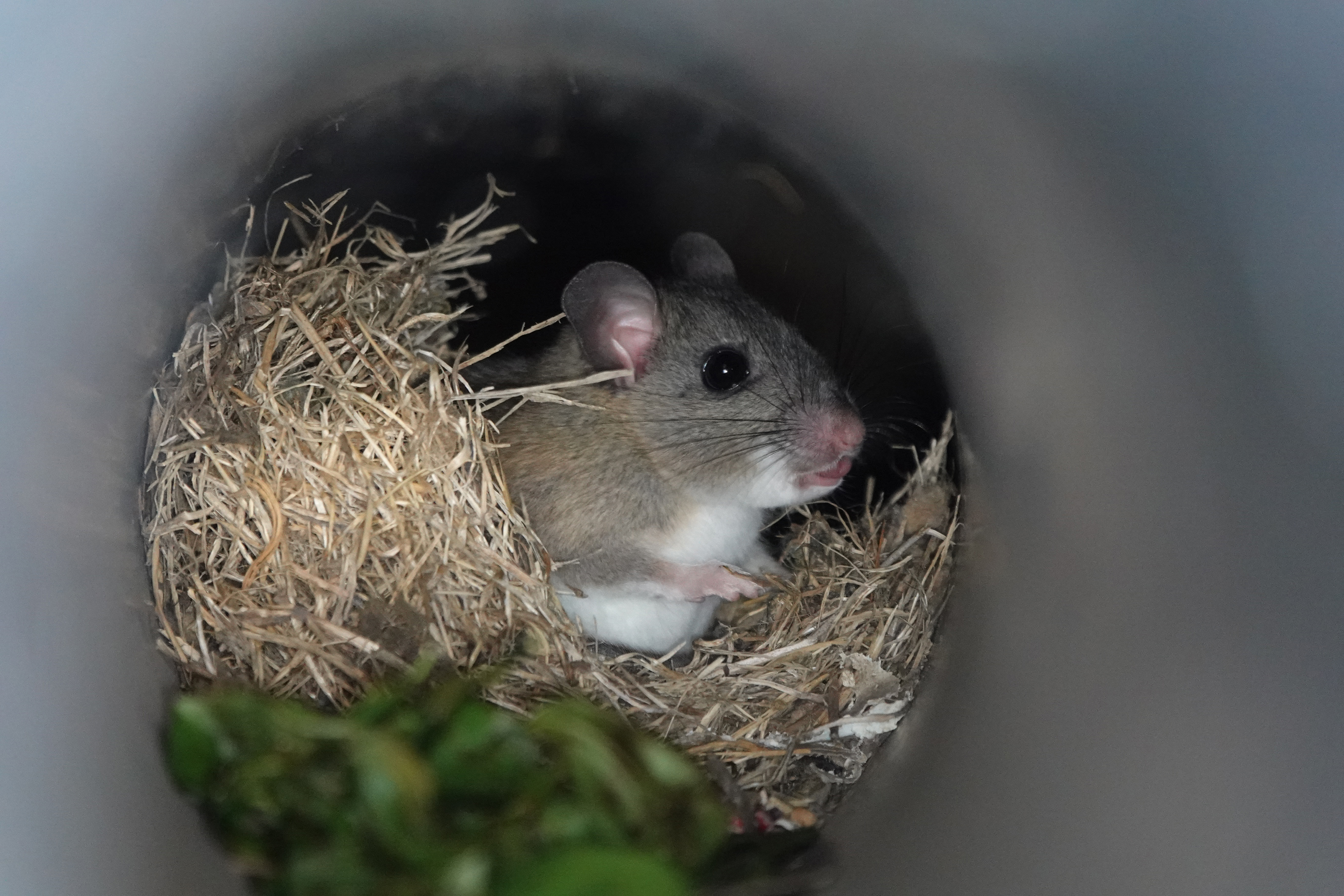
An endangered Key Largo woodrat is seen inside a pipe in an abandoned Cold War-era Nike missile bunker on Wednesday, April 15, 2026, at the Crocodile Lake National Wildlife Refuge in Key Largo. (Joe Cavaretta/South Florida Sun Sentinel)
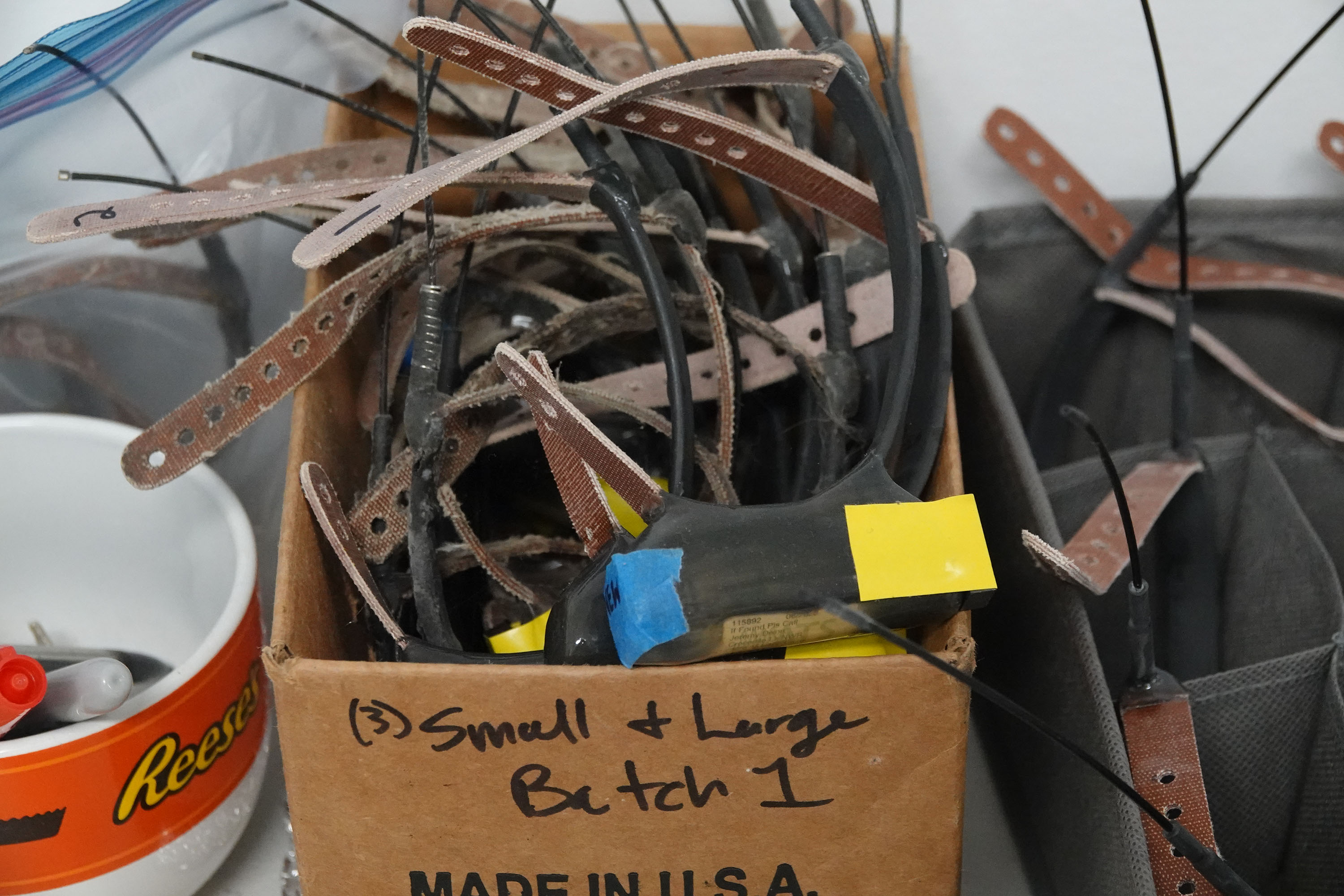
Radio collars that will be placed on possums are seen on Wednesday, April 15, 2026, at the Crocodile Lake National Wildlife Refuge in Key Largo. (Joe Cavaretta/South Florida Sun Sentinel)
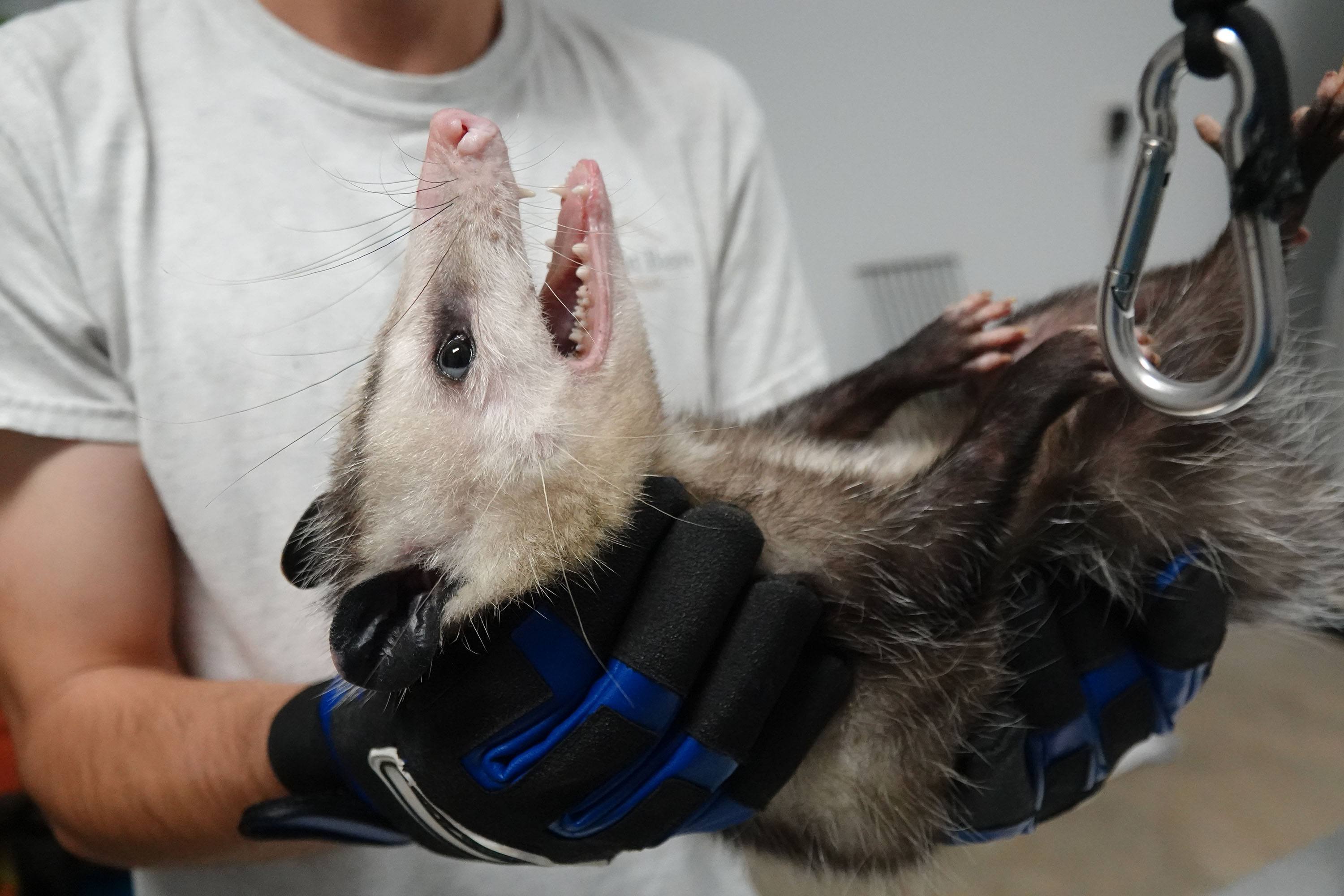
A trapped possum, which will be fitted with a radio collar, is seen on Wednesday, April 15, 2026, at the Crocodile Lake National Wildlife Refuge in Key Largo. (Joe Cavaretta/South Florida Sun Sentinel)
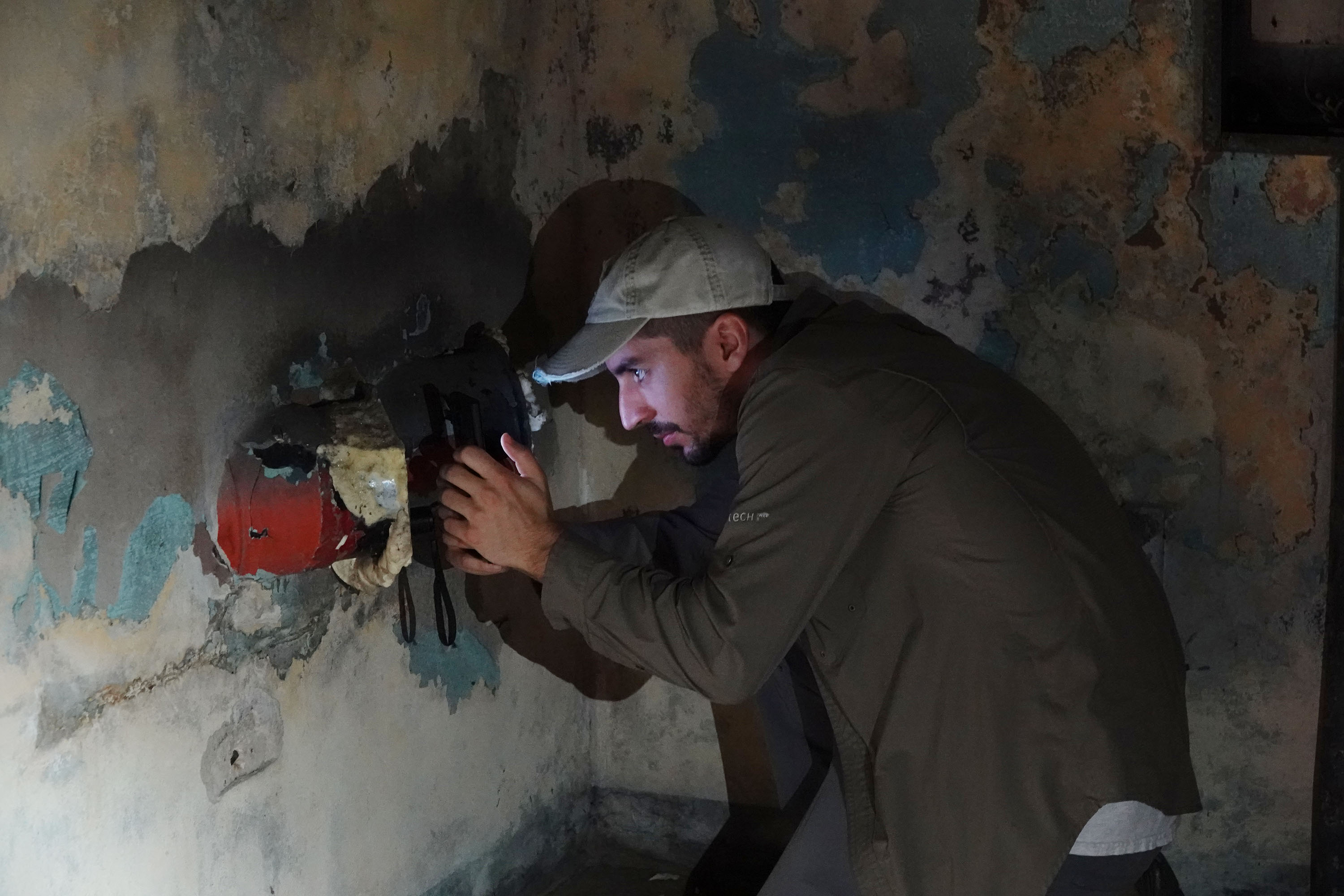
A.J. Sanjar looks into a pipe inside an abandoned Cold War-era Nike missile bunker on Wednesday, April 15, 2026, at the Crocodile Lake National Wildlife Refuge in Key Largo. The bunkers attract invasive pythons and the small mammals they prey upon. (Joe Cavaretta/South Florida Sun Sentinel)
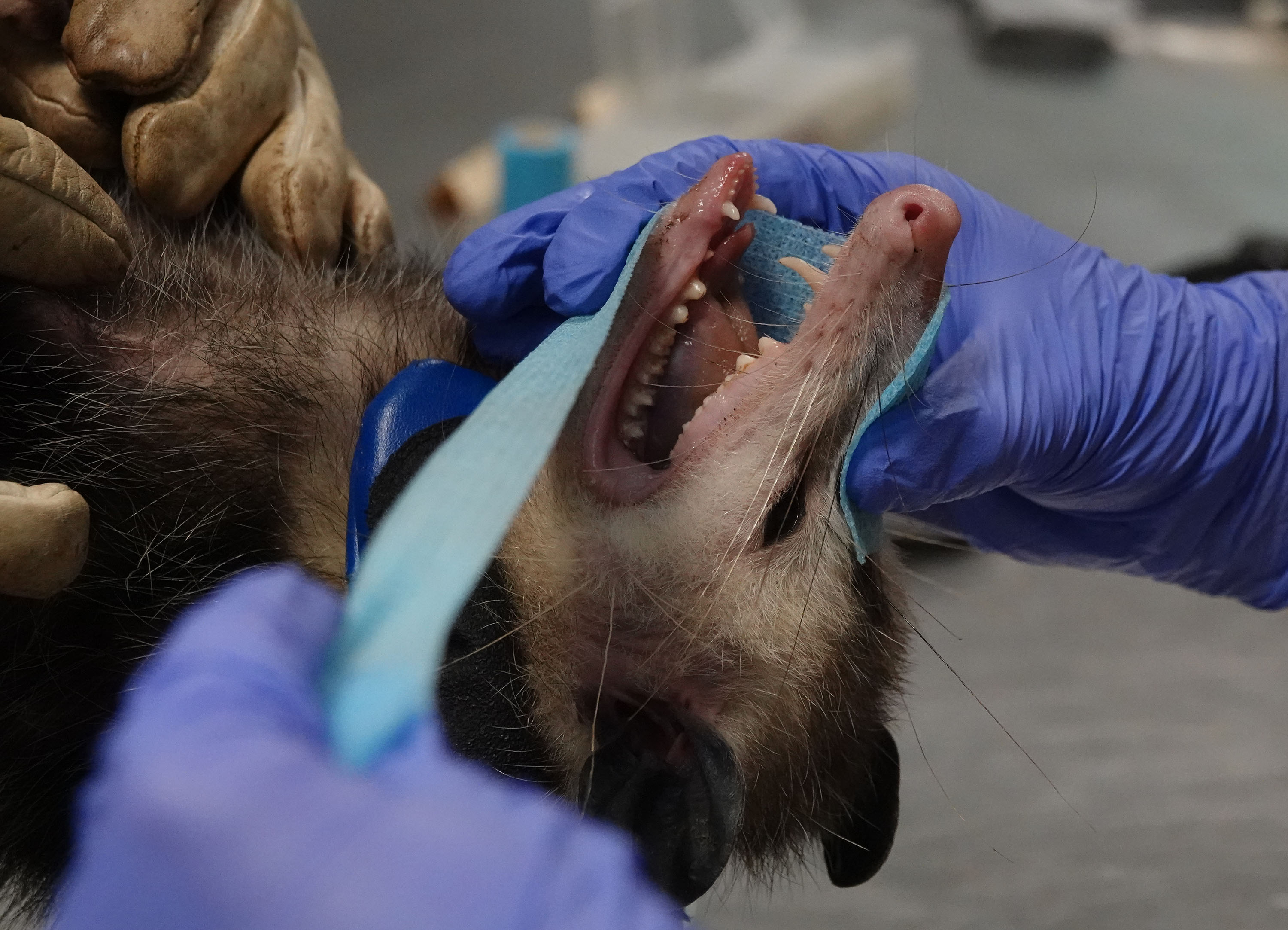
Wildlife officials restrain a possum before fitting it with a VHF collar on Wednesday, April 15, 2026, at the Crocodile Lake National Wildlife Refuge in Key Largo. (Joe Cavaretta/South Florida Sun Sentinel)
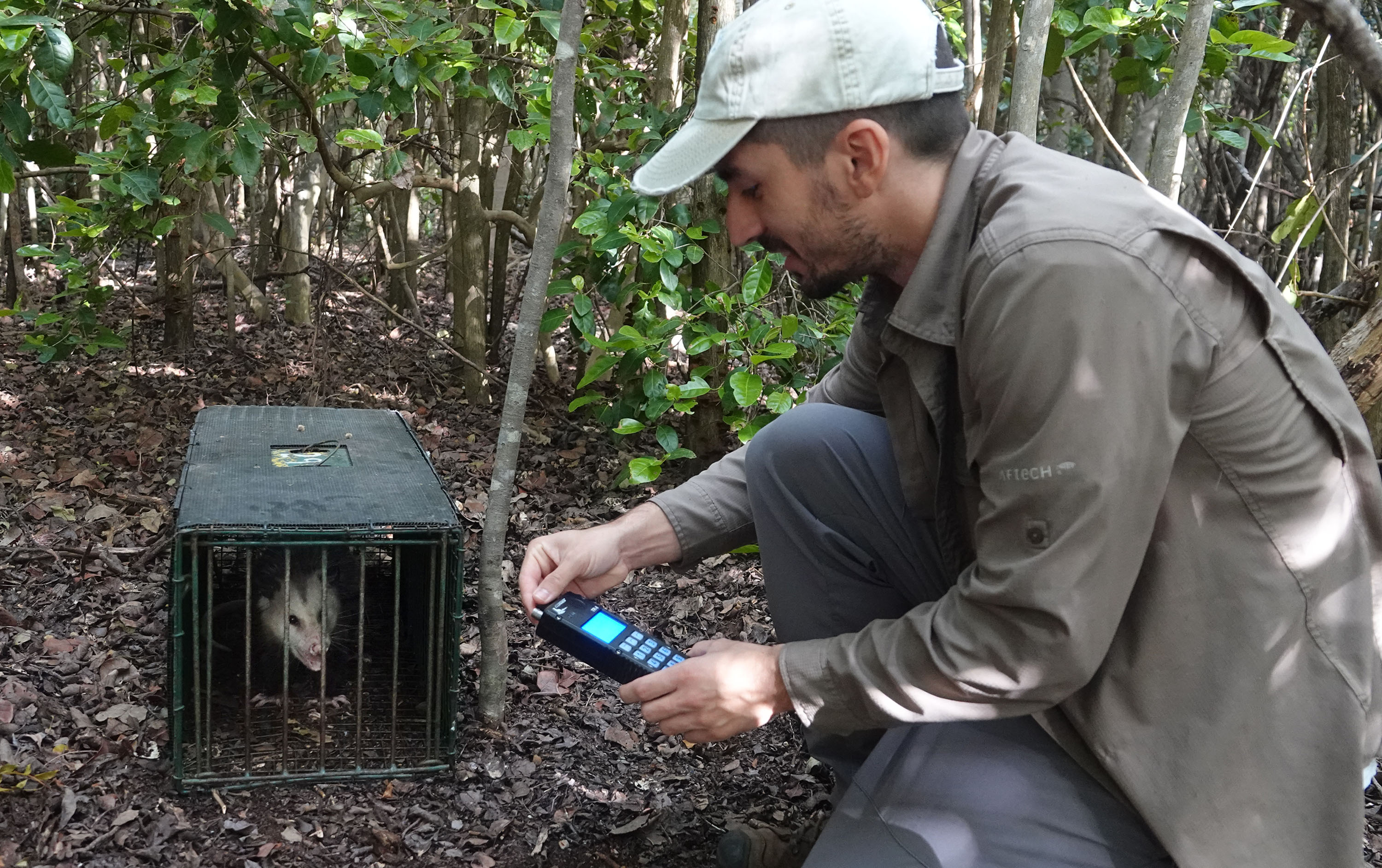
A.J. Sanjar reads information from a trapped possum that had previously been tagged with a radio collar on Wednesday, April 15, 2026, at the Crocodile Lake National Wildlife Refuge in Key Largo. (Joe Cavaretta/South Florida Sun Sentinel)
Show Caption
1 of 15
A.J. Sanjar, from left, Isabella Collamati and Mike Cove place a radio collar on a possum on Wednesday, April 15, 2026, at the Crocodile Lake National Wildlife Refuge in Key Largo. (Joe Cavaretta/South Florida Sun Sentinel)
Another refinement: no more raccoons. They’re cantankerous, can weigh 10 or 15 pounds and have to be chemically immobilized by a veterinarian in order to be collared.
There are other possum advantages. There are more of them around, making them easier to trap, and their home range is smaller, making them easier to locate. And unlike raccoons, they tend to stay out of mangrove habitats, where low branches, high roots and thigh-deep mud make it extremely difficult for humans to reach pythons and pull them out.
Once the collars are on, they name each possum: Fudge Brownie and Possum-razzi, and Cove checks their pouches for babies, or joeys. It turns out Fudge Brownie has six.
Bon voyage, Fudge Brownie
Cove and Sanjar release each possum exactly where they were trapped so they can maintain their home territory and have a knowledge of where to find food and hide out.
They both hit the ground running, literally, bolting off into the forest immediately. They’re soon invisible in the thick cover.
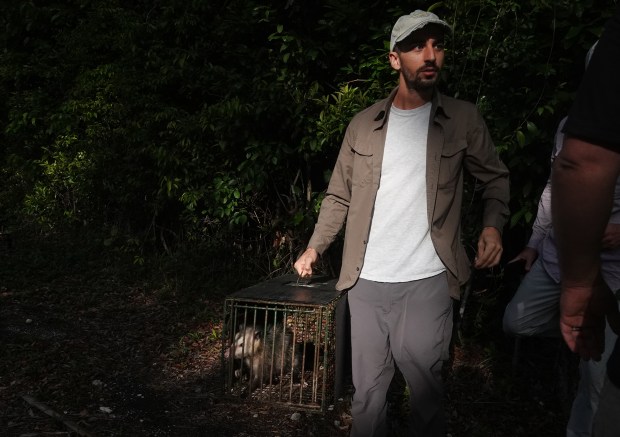 A.J. Sanjar prepares to release a collared possum in the woods from which it was captured on Wednesday, April 15, 2026, at the Crocodile Lake National Wildlife Refuge in Key Largo. (Joe Cavaretta/South Florida Sun Sentinel)
Possums don’t live much longer than two years, even without pythons around.
Dixon said some have been eaten by snakes within two weeks of being collared, but most go on about their business for several months. One of the snakes they caught, a 12-footer, had two of their collared possums in its stomach. “Yeah, we had to dig that one up. That was not fun,” said Dixon.
All of the snakes they’ve captured via mammal collar have been over 8 feet long and the largest was close to 13 feet. “These are all reproductively viable pythons,” said Dixon.
There was some upset among the public that the method was somehow cruel, as if the mammals were bait.
“We’re not putting these animals out there and in harm’s way,” Dixon said. “Harm’s way is there. We’re just documenting what’s happening.”
Hopes and possum-bilities
The possum has been one of the most successful python-removal techniques attempted in Key Largo.
Previously Dixon has tried scout snakes, which lead researchers to breeding aggregations, and a tracking dog named Percy. But Key Largo is a former coral reef, with thousands of caves and crevices in which pythons take shelter, making snakes unreachable when breeding or hiding from a dog.
But the possum method allows them to locate the snakes at any time, and wait for them to surface.
In the two summers and and some additional months since Sanjar came on, the possums have led to the removal of 18 big pythons. Road cruising has resulted in more captures, but many of those snakes are hatchlings. The possum snakes, often female, would be laying 30 to 60 eggs in spring if not removed.
If money were no object, Dixon said he’d have 200 possums out there with collars on. Of course that would also require more collars and staff.
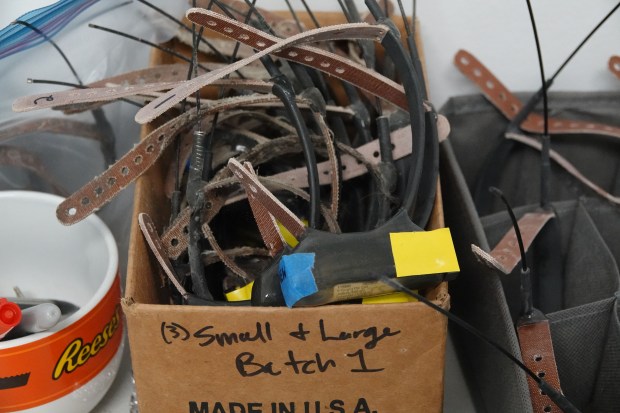 Radio collars that will be placed on possums are seen on Wednesday, April 15, 2026, at the Crocodile Lake National Wildlife Refuge in Key Largo. (Joe Cavaretta/South Florida Sun Sentinel)
Sanjar’s hope is that land managers elsewhere in the state will be able to use the method to complement other techniques — something that the South Florida Water Management District may pursue.
Cove said the northern fringe of the snake’s invasion front would be ideal, because there are still plenty of possums, unlike in Everglades National Park, and the possums would be slowing the invasion, just by being themselves.
The furry white marsupials, which waddle back into remote areas — places where humans would not otherwise set foot — are almost like spies penetrating the secret lives of pythons. “We’re getting them way back in areas where they may never cross the road,” said Dixon. “I think that’s really interesting. The possums are showing us where the snakes are.”
Bill Kearney covers the environment, the outdoors and tropical weather. He can be reached at bkearney@sunsentinel.com. Follow him on Instagram @billkearney or on X @billkearney6.