
FORT LAUDERDALE, Fla. — New questions have risen since last month’s deadly crash at New York’s LaGuardia Airport.
Two pilots were killed in a crash between a plane and a fire truck on the runway.
Officials have since revealed that the fire truck did not have a crucial tracking device, a transponder, that is standard for vehicles at many airports.
At Fort Lauderdale-Hollywood International Airport, more than 30 million people take off and land annually.
Supported by airport data, tracking transponders at both FLL and Miami International Airport are essential for safety.
Local 10’ Jeff Derderian caught up with FLL’s Chief Operating Officer to learn more about how they work.
“If it detects an object close to or near especially the runway environment, it alarms,” said FLL COO Mike Nonnemacher. “It lets the air traffic controller know there’s a potential conflict.”
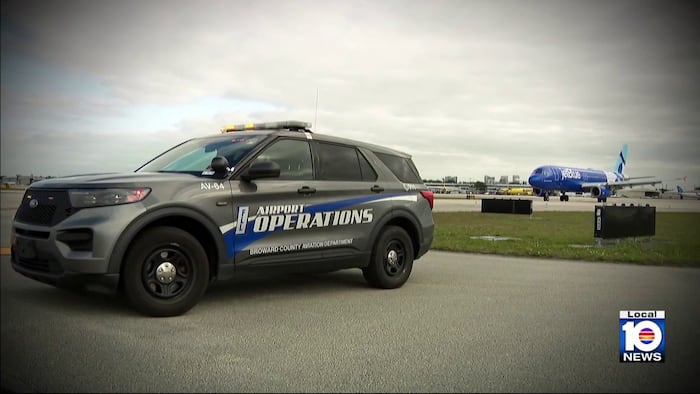
There are busy areas of an airport that travelers may never see, but Local 10 was given access to the movement areas of FLL.
It’s a constant ballet of speed, timing and trust.
FLL has six fire trucks equipped with transponders onboard, tracking planes second-by second.
There are 26 operational vehicles that are a part of that system that go out to check runways, and another 21 maintenance vehicles.
That’s because on the ground, the work never stops.
Lightbulbs, pavement, signs, small fixes in a very big system.
And backing it all up is another set of eyes, an airport surface detection radar that is silently, constantly searching relentlessly.
According to the FAA, the installation of transponders was guidance but not mandatory.
“The FAA is actively encouraging airports to voluntarily equip vehicles with VMATS,” the FAA said in a statement to Local 10.
Similarly to FLL, Miami International Airport also has a surface detection system.
By the numbers, MIA has 51 vehicles with transponders that handle ramp access, wildlife control, electrical work, pavement issues and more.
As for fire and emergency vehicles, Miami-Dade Fire Rescue has nine emergency response vehicles at MIA, but without transponders.
Local 10 has been told that transponders have recently been ordered; MDFR and the Miami-Dade Aviation Department are working together to get it done.
🏠 News From Your Neighborhood
Copyright 2026 by WPLG Local10.com – All rights reserved.