
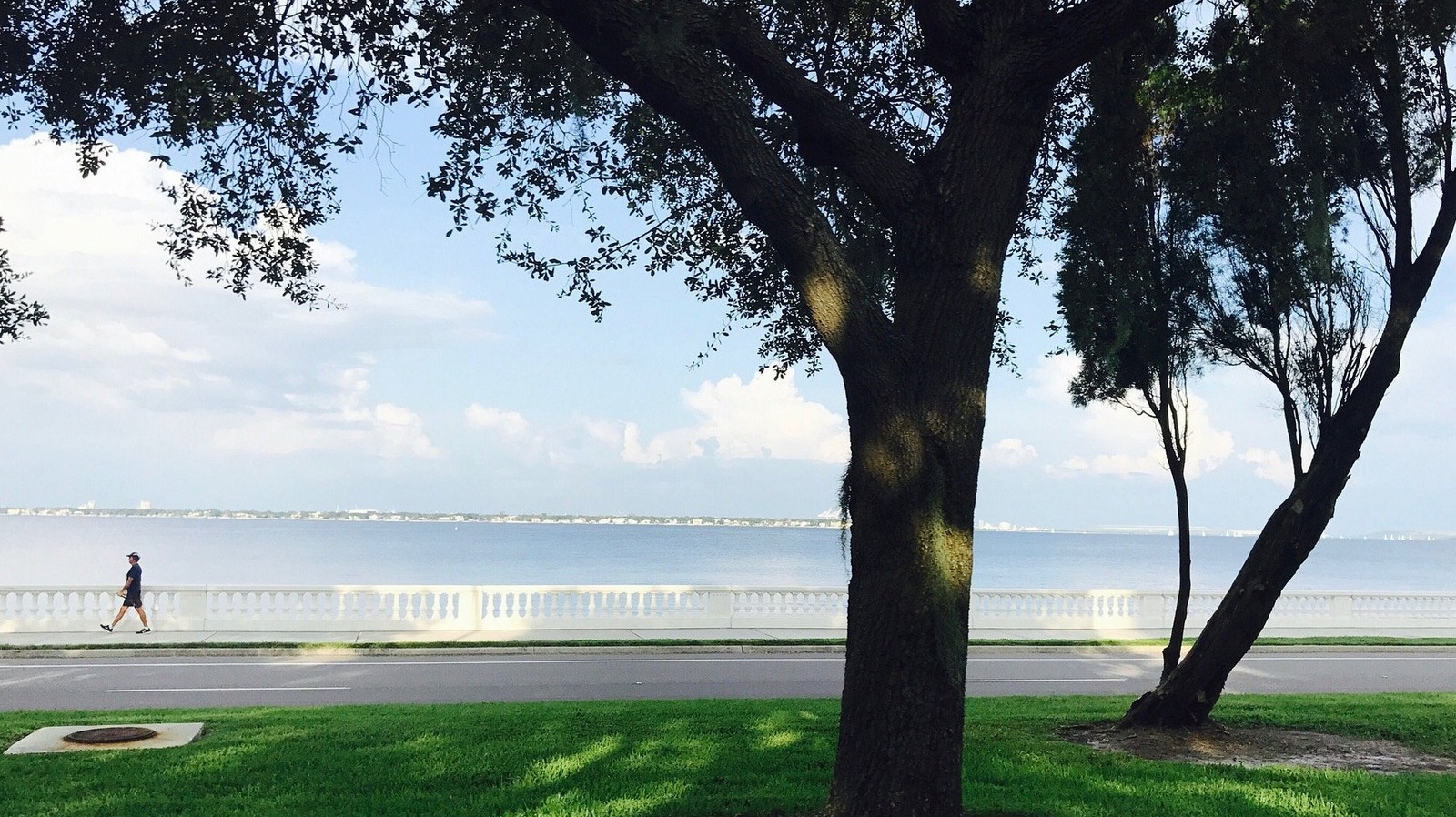
Tampa’s development boom has transformed its skyline, ushering in modern high-rises, luxury residences, and new businesses as it becomes one of the fastest-growing cities in America. Yet many legacy neighborhoods remain, defined by a quintessential “Old Florida” aesthetic — mature live oaks, vintage architectural styles, and soft color palettes. One such neighborhood is Palma Ceia, an upscale enclave in southwest Tampa, minutes from downtown and just south of Hyde Park, a historic neighborhood known for its refined ambiance and vibrant dining scene. Sought after for its quiet charm, shaded, brick-paved streets, and walkability, Palma Ceia is considered prime Tampa real estate. It offers access to waterfront views, local shopping, proximity to many of Tampa’s top attractions, and the exclusivity of Palma Ceia Golf & Country Club, Tampa’s first private course. Its appeal is also reflected in rankings by Niche, which places it among Tampa’s top neighborhoods, citing safety, tranquility, and well-regarded schools.
Palma Ceia encompasses residential areas of Palma Ceia West and Palma Ceia Pines, with boundaries extending toward Bayshore Boulevard and Hillsborough Bay. A designated commercial district along Bay to Bay Boulevard and MacDill Avenue further shapes the neighborhood’s character. Many homes here date back a century, reflecting architectural styles favored by early 20th-century affluence, including Craftsman, Mediterranean, and Spanish Revival, Ranch, and bungalow designs, with newer construction also thoughtfully integrated throughout.
In the early 1900s, Palma Ceia was a popular destination for its natural springs, fed by a nearby creek. Streetcars carried visitors along Bayshore Drive, and in 1928, the property’s owners constructed a large public pool to accommodate growing crowds. The springs eventually dried up, but the area’s legacy endured. Today, Palma Ceia remains a cornerstone of Tampa’s residential communities, notably preserved in Fred Ball Park, where a historical marker commemorates the neighborhood’s early days.