
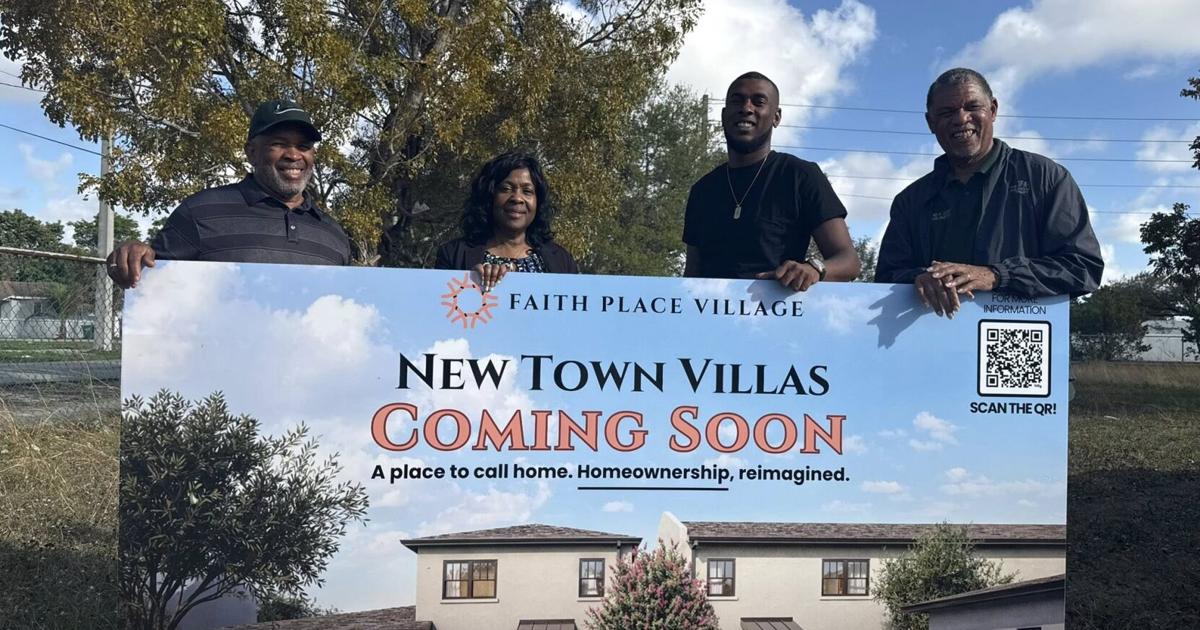
In a county where affordable homeownership has become increasingly hard to achieve, a church in unincorporated Miami-Dade is preparing to turn its land into a lasting legacy, its leaders said, with 37 townhomes designed for buyers, not renters.
Faith Place Village, a planned development just south of North Miami, is expected to break ground by the end of May. The project is a partnership between Faith Community Baptist Church, the Collective Empowerment Group of South Florida (CEG), and developer Prospera Real Estate Collective.
For the leaders behind it, the project is about more than building homes — it’s about creating stability and long-term wealth for families often priced out of the region.

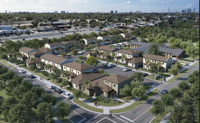
Aerial view of Faith Place Village.
(Courtesy of CEG)
“Affordable housing is a misnomer; the real challenge is attainable housing,” said CEG President Emeritus Rev. Dr. R. Joaquin Willis. “We’re really trying to help build wealth in the community and build a better product.”
The vision
Richard P. Dunn II, pastor emeritus of Faith Community Baptist Church — now overseen by his son Brandon — shaped the vision for the project decades ago while studying at Morehouse School of Religion, where he saw churches tied to community development and housing. Later, as a Miami city commissioner and CRA chair, he saw similar partnerships in Overtown.
After becoming Faith Community’s pastor in 2008, he looked at the church’s more-than three acres of land and saw potential, despite a familiar hurdle.
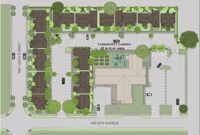
Rendering of the 37 homes and amenities.
(Courtesy of CEG)
“We were land-rich, but cash-poor,” Dunn said. “We got all this land, and we need to develop it, but we don’t have the money to do it.”
For years, developers proposed high-density rentals that didn’t align with the church’s mission or the neighborhood’s character as a single-family home community. That shifted when Dunn connected with Willis, then CEG’s president, who proposed for-sale townhomes focused on building Black wealth.
Though some congregants initially favored selling the land for a quick profit, Dunn argued that a straight sale could have led to uses incompatible with the church and neighborhood. Others worried about losing property their families had sacrificed to obtain.
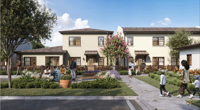
Faith Place Village rendering.
(Courtesy of CEG)
The church ultimately chose a broader purpose.
“What greater effort of ministry can this church do as a legacy and be a part of helping people to own their own homes, to enjoy a part of the American dream,” Dunn said. “We had to choose ministry over money.”
Valued at approximately $14.5 million, Faith Place Village will consist of 37 units: 10 one-story, two-bedroom residences and 27 two-story, three-bedroom units. The larger homes will feature ground-floor primary bedrooms to accommodate families and older residents.
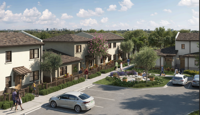
Faith Place Village shared spaces.
(Courtesy of CEG)
Filling the gap
CEG leaders say the project targets working families who earn too much for deeply subsidized rentals but not enough for market-rate homes.
Bernard Phanord, CEG’s president and CEO, said the townhomes are intended for buyers earning 120% of the area median income (AMI) or below, with a focus on helping people at 60-80% AMI access the project through subsidies and partnerships.
“We are intentional and unapologetic about bringing homeownership solutions to the market,” Phanord said. “This is not for investors. This is not for fix-and-flip. This is the primary residence for individuals at 120% AMI or below.”
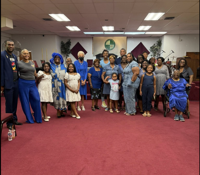
Faith Community Baptist Church’s interior.
(Courtesy of Faith Community Baptist Church)
With Faith Place Village’s projected sale price in the $400,000s, the development offers a significant discount compared to Miami-Dade’s median single-family home price, which sits between $580,000 and $675,000 as of early 2026.
Antonio “Tony” Prado, CEG’s pro bono executive director, said the project is also reaching essential workers like teachers, nurses and police officers. A partnership with the United Teachers of Dade (UTD) is already connecting educators to the project through homeownership orientation sessions.
Prado said the project reflects a broader concern about access to wealth-building in Miami-Dade.
“Unless we find ways in Miami-Dade County and elsewhere to bring affordable homeownership options to particularly low-income Black families — nowadays it doesn’t have to be Black families, any middle-class families — then they’re going to be tenants and never financial independents,” he said. “Because the only way to financial independence is the long-term accumulation of equity in a home.”
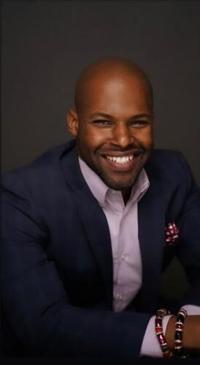
“This is not for investors. This is not for fix-and-flip. This is the primary residence for individuals at 120% AMI or below.” – Bernard Phanord, CEG President and CEO
(Bernard Phanord)
Phanord emphasized that churches can play a larger role in addressing housing needs.
“We look at houses of worship as anchor institutions in their communities,” he said. “And one of those things that they can do, should the asset allow them to, is provide housing — but not just housing from a rental standpoint, but from a model where people can be stakeholders.”
Phanord explained that, unlike rental costs, which can fluctuate based on federal indexes, ownership provides predictability as a result of the principal and interest being set and secured unless refinanced.
“If you buy it, and you have your finances and your will and everything in order, then you already need to tap the person that’s going to be inheriting your property,” Willis said. “That ensures that it’s going to be in the family for at least two, maybe three generations.”
Making homeownership possible
Creating financial viability required a “layered” funding strategy. This includes first-time homebuyer programs, philanthropic funding and partnerships with mission-driven lenders.
Phanord said the Florida Community Loan Fund and the Miami Foundation are already at the table, helping to reduce upfront costs and expand access for moderate-income buyers. The project also receives support through programs in Miami-Dade County Commissioner Marleine Bastien’s district that specifically target first-generation buyers.
“The biggest hurdle is not always the monthly payment — it’s getting in the door,” Phanord said.
To help, CEG provides housing counseling through the Housing Foundation of America and workshops on financial literacy and lender education.
“We do a financial breakdown of rent versus homeownership,” Phanord explained. “If you’re paying $2,000 a month… you could easily be looking at over $100,000 in rent that could have been part of your equity.”
Designed for the community
Ellen Buckley, CEO of Prospera Real Estate Collective, ensured the neighborhood’s actual needs shaped the development. She even stayed with a resident for several nights to understand the area’s rhythm.
“I just took notice of the fact that I needed to learn more about this place… I just need to get on the ground,” she said.
During her stay, Buckley said she was introduced to local staples — from neighborhood diners to small grocers — and learned about residents’ everyday habits and needs. The experience influenced the site’s amenities.
Instead of expensive pools or clubhouses that increase HOA fees, the project will feature yard areas, a playground and community gardens. These gardens will extend the work of the Miami Youth Garden, an initiative founded by Willis.
“We wanted to make sure that the amenities were associated with the true needs of the community and not excessive as to overburden long-term costs,” Buckley said.
Construction is set to take 16 to 18 months, with completion expected by late 2027.
Faith Place Village is just the beginning for CEG. Phanord said the organization has eight to 10 more projects in development, representing up to 1,000 potential units, including a homeownership project in Coconut Grove.
“We want to show that faith-based development is a real thing,” Phanord said.